ADVERTISEMENT
Discover Picturesque Yorkshire Dales Scenery Along This Hebden Circular Walk
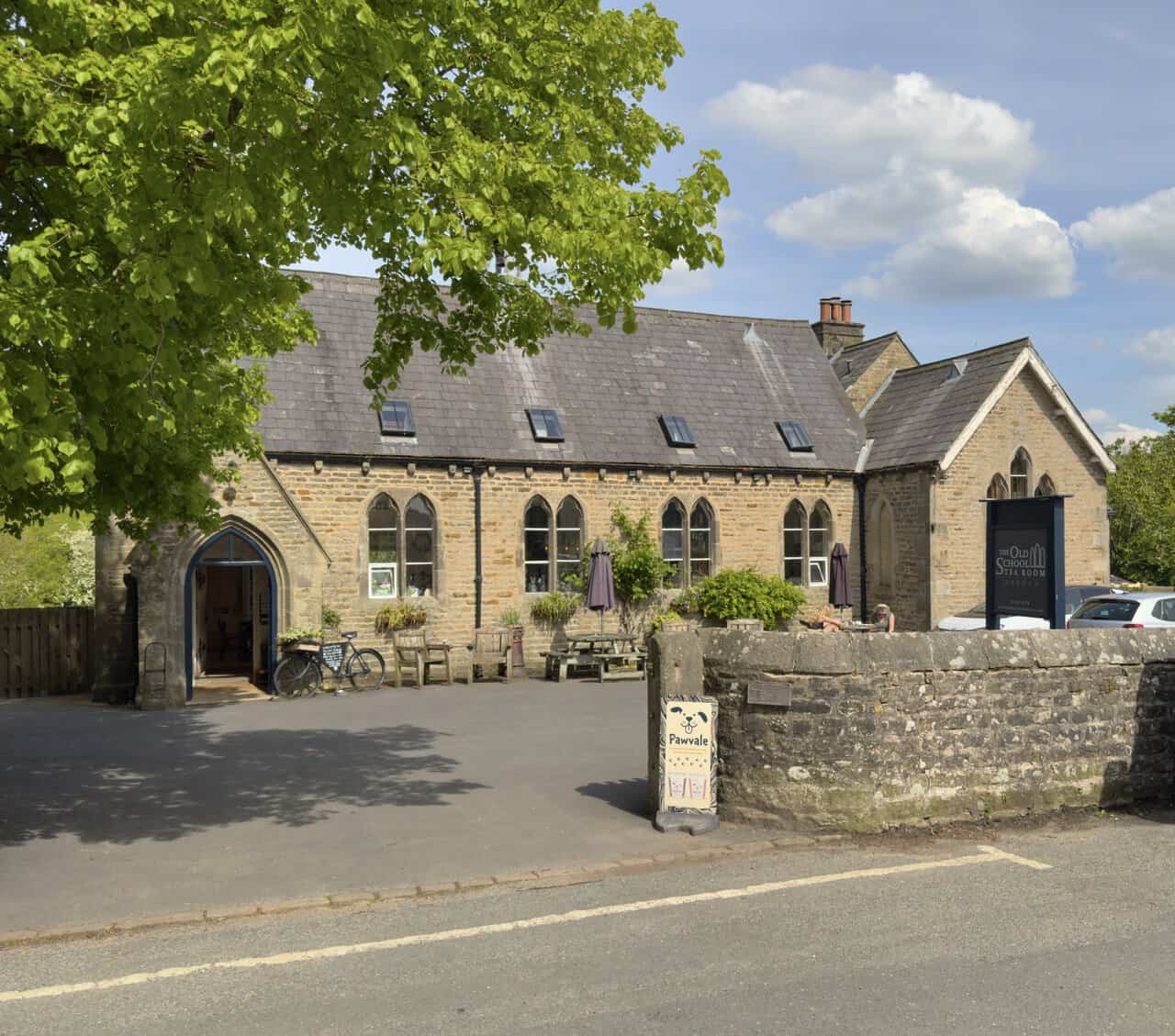
This Hebden circular walk begins in the village of Hebden, just off the B6265 in the Yorkshire Dales. Start from Main Street, where you’ll find plenty of roadside parking alongside the dry stone wall opposite Green Terrace, or near The Old School Tea Room.
From your parking spot, walk back to the B6265 and turn left towards Grassington and Skipton. Continue past the Clarendon Hotel to the end of the village. Just after the coach garage, you’ll see two public footpaths on the right. Ignore the first, which is signposted to Tinkers’ Lane, and take the second, signposted to Grassington via High Lane.
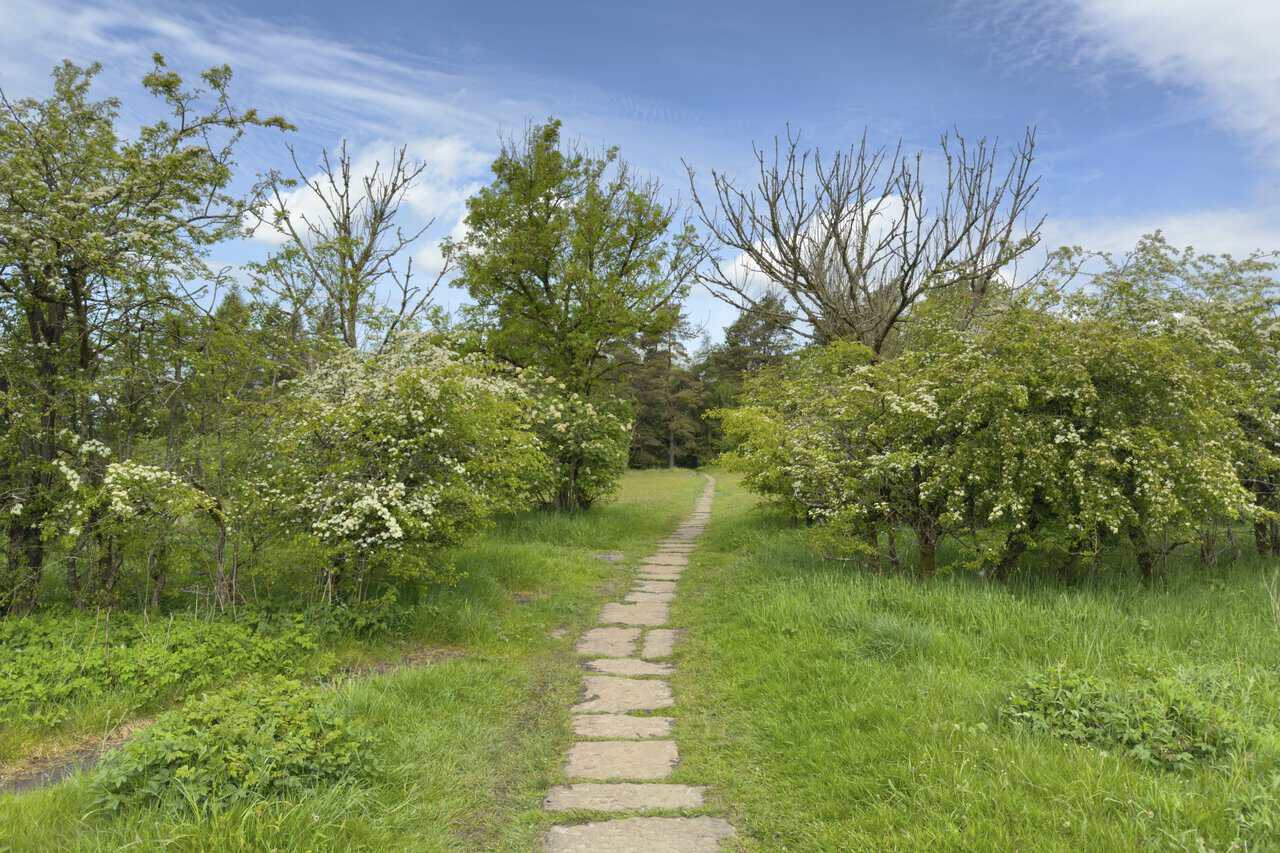
Follow the yellow waymarker arrows across several grassy fields, passing through gated gaps in the walls, for about half a mile until you reach a patch of woodland. An interpretation board confirms that you’ve entered Grassington Park Estate Meadows. At the crossroads on the edge of the woodland, continue ahead on the footpath signposted to Grassington. After leaving the woodland, keep to the flagged stone path straight ahead, then follow further yellow waymarkers through another stretch of woodland.
ADVERTISEMENT
Once you leave the Grassington Park Estate Meadows behind, carry straight on across more grassy fields, passing through gaps in the dry stone walls, some with stiles. The route is well marked with yellow arrows and wooden signposts. The path eventually joins a wider stone track called High Lane, which leads down towards Grassington and marks the next stage of this Hebden circular walk.
The track brings you out onto Low Lane. Turn right here and follow the road downhill to the front of Grassington Town Hall, which also doubles as the Devonshire Institute. Turn left onto Main Street and walk all the way down through the village, past the shops, cafés and pubs, until you reach the B6265, also known as Hebden Road.
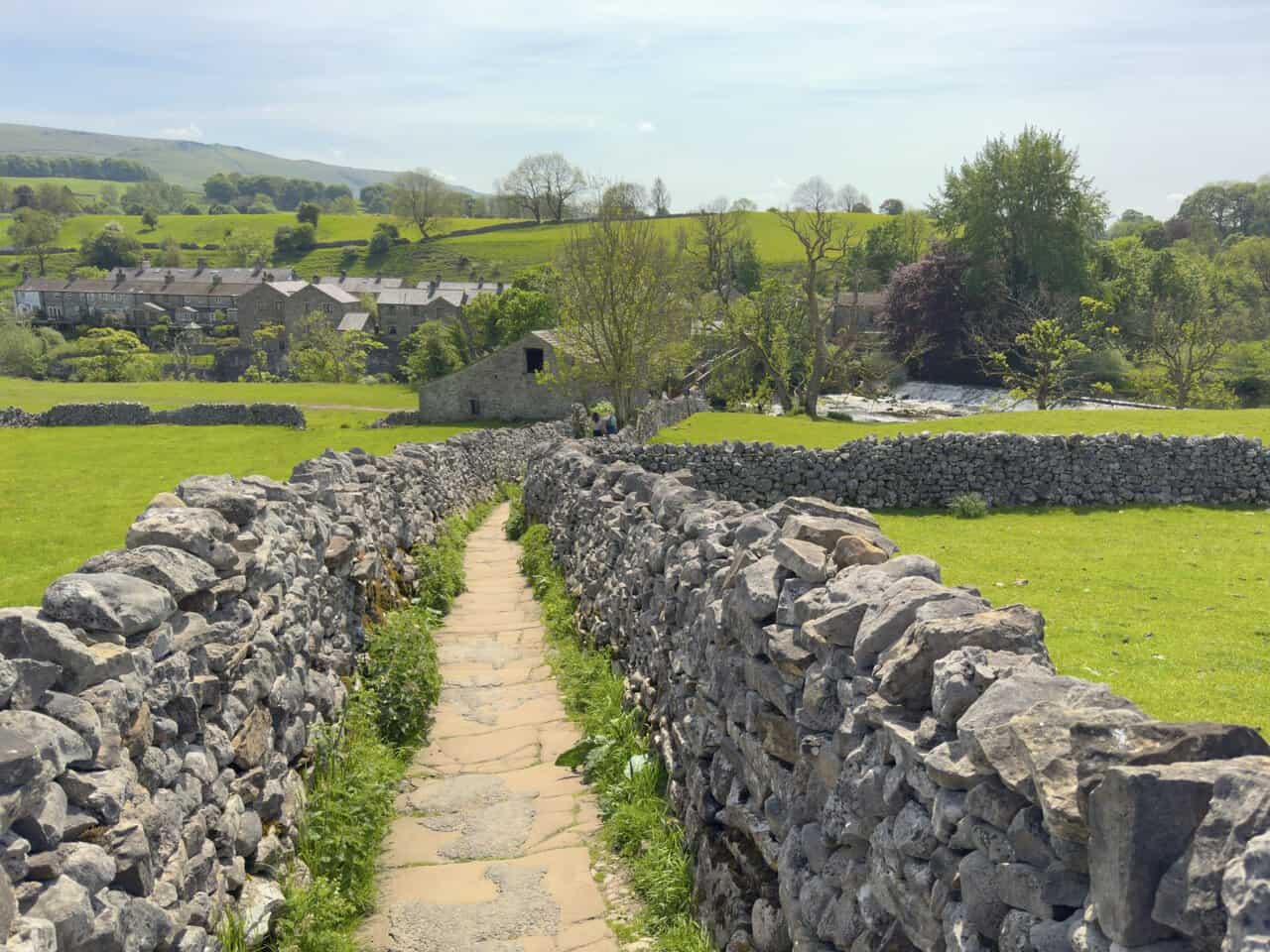
At Hebden Road, turn left, following signs to the national park visitor centre car park. Walk along the road, then use the pedestrian crossing to enter the Yorkshire Dales National Park car park. Head across the car park to the far left-hand corner at the bottom, where you’ll find a sign for Linton Falls. Follow the path between the dry stone walls down towards the falls. Just before the bridge over the River Wharfe, turn left, following the footpath signposted as the Dales Way to Hebden and Burnsall.
ADVERTISEMENT
Cross the fields to a tarmac lane and turn right, still following the signs for Hebden and Burnsall. The lane eventually narrows into a footpath running alongside the river. At the next junction, three options are signposted: Linton Church via the stepping stones, the Dales Way to Burnsall, and the public footpath to Hebden. Take the middle route, signposted as the Dales Way to Burnsall.
The riverside section is one of the most scenic parts of this Hebden circular walk. Continue along the footpath beside the River Wharfe. After about a mile and a quarter, you’ll reach Hebden Suspension Bridge. Don’t cross it. Instead, turn left, following the signpost to Hebden. Very shortly afterwards, you’ll come to a narrow tarmac lane called Mill Lane. Turn right and follow Mill Lane to the bridge over Hebden Beck.
At the bridge, turn left, where a sign indicates a public footpath to Hebden and Bank Top. Walk between the two houses and follow the path up through the woodland into open meadowland, then over the footbridge across Hebden Beck near the weir. Continue up the valley, gradually climbing on the left-hand side, until you arrive back on Main Street in Hebden. The path emerges by The Old School Tea Room and your parking area, completing this Hebden circular walk.
Hebden Circular Walk: Maps and Tools
Visit either the OS Maps website or the Outdooractive website to view this walking route in greater detail. Both platforms offer a range of features, including the ability to print the route, download it to your device, and export the route as a GPX file. You can also watch a 3D fly-over and share the route on social media. Additionally, this page includes a printable version of the walk in PDF format. Plus there is a supporting video, available for you to watch on YouTube.
Hebden Circular Walk: Distance, Duration, Statistics
Distance: 4¾ miles
Distance: 7½ kilometres
Duration: 2¼ hours
Ascent: 439 feet
Ascent: 134 metres
Type: Circular walk
ADVERTISEMENT
Recommended Ordnance Survey Map
The best map to use on this walk is the Ordnance Survey map of the Yorkshire Dales Southern & Western Area, reference OS Explorer OL2, scale 1:25,000. It clearly displays footpaths, rights of way, open access land and vegetation on the ground, making it ideal for walking, running and hiking. The map can be purchased from Amazon in either a standard, paper version or a weatherproof, laminated version, as shown below.
Standard Version
Yorkshire Dales Walking Guidebooks
Walking in the Yorkshire Dales: South and West, by Jan and Dennis Kelsall, describes 44 circular day walks of 3.5 to 13 miles across Wharfedale, Littondale, Malhamdale, Dentdale and Ribblesdale, plus the Yorkshire Three Peaks Challenge, with Ordnance Survey mapping and notes on parking and refreshments.
Short Walks Yorkshire Dales, by Rachel Crolla and Carl McKeating, covers the area around Grassington, Skipton, Malham and Ilkley. Its 15 routes of 2.5 to 6 miles each take under three hours, ideal for families or a relaxed half day out. Both books can be purchased from Amazon, as shown below.
Walking the Yorkshire Dales
About Hebden
Hebden is a small village and civil parish in North Yorkshire, tucked into Wharfedale within the Yorkshire Dales National Park. Sitting near Grimwith Reservoir and just under two miles east of Grassington, the village had a population of 246 at the 2011 census and forms one of four villages within the ecclesiastical parish of Linton. The B6265 runs through Hebden on its east-west route between Grassington and Pateley Bridge, while Main Street, the village’s high street, continues south as Mill Lane towards the River Wharfe and the neighbouring villages of Hartlington and Burnsall.
Related Walk: Similar to the Hebden Circular Walk
Explore the Barden Moor walk with stunning reservoirs and open moorland
The history of Hebden stretches back thousands of years, with Bronze Age stone circles on the surrounding moors and a hoard of 33 Roman silver coins discovered in a local field, now on display at the Craven Museum & Gallery in Skipton. The village is recorded in the Domesday Book of 1086 as Hebedene, and its name is thought to come from Old English words for either a rose-hip valley or a bramble valley. During the 19th century, Hebden grew into a busy industrial community thanks to lead mining on Grassington Moor and a three-storey textile mill built in 1792 beside Hebden Beck. The mining prosperity led to much of the village being rebuilt, with Green Terrace, the old village school and the Methodist Chapel all dating from this period.
Today Hebden is a quiet, welcoming community designated as a conservation area, with working farms, an inn, a tea room and a community hall. It serves as a popular base for walkers and cyclists exploring Upper Wharfedale, with the Dales Way passing through the parish along the banks of the River Wharfe. Among the village’s most recognisable landmarks are the Hebden Suspension Bridge, built in 1885 by local blacksmith William Bell using recycled materials and paid for by public subscription, and St Peter’s Church, a Grade II listed Gothic Revival building completed in 1841. A gold-painted post box near the old post office commemorates rowing gold medallist Andrew Triggs Hodge, who grew up in the village and won at the 2012 Olympic Games.
Hebden Circular Walk: My Photos
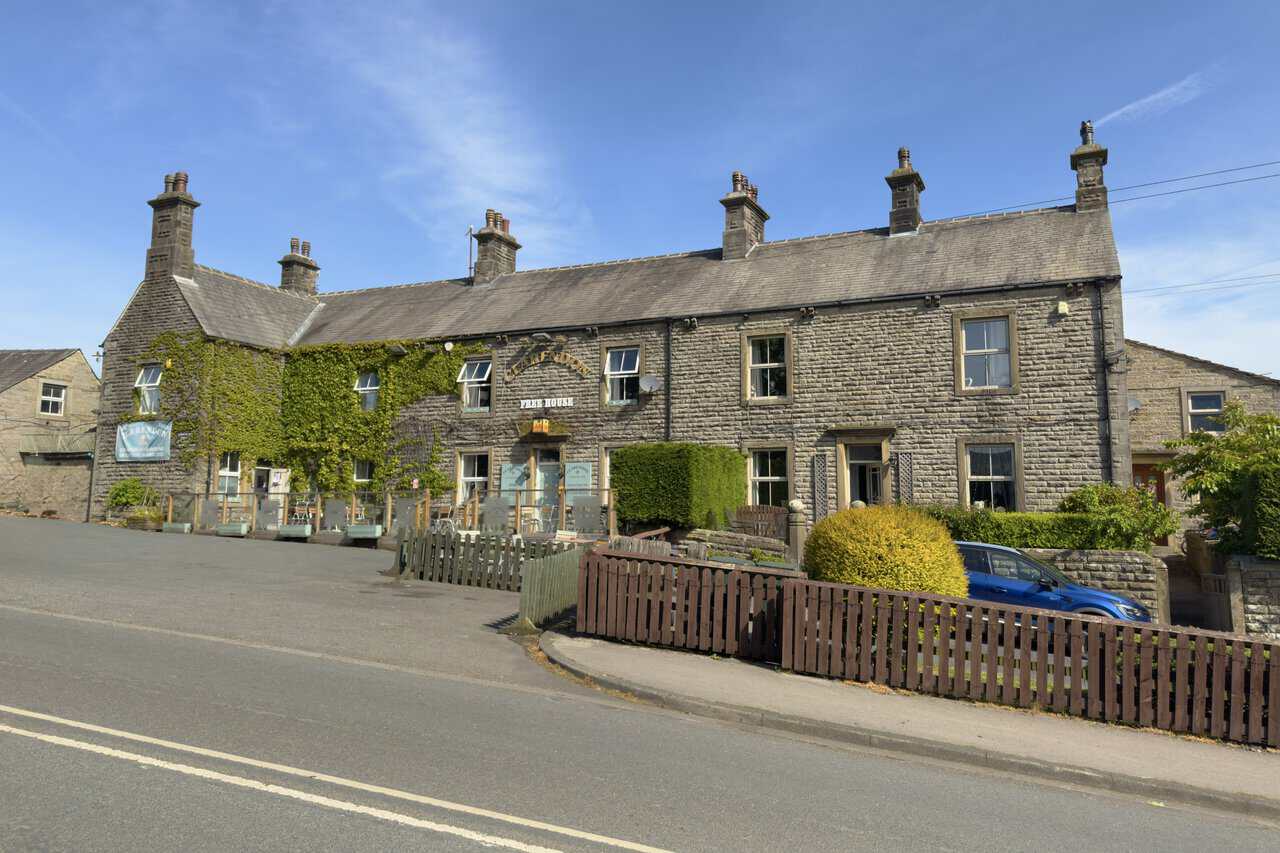
After parking on Main Street, I set off on my Hebden circular walk and soon pass the Clarendon Hotel as I make my way through the village. This stone-built country inn was first established in 1753 and has operated under various names down the years, finally adopting the Clarendon name in 1901. Its ivy-covered frontage and traditional Dales character mark it out as a fine opening landmark for the day.
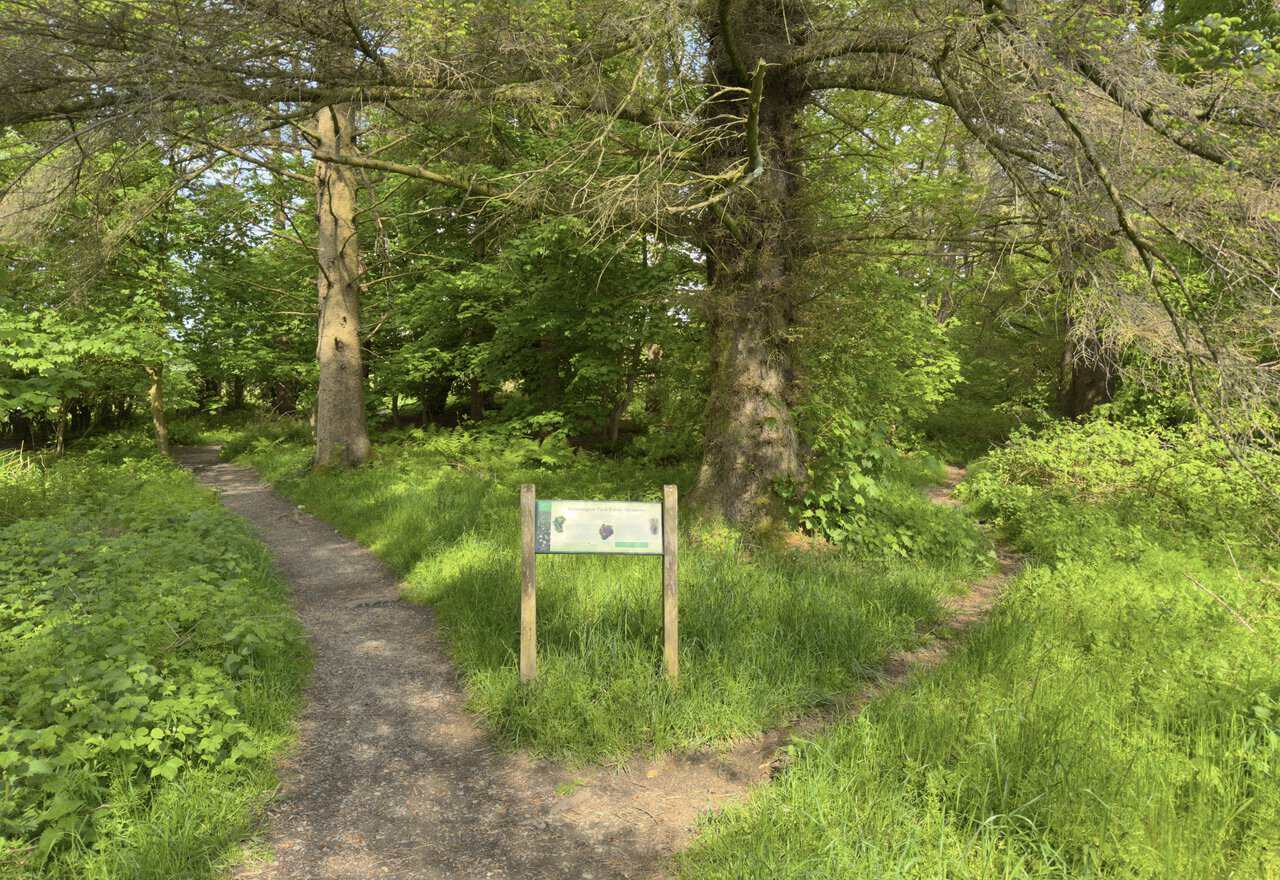
Leaving Hebden behind me, I cross a series of grassy fields before arriving at a patch of woodland, where an interpretation board introduces me to Grassington Park Estate Meadows. According to the board, these flower-rich meadows have been classified as a Site of Special Scientific Interest, thanks to the remarkable variety of plant life found here. A recent survey identified more than fifty species, with eleven different types of grass alone.
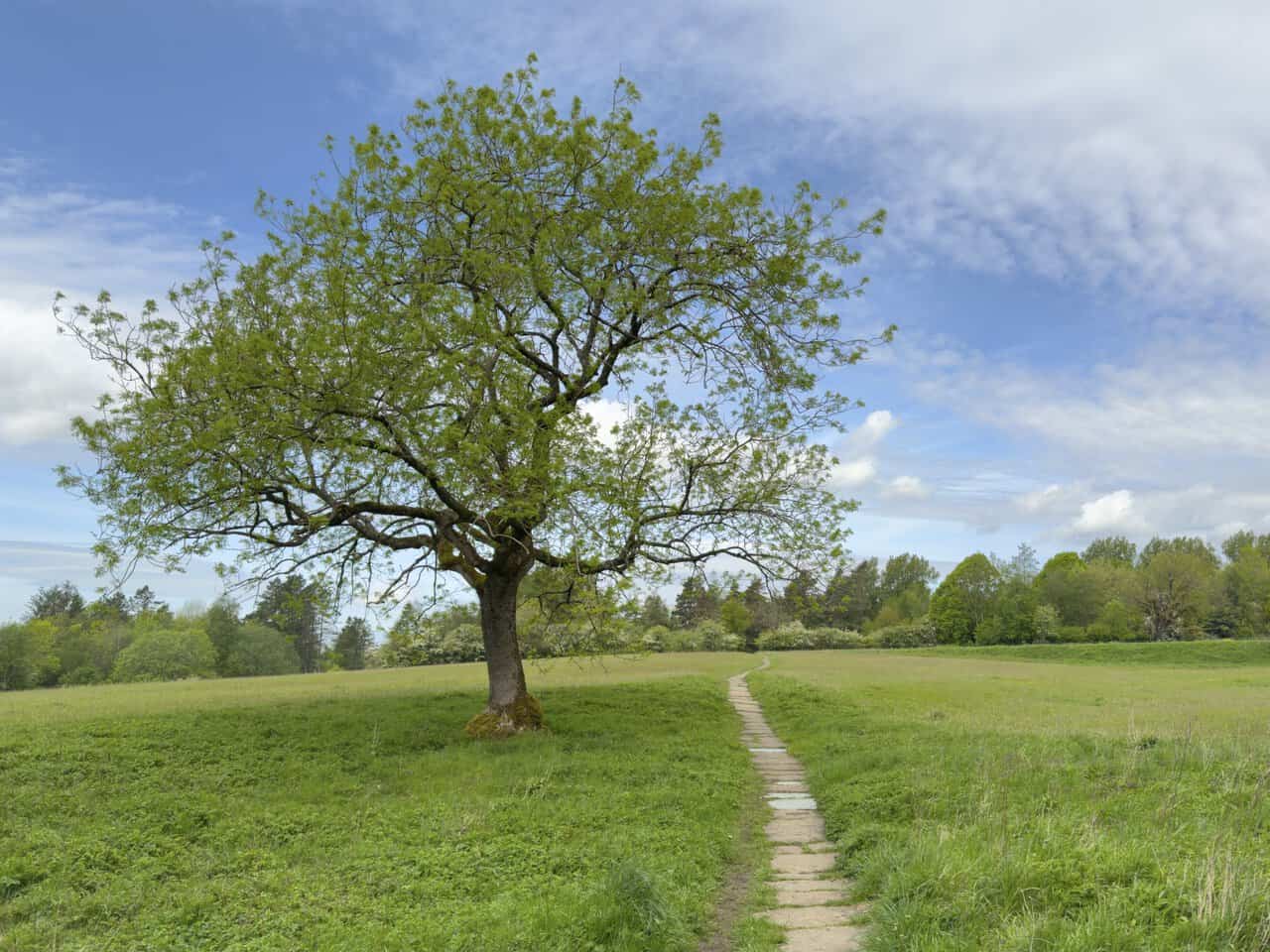
The path then opens out into the meadow itself, where a beautifully shaped solitary tree stands close to the route. A flagged stone path winds gently through the long grass, laid down to shield the rare wildflowers below from the wear of walkers’ boots. At the height of flowering, the field turns into a sea of white oxeye daisies, deep red great burnet, purple self-heal and the vivid yellow of rough hawksbit.
Up ahead, the flagged path runs between hawthorn trees laden with creamy white blossom. The hay harvested from these meadows is still fed to local sheep and cattle, yet the flowers themselves once carried meaning in their own right. Two varieties of lady’s mantle grow here, and the plant’s Latin name, Alchemilla, traces back to medieval alchemy, when the silvery dewdrops gathering on its hairy leaves were believed capable of helping to turn ordinary metals into gold. Nearly every flower I might come across in this meadow once had either a medicinal purpose or a folk tale attached to it.
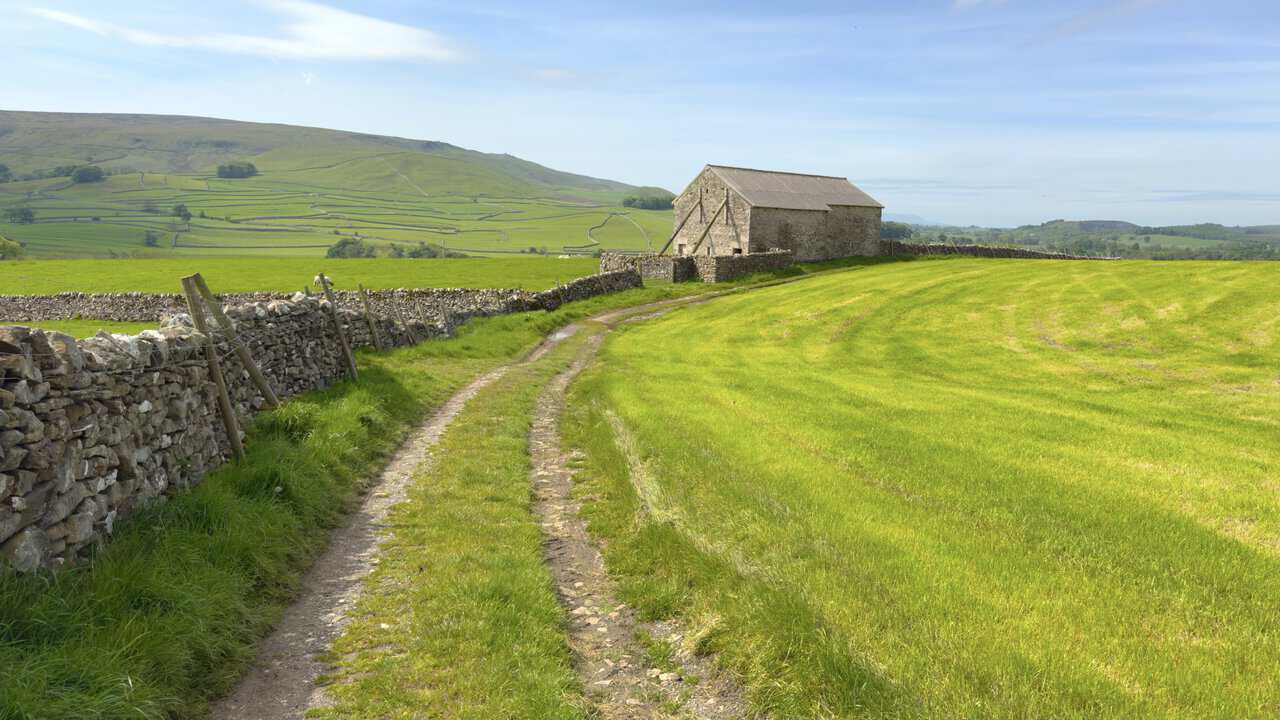
Beyond High Field Lathe, the footpath opens up to a glorious south-westerly view, and I stop for a moment during this Hebden circular walk to take it in. A stone barn occupies the middle of the scene, framed by the rolling hills of Barden Moor and a patchwork of dry stone walls climbing up the slopes. On the skyline, the obelisk crowning Cracoe Fell can just about be picked out, a gritstone war memorial put up in 1922 to commemorate the local men who gave their lives in the First and Second World Wars.
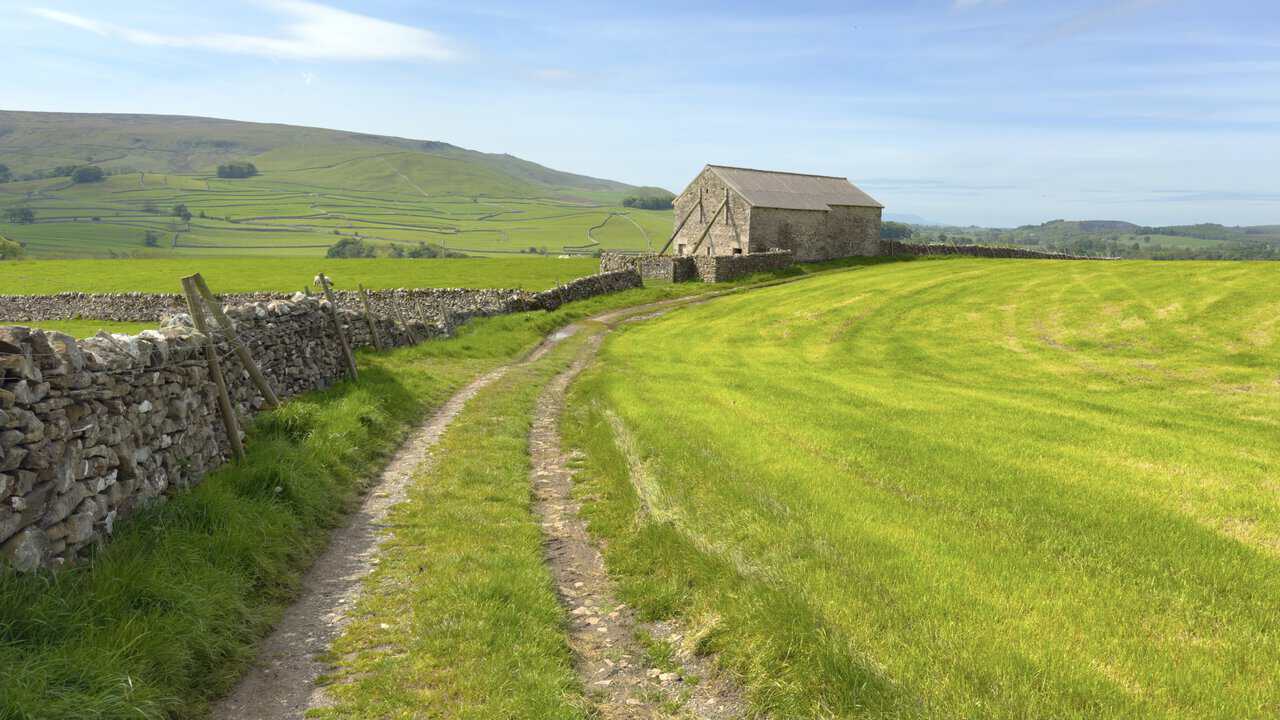
The path then joins High Lane, a broad stone track that will take me north-west and down into Grassington. Bordered on both sides by sturdy dry stone walls, the lane leads my gaze towards the distant horizon, where the hills of Kilnsey Moor and Malham Moor lift gently above the surrounding fields. It’s a quintessential Yorkshire Dales scene, and a lovely spot to pause and absorb it all.
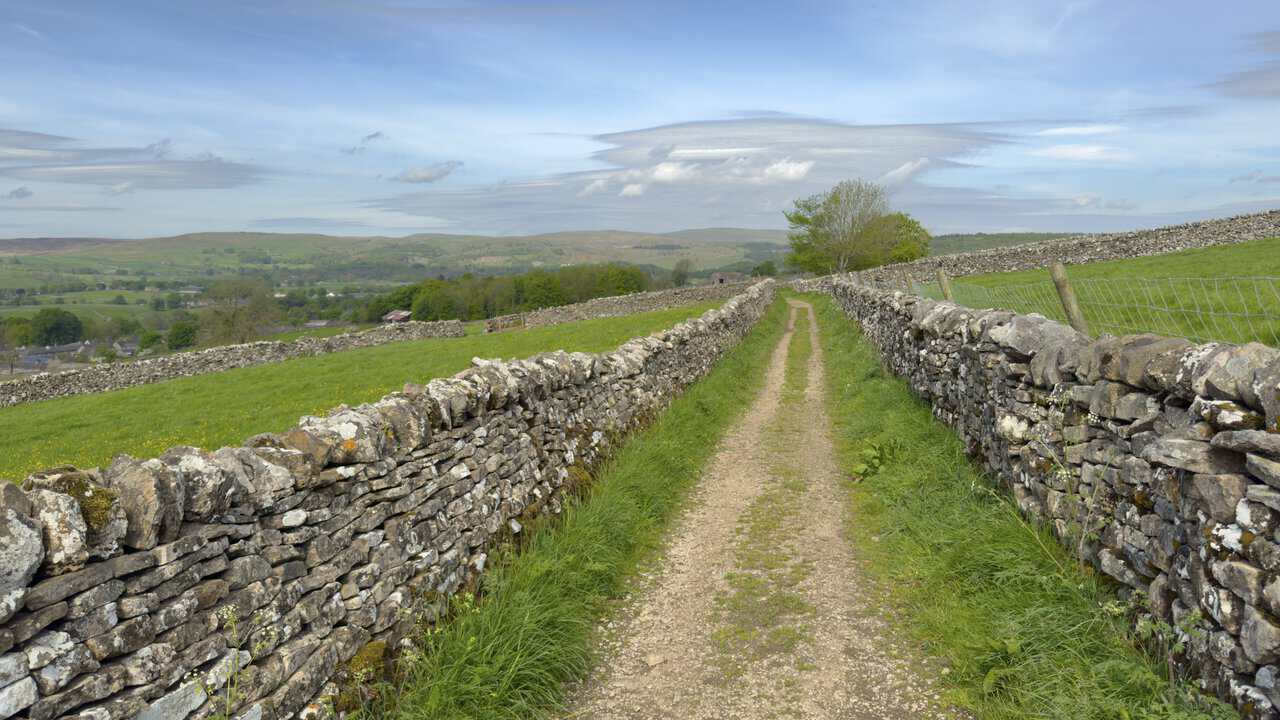
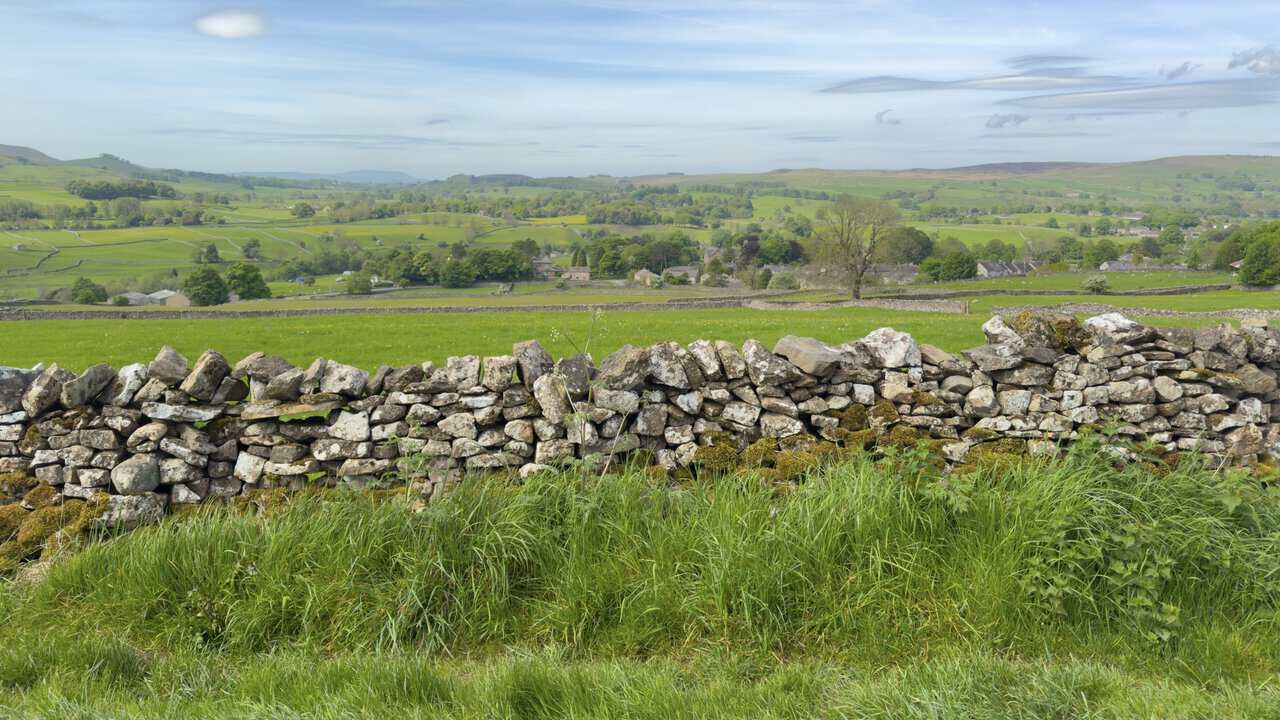
Looking over the wall to my left, the rooftops of Grassington start to appear, tucked into the patchwork of fields and trees. Further off, the distinctive outline of Pendle Hill rises faintly in the distance. Although Pendle actually lies just over the border in Lancashire, it can be glimpsed from many parts of the Yorkshire Dales on a clear day, making it a pleasant surprise to spot from this part of the route.
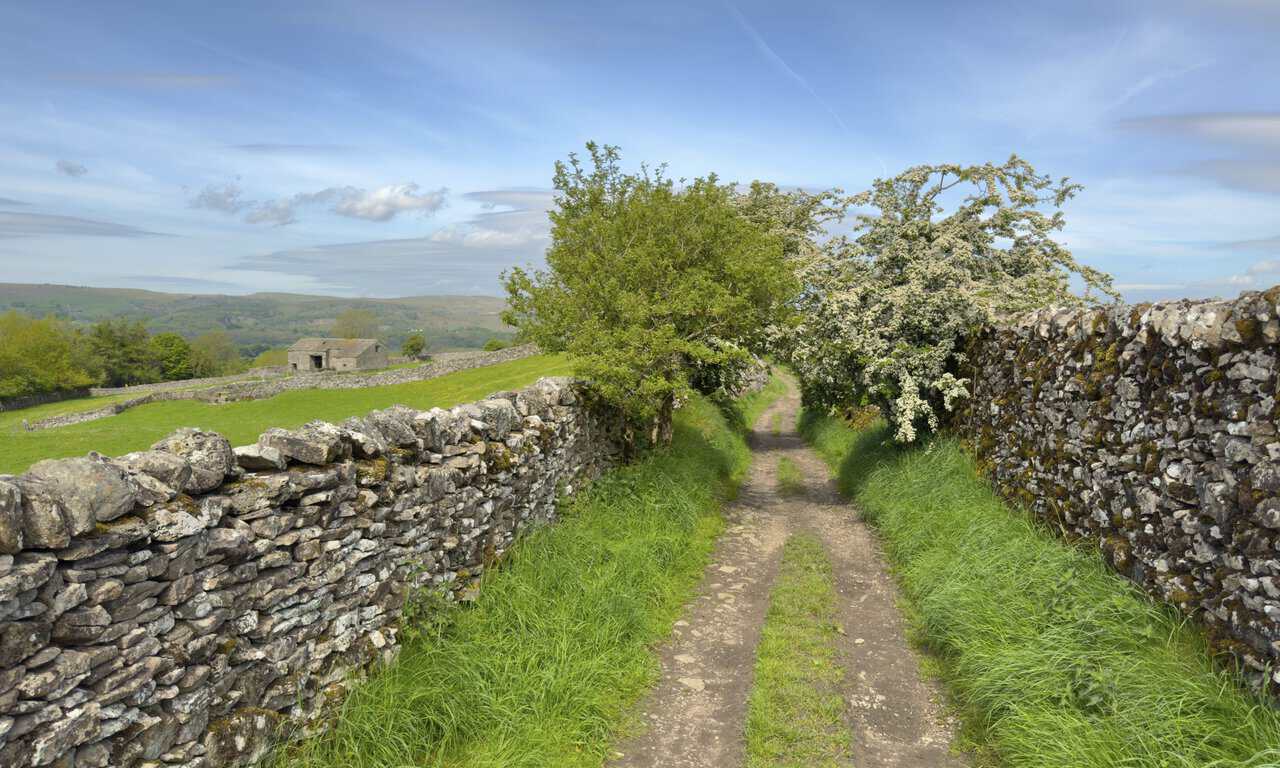
High Lane is easy going underfoot, broad and uncomplicated to walk. I’m particularly taken with how the hawthorn bushes lean in from either side, their creamy blossom creating a natural archway above the path. Beyond the wall on the left, a stone barn rests quietly among the fields, with the hills lifting softly into the distance.
As High Lane comes to an end, I find myself entering the upper edge of Grassington, where stone cottages topped with weathered slate roofs begin to come into view. The track will guide me down to Low Lane, from where I’ll continue along the road to the town hall at the northern end of the village.
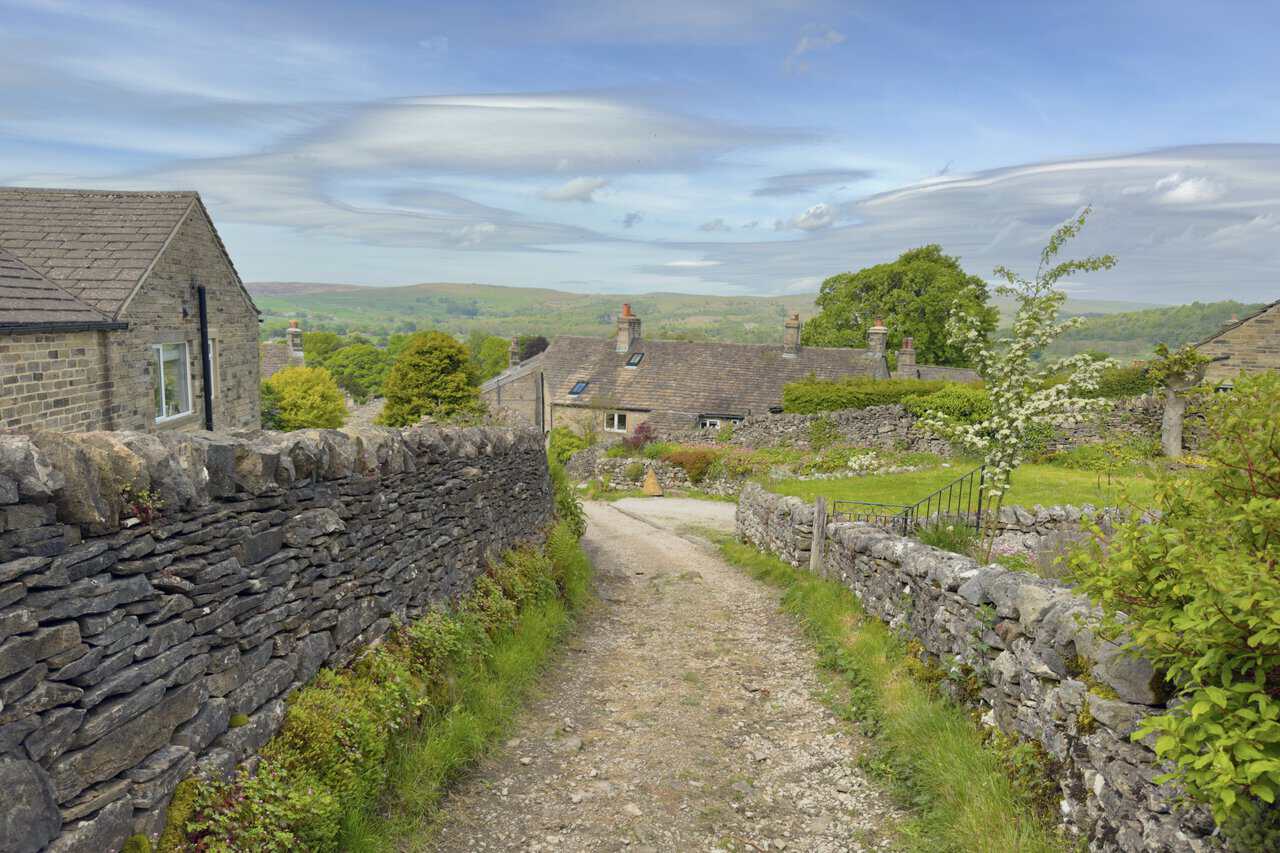
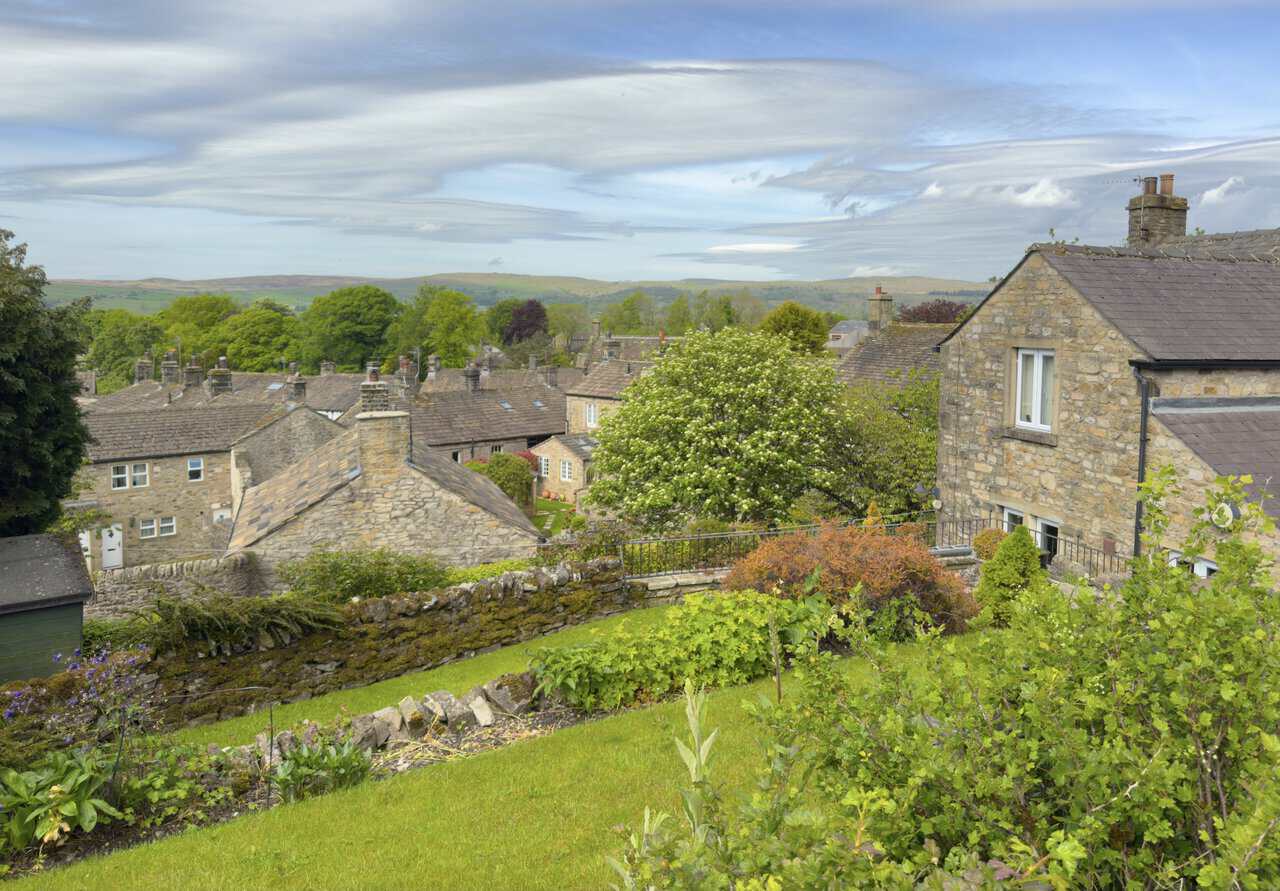
Heading downhill, I see the rooftops of Grassington spreading out to my left, the village nestled neatly into the bend of the dale on this Hebden circular walk. Chimneys, slate tiles and weathered stone gables sit clustered together in characterful groups, with mature trees softening the spaces in between. Beyond the village, the moors stretch gently towards the horizon, a reminder of just how perfectly Grassington belongs within its Yorkshire Dales setting.
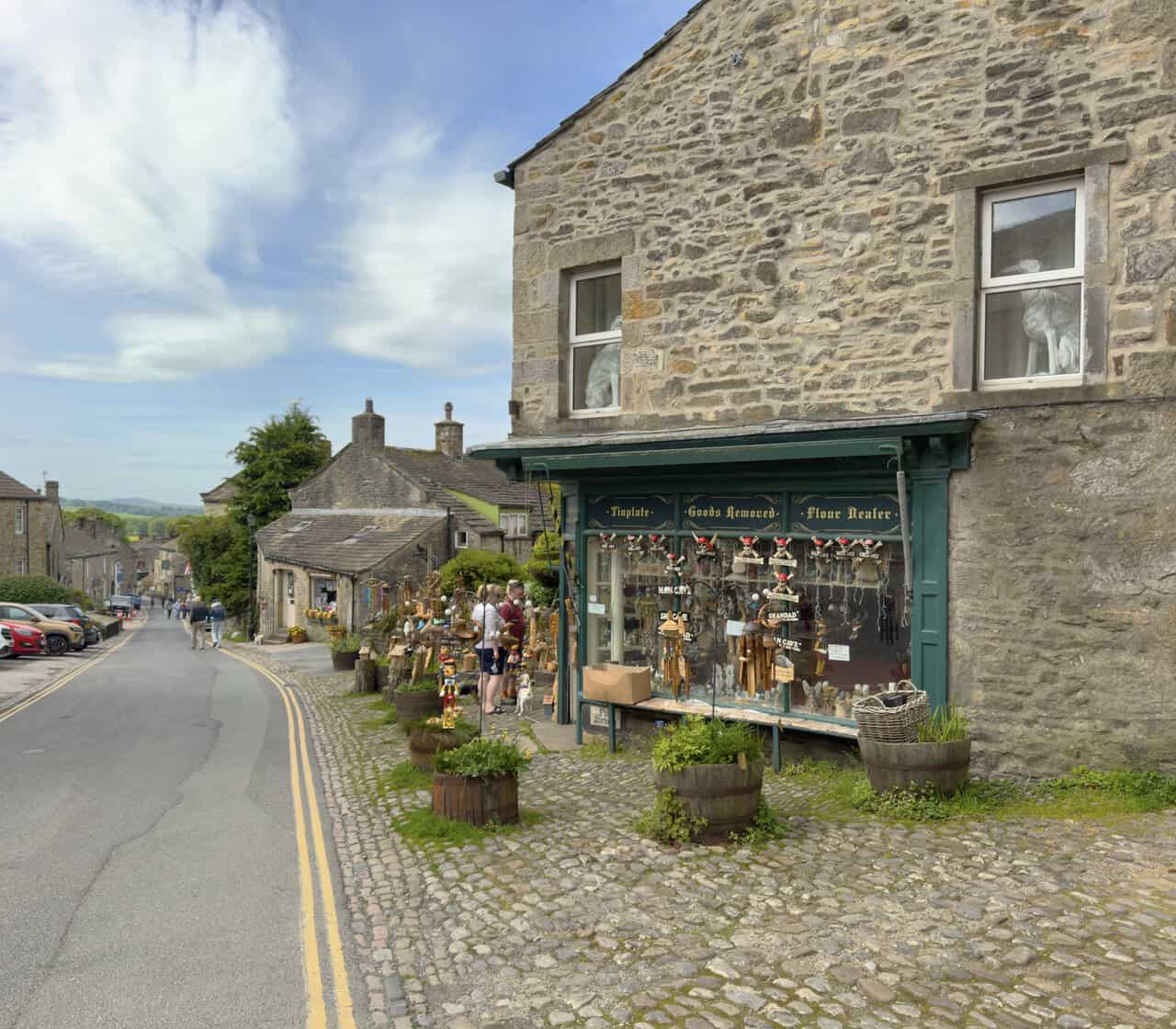
On reaching Main Street, I find myself walking through the very heart of Grassington, a former lead-mining village that has grown into a popular hub for both locals and visitors alike. Cobbled streets are lined with stone buildings from the 17th and 18th centuries, with traditional shopfronts opening directly onto the pavement. These days, lead has long since been replaced by crafts, cafés and warm hospitality, and the village has a welcoming, unhurried feel to it.
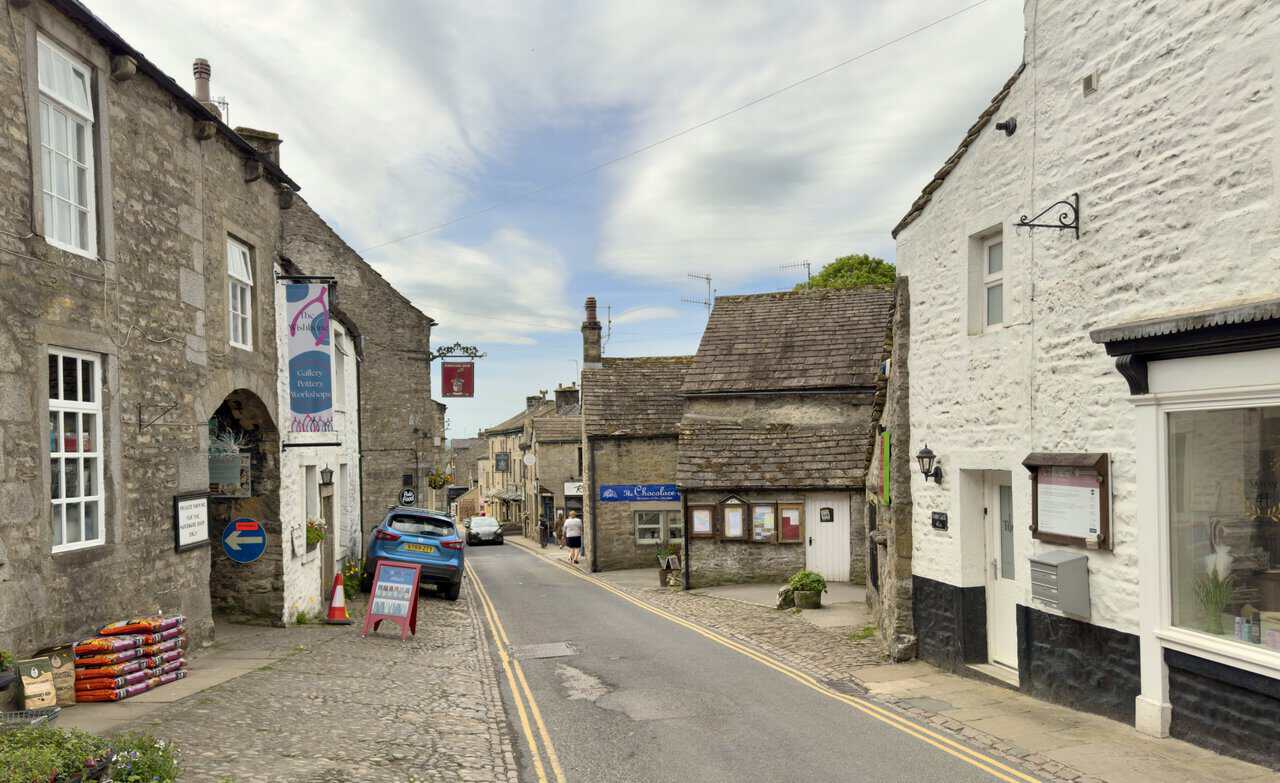
Independent retailers set the tone here, with art galleries, pottery workshops, gift shops, bookshops and craft outlets standing side by side. There are also chocolatiers, bakeries and outdoor clothing specialists, along with friendly cafés and traditional pubs. The Grassington calendar is just as lively, with a music and arts festival every June, a much-loved Dickensian Festival in December, and a 1940s weekend in September that gains more popularity each year.
At the heart of Grassington, the cobbled market square is home to the Upper Wharfedale Folk Museum, which traces the lead-mining, farming and cloth-making heritage of the village and the wider dale. Two and a half centuries back, this was a booming settlement with a reputation for being rather rough around the edges, before mellowing into the gentle character it has today. There’s something timeless about strolling past these weathered stone walls and characterful shopfronts.
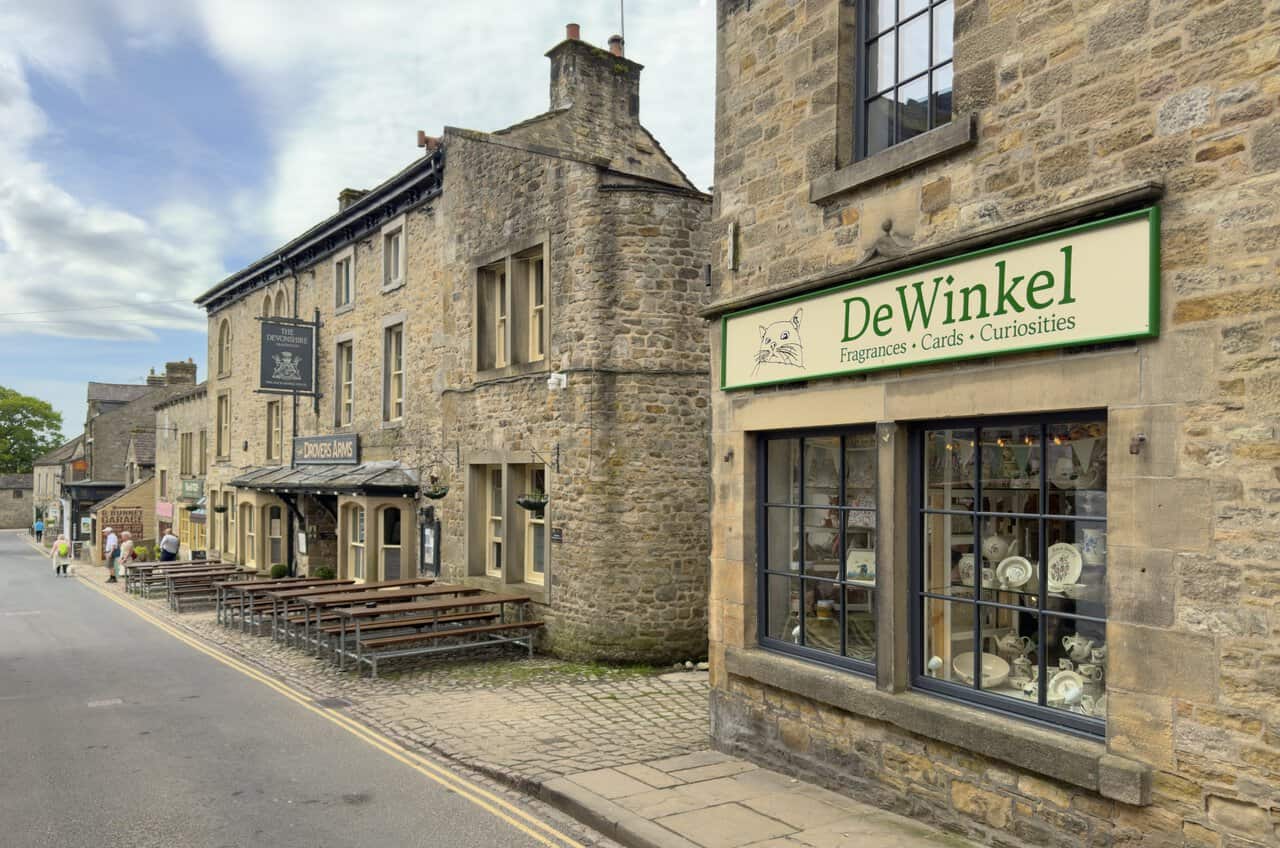
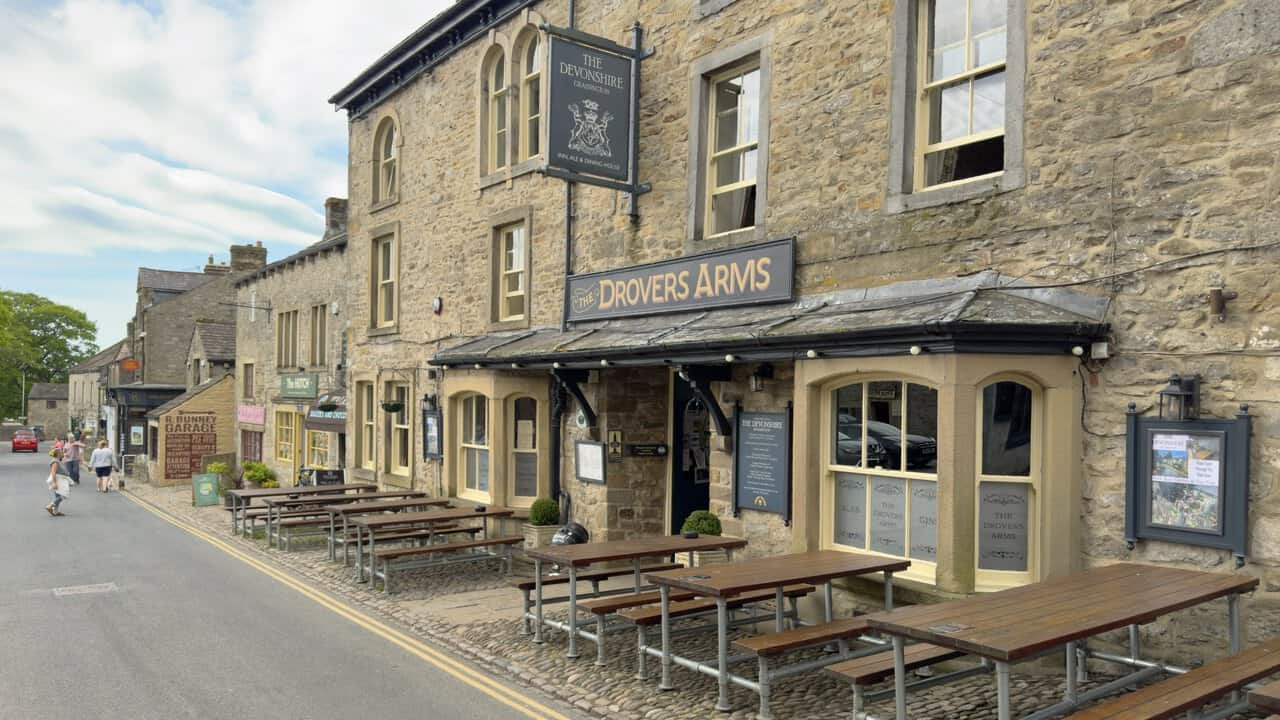
Towards the lower end of the square stands The Devonshire, a traditional inn serving Timothy Taylor’s real ales alongside locally sourced food. Many visitors will recognise it, as it appears as The Drovers Arms in Channel 5’s All Creatures Great and Small, with Grassington itself doubling as the fictional village of Darrowby. For filming, the exterior is dressed with period signage and props to recreate 1940s Yorkshire, and the pub now proudly displays both names in honour of its television role.
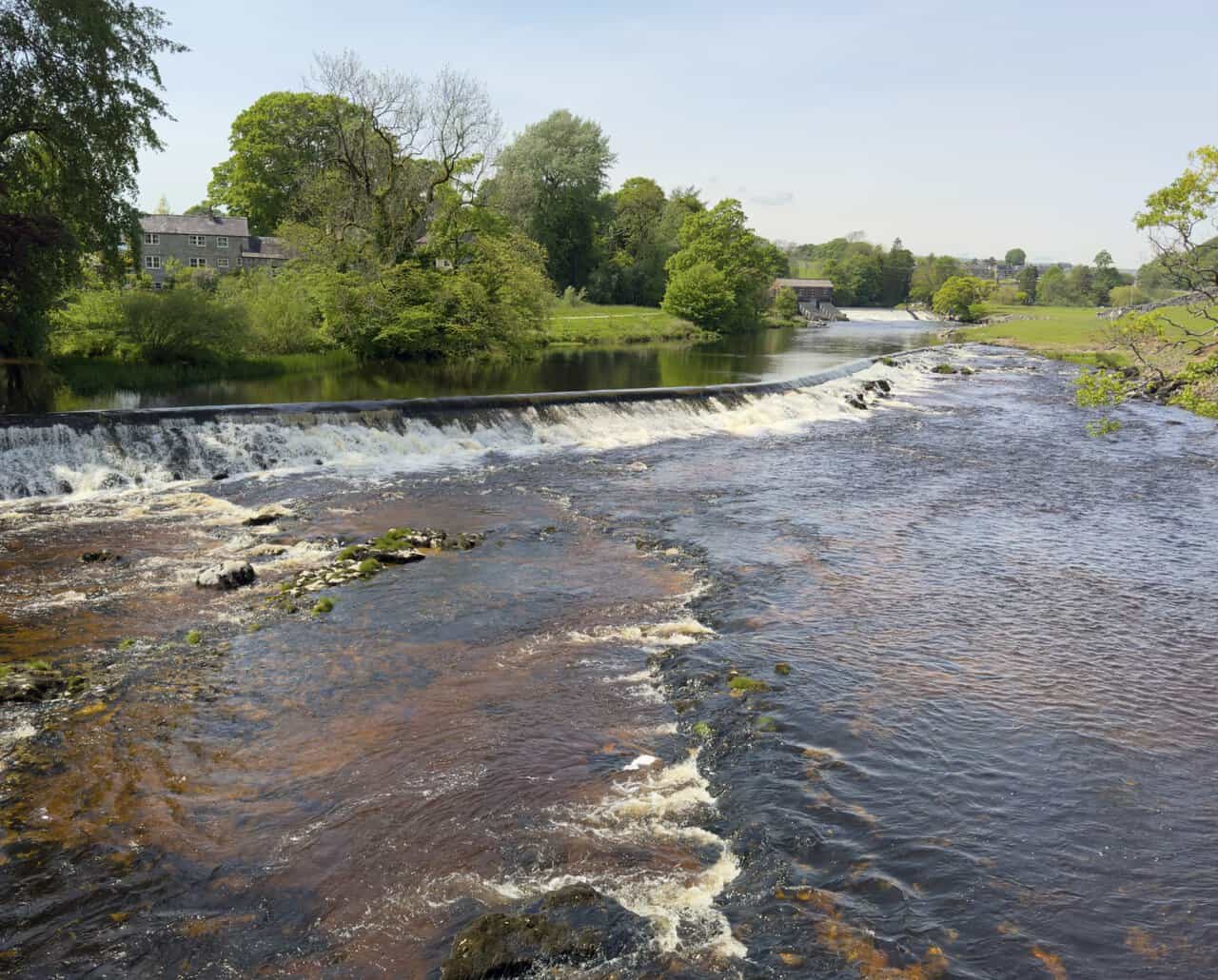
Setting off from the Yorkshire Dales National Park car park, I follow the well-known and much-photographed Sedber Lane footpath down to Linton Falls. It’s a popular path and beautifully picturesque, hemmed in on both sides by a dry stone wall. On the horizon, the obelisk atop Cracoe Fell can still be seen, a gritstone war memorial erected in 1922 in memory of the local men who lost their lives during the First and Second World Wars.
From the footbridge at Linton Falls, I look back to spot the Linton Falls Hydro, a small hydroelectric station nestled beside the upper weir. The red-brick turbine house was originally built in 1909 by the Grassington Electricity Supply Company, supplying the very first electric light to the village. The sloping turbine channels give it the unmistakable look of industrial heritage. While the original station ceased operating in 1948, when the National Grid finally reached the Dales, the building was given protection as a scheduled monument in 2001 and restored in 2012. Two Archimedean screw turbines now produce enough green electricity each year to power around ninety homes, giving this century-old site a worthy second lease of life.
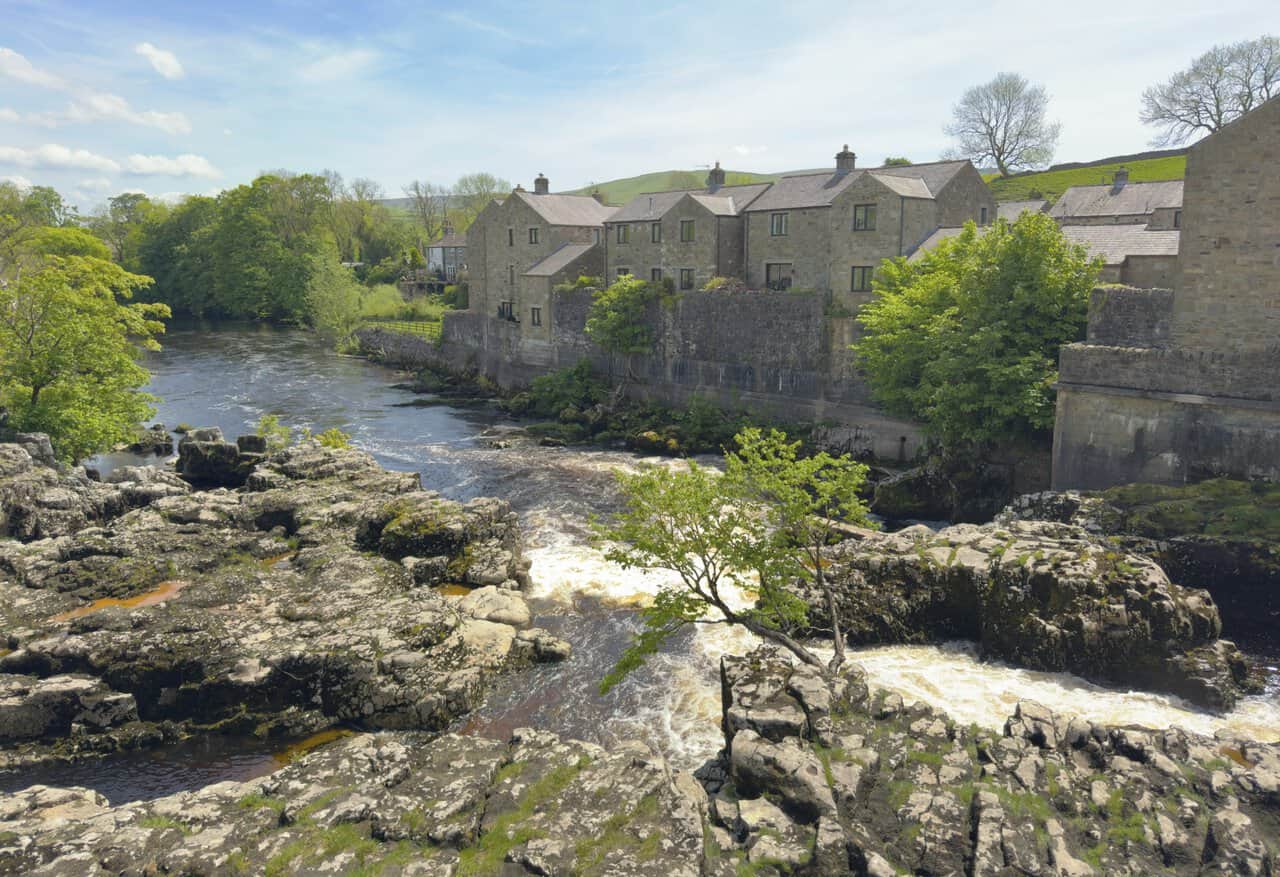
The view from the footbridge is one of the standout moments of the walk. Beneath me, the River Wharfe tumbles dramatically through channels cut deep into the limestone bedrock, marking one of the most easterly features of the Craven Fault. This series of geological fault lines shifted millions of years ago, lifting the limestone to the north higher than that to the south, and following heavy rain the water thundering beneath the bridge can be a truly awe-inspiring sight.
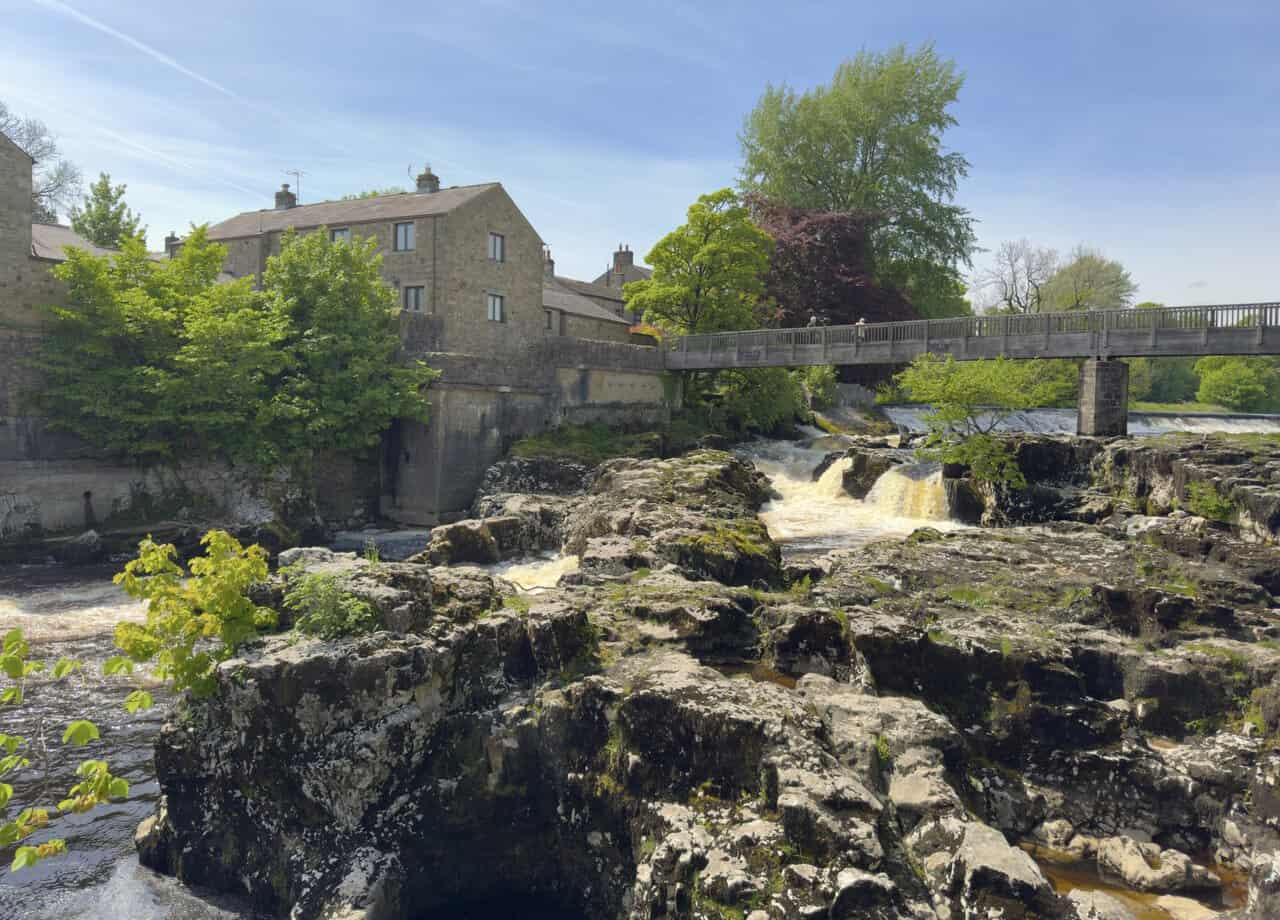
Looking back from the riverbank, I see the wooden footbridge again, with stone cottages clustered beside the falls. The nearby weirs once directed water into Linton Mill, a large textile mill that has long since been pulled down but which contributed much to the industrial history of this stretch of the Wharfe. Linton Falls ranks among the most memorable spots on my Hebden circular walk, and it’s difficult not to pause a little longer to soak it all in.
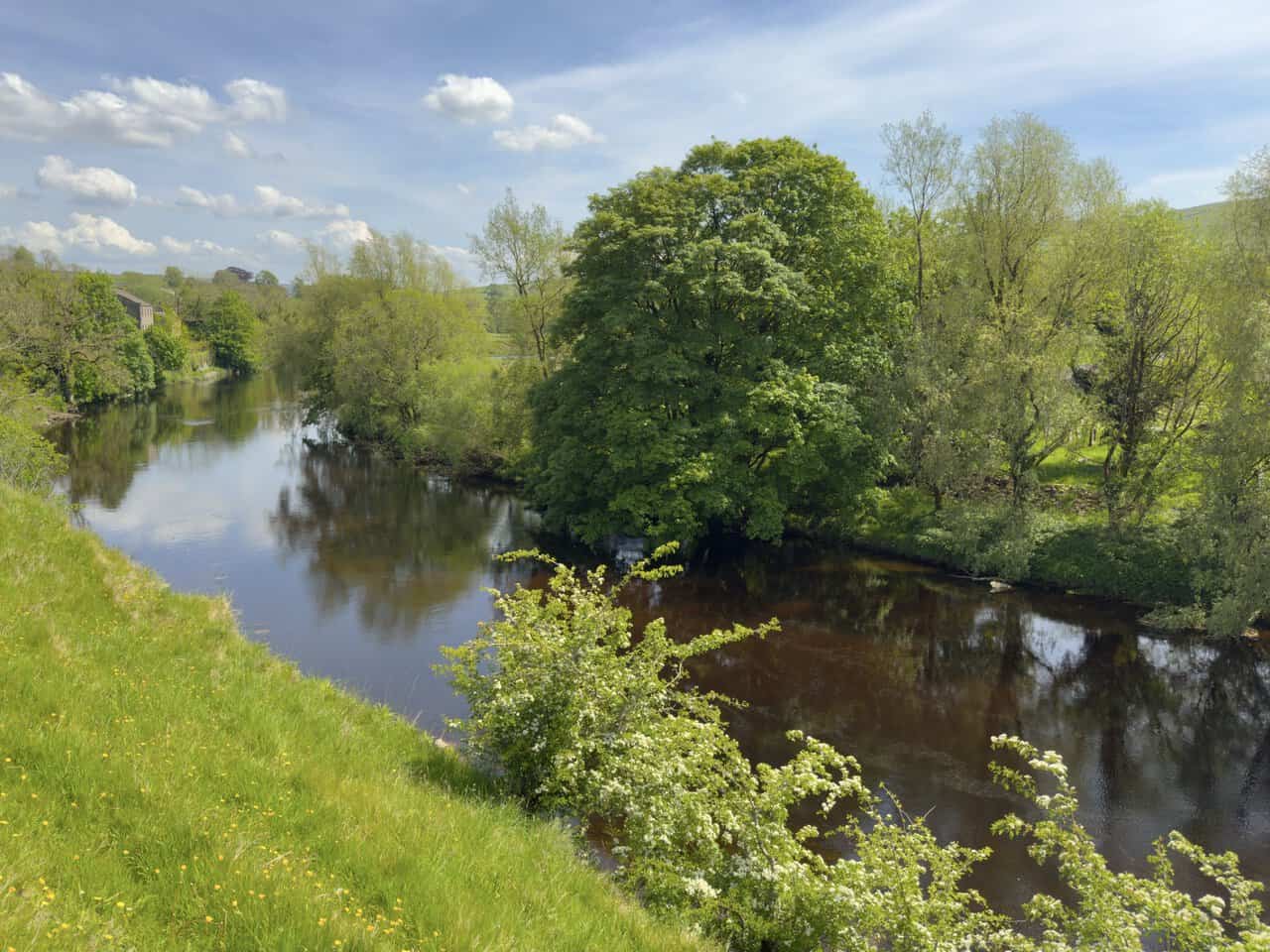
Continuing onwards along the Dales Way beyond Linton Falls, the River Wharfe becomes noticeably quieter, its surface settling into a smooth, mirror-like flow that mirrors the trees standing along the banks. Hawthorn blossom hangs gracefully over the water’s edge and grassy meadows roll back from the path, with the gentle hills of Wharfedale rising softly into view. After the drama of the falls, this calmer section provides a welcome contrast and a lovely place to walk.
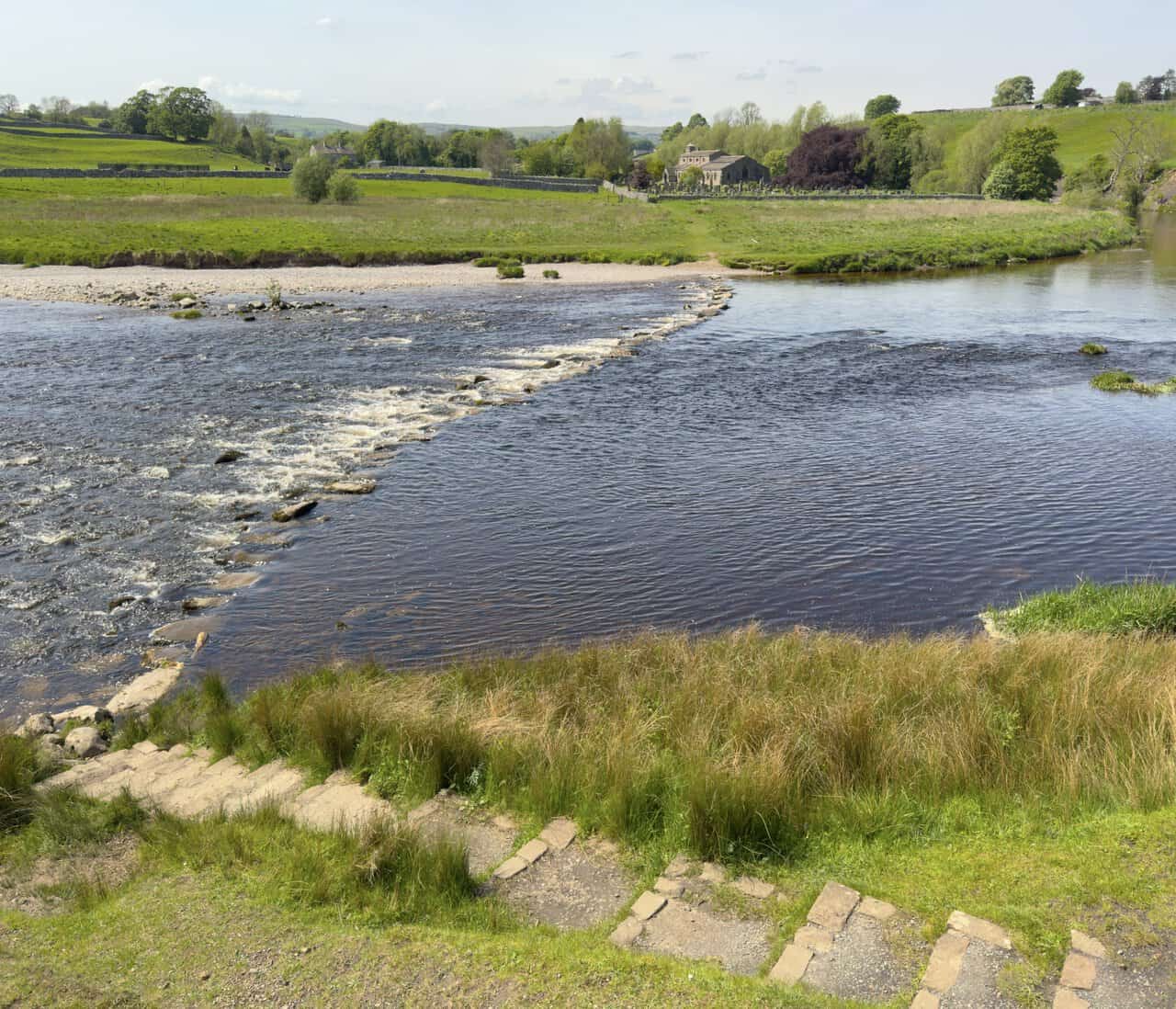
A short distance further on, I arrive at a junction where three routes are signposted: Linton Church via the stepping stones, the Dales Way to Burnsall, and the public footpath to Hebden. The middle route to Burnsall is the one I’ll be following on this Hebden circular walk, but the stepping stones across to Linton Church are simply too intriguing not to investigate. The river here is quite low, yet the stones still aren’t passable, which leaves me wondering just how seldom they can actually be crossed.
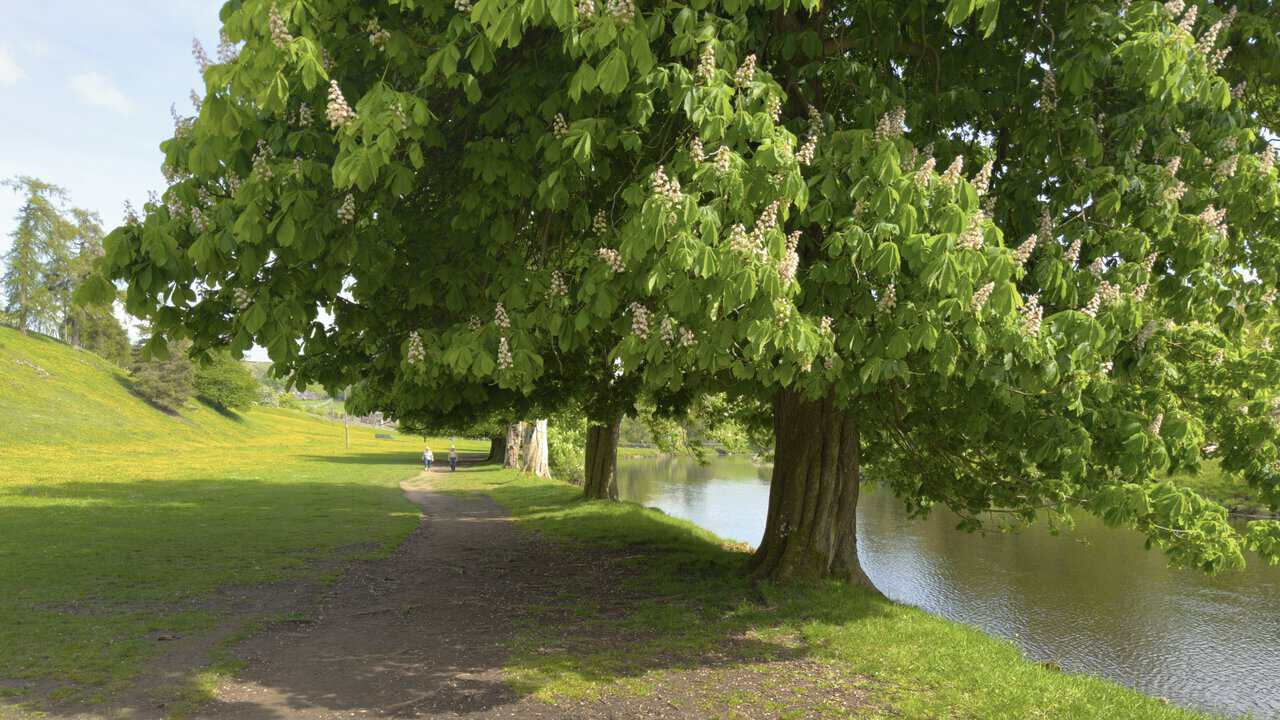
This stretch of the Dales Way running alongside the River Wharfe is an absolute pleasure to walk, and it’s plain to see why it’s such a well-loved route. A row of chestnut trees casts welcome shade across the path, their candle-like blossoms standing out beautifully against the fresh green leaves, while the river drifts quietly along to my right. With buttercups scattered through the meadow on one side and gentle reflections shimmering on the water, the going feels almost effortless as I head towards Hebden Suspension Bridge.
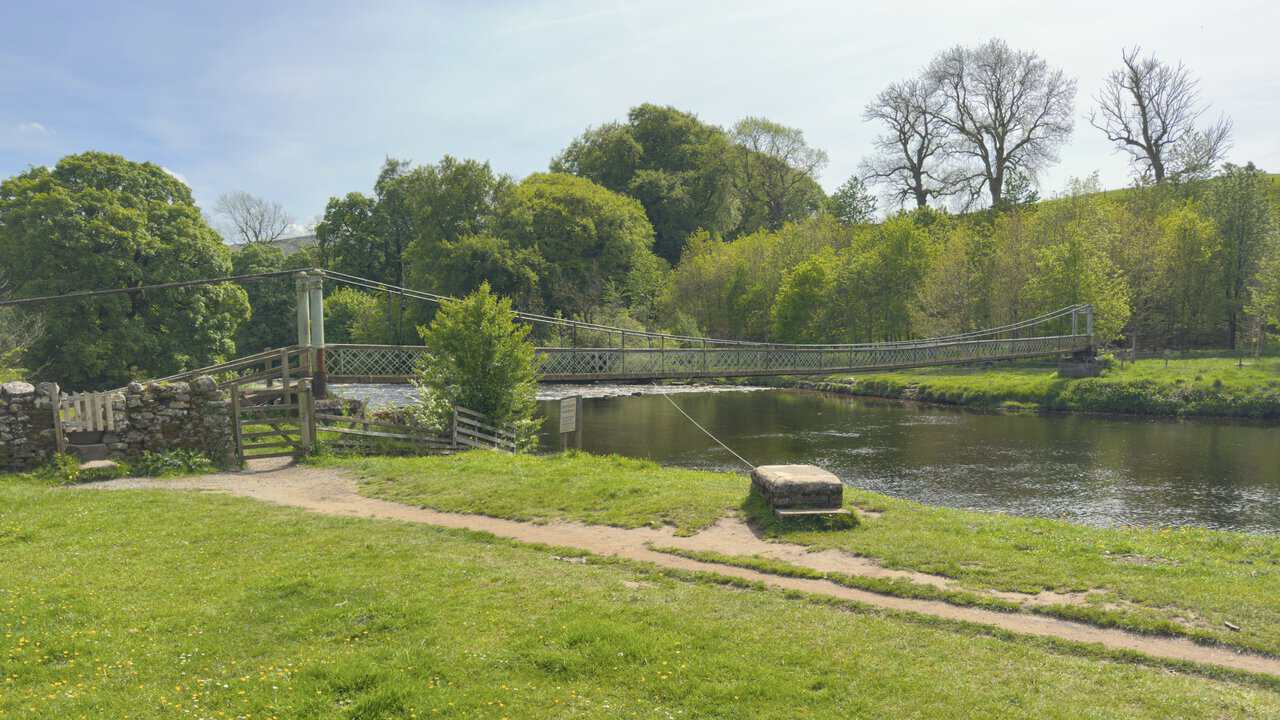
I reach Hebden Suspension Bridge, situated around half a mile south of Hebden village on this Hebden circular walk. The bridge was built in 1885 by local blacksmith William Bell, using 262 yards of surplus steel rope bought from the Hebden Moor Mining Company. Construction came in response to a storm two years earlier that had destroyed Burnsall Bridge, leaving villagers with restricted access across the river, with funds raised through public donations. Its opening was marked by a grand celebration, complete with a brass band and a public tea.
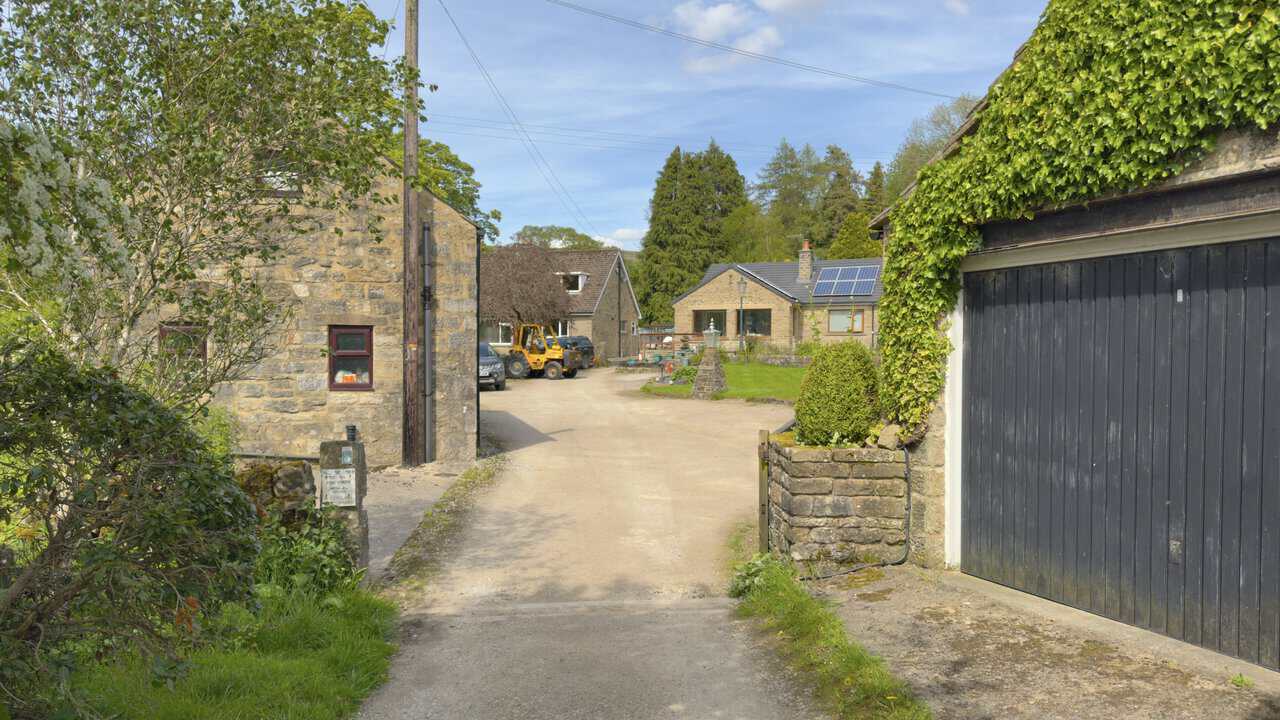
Leaving the bridge behind me, I follow Mill Lane for a short distance before turning onto a public footpath signposted to Hebden and Bank Top. At first, it feels somewhat as though I’m wandering onto private property, since the path runs down a driveway between two stone houses, with a clear sign reassuring walkers that this is indeed the correct way. A small stone post next to the bush politely requests that visitors stick to the footpath between the houses, with no cycling or running.
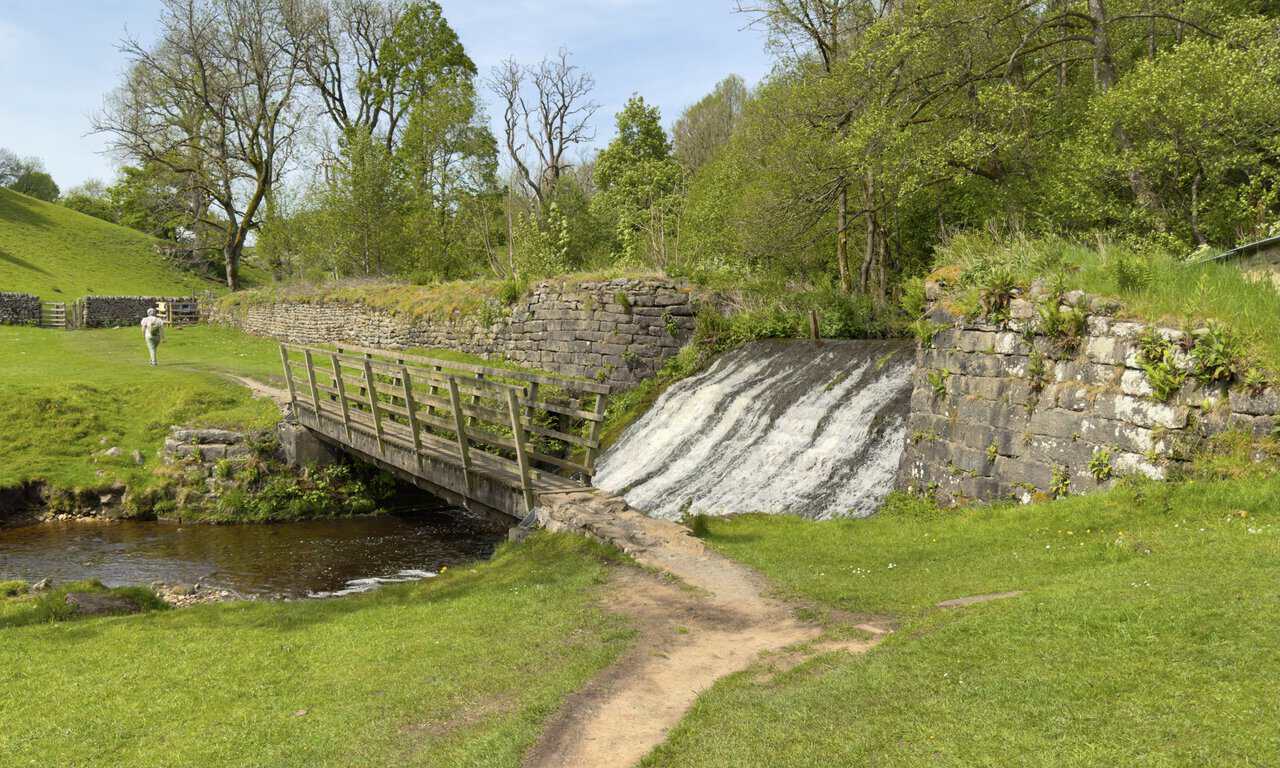
The trail back to Hebden takes a pleasant route through a shallow valley, eventually leading me to a picturesque wooden footbridge over Hebden Beck. A small weir sends white water tumbling down beside the bridge, with stone walls framing the scene and open meadowland stretching away on either side. It’s a peaceful little corner, and one that feels almost tucked away from the wider Yorkshire Dales landscape.
A gentle climb up the left-hand side of the valley returns me to Main Street in Hebden, with the path emerging right next to The Old School Tea Room. Housed in the village’s former schoolhouse and easily recognised by its Gothic-arched windows, the tea room offers homemade meals, cakes and afternoon teas, along with a tea garden that’s home to a pair of Pygmy goats. With my car parked just steps away, it’s the ideal place to finish off my Hebden circular walk with a well-earned cuppa.