ADVERTISEMENT
Discover Falling Foss and Littlebeck on Two Lovely North York Moors Walks
Falling Foss is a 67-foot waterfall hidden deep in the woods of the North York Moors, about five miles south of Whitby. It’s one of the loveliest spots in the national park, and you can reach it on a gentle woodland walk. I’ve written up two walks that visit the waterfall, and this guide brings them together in one place.
Both walks start at May Beck Car Park and follow the same path to the waterfall and the hamlet of Littlebeck. After that, you can choose how to finish. The first walk is linear, so you simply retrace your steps. The second is circular and returns over open fields and farm tracks.
In this guide, you’ll find out what makes the waterfall special and what you’ll see along the way. You’ll also see how the two walks compare, with practical tips on parking, maps and the best time to visit. Finally, a short set of questions and answers covers the things people most often ask.
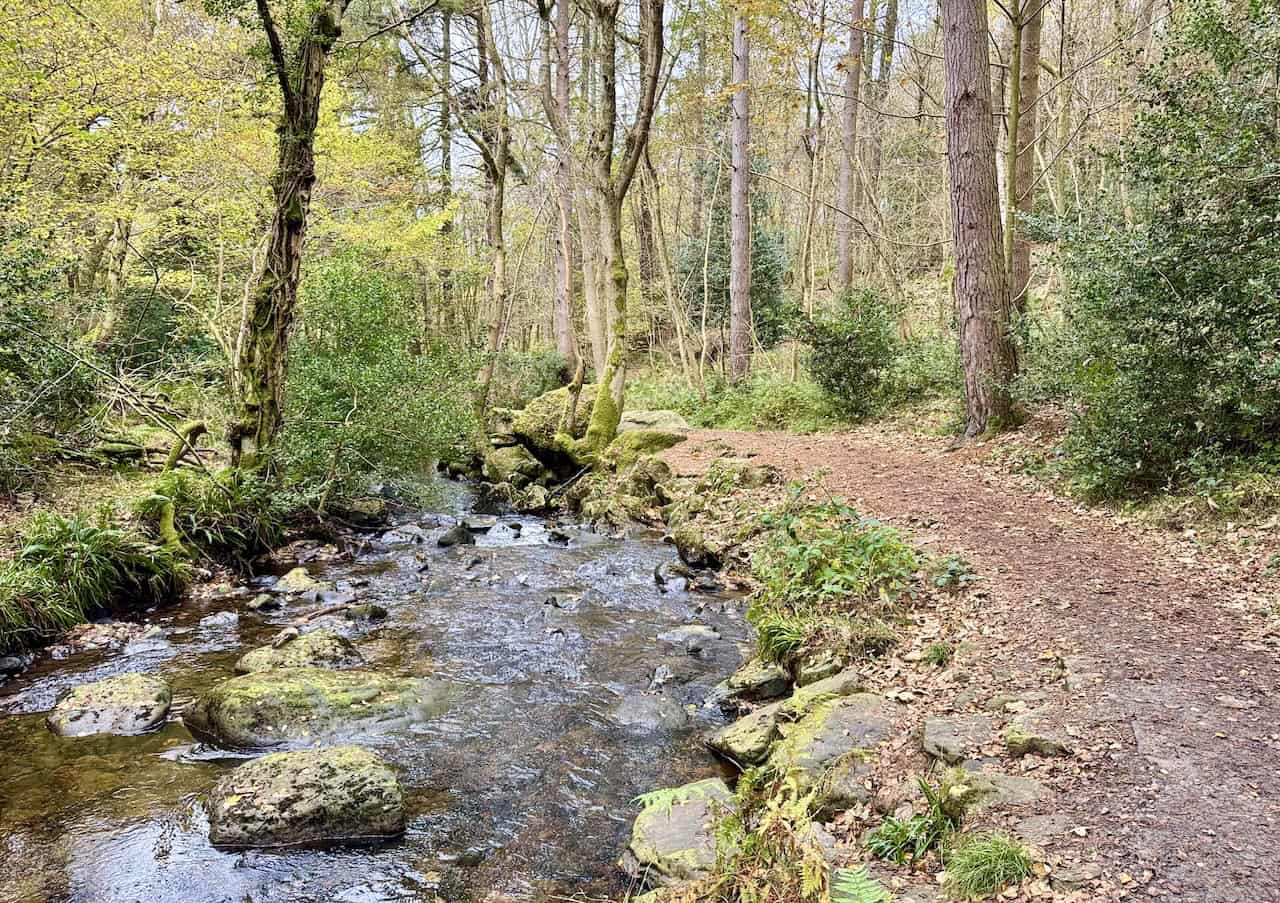
Both walks begin beside May Beck, a gentle stream that ripples over mossy rocks beneath tall pines. It sets the tone for the peaceful woodland that lies ahead.
ADVERTISEMENT
About Falling Foss
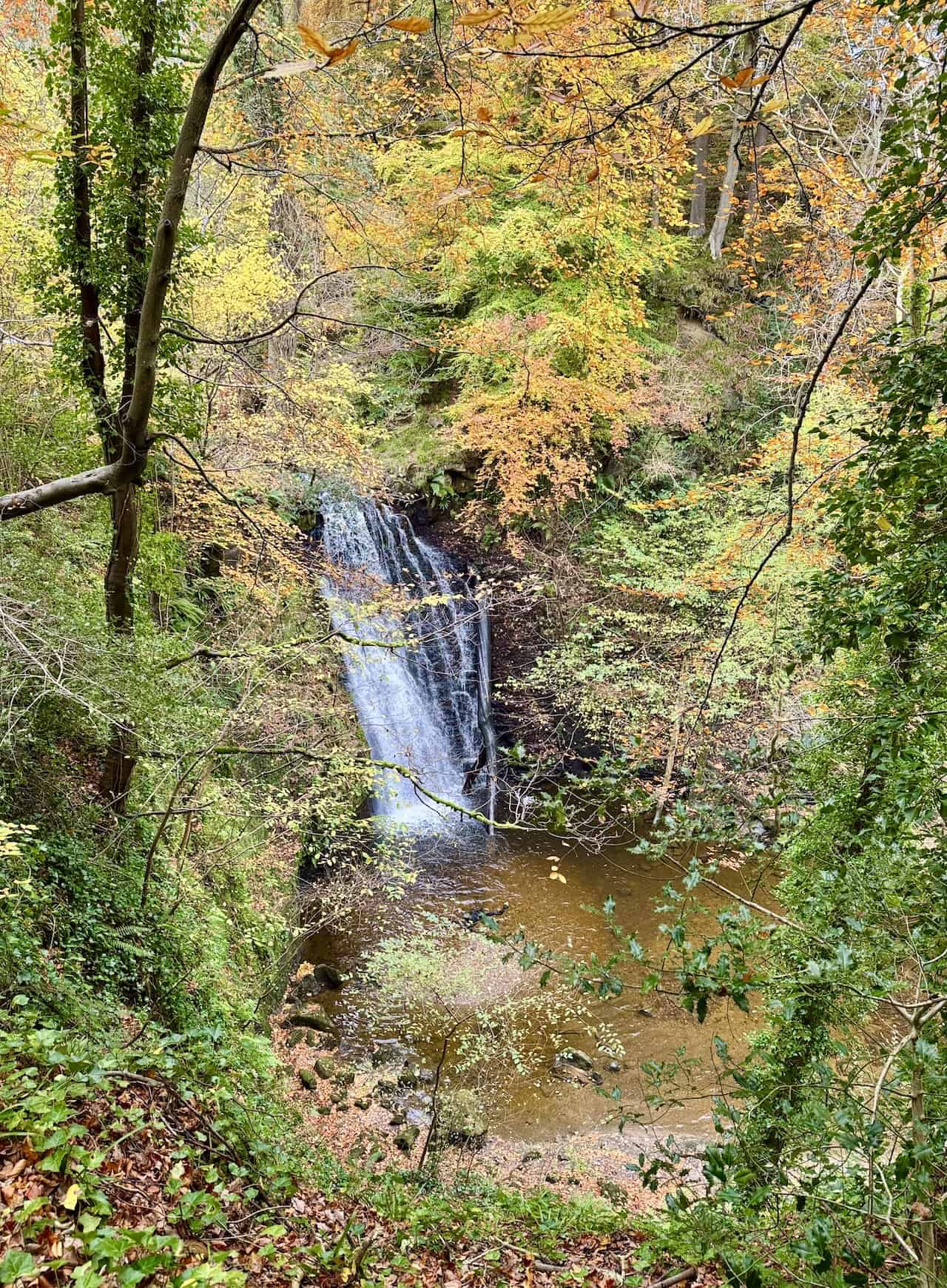
Falling Foss plunges 67 feet (20 metres) down a sheer rock face into a calm pool below. It sits on a stream called Little Beck, in the north-east corner of the North York Moors National Park. If you’d like to find it on a map, its Ordnance Survey grid reference is NZ 888 035.
The waterfall lies within Sneaton Forest, which Forestry England looks after. Woodland surrounds it on all sides, so it feels wonderfully secluded. Even so, it’s a popular spot with families, walkers and visitors staying in Whitby.
You get a clear view of the falls from the main path. A steep path leads down to the base, but it’s slippery, so it’s best to stay on the main route. This photo shows the waterfall in autumn, with water tumbling down the dark rock into the pool below. Golden leaves frame the scene, and the woodland feels calm and still.
ADVERTISEMENT
Two Ways to Walk to Falling Foss
You can follow either of my two walks to Falling Foss. They share the same outward route, so the first half is identical. The difference lies in how you return to May Beck Car Park.
| Walk Details | Linear Walk | Circular Walk |
|---|---|---|
| Route Type | Linear, there and back | Circular |
| Distance | 4¼ miles (6¾ kilometres) | 4½ miles (7½ kilometres) |
| Duration | 2¼ hours | 2½ hours |
| Ascent | 862 feet (263 metres) | 866 feet (264 metres) |
| Start and Finish | May Beck Car Park | May Beck Car Park |
| Return Route | Back through Little Beck Wood | Fields, Leas Head Farm and Foss Farm |
| Best For | Families and woodland lovers | Walkers who enjoy variety |
ADVERTISEMENT
The Linear Walk to Littlebeck
The linear walk follows May Beck through the woods to the waterfall. It then continues past The Hermitage and through Little Beck Wood Nature Reserve to Littlebeck. At the ford, you turn round and retrace your steps.
Going back the same way isn’t a drawback. In fact, you’ll notice things you missed on the way out, and the light falls differently through the trees. The path suits pushchairs as far as The Hermitage, although steps and boardwalks follow after that.
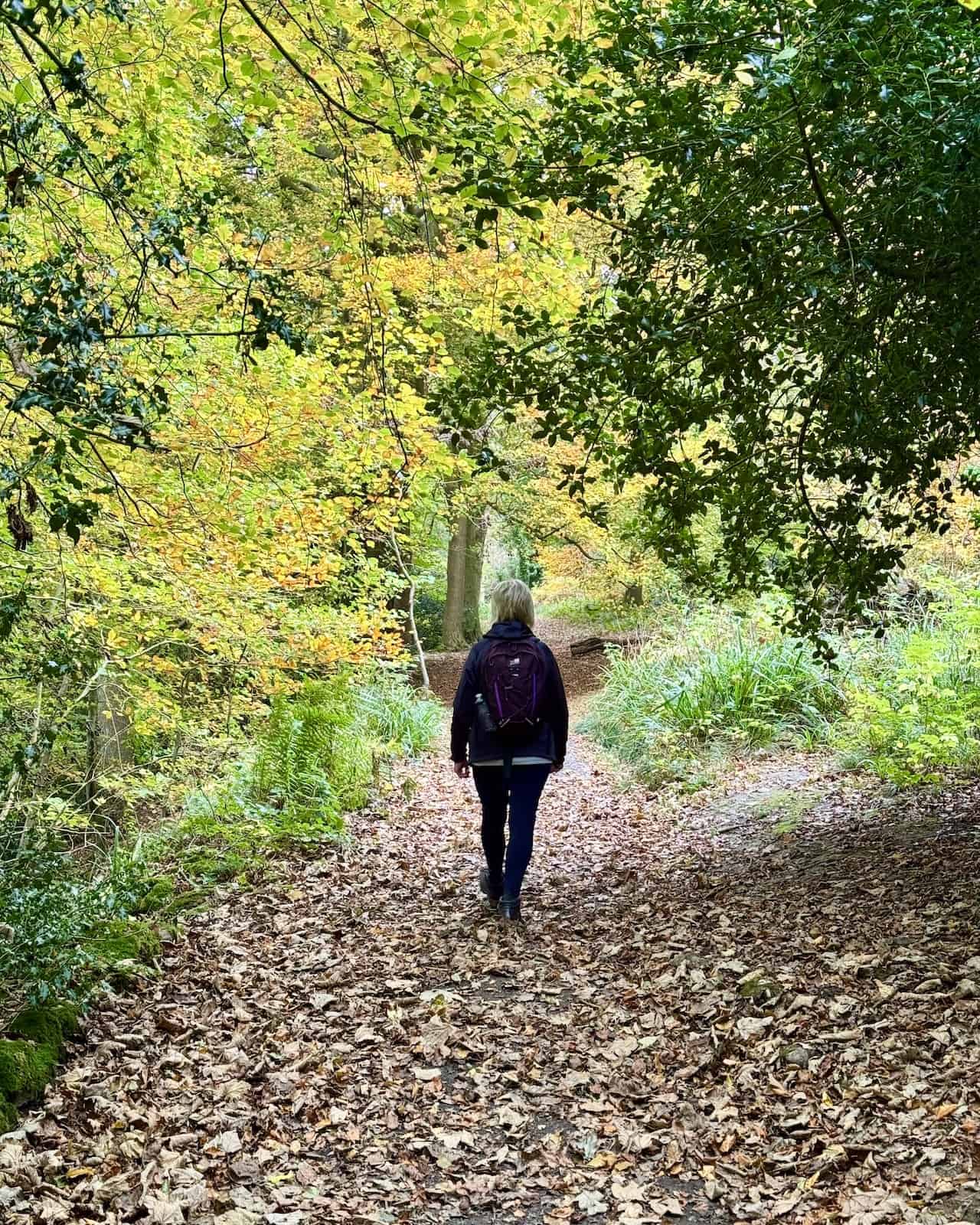
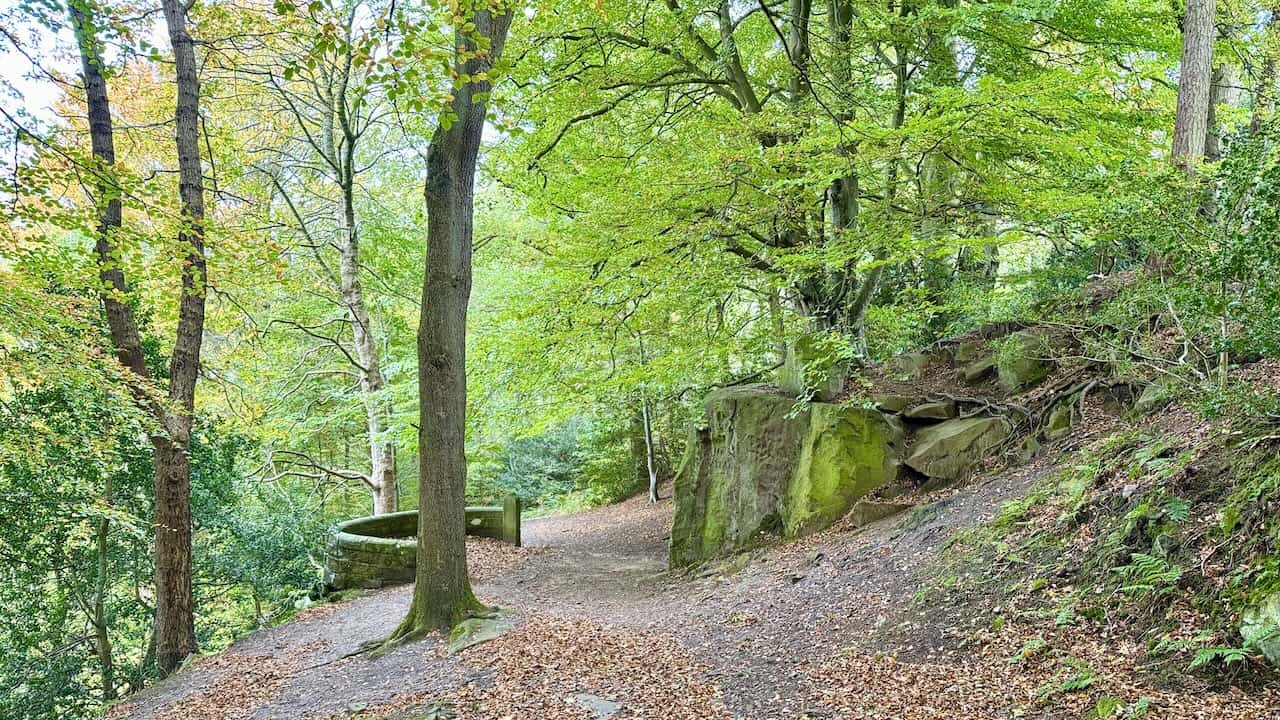
Beyond the waterfall, a leafy path winds on through the trees towards The Hermitage. On the way back, you’ll see this same stretch in a new light.
You’ll find full directions, photos and statistics on my linear walk to Littlebeck page.
The Circular Walk via Leas Head Farm
The circular walk starts the same way, but it doesn’t retrace its steps from Littlebeck. Instead, you cross Little Beck on stepping stones and climb steeply through the woods on a bridleway. This climb can be boggy after rain, especially near the top.
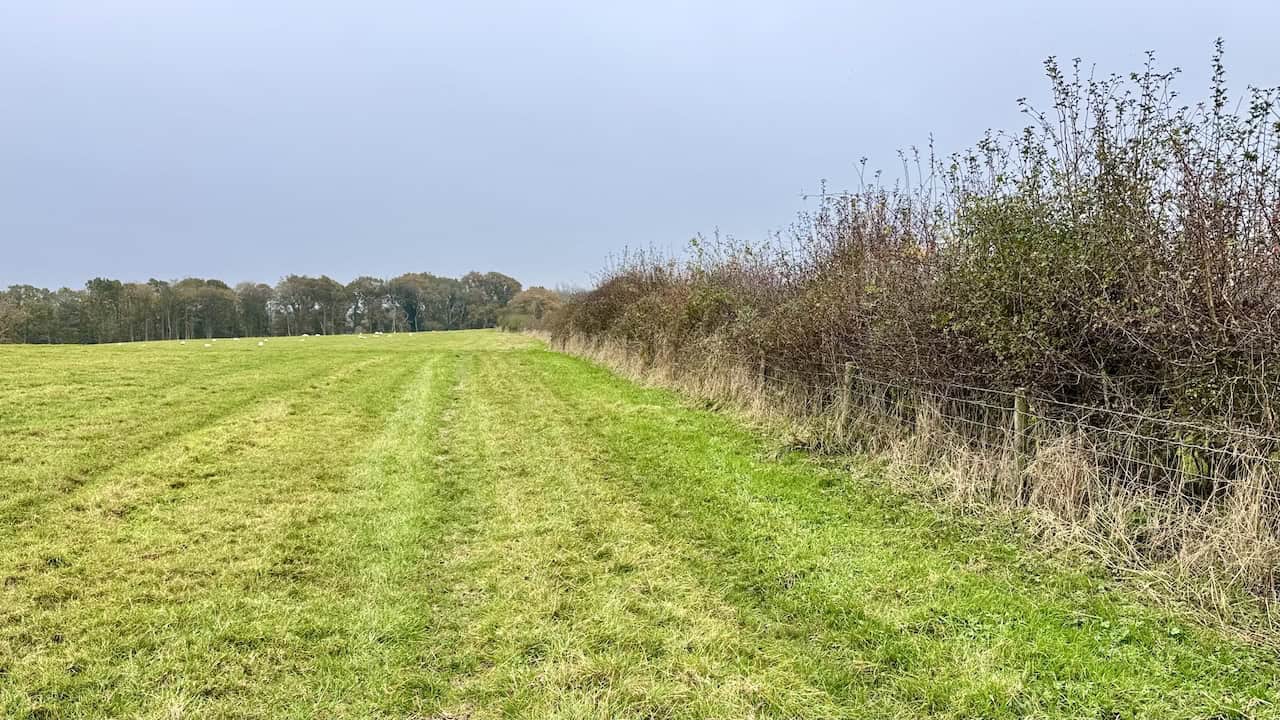
Next, you skirt two large fields to reach Great Wood, then follow the bridleway to Leas Head Farm. A ford, Foss Farm and a quiet lane bring you back to the stone bridge near Midge Hall. From there, you follow the familiar path back to May Beck.
Blue arrows mark the bridleway as it crosses open countryside. With a little care, the route is easy to follow.
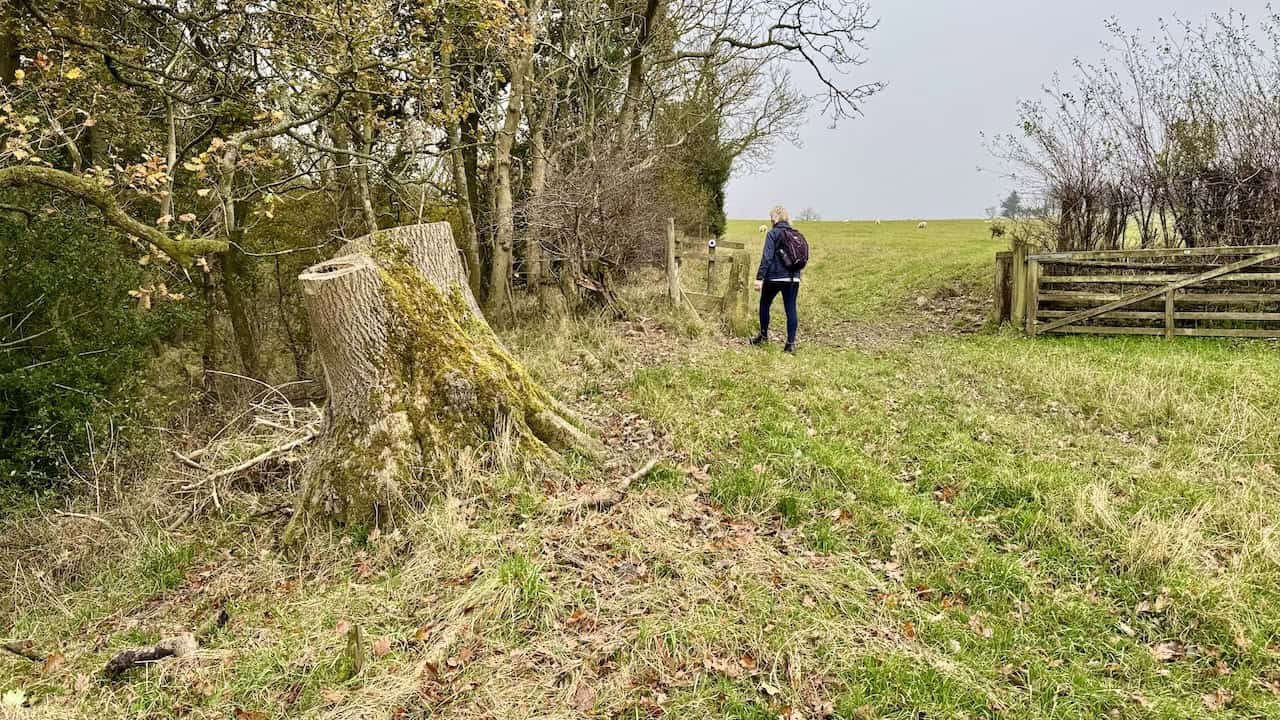
Later, a quiet lane leads from Foss Farm back towards Midge Hall. Tall trees line the way, and their golden leaves catch the sunlight in autumn.
You’ll find full directions, photos and statistics on my circular walk via Leas Head Farm page.
Getting to Falling Foss and Parking
Both walks start at May Beck Car Park, about five miles south of Whitby. To get there, follow the B1416, which links the A171 with Ruswarp. Then turn off at the sign for May Beck and follow the minor road to its end.
Forestry England runs two car parks in Sneaton Forest. May Beck is the quieter one, about ¾ mile (1.2 kilometres) from the waterfall. The other car park lies just a five-minute walk from Falling Foss, so it suits anyone who only wants to see the falls.
Parking charges apply at both car parks, and each one has two accessible spaces. There’s no cash payment, so you’ll need to pay through RingGo, by phone or online within 48 hours. Forestry England national members park for free. Check the latest prices on the Forestry England website before you go.
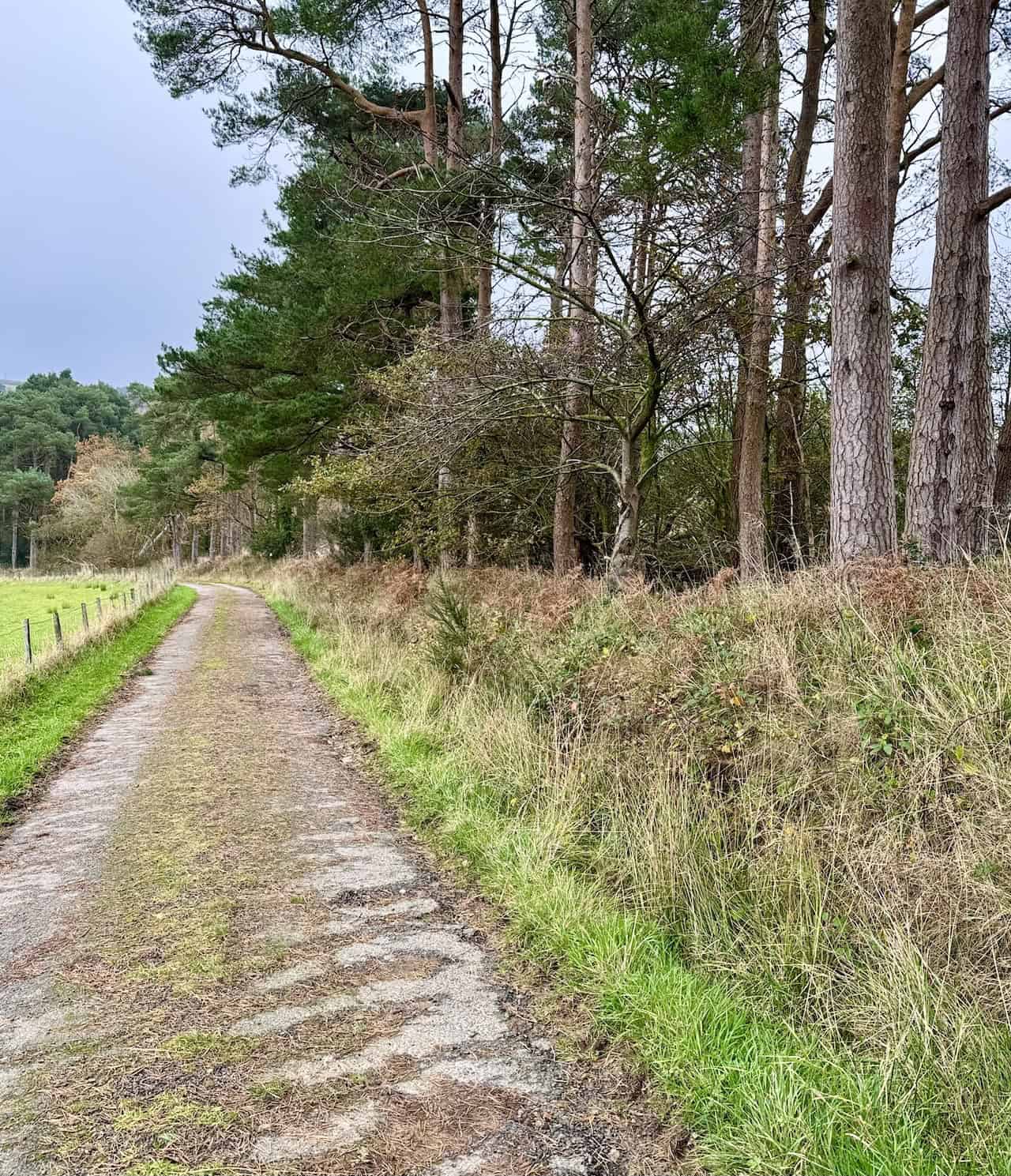
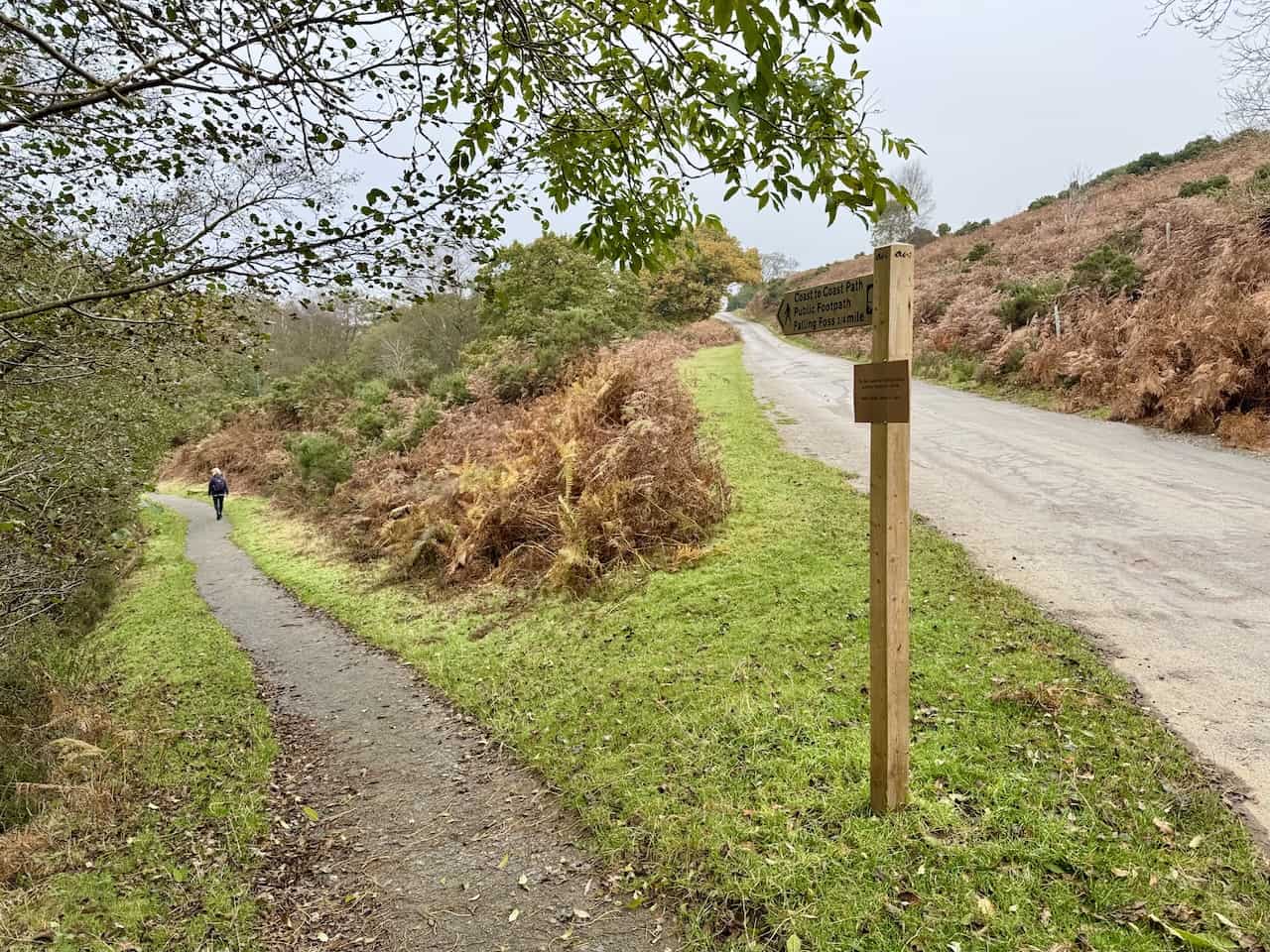
From May Beck Car Park, you cross the road bridge and join a wide gravel path. Wooden signs point the way to the waterfall and the Coast to Coast Path.
What You’ll See Along the Way
Both walks pack a lot into a short distance. Here are the highlights you’ll pass on the shared stretch between May Beck and Littlebeck.
May Beck and the Woodland Path
The first ¾ mile follows May Beck north through mixed woodland. The path is smooth, well kept and mostly level, so it’s a gentle start for all ages. Moss-covered boulders, tall pines and the occasional woodland gate line the way.
Wooden signs carved with an acorn and the initials ‘AW’ guide you along. They mark Alfred Wainwright’s Coast to Coast Walk, which runs 192 miles (309 kilometres) from St Bees to Robin Hood’s Bay. Your route follows a short stretch of it between May Beck and Falling Foss.
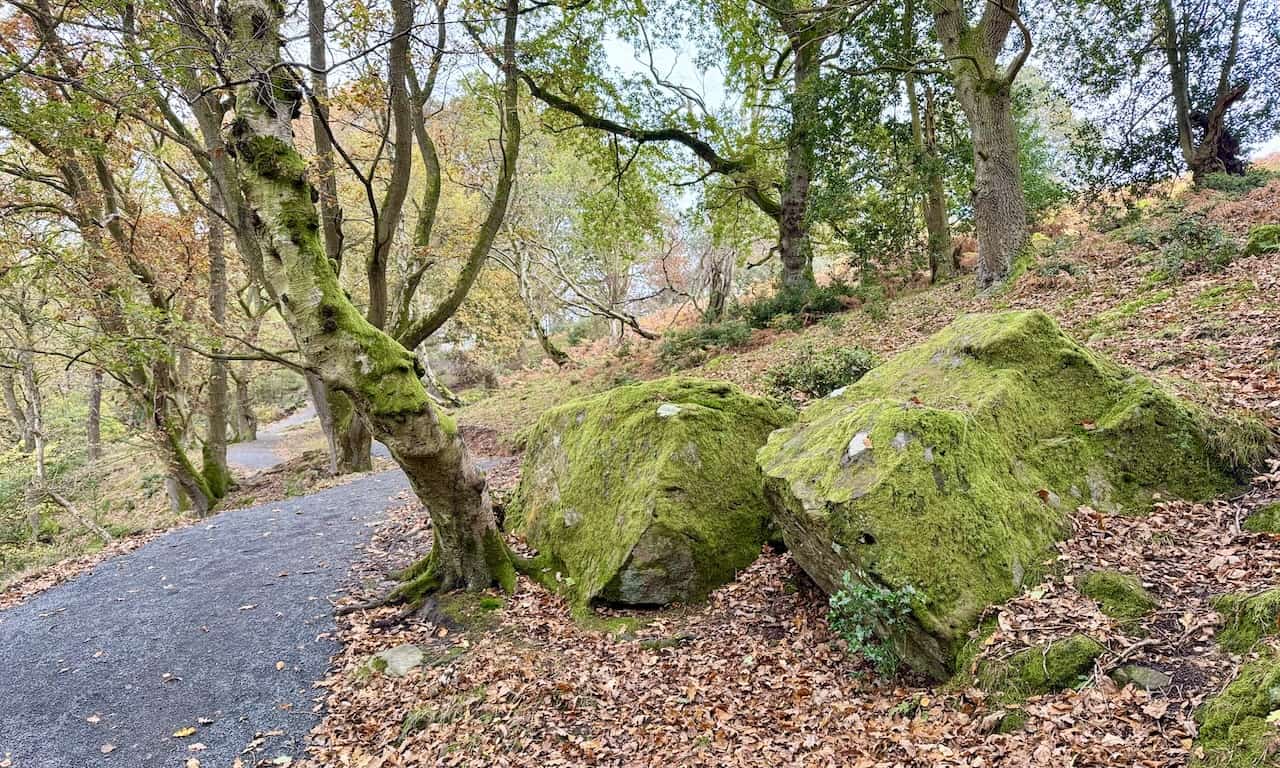
Along this stretch, large boulders draped in green moss sit beside the path. In autumn, they stand out beautifully against the fallen leaves.
Midge Hall and the Falling Foss Tea Garden
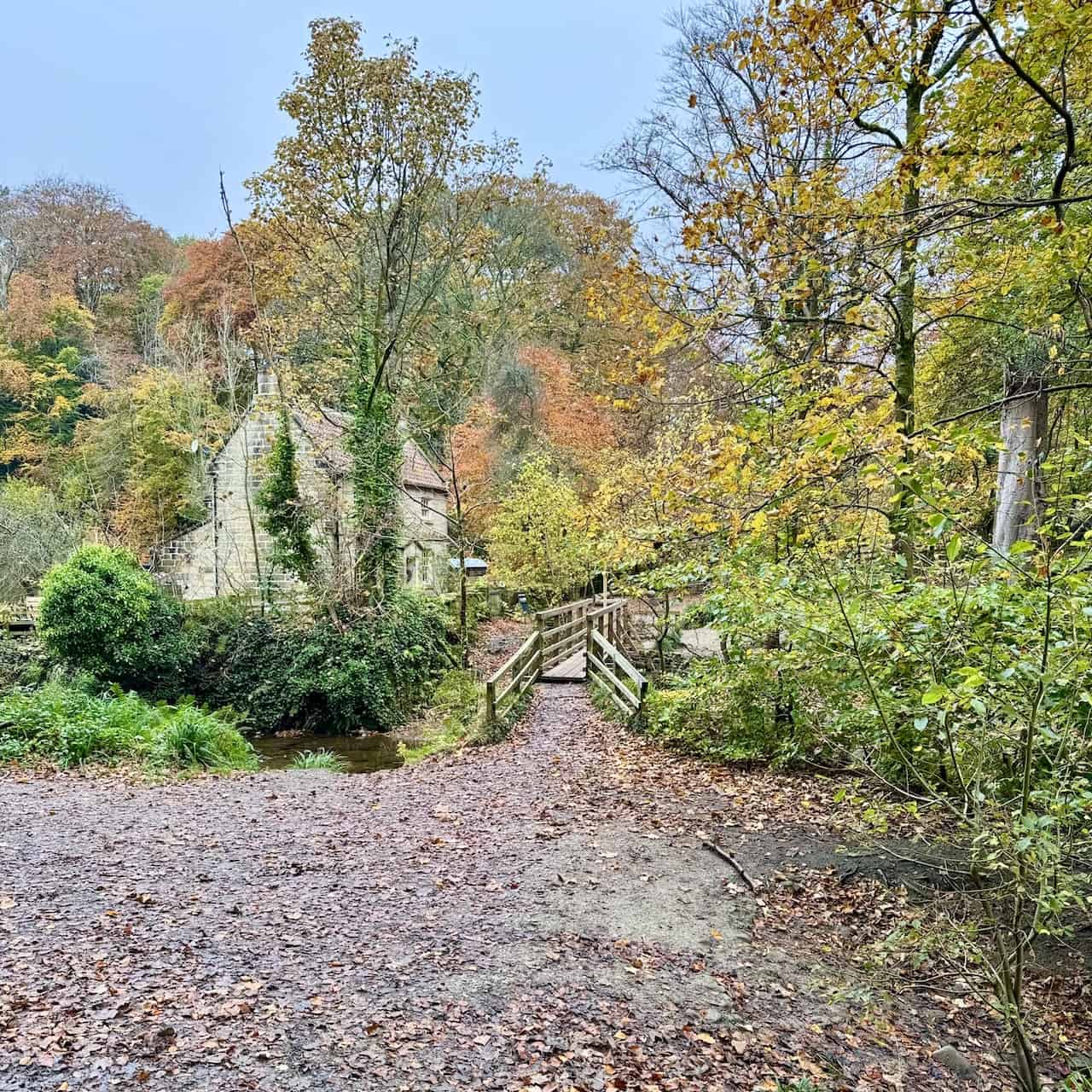
Just before the waterfall, you cross an arched stone bridge and turn right towards Midge Hall. This old cottage stood derelict for over 50 years. Then, in 2008, it reopened as the Falling Foss Tea Garden.
The tea garden is a lovely place to stop for a drink and a bite to eat. However, it opens seasonally and depends on the weather, so check before you go. To reach it, you cross a small wooden footbridge over Little Beck. The cottage sits in a peaceful glade, right next to the waterfall.
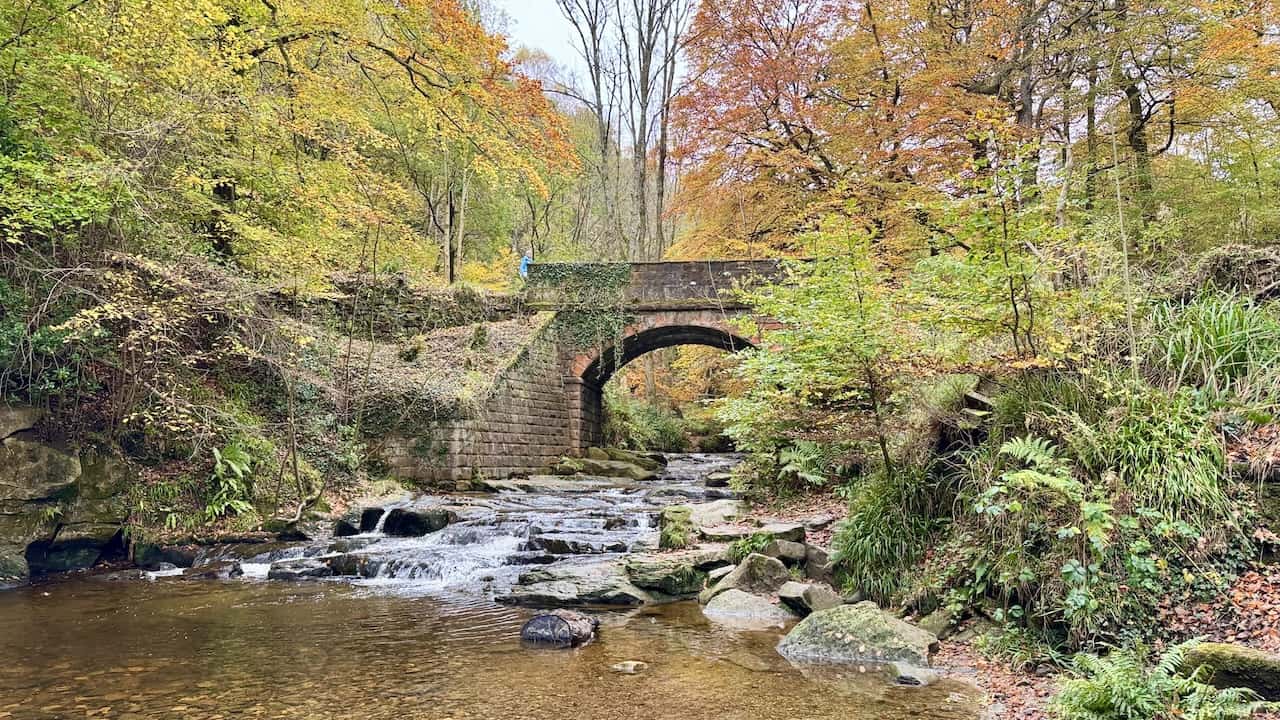
Before you move on, look back at the old stone bridge. Beneath its arch, the stream drops over rocks in a series of small cascades. Ivy and autumn colour soften the weathered stonework.
The Hermitage
About a quarter of a mile beyond the waterfall, you’ll reach The Hermitage. Someone carved this curious shelter from a single block of sandstone, probably in the late 18th century. The letters ‘GC 1790’ appear above the entrance.
Inside, stone benches line the walls, which suggests it was a place for rest or quiet thought. The initials probably refer to George Chubb, though local stories credit Christopher Jeffrey. From the path, The Hermitage looks like a small cave set into the hillside, with its doorway carved straight into the rock.
Little Beck Wood Nature Reserve
Next, you pass through a gap in a wall into Little Beck Wood Nature Reserve. The Yorkshire Wildlife Trust cares for its 26 hectares of woodland on both sides of Little Beck. Oak, ash, alder and cherry cover the steep valley slopes.
Keep an eye out for dippers and grey wagtails near the water. Woodpeckers, nuthatches and treecreepers live here too, while roe deer roam the quieter corners. In spring, bluebells, wood anemones and primroses brighten the woodland floor.
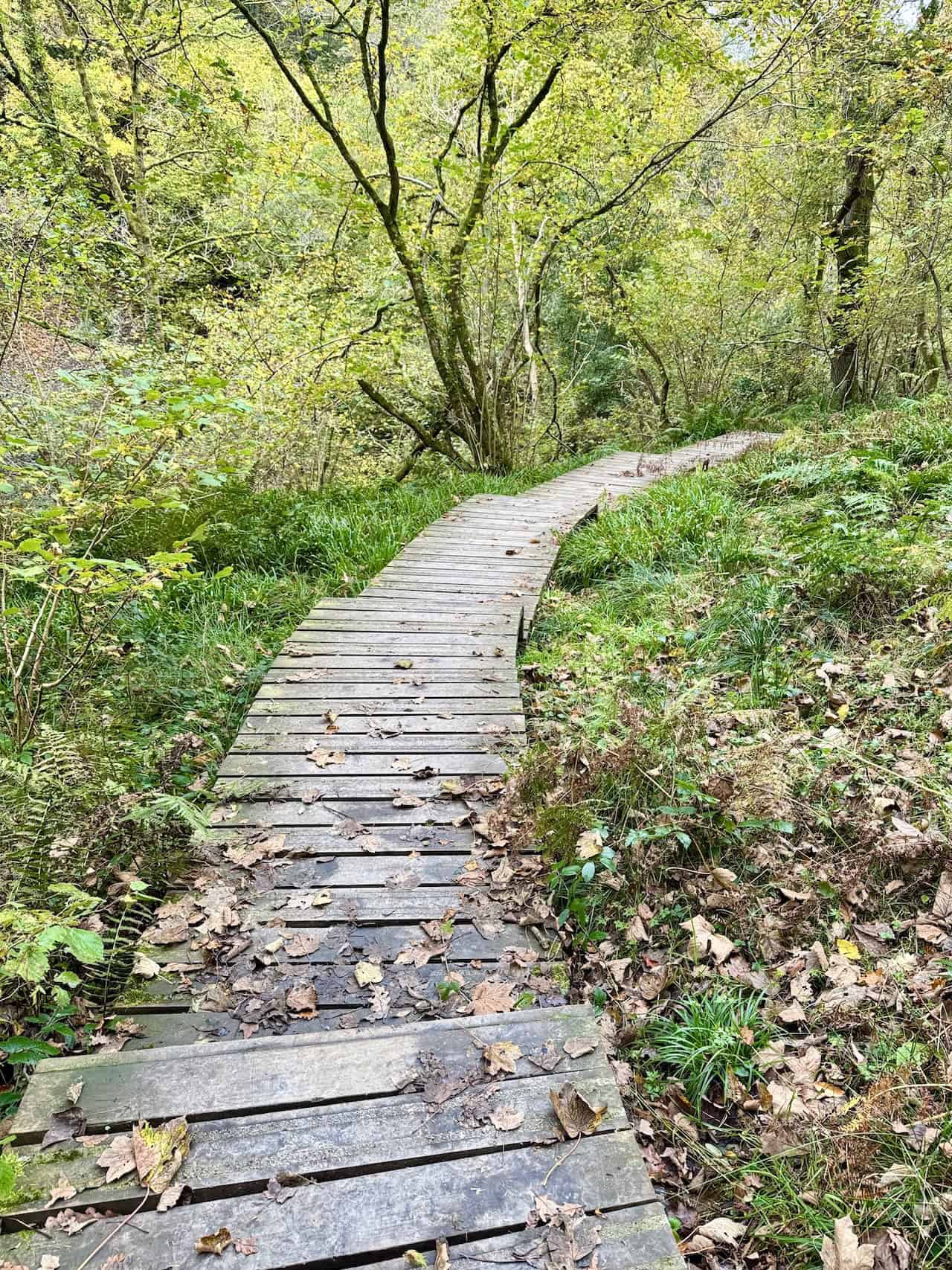
Further on, the stream has exposed dark Jurassic shale, which people once quarried for alum. Meanwhile, raised boardwalks now carry the path over the wettest ground. They keep your boots dry and protect the plants on either side.
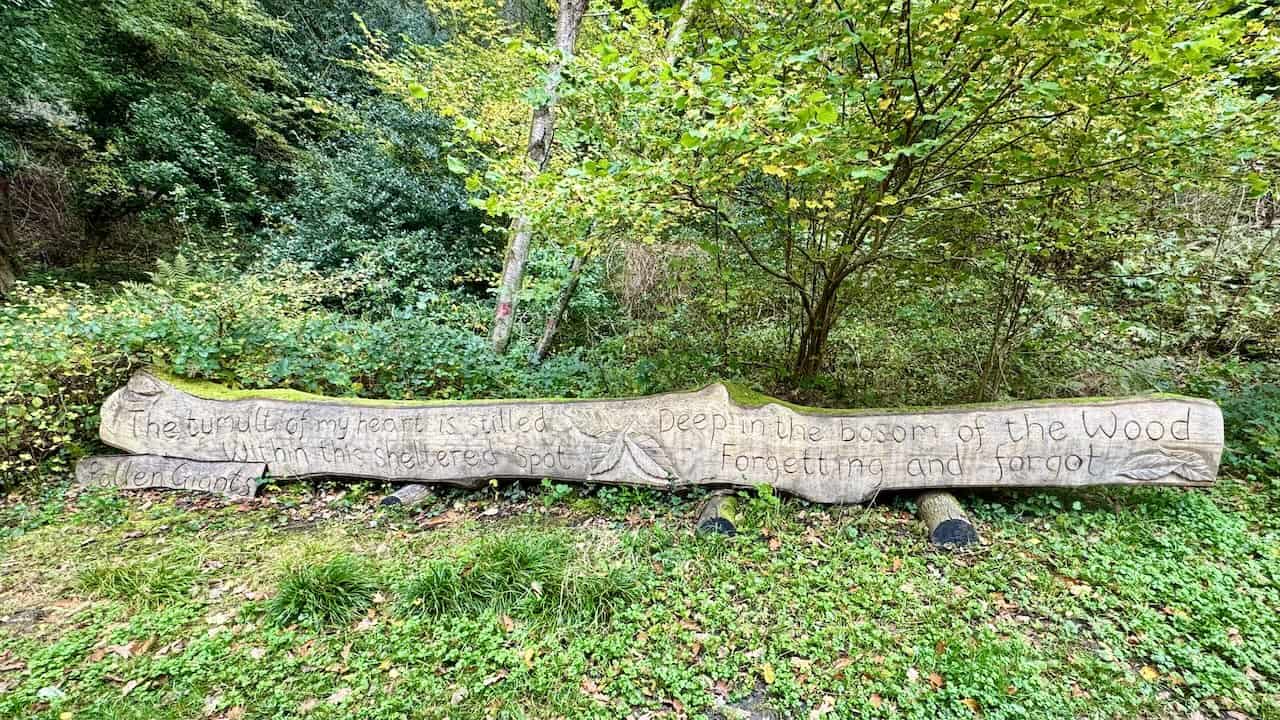
Look out, too, for ‘Fallen Giants’, a bench carved from a large fallen tree trunk. A short poem engraved into the wood invites you to stop and rest for a while.
The Hamlet of Littlebeck
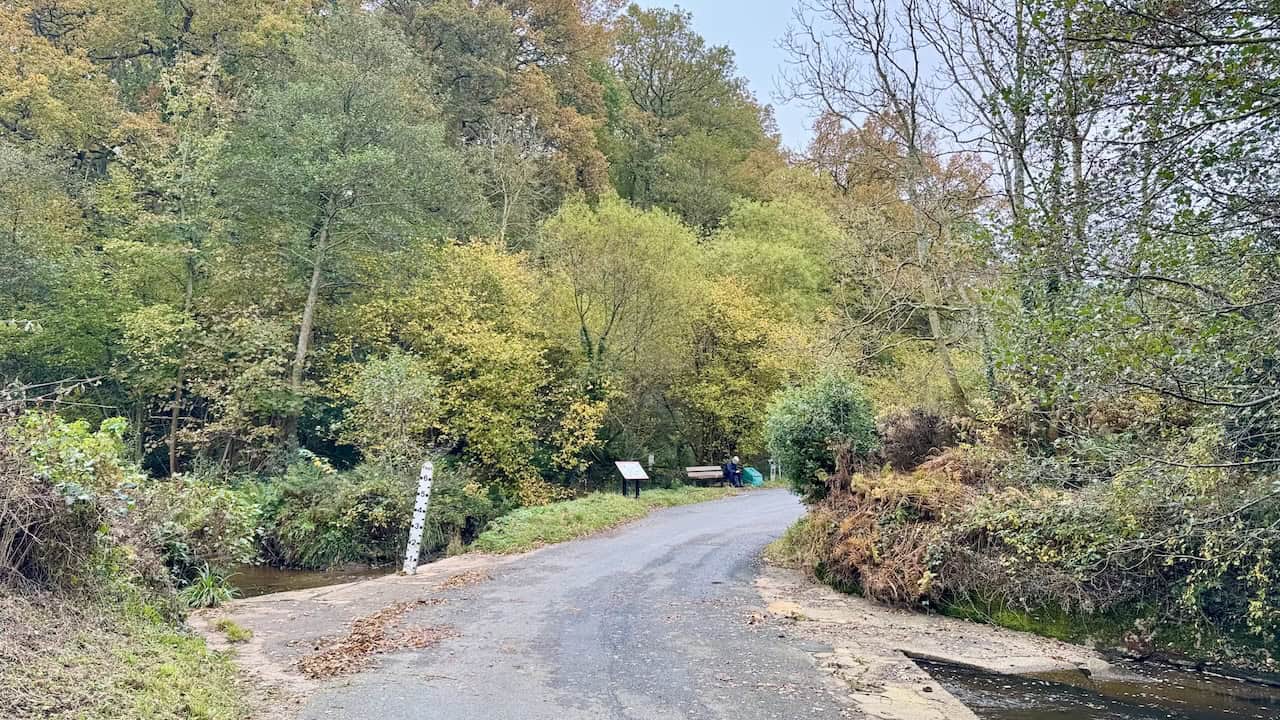
At the northern edge of the reserve, a gate leads into the quiet hamlet of Littlebeck. Follow the road to the left, and you’ll soon reach a ford over Little Beck. This marks the halfway point of both walks, about two miles from May Beck.
Three hundred years ago, Littlebeck played a key role in the alum industry. An interpretation board tells its story and points out the main landmarks. Some, like the Old Mill, sit on private land. Beside the ford, a bench looks out over the stream as it runs gently across the road. It’s the perfect place to stop for coffee and lunch.
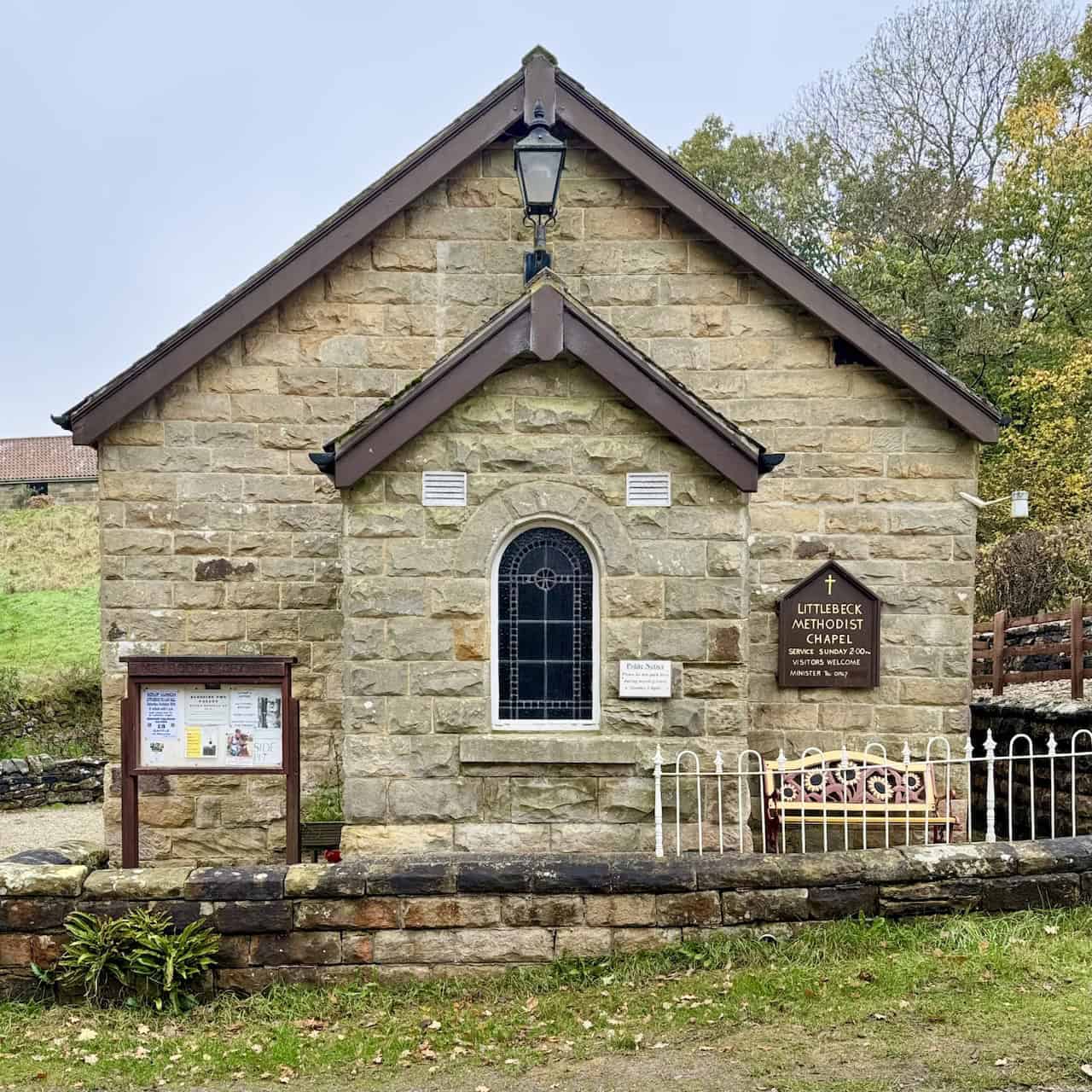
Just a few steps away stands Littlebeck Methodist Chapel, which opened in 1890. This small, simple building still serves the local community and suits its peaceful setting.
Which Falling Foss Walk Should You Choose?
Both walks are lovely, so the best choice depends on what you enjoy most.
- Choose the linear walk if you’d like to stay in the woods all the way. It’s also a good option for young families, as the first stretch suits pushchairs.
- Choose the circular walk if you enjoy variety. It adds open fields, farm tracks and wider views, and you’ll repeat only the final stretch.
- Choose a shorter stroll if you only have an hour or so. Simply walk from May Beck to Falling Foss and back, which is about 1½ miles in total.
Whichever you pick, you’ll see the waterfall. If you choose the circular walk, be ready for a steep climb out of Littlebeck. The path rises through dense woodland before it opens out onto the fields. And it can be muddy too, but that’s part of the fun!
Planning Your Visit to Falling Foss
A little planning helps you get the most from your day. Here are a few tips to keep in mind.
- Best Time To Visit: Every season has its charm. Autumn brings golden leaves, while spring fills Little Beck Wood with bluebells. The waterfall looks most impressive after heavy rain.
- Footwear: Wear sturdy boots. Both routes include steps, boardwalks and muddy stretches, and the climb from Littlebeck can be boggy.
- Dogs: Dogs are welcome in Sneaton Forest. In the nature reserve, keep them close and respect the wildlife.
- Food and Drink: The tea garden opens seasonally, so take a flask and a snack just in case. The bench by the ford makes an ideal lunch stop.
- Safety: Take care near the falls, as the path down to the pool is steep and slippery.
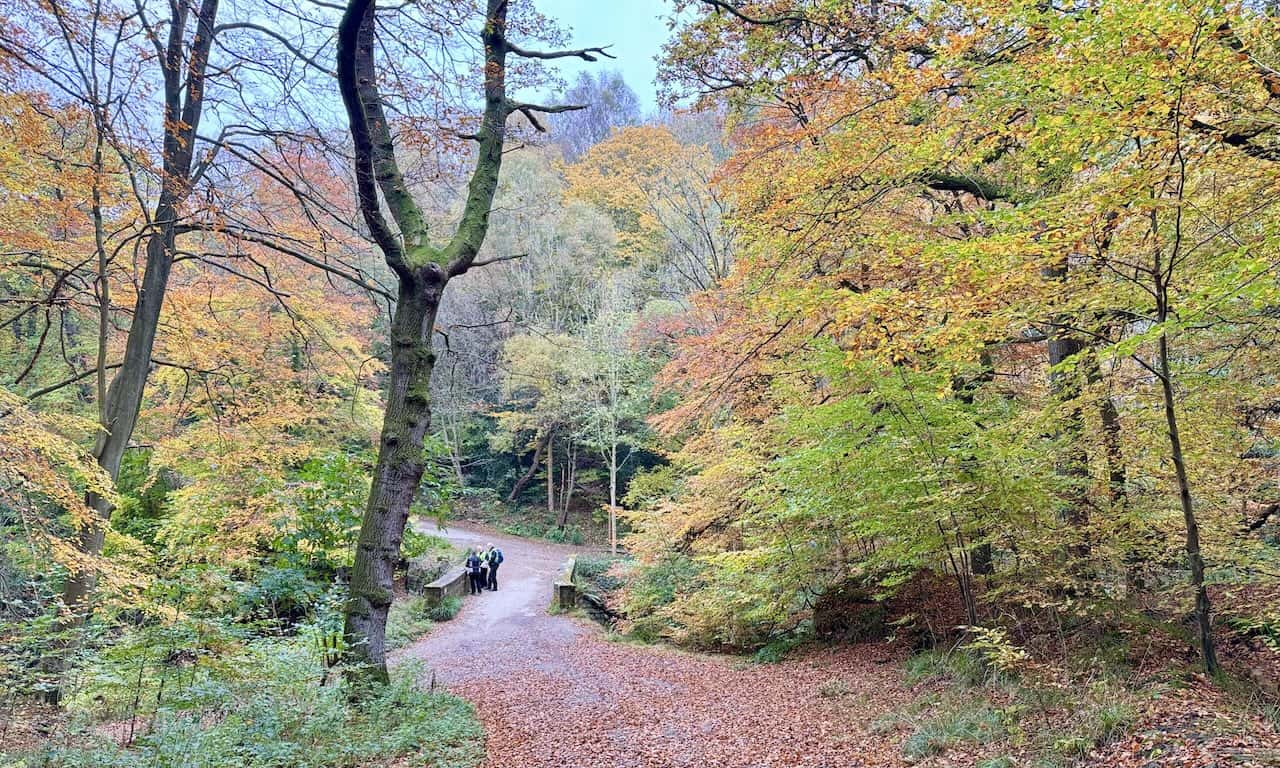
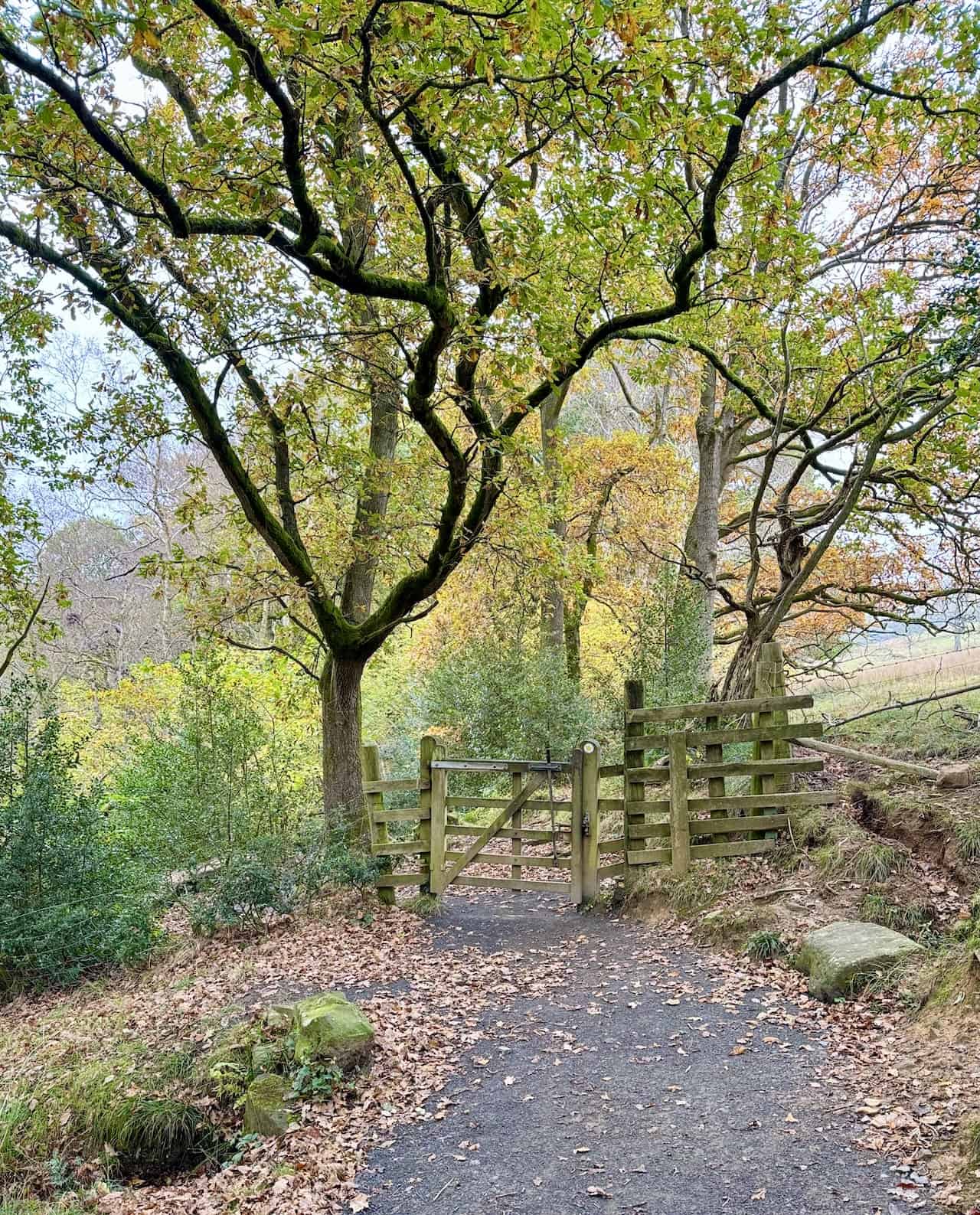
Autumn is a particularly beautiful time to visit. Woodland gates, gnarled branches and a thick carpet of leaves give the walks a warm, golden glow.
Frequently Asked Questions About Falling Foss
Here are quick answers to the questions people ask most often about visiting the waterfall.
How High Is Falling Foss?
Falling Foss drops 67 feet (20 metres) into a pool on Little Beck. That makes it one of the most impressive waterfalls in the North York Moors.
How Long Does It Take to Reach the Waterfall?
From May Beck Car Park, the waterfall is about ¾ mile away, which takes around 20 minutes at a gentle pace. From the smaller car park nearer the falls, it’s just a five-minute walk. My full walks take 2¼ to 2½ hours.
Where Can You Park?
Forestry England runs two car parks in Sneaton Forest: May Beck and the car park nearer the falls. Both charge for parking, and you pay through RingGo, by phone or online.
Is Falling Foss Dog Friendly?
Yes, dogs are welcome in Sneaton Forest and along both walks. Keep them close in Little Beck Wood Nature Reserve, and on a lead near livestock in the fields.
Can You Take a Pushchair?
Yes, as far as The Hermitage. The gravel path from May Beck is mostly smooth, with just one short rocky section. Beyond The Hermitage, steps and boardwalks make a pushchair impractical.
Is There a Café?
Yes, the Falling Foss Tea Garden at Midge Hall sits right beside the waterfall. It opens seasonally and depends on the weather, so check before you set off.
How Far Is Falling Foss from Whitby?
Falling Foss lies about five miles south of Whitby. The drive takes around 15 minutes along the B1416.
Maps, Guidebooks and Videos
For both walks, the best map is the OS Explorer OL27 map of the North York Moors Eastern Area, at a scale of 1:25,000. You can buy it in a standard paper version or a weatherproof version.
Two guidebooks also cover the area well. Try the North York Moors Pathfinder Walking Guide by Brian Conduit and Dennis Kelsall. Alternatively, there’s 100 Walks in Yorkshire: North York Moors and Wolds by Gary Richardson.
Each walk has its own online map, printable version and video:
- Linear Walk: View on OS Maps, View on Outdooractive, View Printable Version and Watch on YouTube
- Circular Walk: View on OS Maps, View on Outdooractive, View Printable Version and Watch on YouTube
Enjoy Your Day at Falling Foss
Falling Foss packs a waterfall, a tea garden, an 18th-century hermitage and a peaceful nature reserve into one short walk. Whether you choose the linear or circular route, you’ll finish back at May Beck with tired legs and plenty of photos.
The final stretch takes you from Midge Hall along the woodland path to May Beck Car Park. It’s a gentle, peaceful way to round off your walk.
Looking for more ideas? You’ll find plenty of other routes on my North York Moors walks page. And if you’ve enjoyed this guide, you can support my free website with just £2.