The Rural Crafts and Trades That Ryedale Folk Museum Has Kept Alive
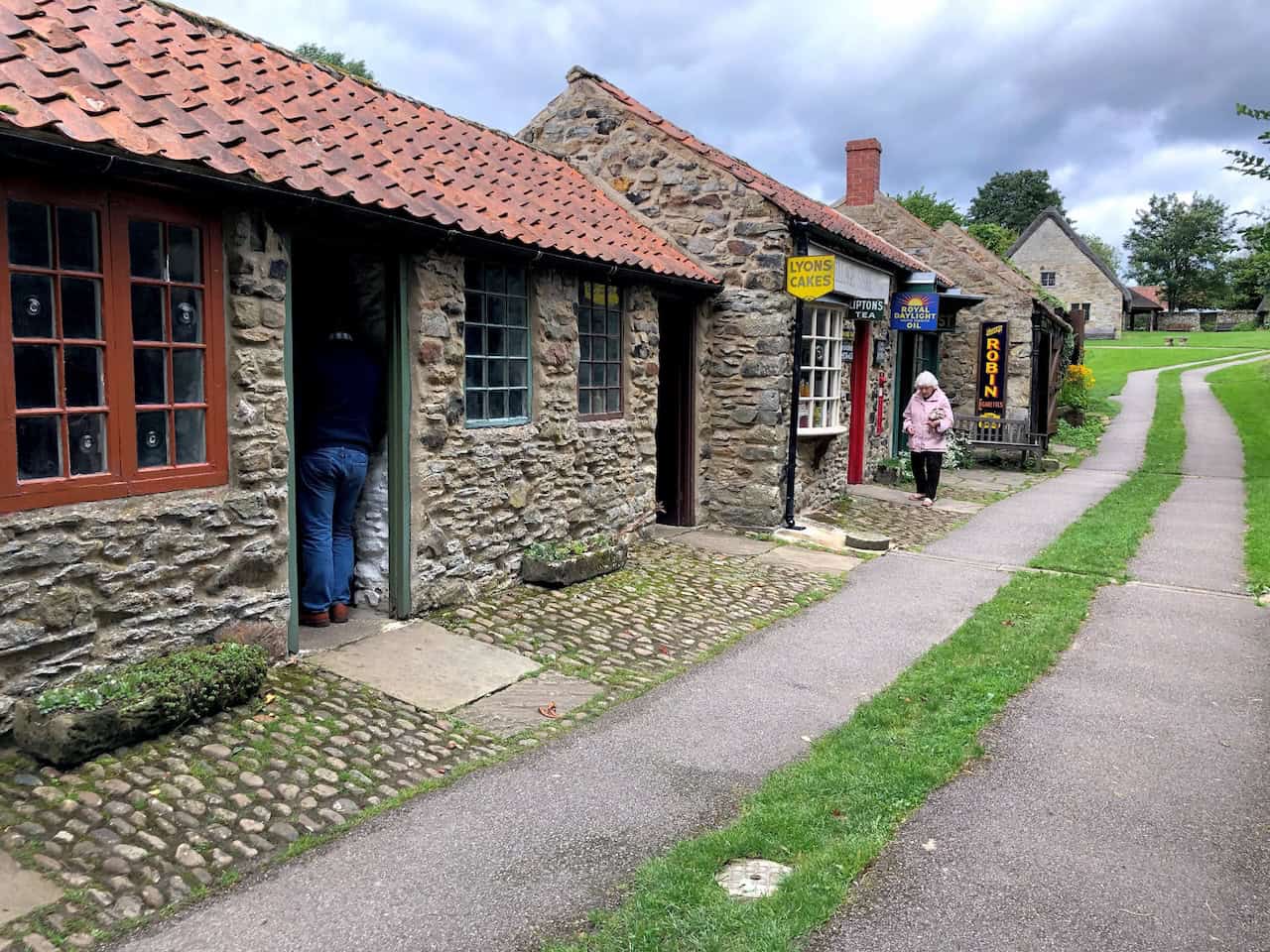
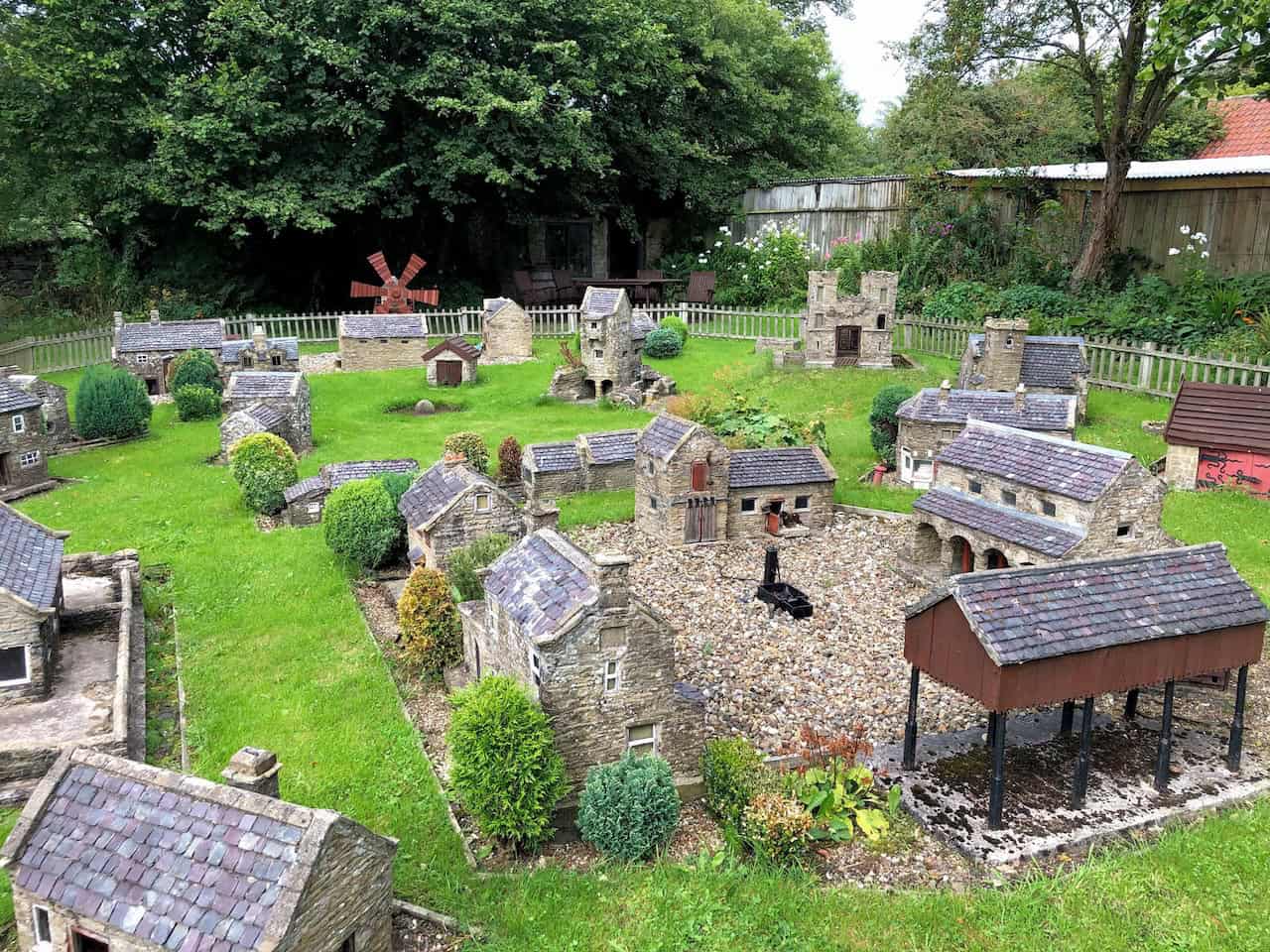
The Ryedale Folk Museum sits in the picturesque village of Hutton-le-Hole, within the southern reaches of the North York Moors National Park. Spread across six acres, it works like a village within a village, preserving the rural heritage of the region through over twenty historic buildings and a collection of 40,000 objects. Together, these tell the story of everyday life from the Iron Age to the 1950s.
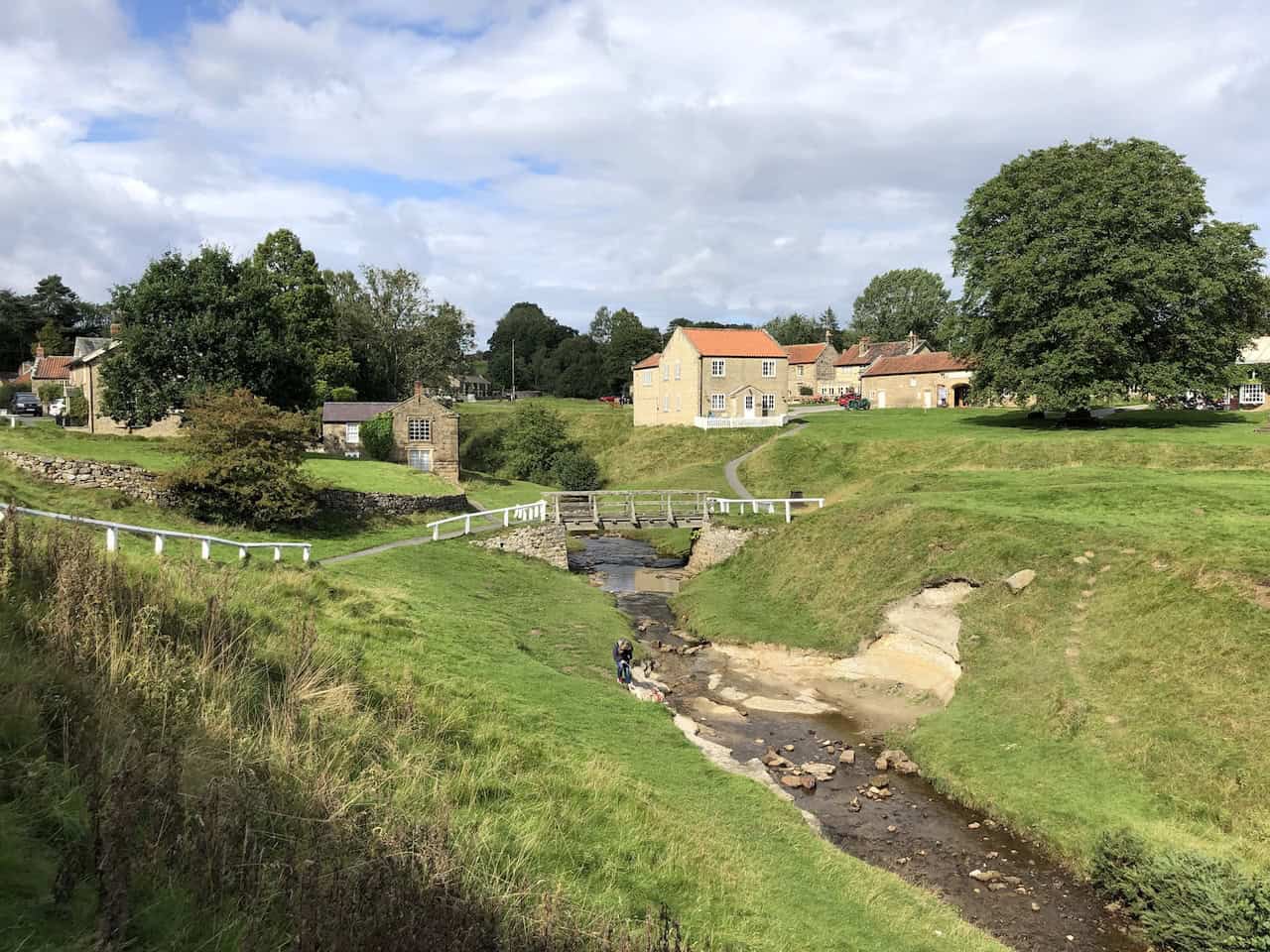
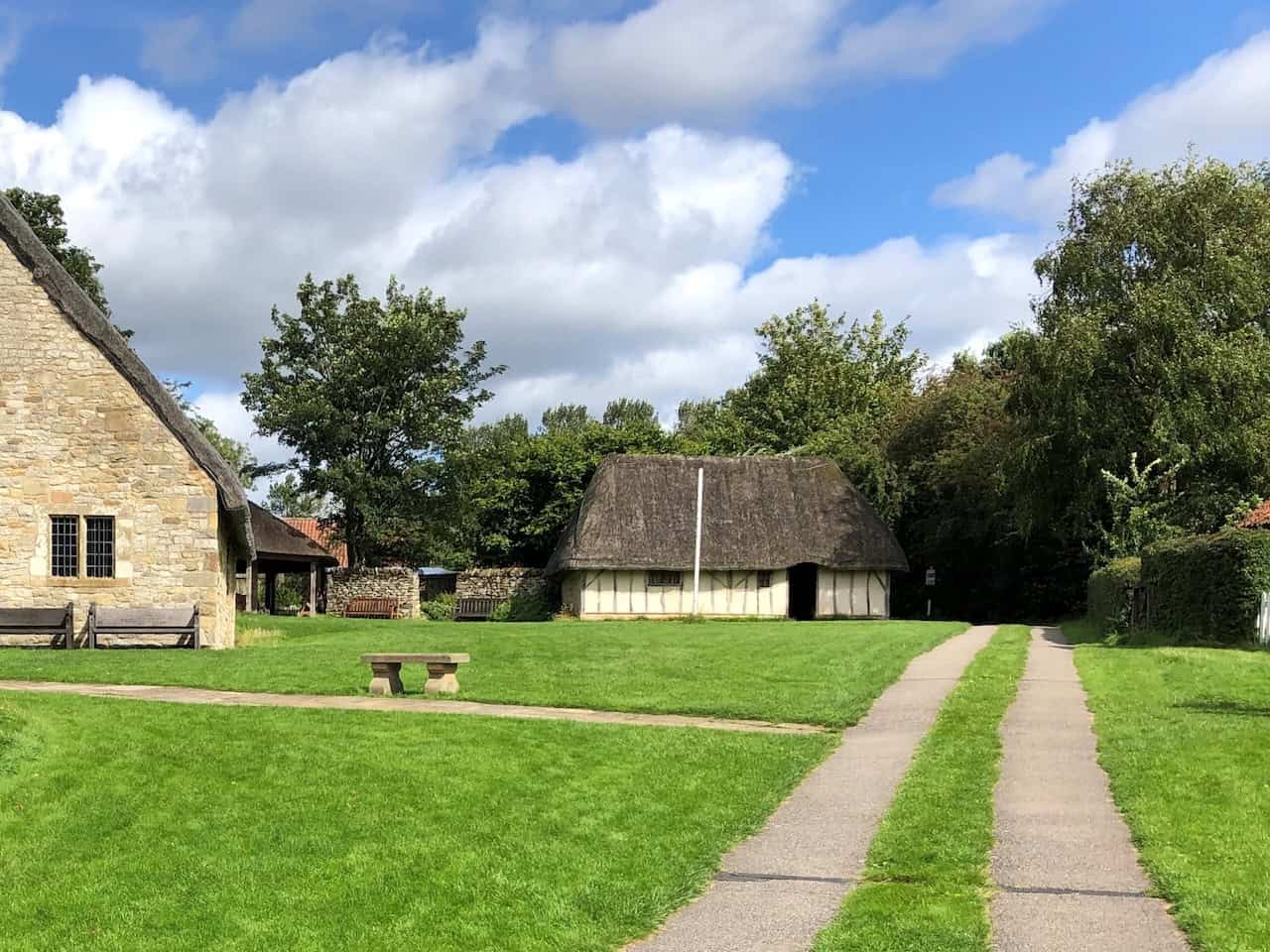
The museum’s core mission is to preserve the stories of ordinary people, which sets it apart from larger institutions that focus on the grand narratives of the aristocracy or industrial progress. As an open-air living history museum, it practises architectural translocation. Historic buildings have been carefully saved from surrounding villages and rebuilt, stone by stone, on the museum site.
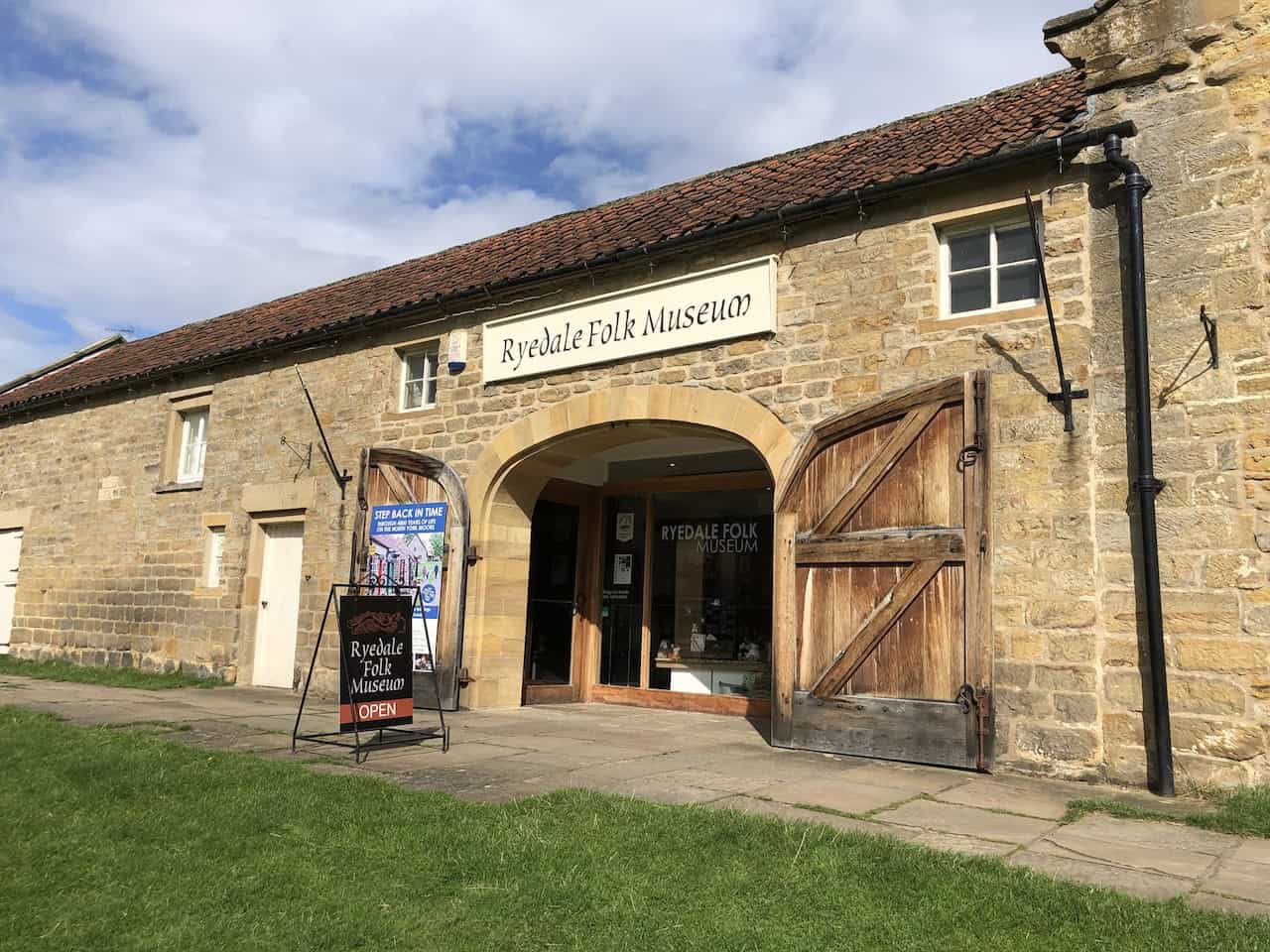
The setting is a big part of what makes the museum so special. The tranquil village atmosphere, with sheep grazing on the common and Hutton Beck murmuring nearby, adds to the experience. Stepping inside these authentic homes and workshops, visitors move history from the page into something vivid and personal, breathing in the scent of old timber and peat smoke as they explore the lives of Ryedale’s ancestors.
The Ryedale Folk Museum is in the village of Hutton-le-Hole, North Yorkshire, YO62 6UA, approximately two miles north of the A170 between Helmsley and Pickering.
Walking in the Yorkshire Dales with 43 Circular Routes
AD This Cicerone guidebook includes 43 circular walks exploring valleys, hills, and moors between Kirkby Stephen and Pateley Bridge. With OS maps, local highlights, and routes ranging from 3–11 miles, it is a year-round companion for walkers of all abilities.
Ryedale Folk Museum Opening Hours for 2026
The museum is open from 9 March to 29 November, Saturday to Thursday, and is closed on Fridays. Before you visit, it is always worth checking the Ryedale Folk Museum website to confirm the latest opening times and admission prices.
- 9 March – 26 March: 10:00 am – 4:00 pm
- 28 March – 30 September: 10:00 am – 5:00 pm (also open Monday 31 August)
- 1 October – 29 November: 10:00 am – 4:00 pm
Grisport Unisex Adult Peaklander Hiking Boots
AD The Grisport Unisex Adult Peaklander Hiking Boots are crafted in Italy with a durable waxed leather upper, Spotex breathable lining, and a reliable Track-on rubber sole. Waterproof and weighing just 1120g, they offer comfort, resilience, and dependable performance on demanding trails.
Admission Prices at Ryedale Folk Museum in 2026
Every ticket works as an annual pass, giving unlimited return visits for one full year from the date of purchase.
| Ticket Category | 2026 Price | Notes |
|---|---|---|
| Adult | £12.00 | Valid for one year |
| Concession | £10.00 | Ages 65+ or students with ID |
| Child (4–15) | £10.00 | Under-4s enter free |
| Family (2+2) | £40.00 | Two adults and two children |
| Family (1+2) | £30.00 | One adult and two children |
| Group (10+) | £8.00 per person | Must be pre-booked 48 hours in advance |
Carers are admitted free of charge when accompanying a visitor with additional needs (valid ID required). School groups visiting on a self-led basis pay £7 per child, with accompanying adults entering free.
The museum does not have its own car park, but visitors can use the Crown Inn car park next door for a flat daily rate of £3 (cash or coins only).
Grisport Unisex Adult Peaklander Hiking Boots
AD The Grisport Unisex Adult Peaklander Hiking Boots are crafted in Italy with a durable waxed leather upper, Spotex breathable lining, and a reliable Track-on rubber sole. Waterproof and weighing just 1120g, they offer comfort, resilience, and dependable performance on demanding trails.
The Visionaries Who Founded a Museum for Ordinary People
The Ryedale Folk Museum was not created by government initiative. It grew from the combined passion of three local experts who wanted to rescue the region’s rapidly disappearing way of life.
Wilfred Crosland and the Origins of Ryedale Folk Museum
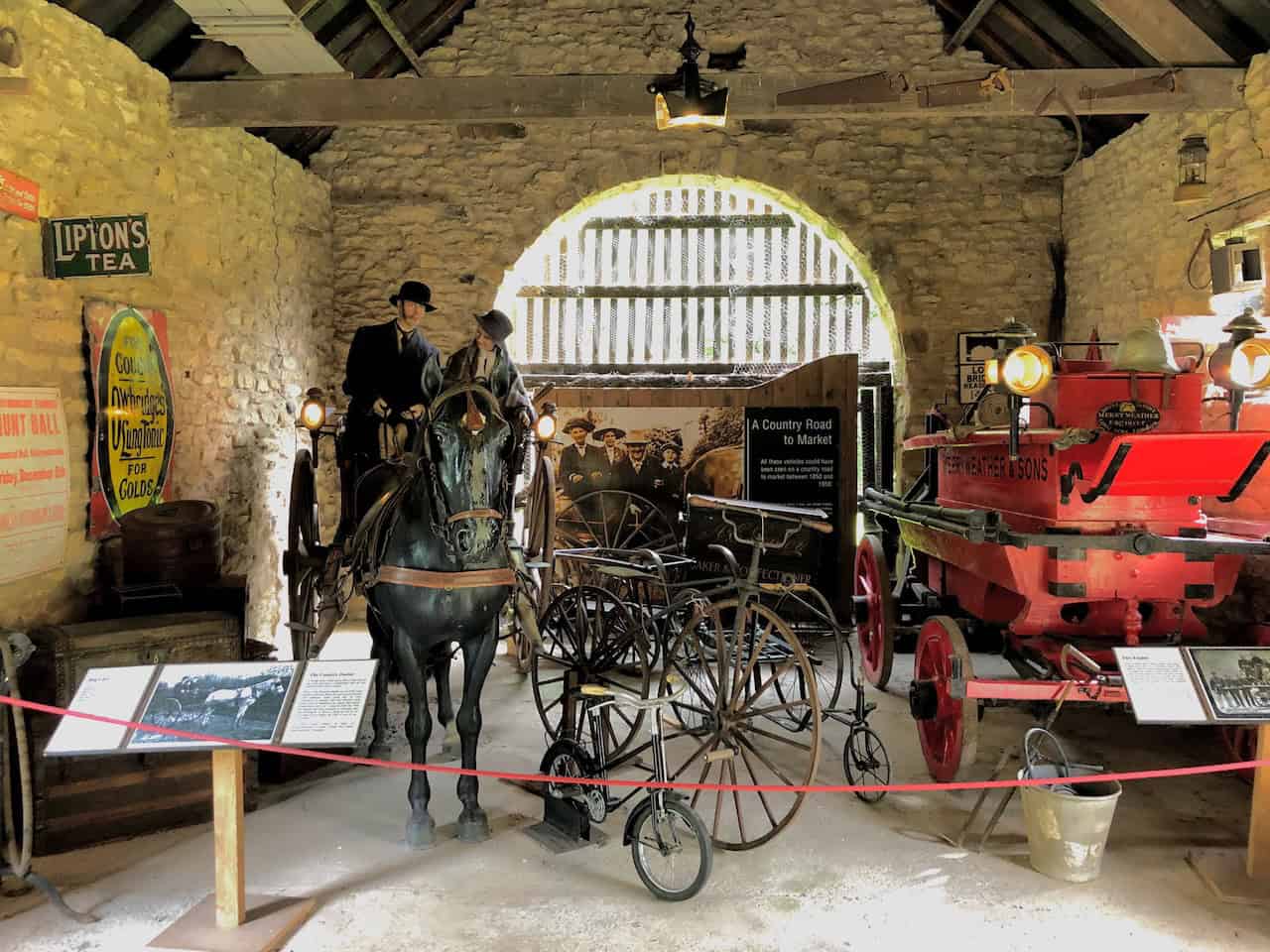
Wilfred Crosland (1876–1961) was a local historian and antiquary with a distinctive approach to collecting. From the 1930s, he focused on the everyday objects ordinary people used: cooking pots, tools, and other items falling out of use. At a time when most museums celebrated the aristocracy, Crosland championed the lives of common people. The first glimpse of a museum on the current site came in 1935, when Wilfred and his sisters opened their home, Elphield House, for a two-week exhibition to raise funds for the Village Hall.
Fifty Walks Across the Beautiful North York Moors National Park
AD Discover 50 routes across the North York Moors, from short easy strolls to challenging high-level hikes. With OS maps, route descriptions, and local highlights, it also includes the legendary 40-mile Lyke Wake Walk, described in four accessible stages.
Bert Frank: First Curator of Ryedale Folk Museum
While Crosland was collecting in Hutton-le-Hole, Bertram ‘Bert’ Frank (1919–1996) was developing his own small museum from a garden shed in nearby Lastingham. He attended Crosland’s lectures regularly and held his expertise in high regard. After Crosland’s death, Bert became the museum’s first curator and was awarded an MBE in 1986 for his tireless work in rescuing heritage buildings.
Raymond Hayes (1909–2000)
Raymond Hayes was a village postman and photographer who gave the museum its archaeological and documentary depth. His fieldwork recovered significant prehistoric artefacts from sites including Kirkdale Cave and Costa Beck, extending the museum’s scope deep into prehistory. He also captured much of the museum’s early history through his photography.
Fifty Walks Across the Beautiful North York Moors National Park
AD Discover 50 routes across the North York Moors, from short easy strolls to challenging high-level hikes. With OS maps, route descriptions, and local highlights, it also includes the legendary 40-mile Lyke Wake Walk, described in four accessible stages.
The Formation of the Crosland Foundation Trust
After Wilfred Crosland’s death in 1961, his sisters Helen and Minnie invited Bert Frank and his wife Eveline to Hutton-le-Hole to take care of the collection. The sisters promised to leave Elphield House and its land to the museum in their wills, securing the site’s future.
The museum first opened to the public in three rooms in August 1963, charging visitors one shilling for entry. Bert cleared an adjoining barn to create more space, and the museum was officially founded on 28 March 1964. In 1966, it was established as a charitable trust, the Crosland Foundation Trust, boosted by a £1,000 donation from Mrs Jean Robinson. Bert Frank was formally appointed as curator on 15 November 1966. Today, Elphield House, where it all began, continues to serve as the museum’s reception area and gift shop.
Over Twenty Historic Buildings Saved and Rebuilt Stone by Stone
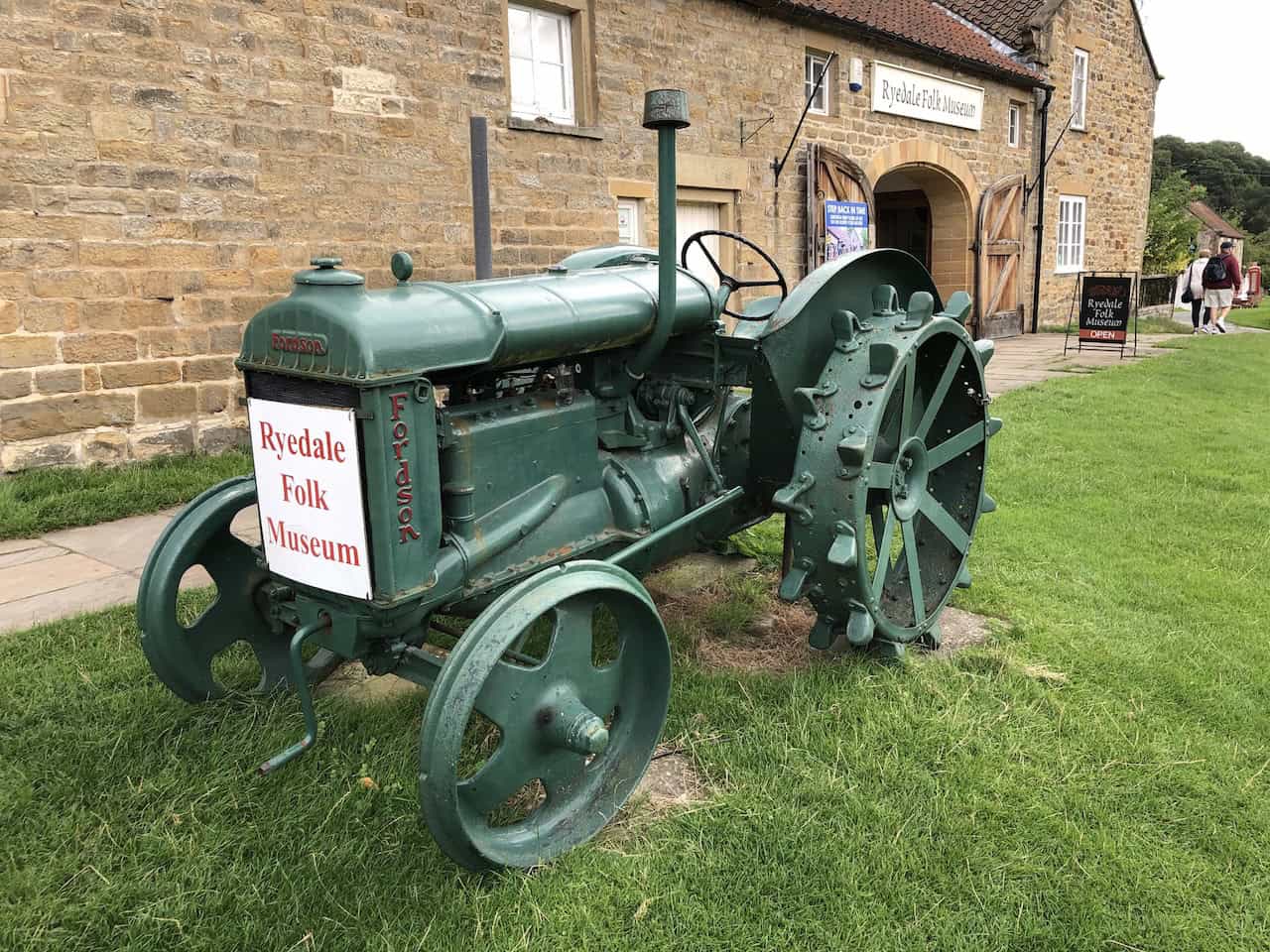
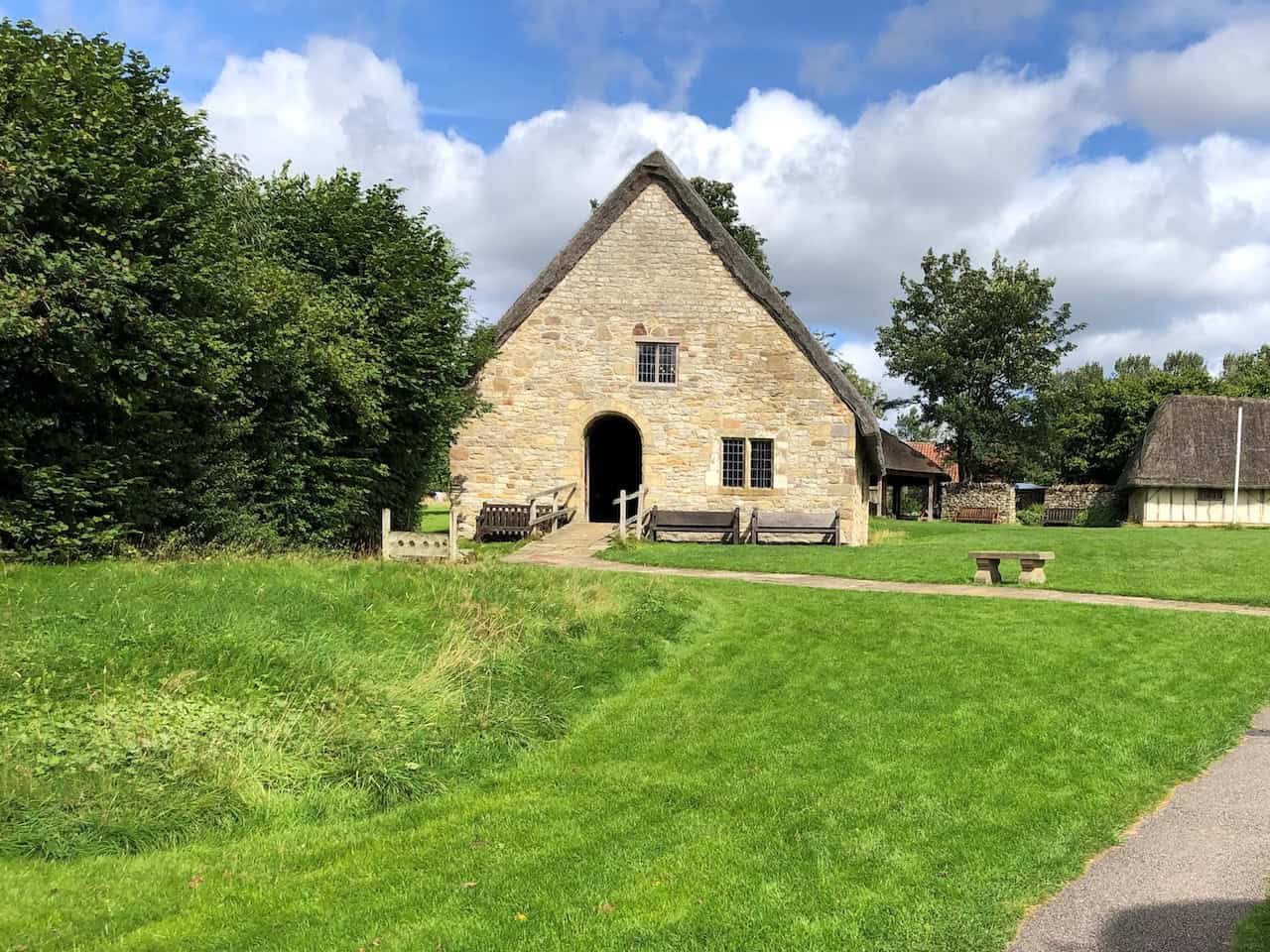
The most significant achievement of the Ryedale Folk Museum is its collection of over twenty heritage buildings, saved from demolition through the process of architectural translocation. This involves carefully dismantling historic structures at their original locations, labelling every stone and timber, and then reassembling them on the museum site to preserve their architectural integrity. It was a true community effort, carried out by local volunteers who gave their time and labour to rescue the region’s disappearing heritage.

Osprey Hikelite Unisex Backpack for Comfortable and Lightweight Hiking
AD The Osprey Hikelite backpack combines lightweight design with practical features, including a breathable mesh back panel, soft webbing straps, and stretch mesh water bottle pockets. With zipped storage and an organiser compartment, it is ideal for day hikes and outdoor use.
Prehistoric and Medieval Dwellings at Ryedale Folk Museum
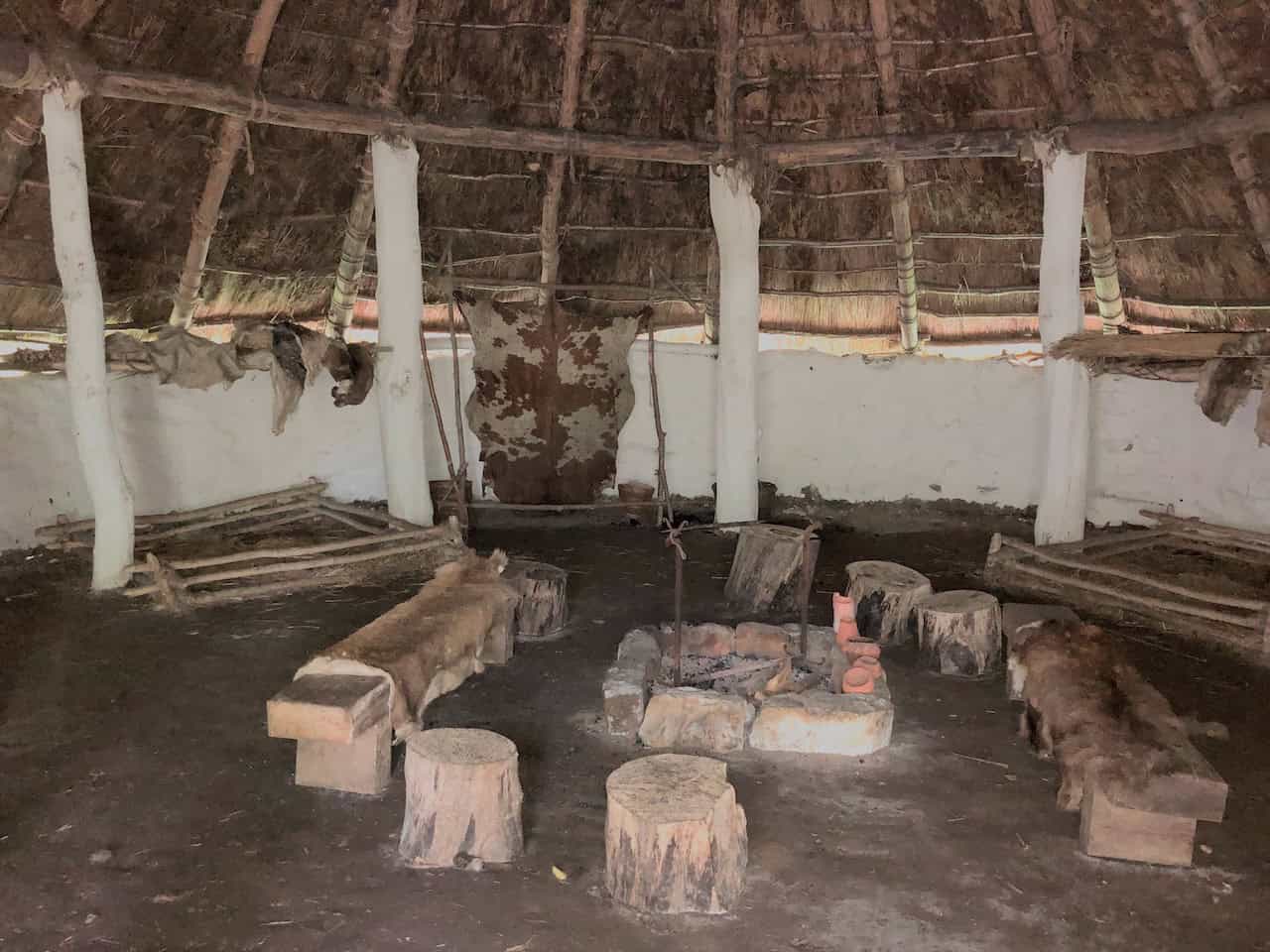
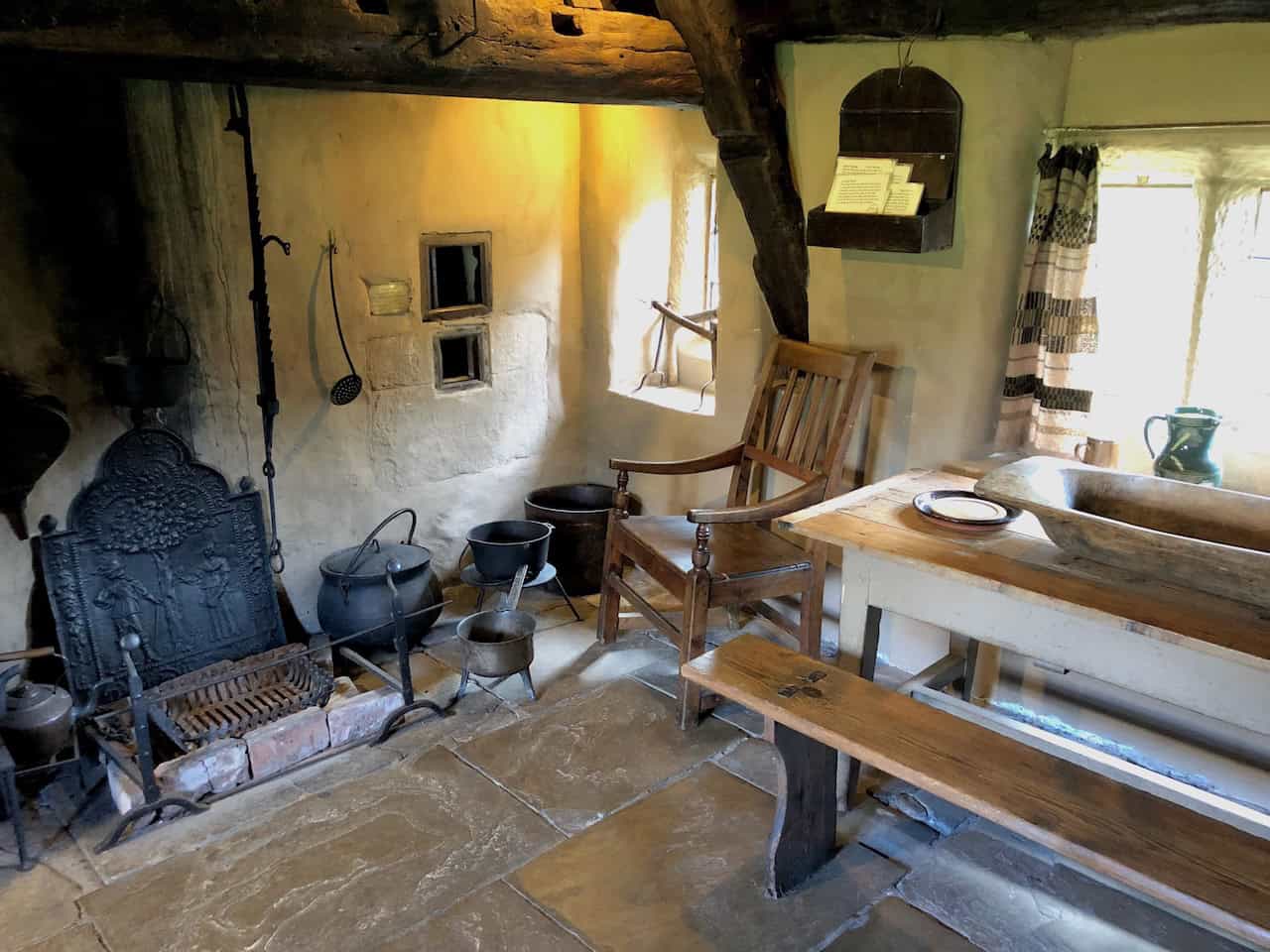
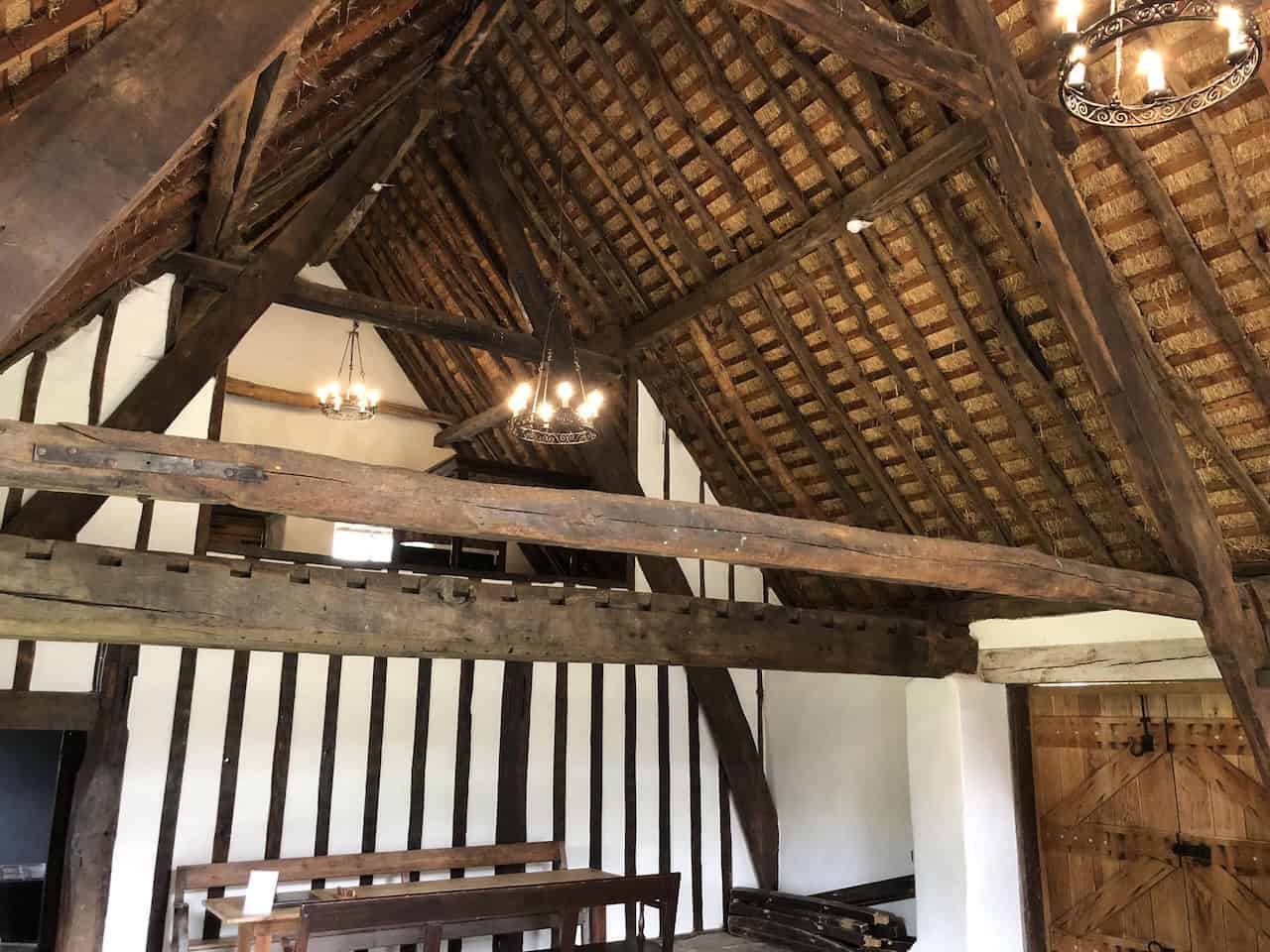
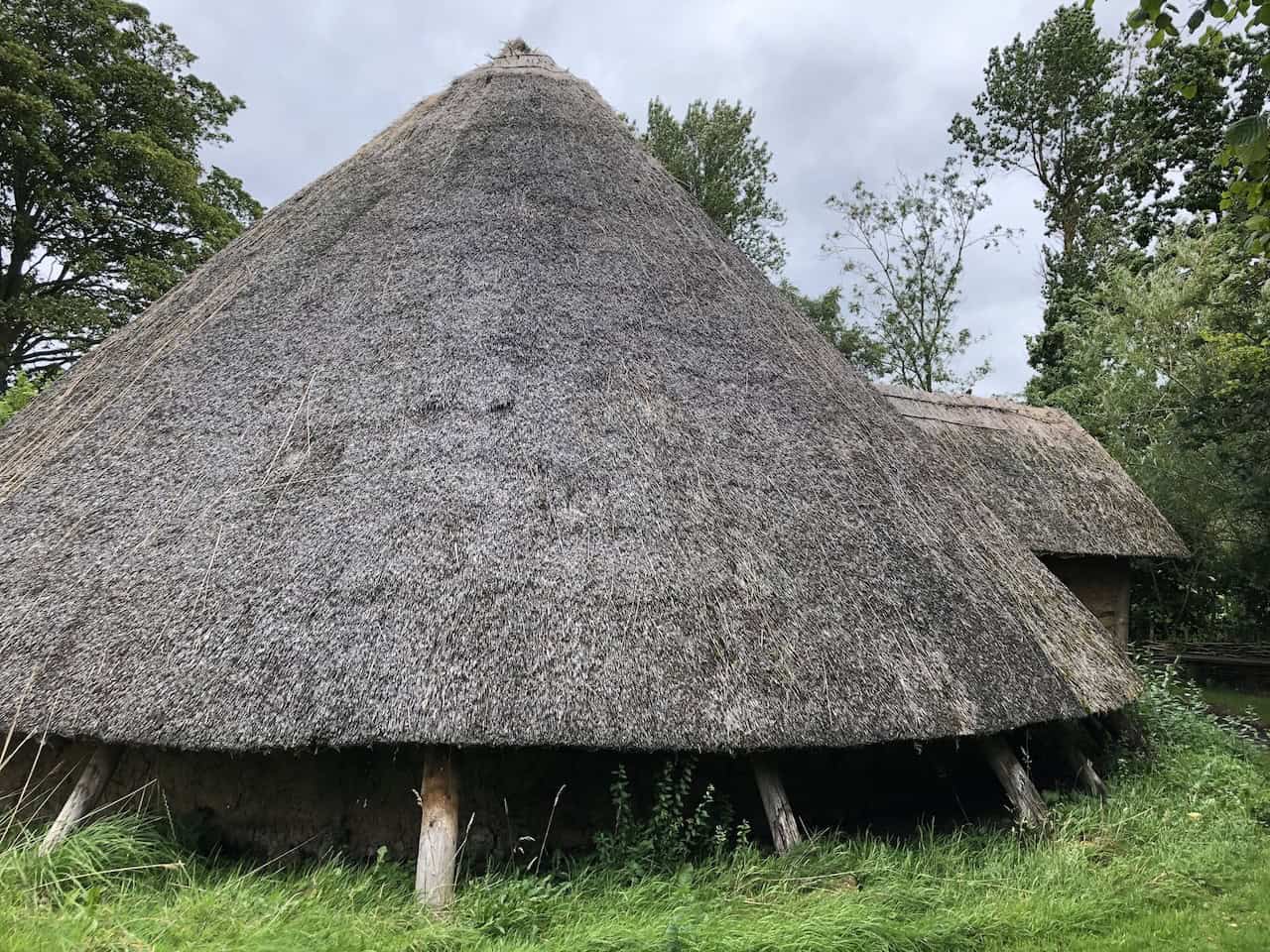
The Iron Age Roundhouse is an authentic reconstruction based on archaeological postholes found in the Ryedale landscape. Built from a wooden frame with wattle and daub walls, it is topped with a massive thatched roof of reeds or straw. Inside, extended families once lived communally in a single circular room, gathered around a central open fire, with smoke escaping through the thatch.
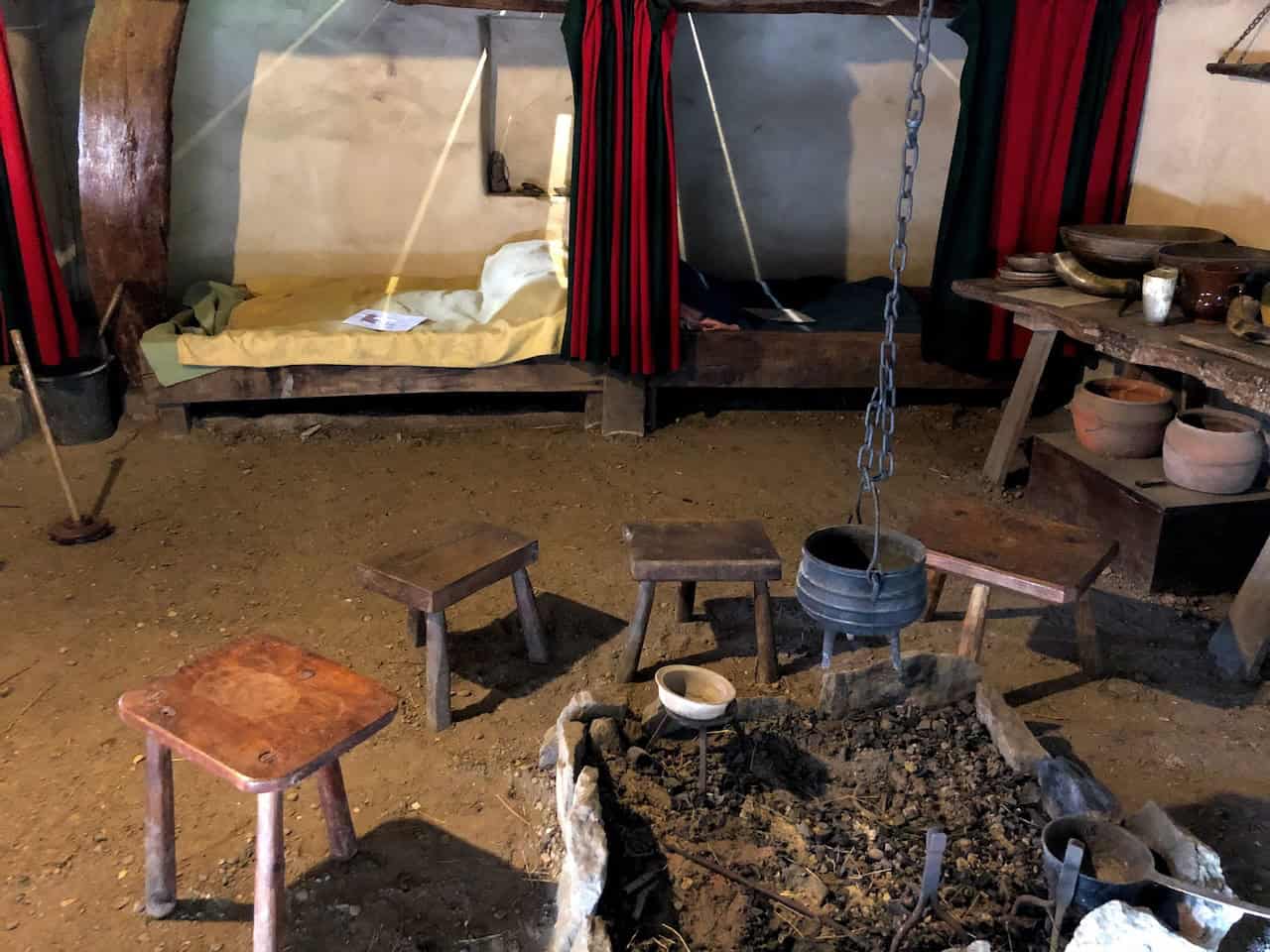
The Medieval Crofter’s Cottage represents peasant life between the 13th and 16th centuries and was built on-site using archaeological research. It shows how families lived in close quarters with their animals, with people at one end of the timber-framed building and livestock housed at the other.
Osprey Hikelite Unisex Backpack for Comfortable and Lightweight Hiking
AD The Osprey Hikelite backpack combines lightweight design with practical features, including a breathable mesh back panel, soft webbing straps, and stretch mesh water bottle pockets. With zipped storage and an organiser compartment, it is ideal for day hikes and outdoor use.
The Cruck-Framed Collection
The museum is an important sanctuary for cruck-framed buildings, a medieval construction technique using large, naturally curved oak beams, split in half to form a structural A-frame.
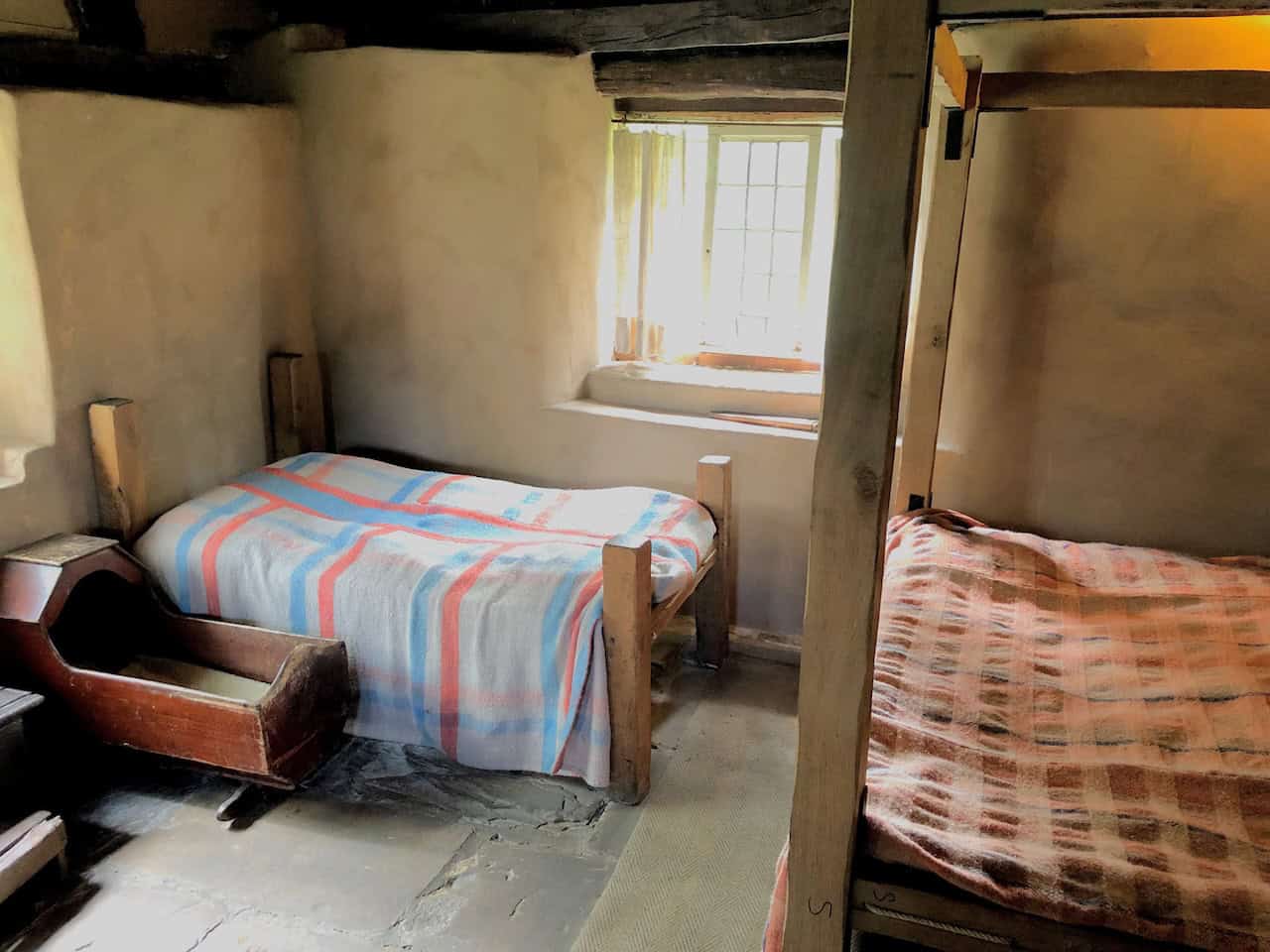
Stang End Cruck House, originally from Danby, is a 17th-century yeoman farmer’s home and was the first building re-erected at the museum, in 1967. It features one of only twenty known witch posts in existence, placed at the hearth to protect against evil influences.
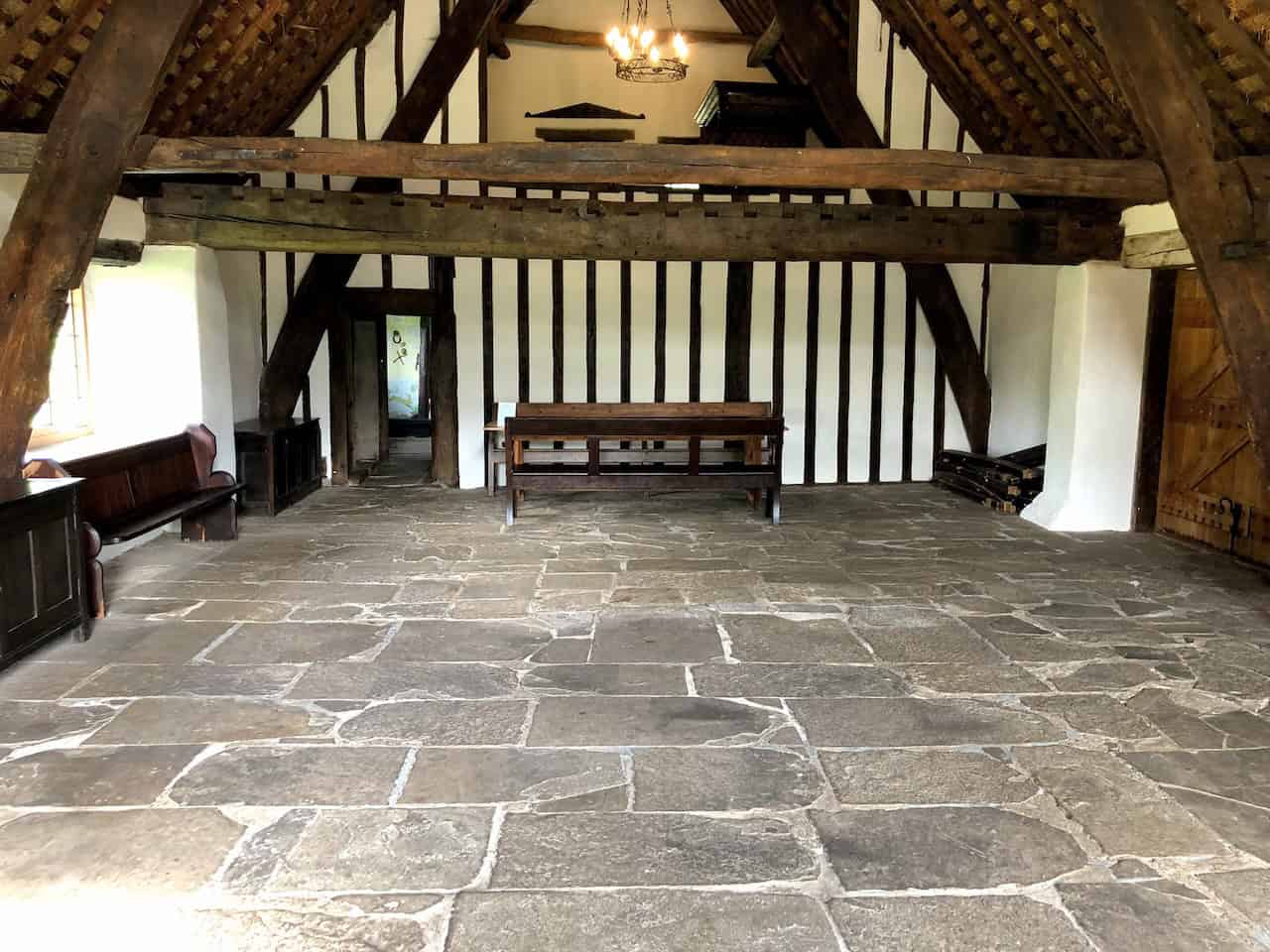
The Manor House, known as Harome Hall, was reconstructed in 1971 and contains the largest cruck timbers ever found in North East Yorkshire. The building was constructed without nails, and its massive roof required nine tonnes of wheat straw for thatching. It once served as the hall for the Manor Court, where community disputes were settled.
Peak Bagging Wainwrights with Routes to Complete All Fells
AD This comprehensive guide offers 45 circular routes linking all 214 Wainwright fells. With maps, GPX downloads, elevation profiles, and practical advice, it provides efficient yet inspiring ways to complete this classic Lake District challenge at your own pace.
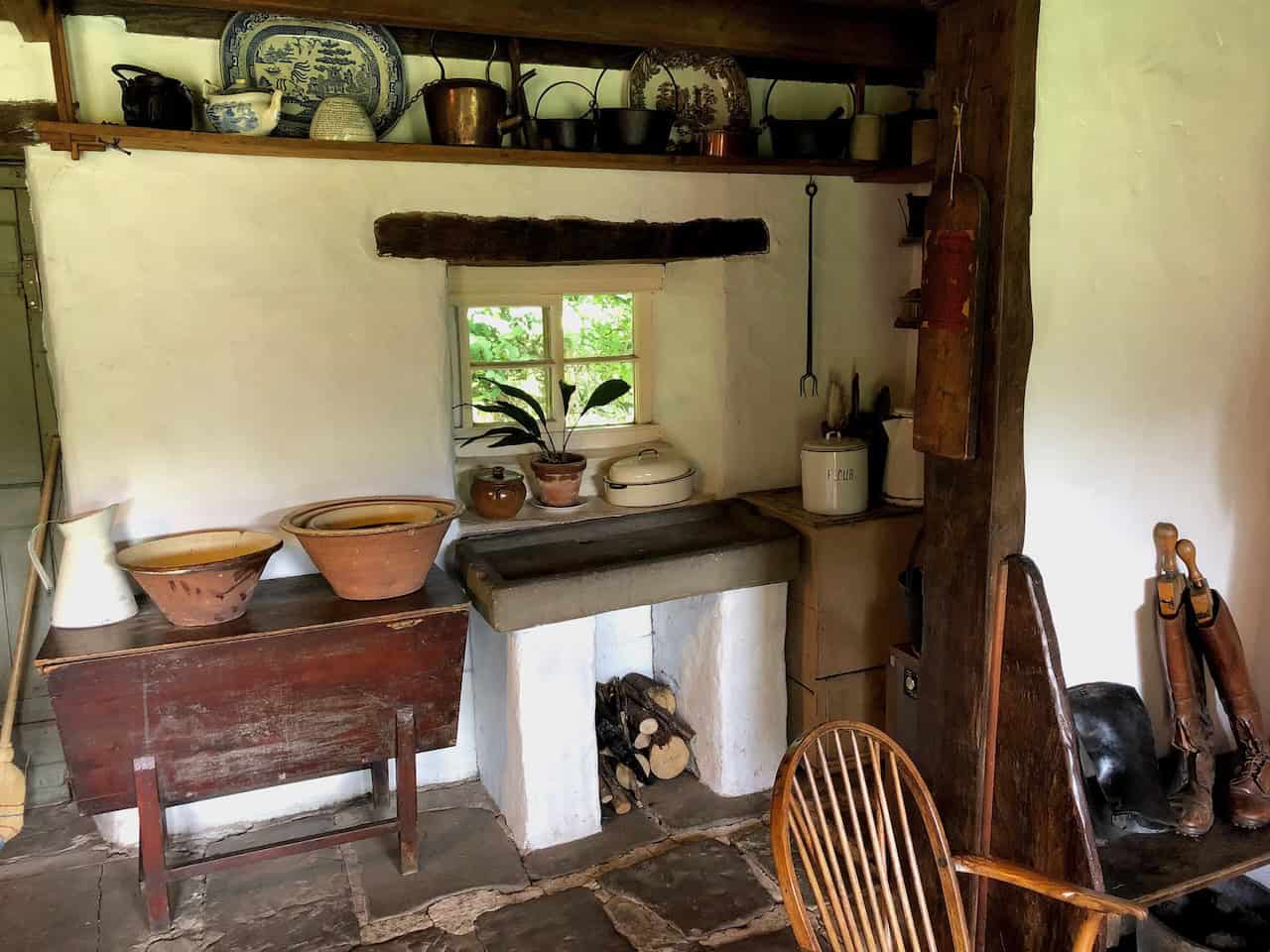
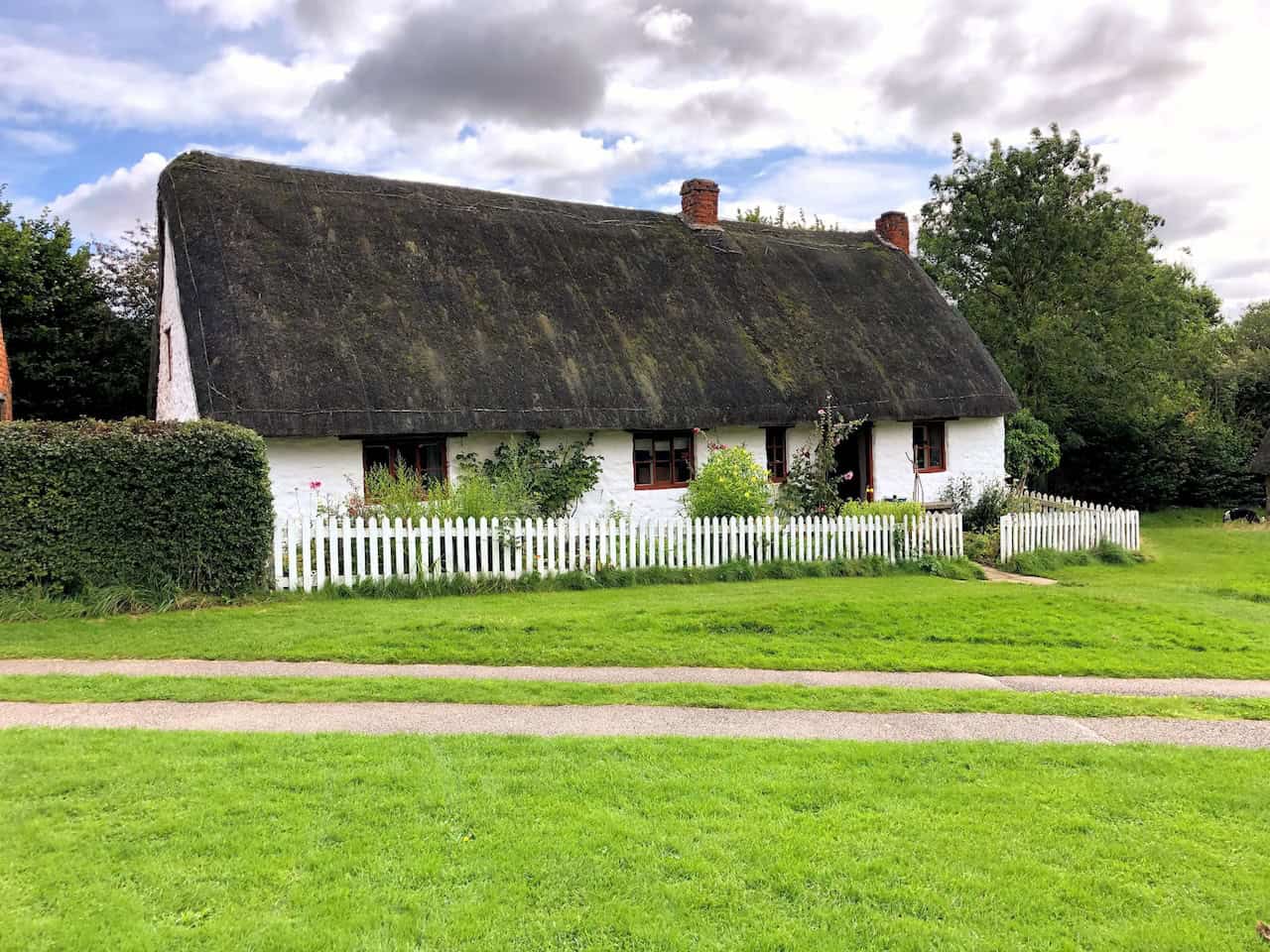
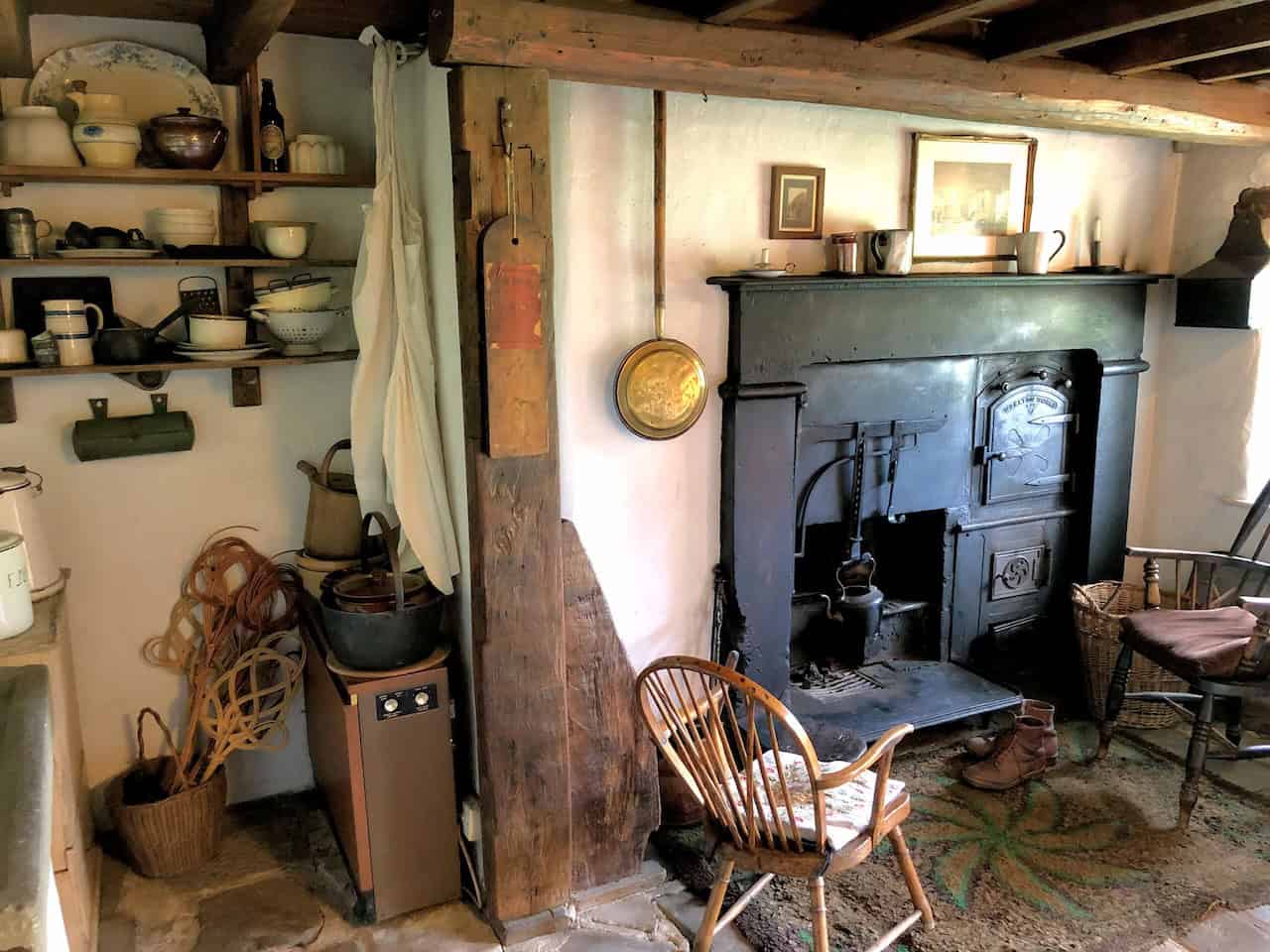
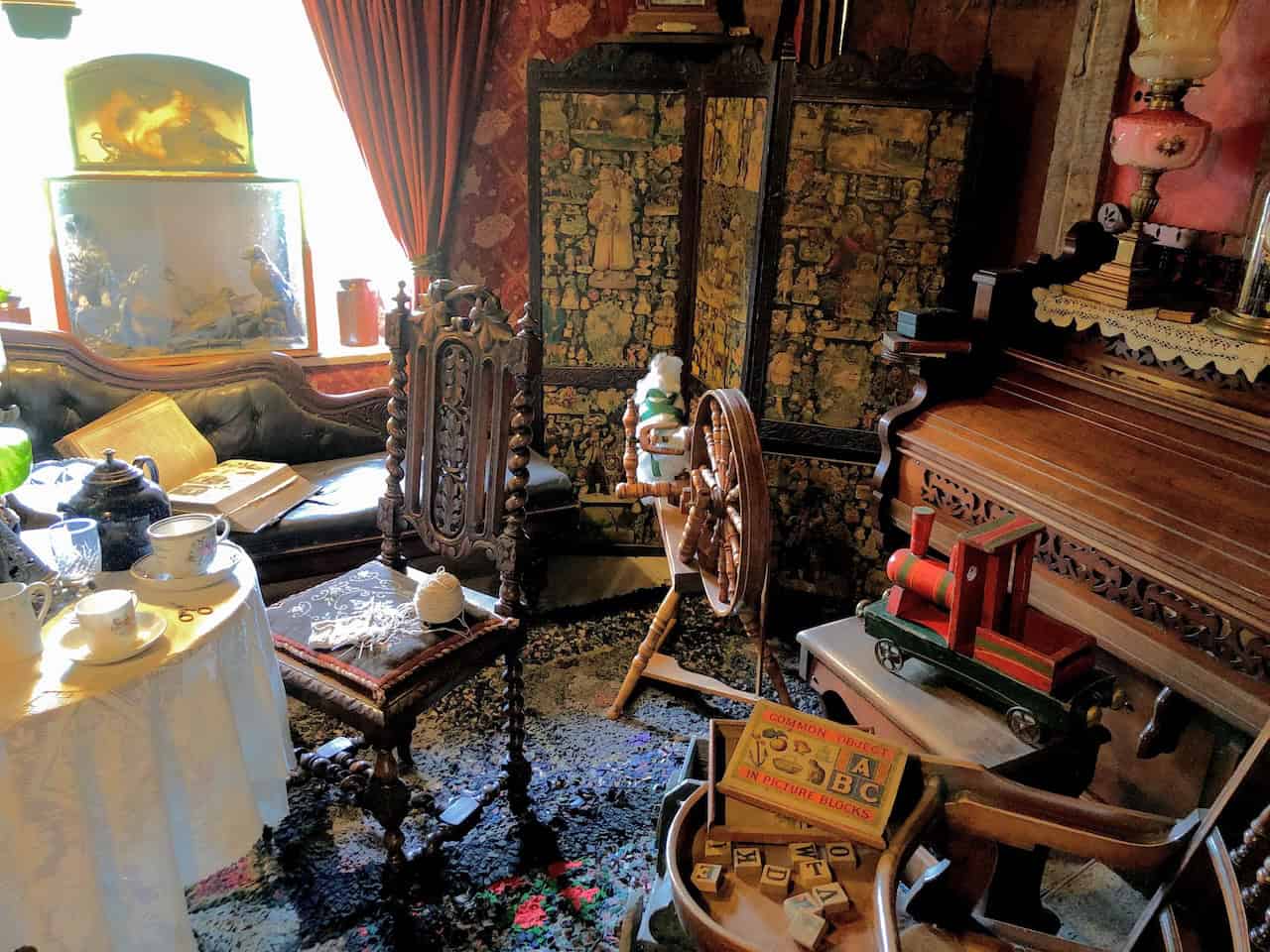
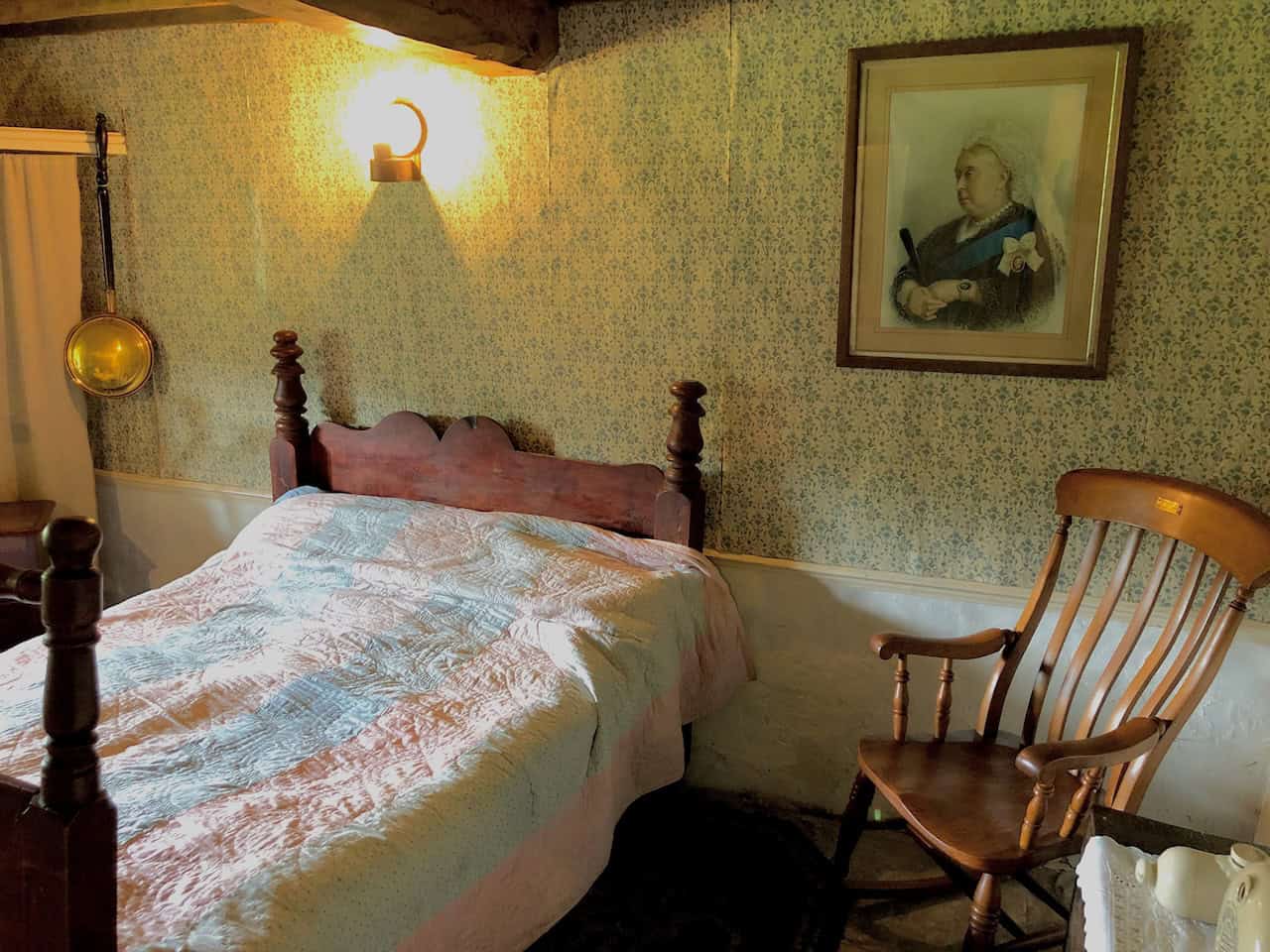
White Cottage is a Victorian cruck-framed cottage from Harome that served as a labouring family’s home. It has a working kitchen range still used for baking demonstrations and a traditional cottage garden.
The Rural Crafts and Trades That Ryedale Folk Museum Has Kept Alive
The workshops at the Ryedale Folk Museum represent the essential trades that kept isolated moorland communities self-sufficient. Each one illustrates the high level of manual skill involved and the close interdependency between different crafts.
Peak Bagging Wainwrights with Routes to Complete All Fells
AD This comprehensive guide offers 45 circular routes linking all 214 Wainwright fells. With maps, GPX downloads, elevation profiles, and practical advice, it provides efficient yet inspiring ways to complete this classic Lake District challenge at your own pace.
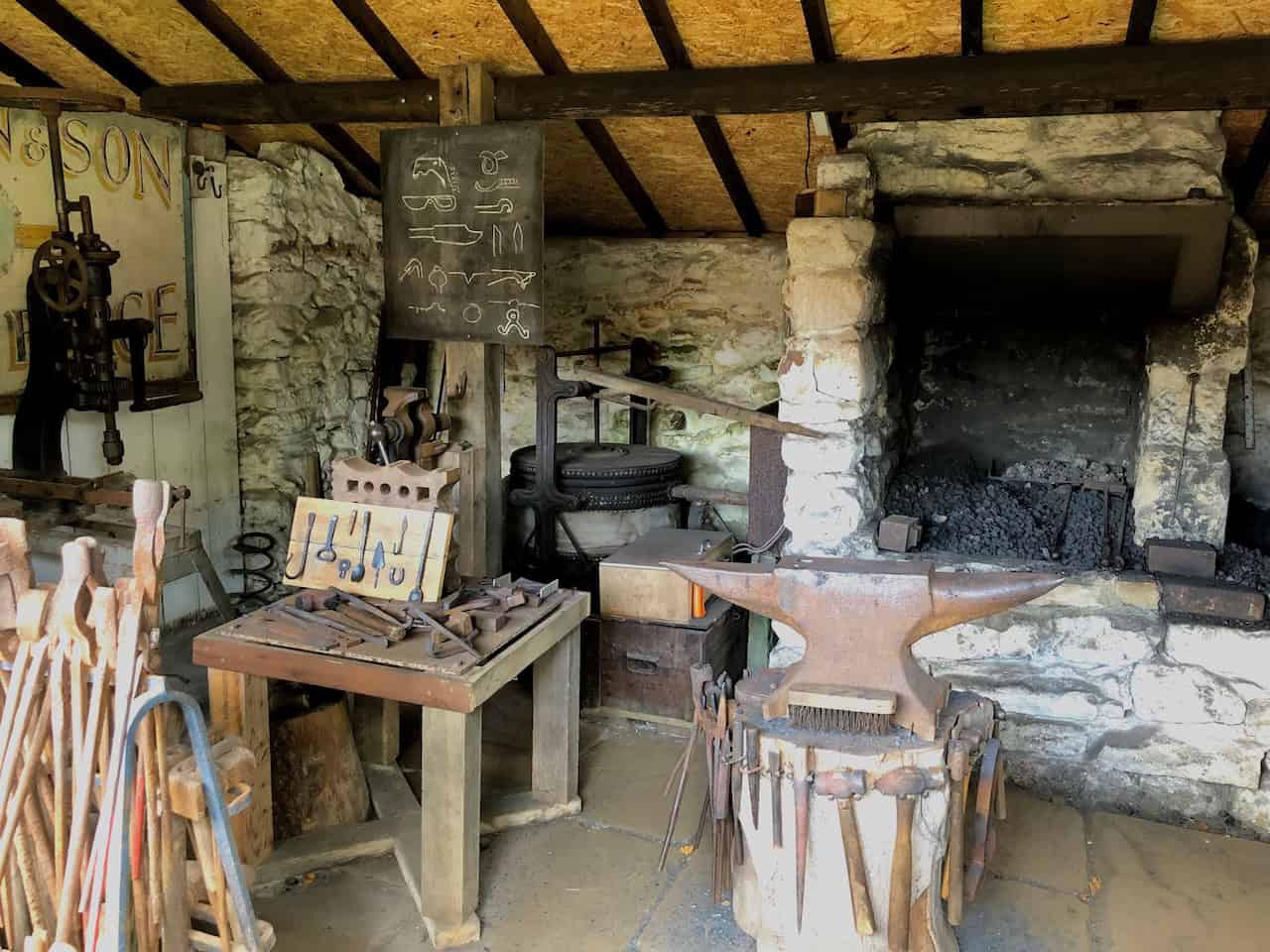
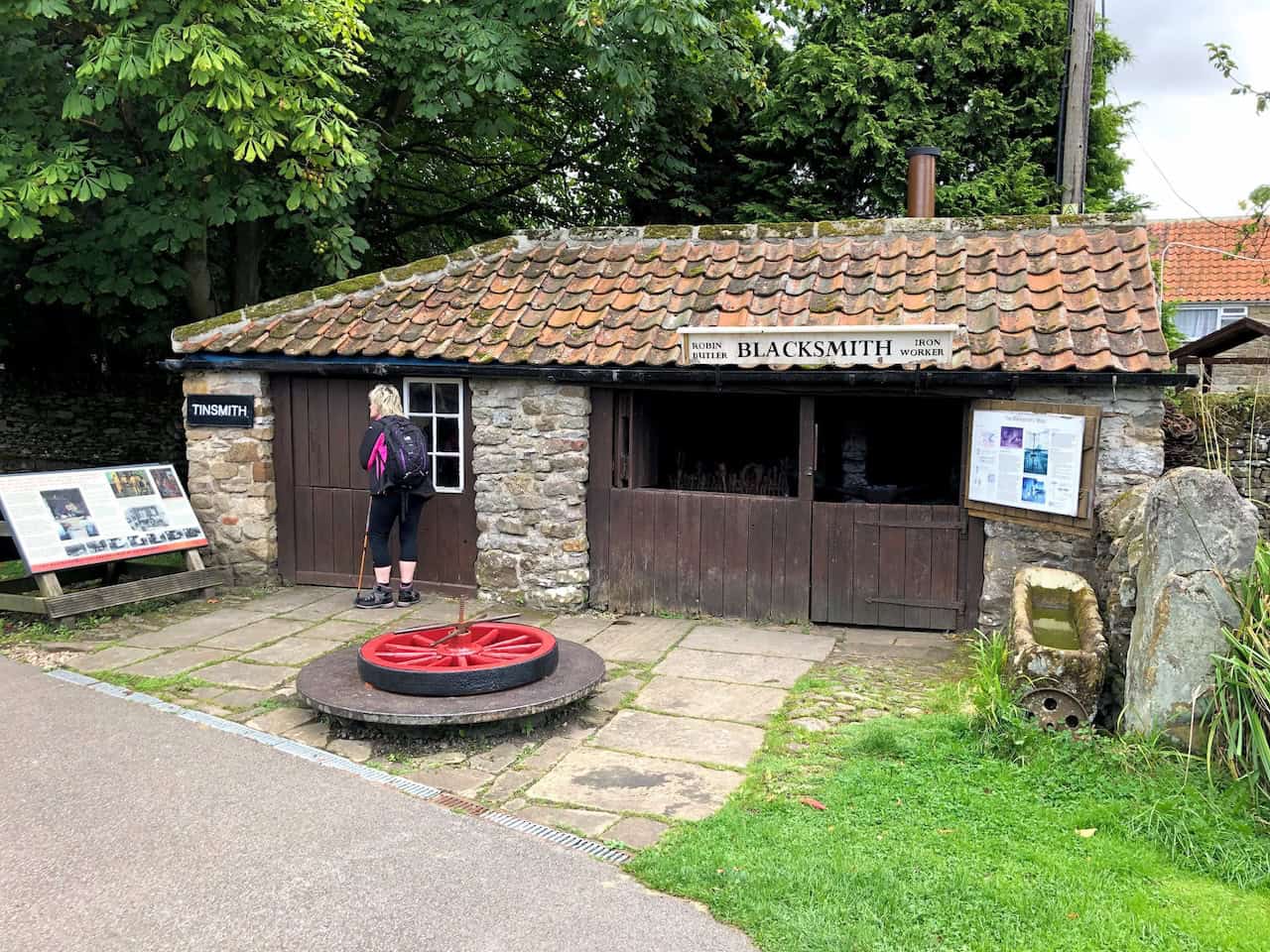
The Blacksmith’s Forge
The forge was at the heart of village life, producing and repairing everything from horseshoes to agricultural tools. Outside sits a hooping plate, used to fit metal rims onto wooden wheels. The blacksmith would heat a metal tyre until it expanded, place it over the wooden wheel, and then douse it with cold water so it contracted into a tight fit. Volunteers still carry out demonstrations here today.
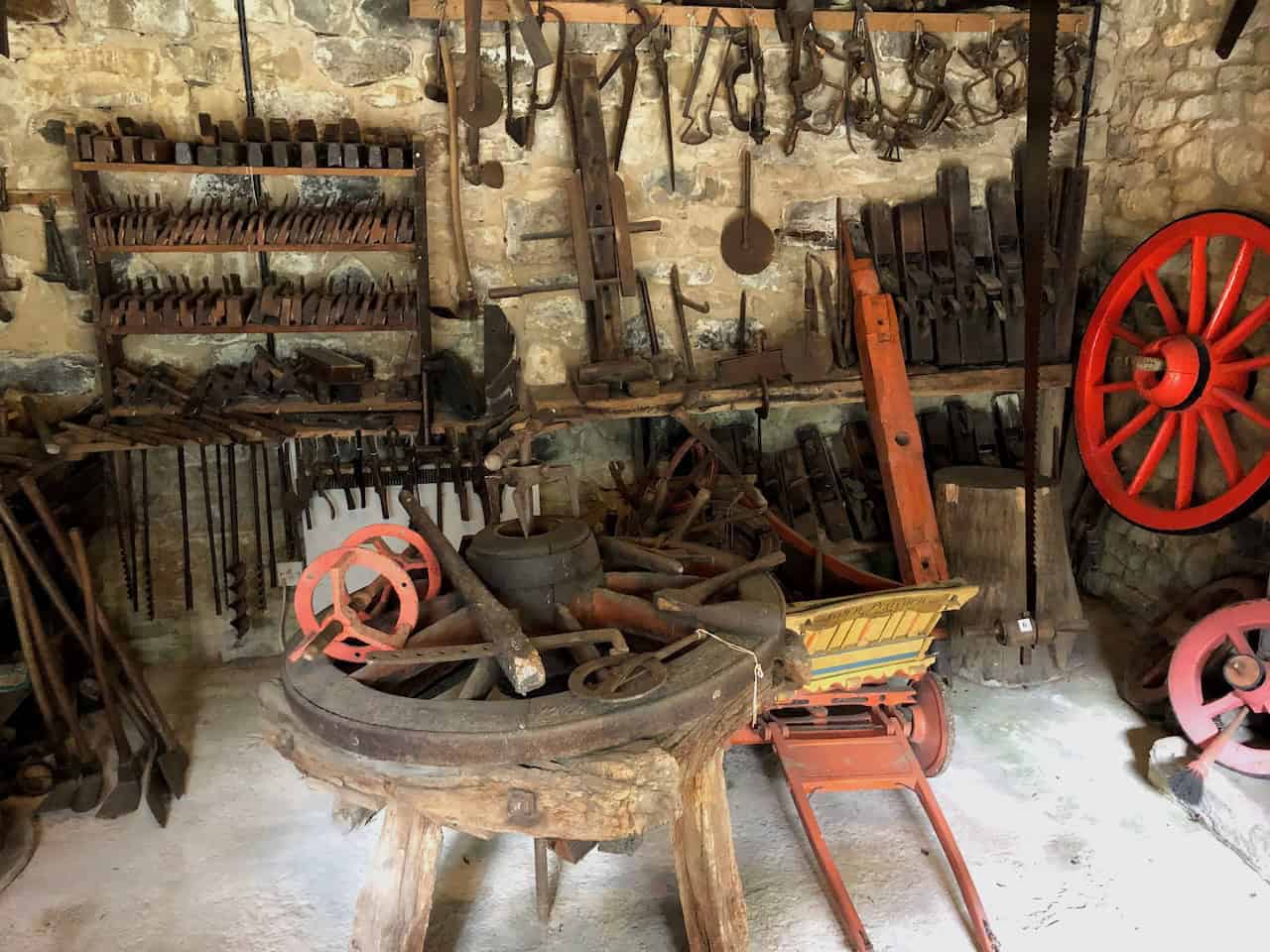
The Wheelwright and Wainwright’s Workshop
The wheelwright worked closely with the blacksmith, specialising in the complex geometry of wooden wheels for carts, wagons, and farm machinery. Visitors can see the tools used to craft wheel components, including spokes, felloes, and hubs. Historical records at the museum mention the Tomlinson family, who served the region as woodworkers and wheelwrights for generations.
Berghaus Hillmaster II GTX Men's High Rise Hiking Boots
AD The Berghaus Hillmaster II GTX men’s hiking boots feature a waterproof, breathable GORE-TEX membrane, a memory foam tongue and collar for a personalised fit, and a Vibram sole delivering exceptional grip, stability, and shock protection for confident performance on any terrain.
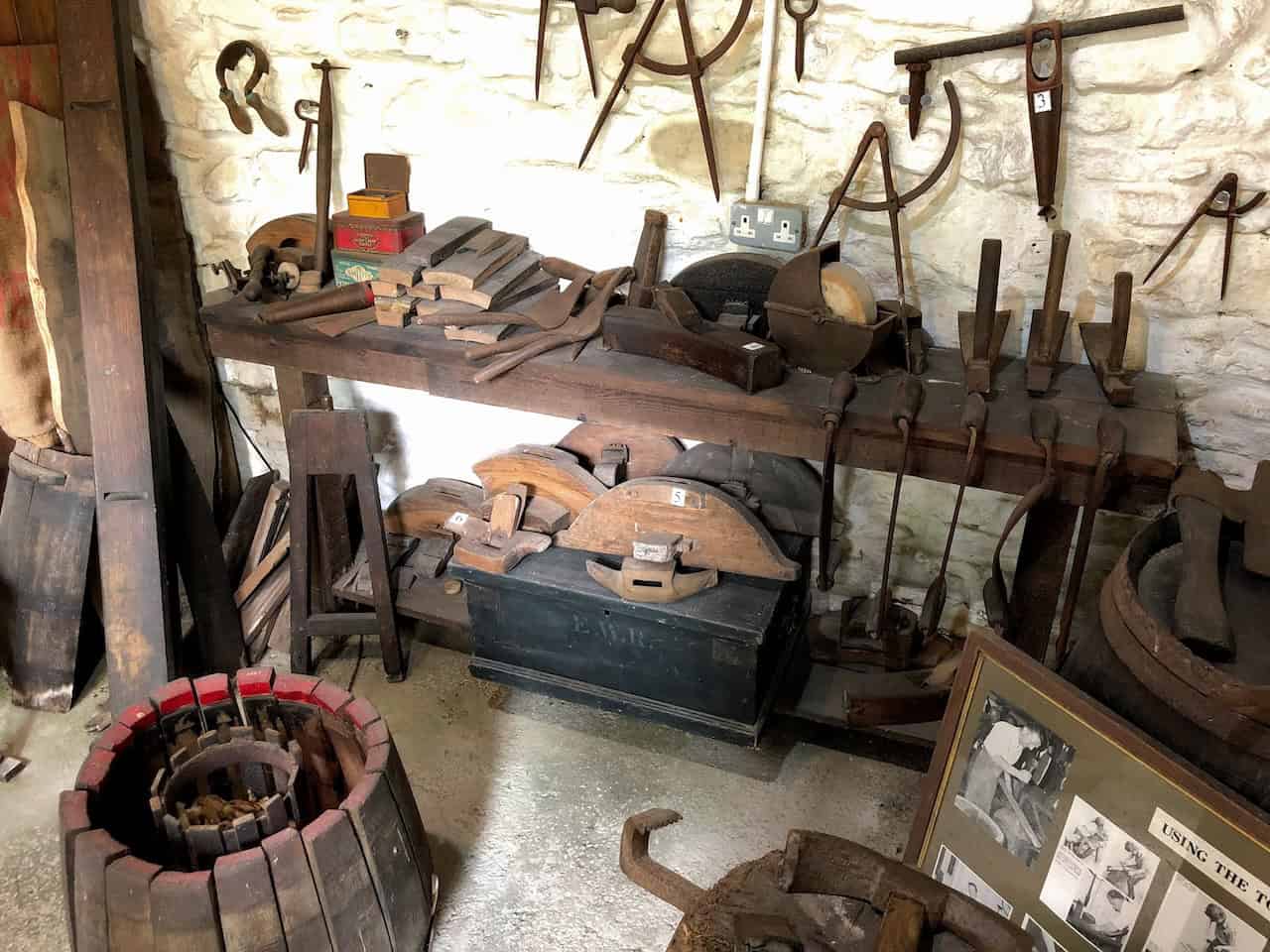
The Cooper’s Shop at Ryedale Folk Museum
The cooper made and repaired the barrels and casks used to store and transport liquids and dry goods. The shop displays the precision tools used to shape wooden staves and assemble them into watertight containers, all without the use of modern sealants.
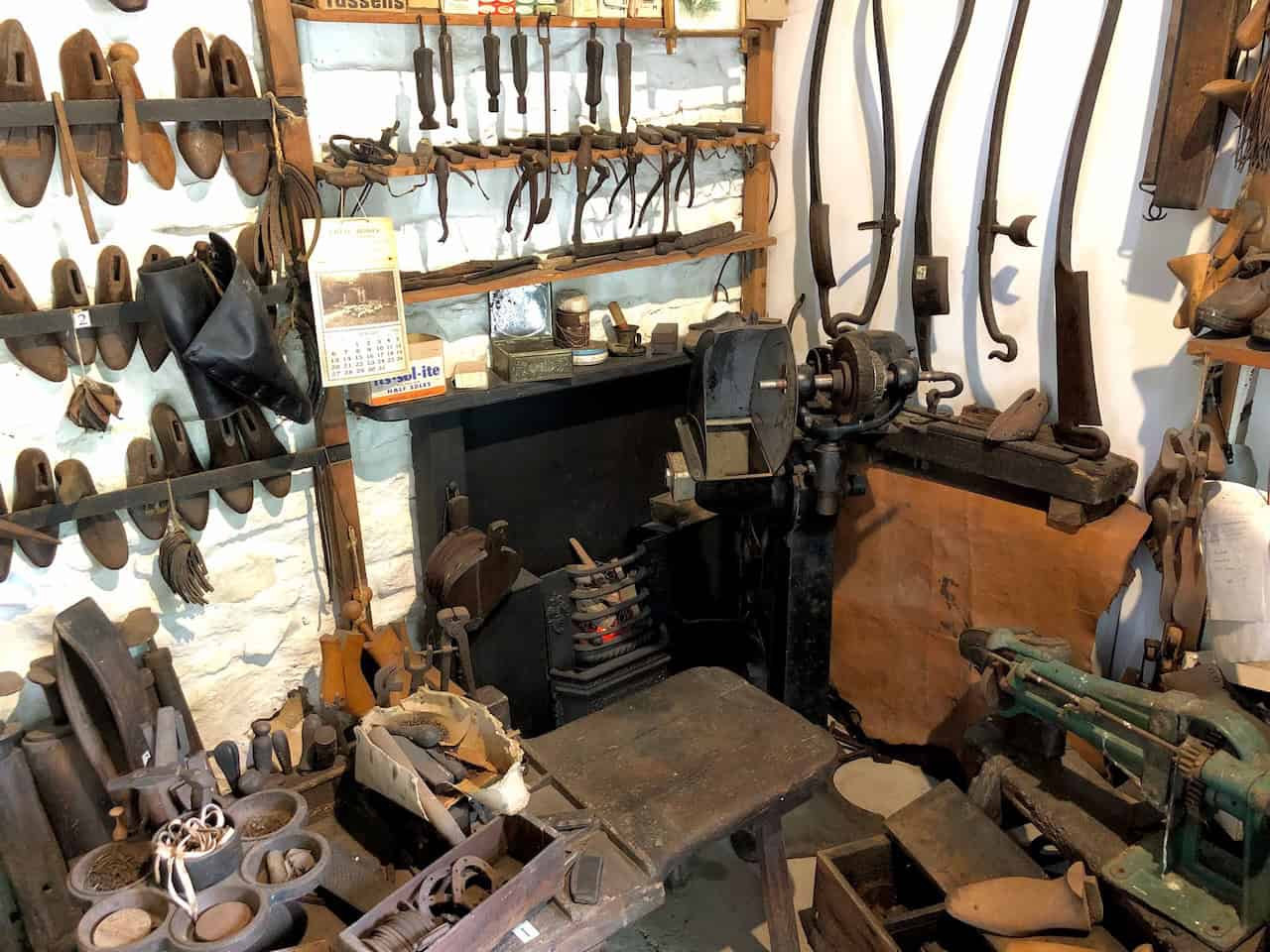
The Cobbler’s Shop
This workspace shows the making and repair of traditional footwear, including sturdy clogs for farm work. The shop features cobblers’ benches equipped with historical tools such as lasts, the wooden forms shaped like a foot, and awls for piercing heavy leather.
Berghaus Hillmaster II GTX Men's High Rise Hiking Boots
AD The Berghaus Hillmaster II GTX men’s hiking boots feature a waterproof, breathable GORE-TEX membrane, a memory foam tongue and collar for a personalised fit, and a Vibram sole delivering exceptional grip, stability, and shock protection for confident performance on any terrain.
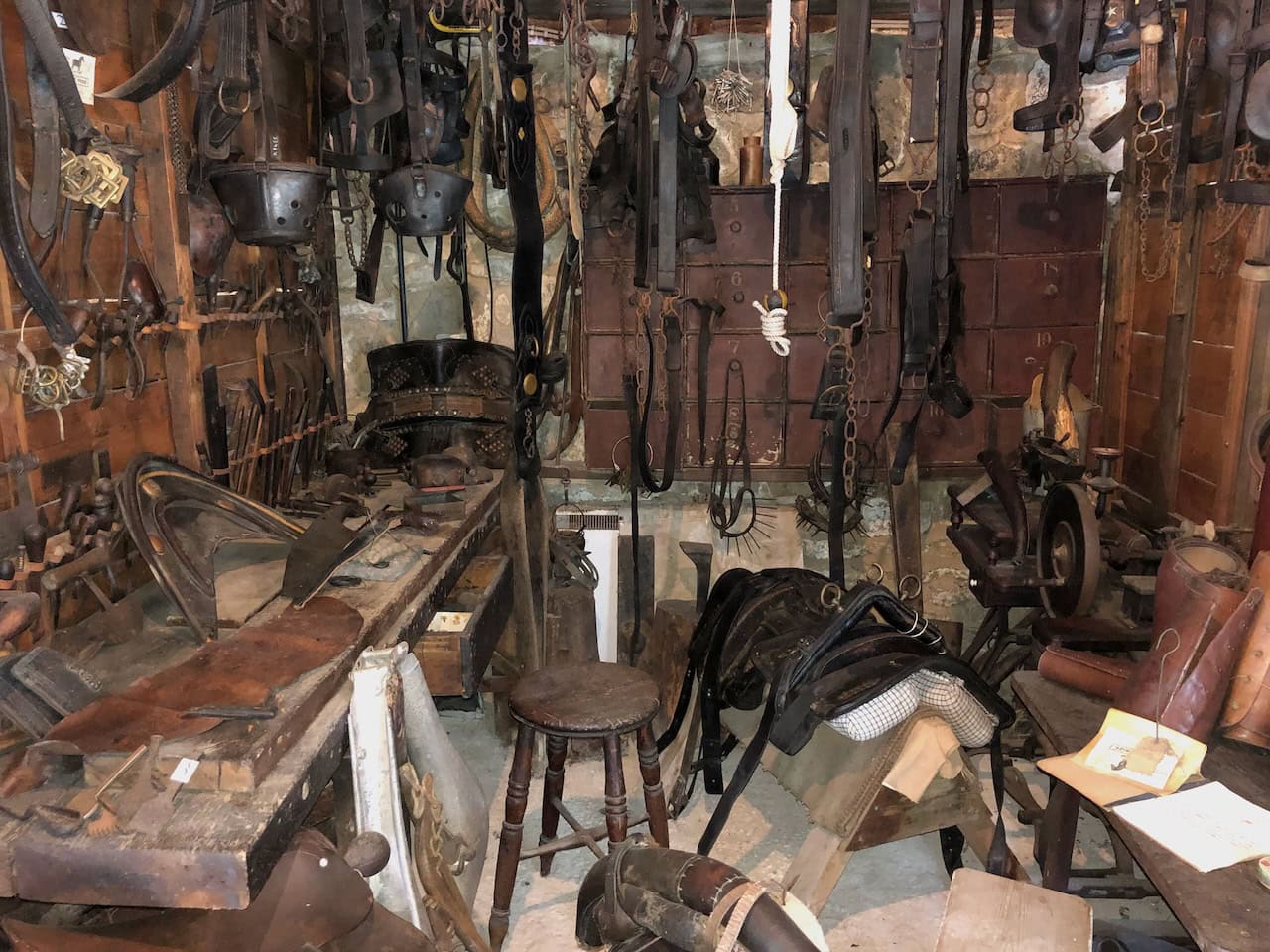
The Saddler’s Shop
The saddler produced the leather harnesses and equipment needed for working animals and horse-drawn transport. The workshop contains displays of leather-working tools and specialist equipment used to make durable gear for the region’s horses and ponies.
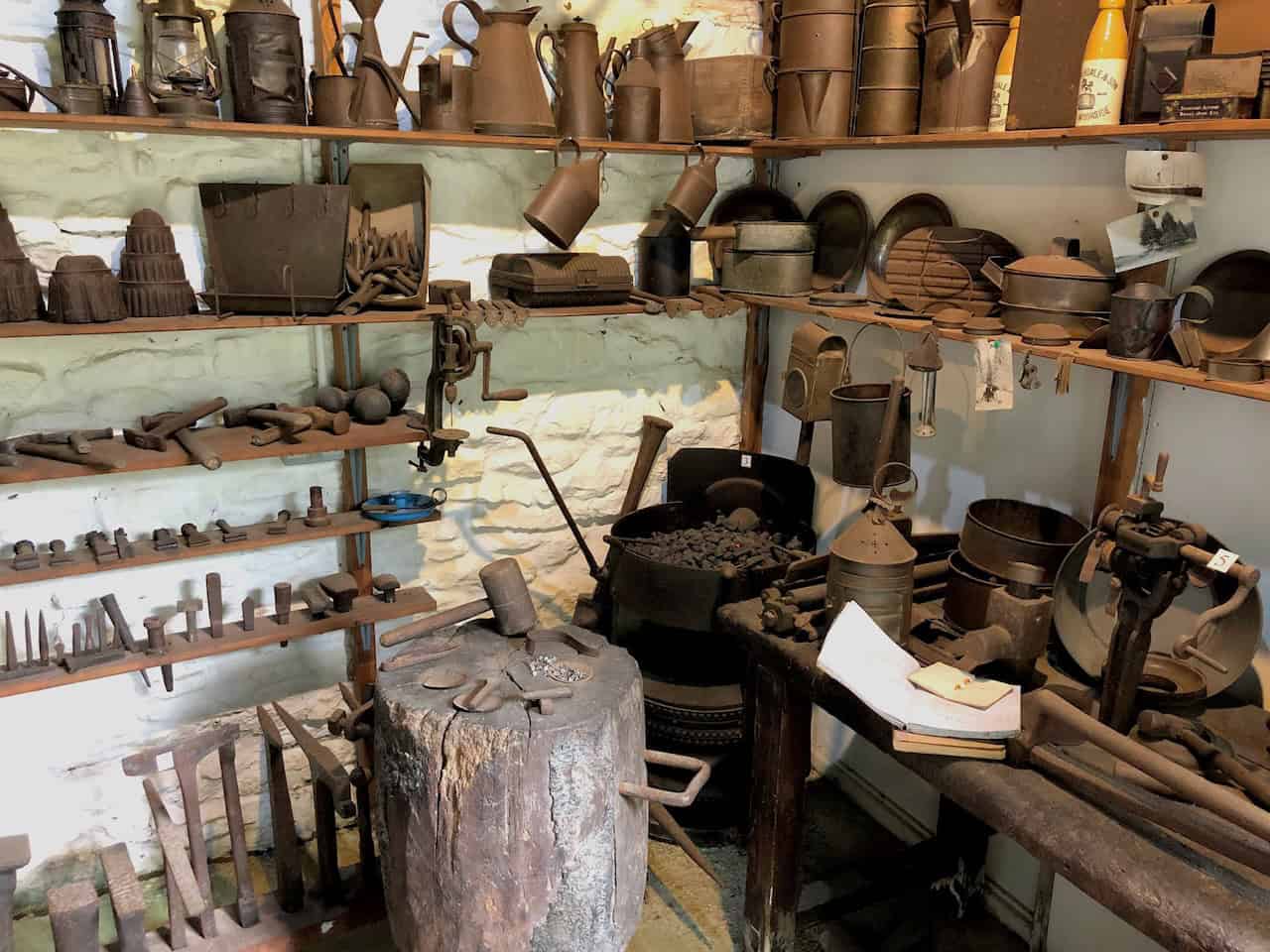
The Tinsmith’s Shop
The tinsmith made and repaired everyday household items such as buckets, watering cans, and candle holders. The shop is filled with sheets of tin, specialist shears, and soldering irons, reflecting a time when metal goods were carefully repaired rather than replaced.
Kendal Mint Co Energy Gel with Citrus and Mint Flavour
AD Kendal Mint Co energy gels deliver 27g of fast-absorbing carbohydrates plus electrolytes and B vitamins for improved performance. Vegan, gluten free, and Informed Sport certified, these caffeine-free gels are refreshing, easy to digest, and ideal for running, cycling, and endurance.
The Joiner and Carpenter’s Shop
The joiner specialised in finer woodworking, from furniture to the internal fittings of buildings. Exhibits include Tomlinson dressers, lodging boxes, and boxes made for baking gingerbread. Tools such as carpenters’ planes illustrate the skill required before the age of industrial manufacturing.
The Iron Foundry at Ryedale Folk Museum
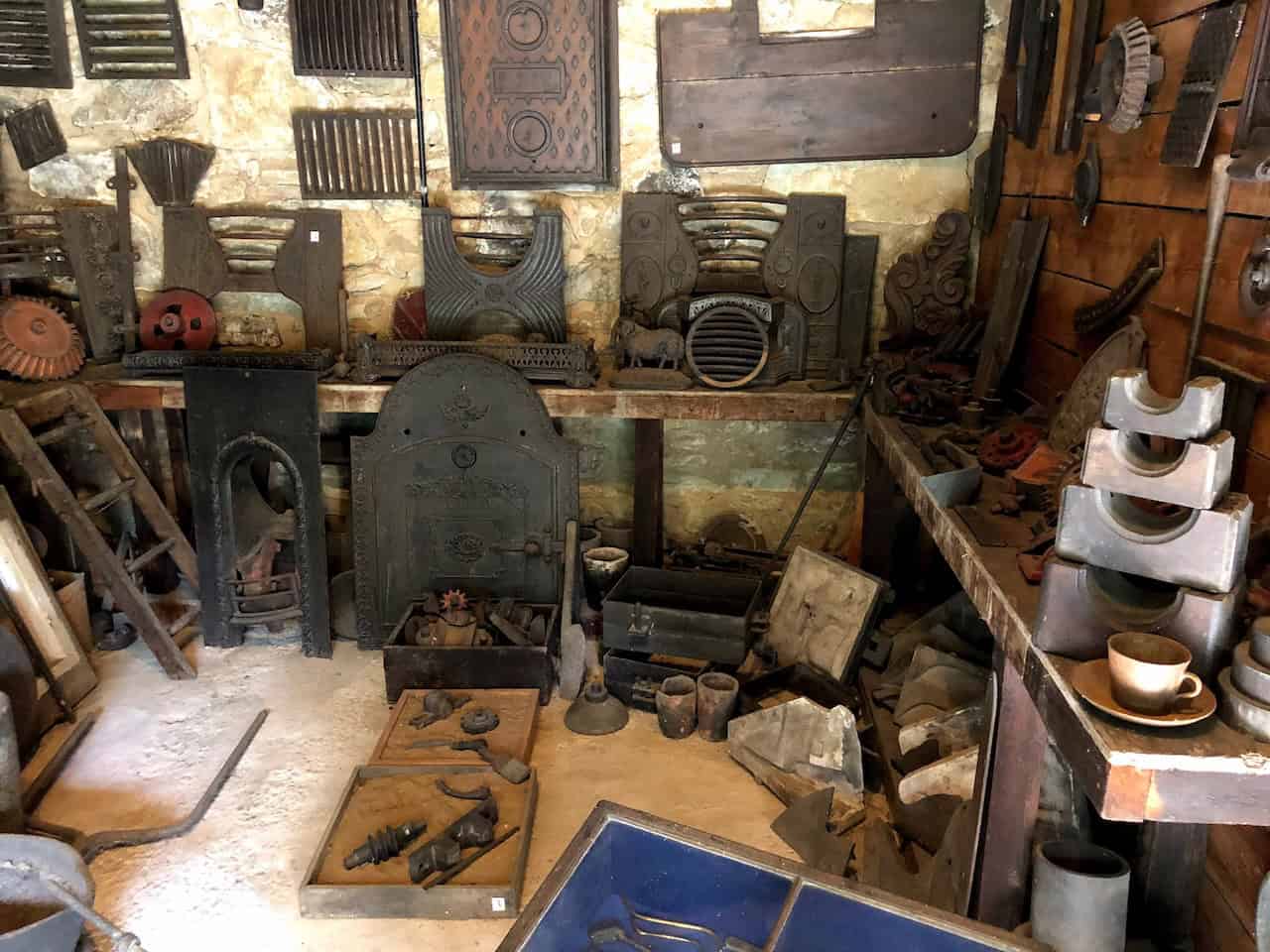
The foundry reflects the region’s industrial growth, particularly after the railway arrived in the 1840s. It relates to the Carter family, three brothers who each opened separate foundries in Kirkbymoorside, one of which specialised in producing kitchen ranges.
The Undertaker’s Premises
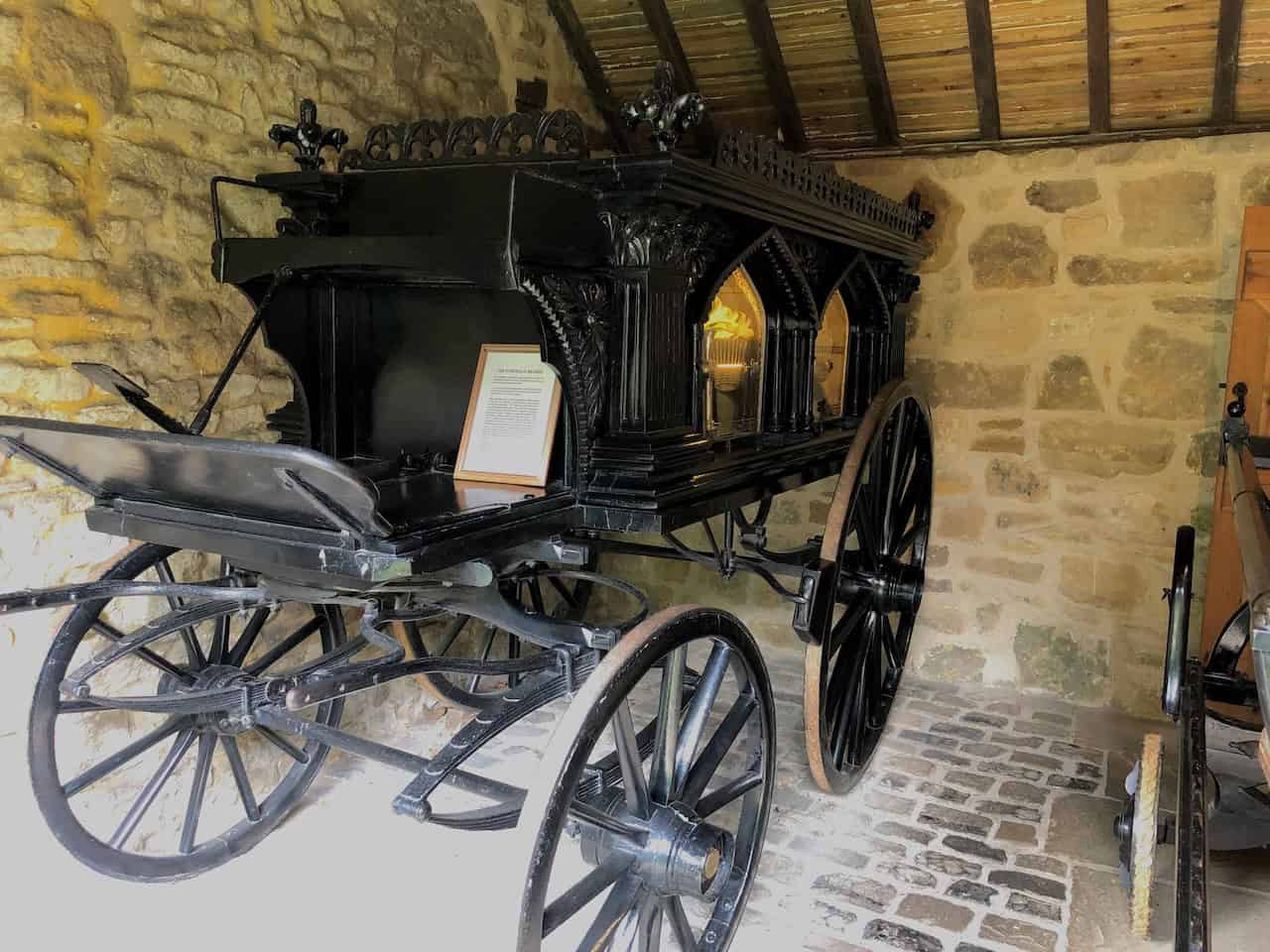
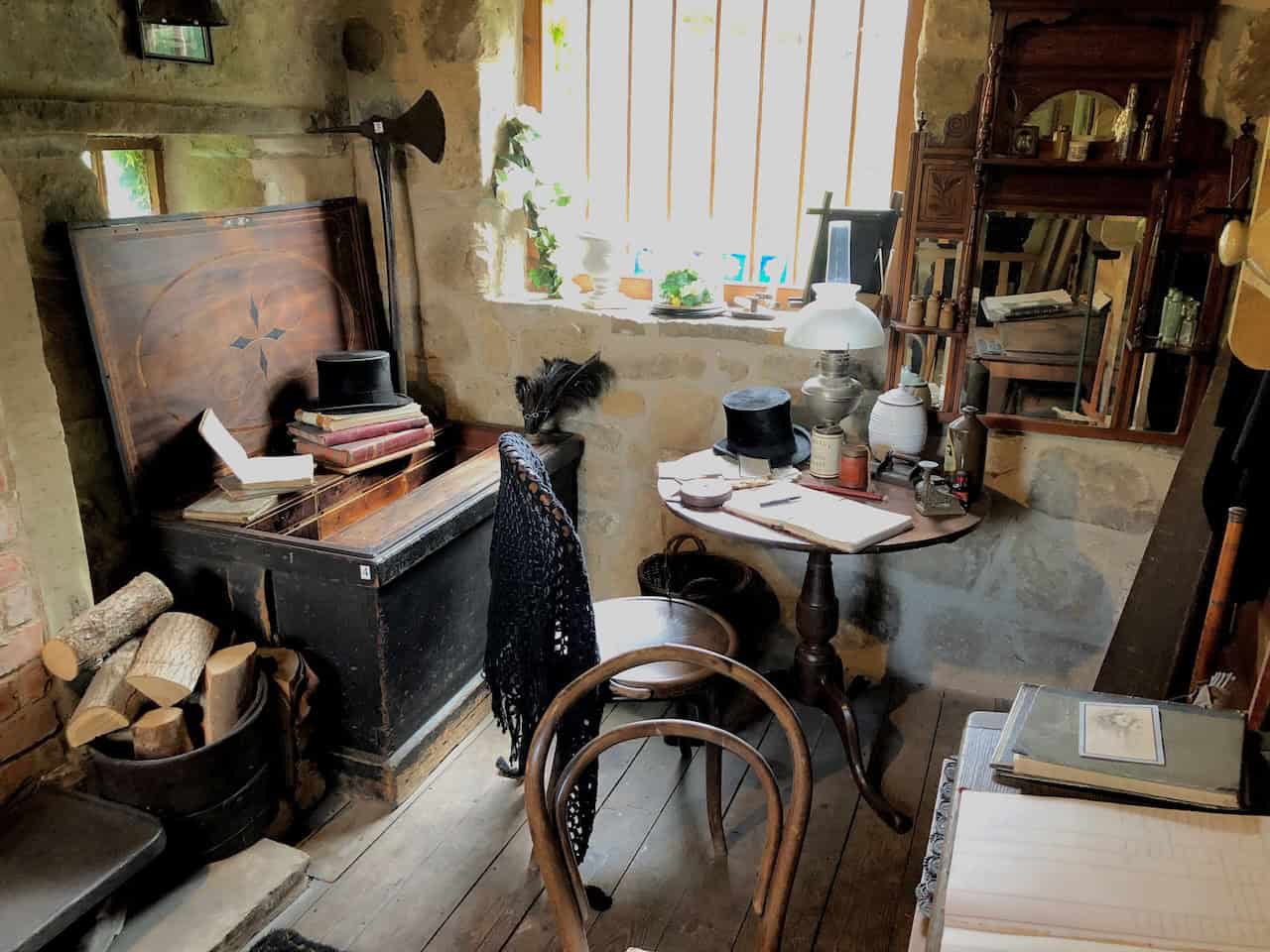
This workshop offers a sobering look at the social history of the dales, housing funeral artefacts and elaborate 19th-century memorial cards. Its most significant item is the Farndale Hearse of 1839, bought collectively by the remote moorland community. In an unusual modern twist, the premises are now licensed for intimate wedding ceremonies, though it accommodates only two witnesses and is noted as not being for the fainthearted.
Kendal Mint Co Energy Gel with Citrus and Mint Flavour
AD Kendal Mint Co energy gels deliver 27g of fast-absorbing carbohydrates plus electrolytes and B vitamins for improved performance. Vegan, gluten free, and Informed Sport certified, these caffeine-free gels are refreshing, easy to digest, and ideal for running, cycling, and endurance.
Shops, Schools, Chapels and Secret Kilns: Rural Life Beyond the Home
The commercial and public life exhibits at the Ryedale Folk Museum offer a vivid glimpse into how rural communities once shopped, learned, worshipped, and even operated illicit trades.
The 1950s Store and Vintage Chemist at Ryedale Folk Museum
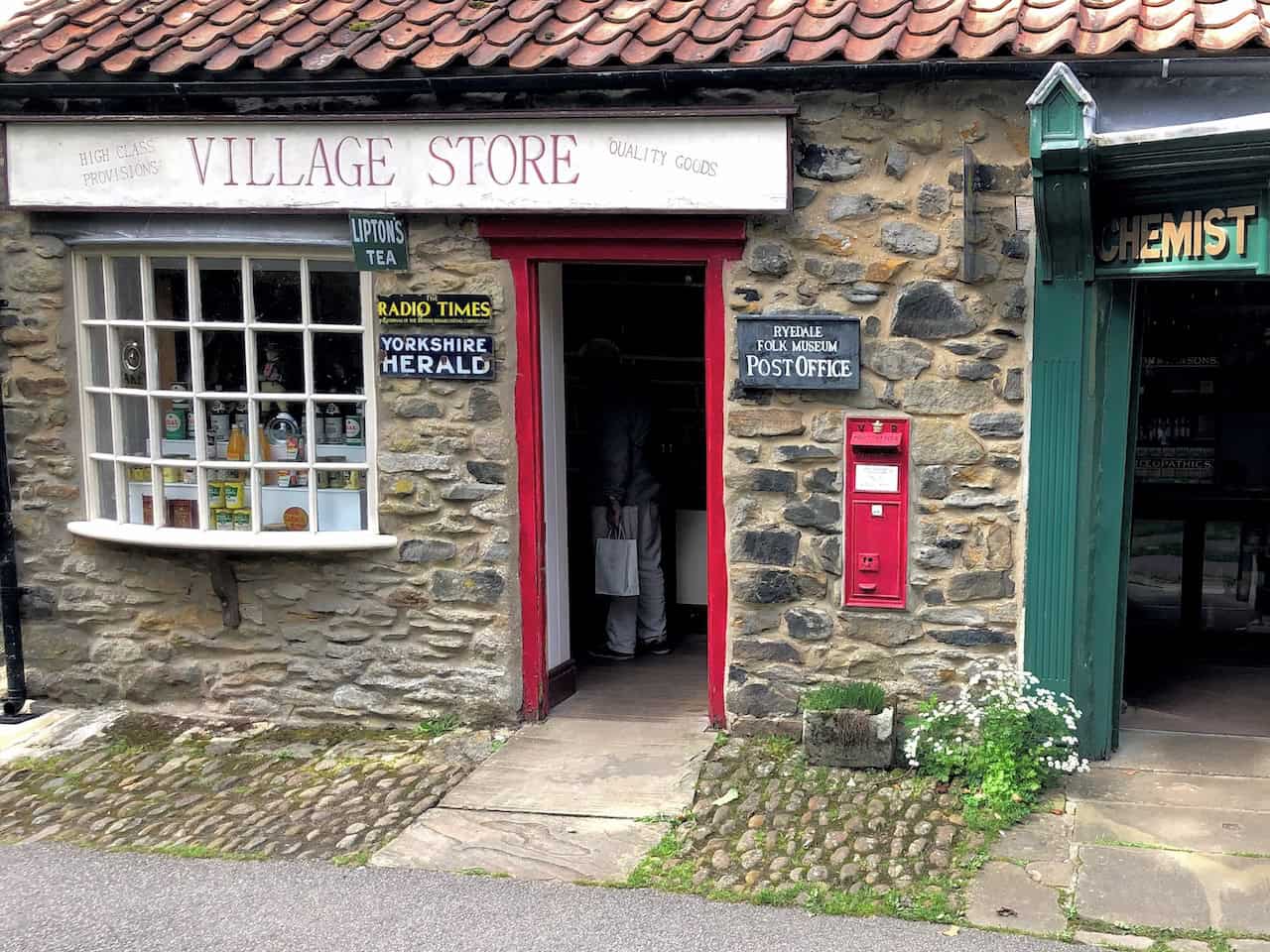
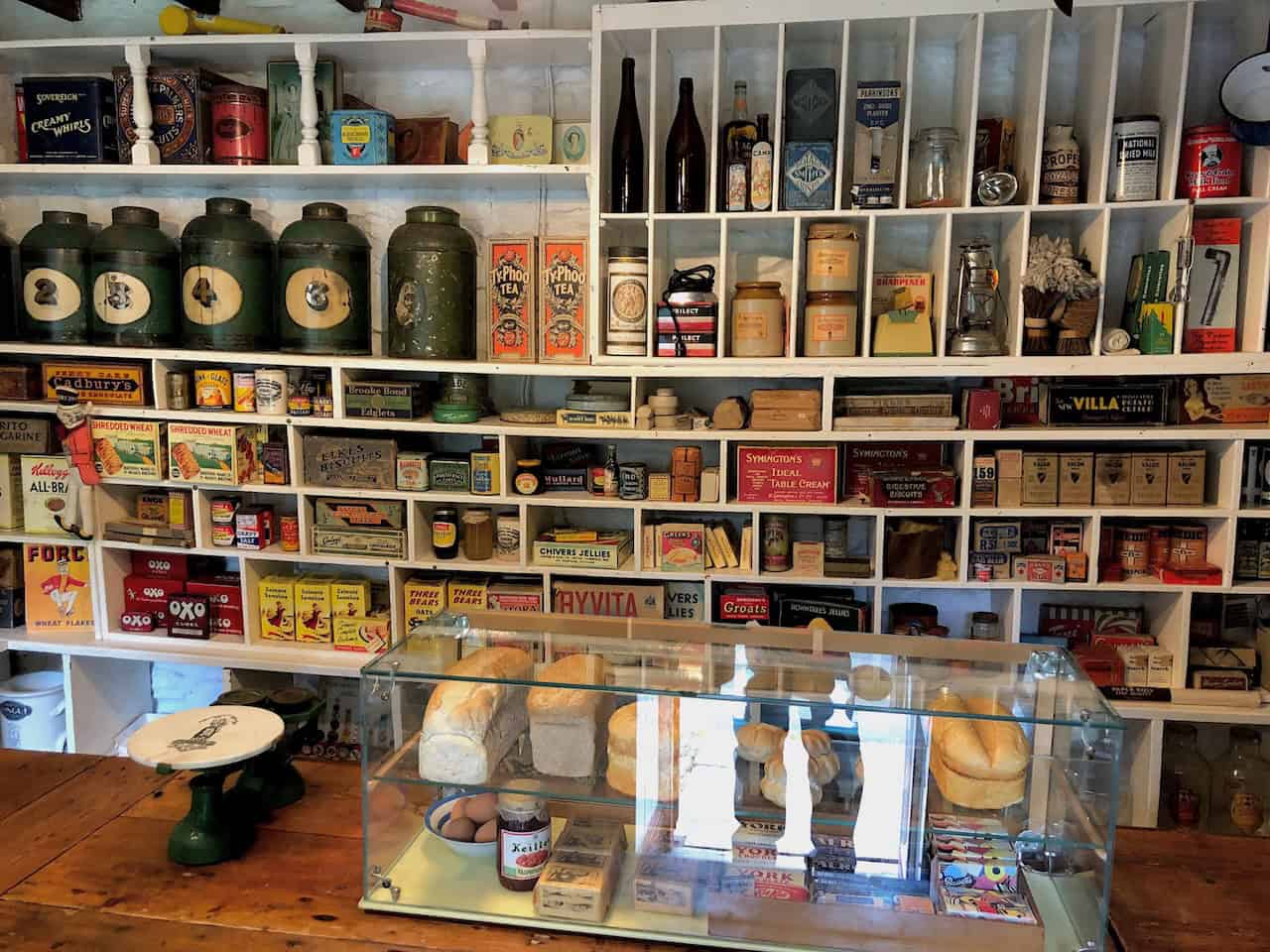
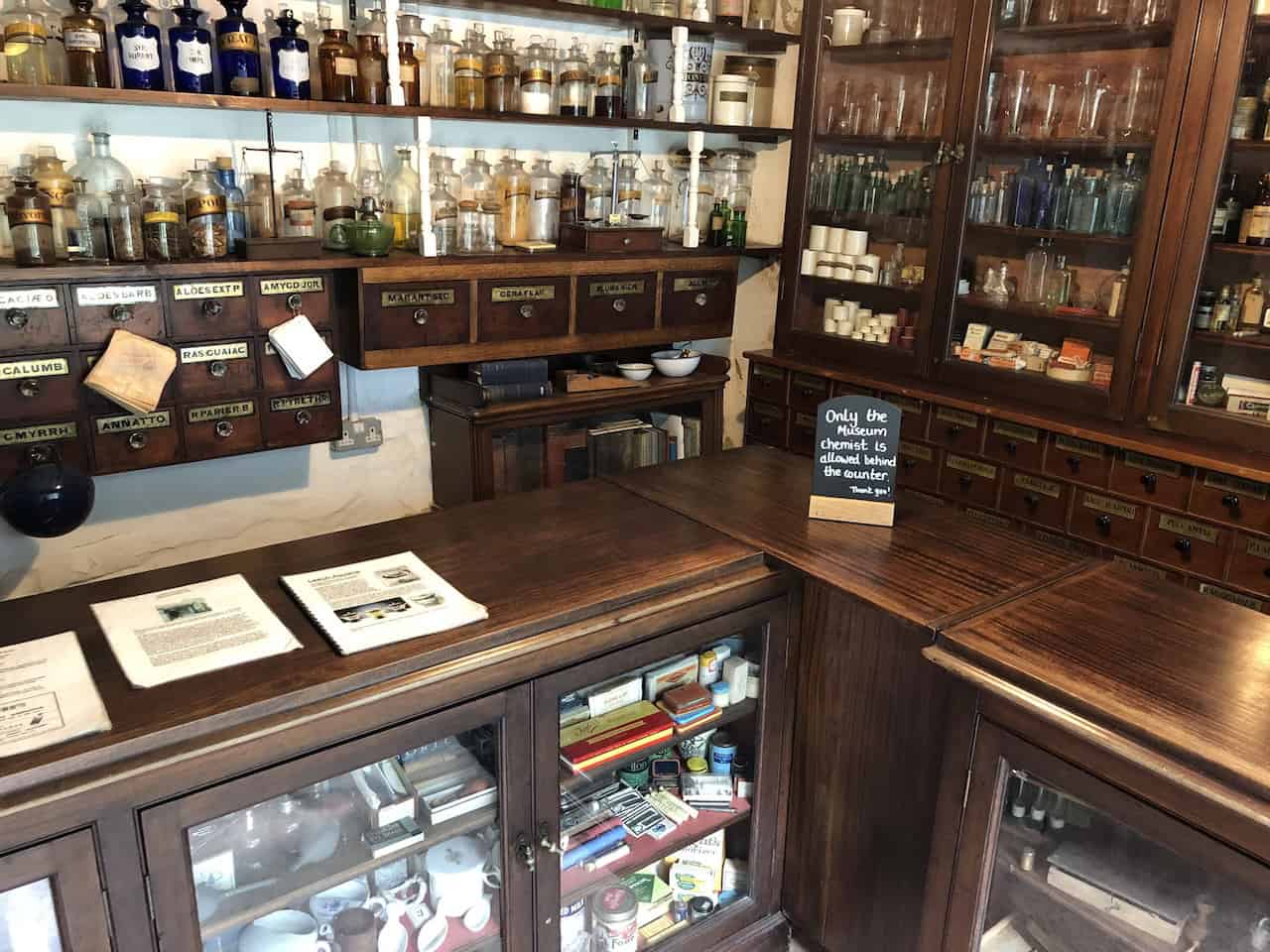
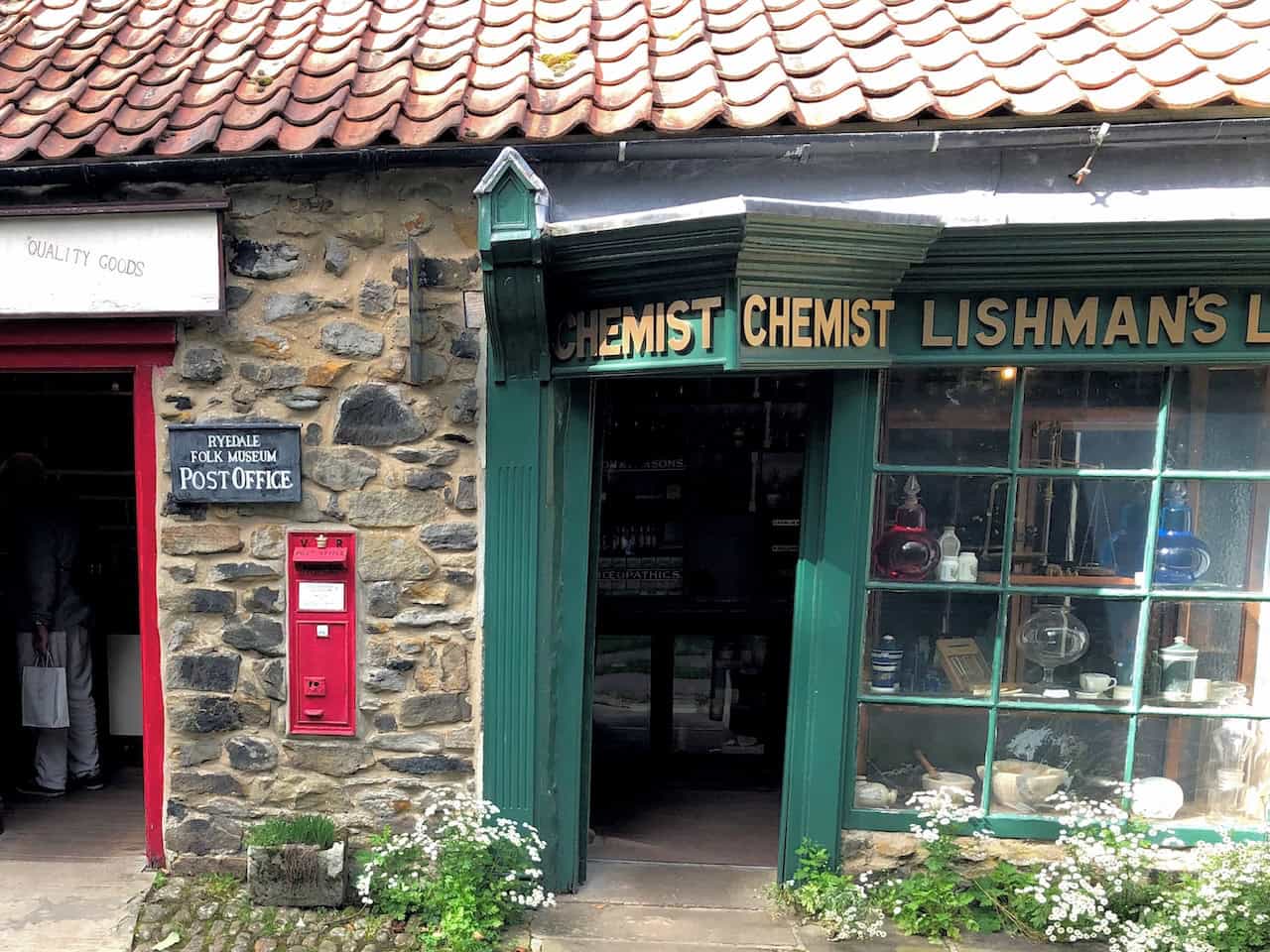
The 1950s Village Store is a time capsule of mid-20th-century life, stocked with the products, packaging, and prices that have long since disappeared from modern shelves. Next door, the Vintage Chemist recreates an early 20th-century pharmacy, with shelves of traditional cobalt blue bottles for syrups and green bottles for poisons, alongside curiosities such as leech bowls. A notable exhibit is the Cachet Machine, used for the manual production of early medicinal doses.
The Victorian Schoolroom
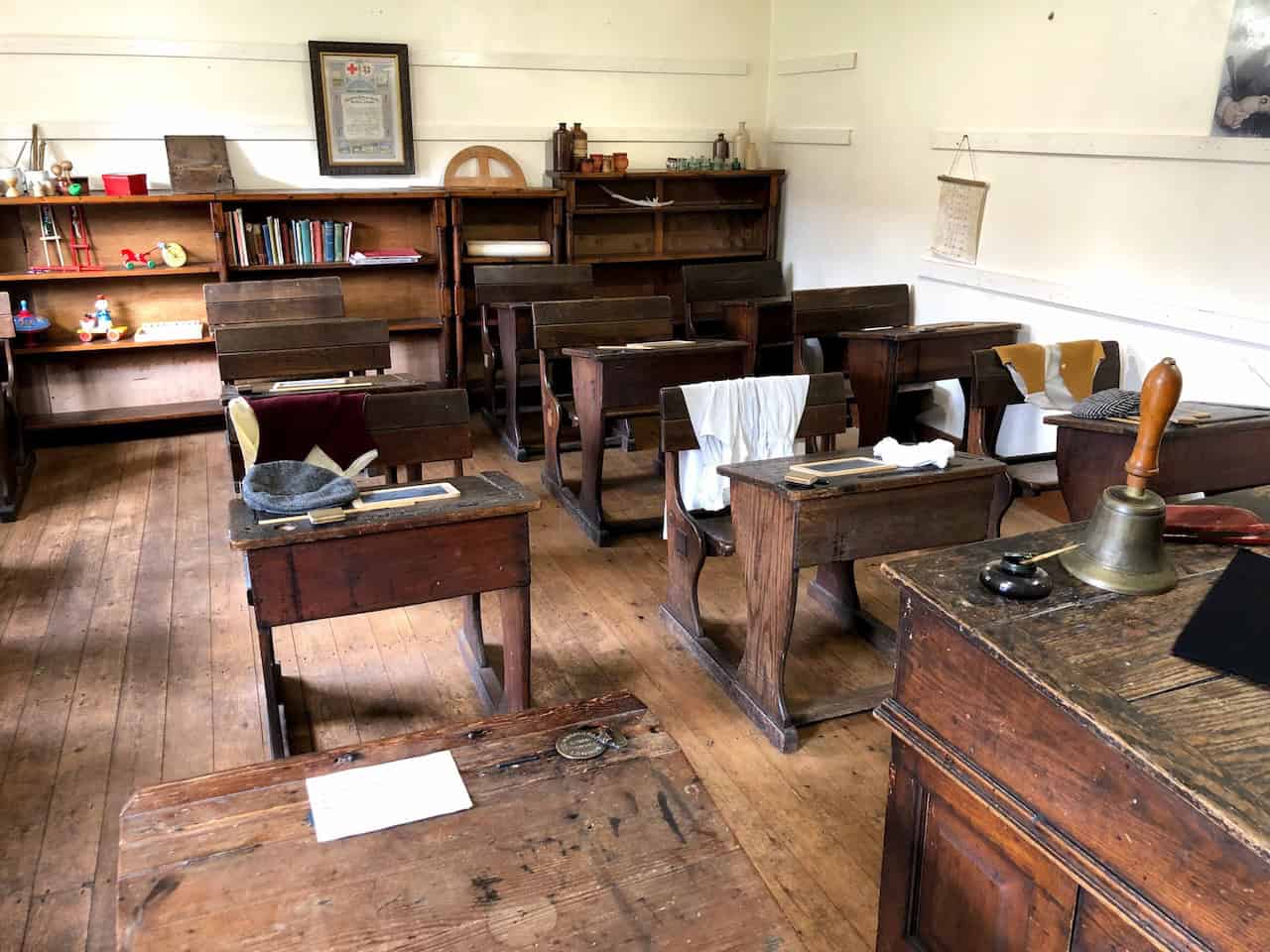
The Victorian Schoolroom is one of the museum’s most evocative spaces. Rows of wooden desks, slate boards, and high windows designed to prevent children from looking outside recreate the austere world of 19th-century education. Visitors can see the tools of classroom discipline, including the cane, fingerstocks, and the dunce’s cap. In 2026, students can prepare for their visit with a virtual lesson from Miss Periwinkle, a kindly but firm Victorian schoolteacher.
Thermos Stainless King Flask for Travel and Daily Adventures
AD The Thermos Stainless King 470ml flask keeps drinks hot for 18 hours or cold for 24. With durable stainless steel, vacuum insulation, a serving cup, and a leakproof design, it is perfect for commutes, journeys, and outdoor adventures.
The Wesleyan Chapel and Rosedale Glass Furnace
The Wesleyan Chapel reflects the important role that Methodist faith played in moorland life. Its simple, unadorned architecture speaks to the values of community and devotion that gave working families structure and comfort in difficult times.
Perhaps the most unusual exhibit is the Rosedale Glass Furnace, a reconstruction of a secret 15th-century kiln used by craftsmen working without costly government licences. It is the only example of its kind in the UK. To avoid heavy penalties, these glassmakers worked in hidden moorland locations, heating crucibles to 1,200 degrees Celsius to produce bottles and jugs that were sold in secret.
Inside the Collections: 40,000 Objects at Ryedale Folk Museum
The Ryedale Folk Museum cares for around 40,000 objects, ensuring that every building on the site is not just a structure but a fully furnished environment that reflects the lives of its former inhabitants.
The Harrison Collection at Ryedale Folk Museum
One of the most significant collections is the Harrison Collection, assembled over six decades by brothers Richard and Edward Harrison. Spanning five centuries of British social history, its 10,000 objects range from domestic kitchen utensils to rare medical instruments. The most striking item is the John Peck lead heart casket, dated 1562. Peck was a knight of the Hospitaller Order, and the casket, decorated with a Maltese cross, was designed to carry his heart home for burial should he die abroad. It is one of only two known examples from this period.
Thermos Stainless King Flask for Travel and Daily Adventures
AD The Thermos Stainless King 470ml flask keeps drinks hot for 18 hours or cold for 24. With durable stainless steel, vacuum insulation, a serving cup, and a leakproof design, it is perfect for commutes, journeys, and outdoor adventures.
The William Hayes Daylight Photographic Studio
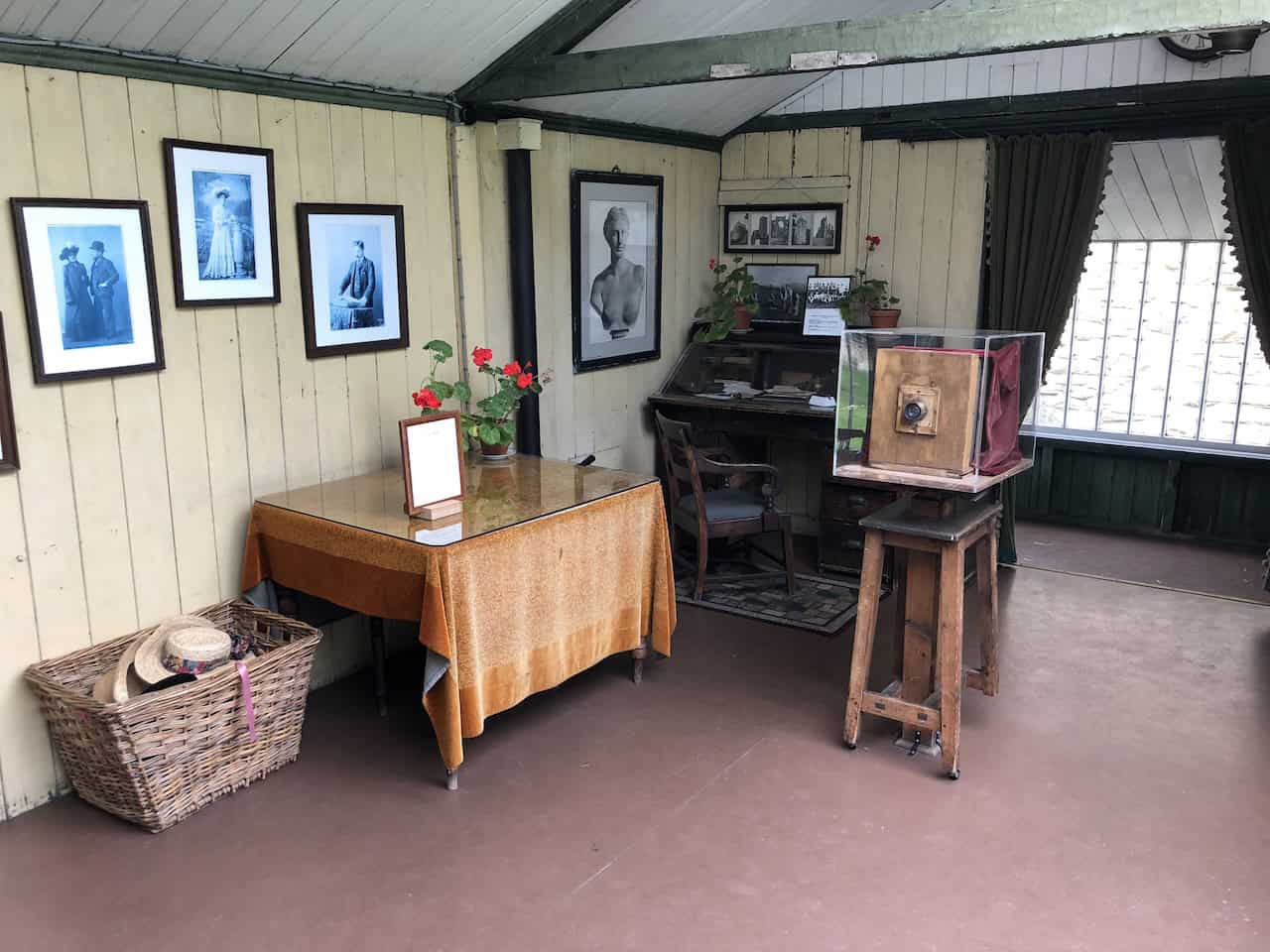
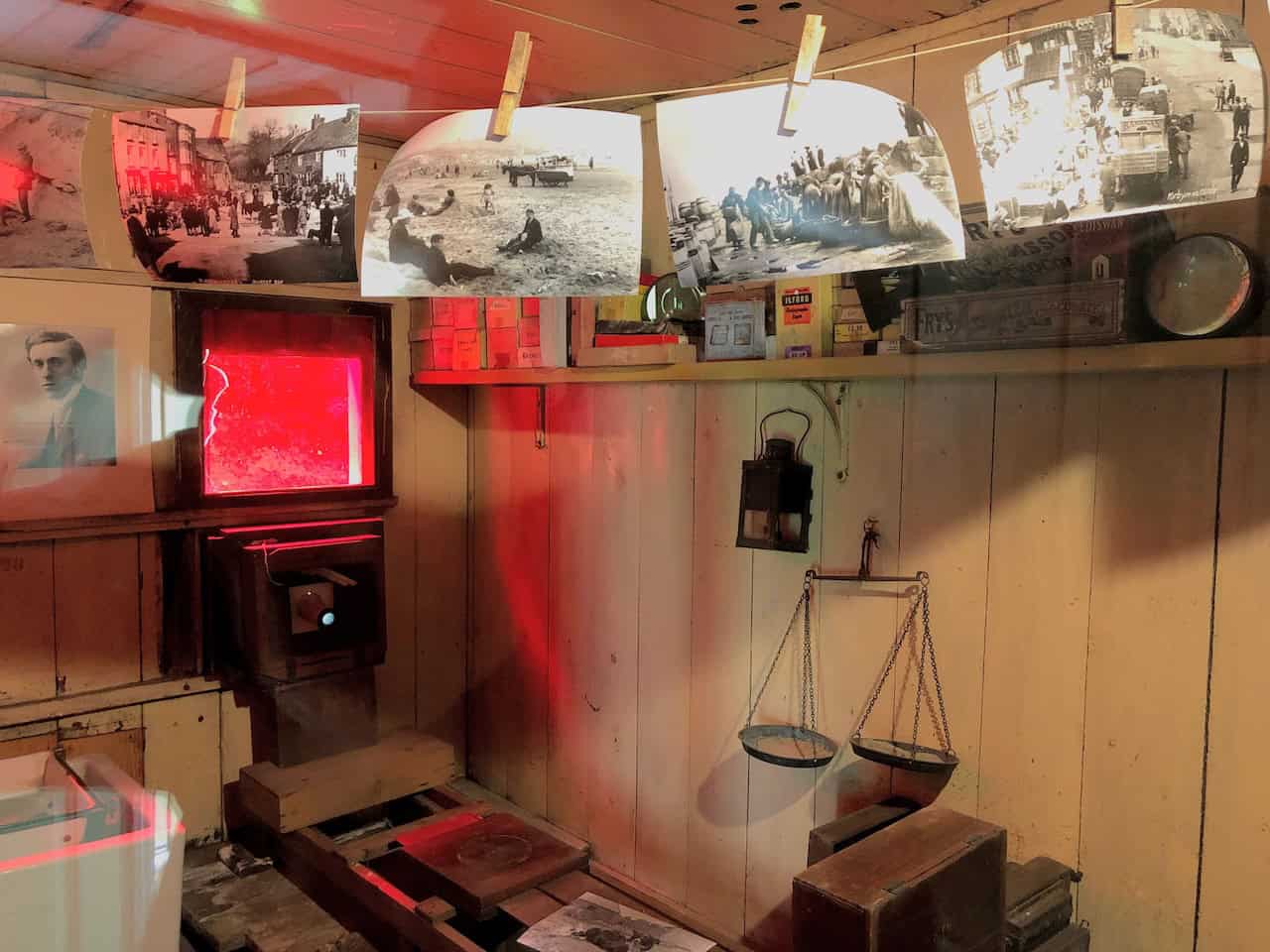
The William Hayes Daylight Photographic Studio, built in 1902 and originally located in York, is recognised as the oldest surviving daylight studio in England. Designed to harness natural light for portrait photography, it retains its original darkroom and finishing room. Visitors are still encouraged to step inside and take their own Edwardian-style photographs.
Textiles and Social History at Ryedale Folk Museum
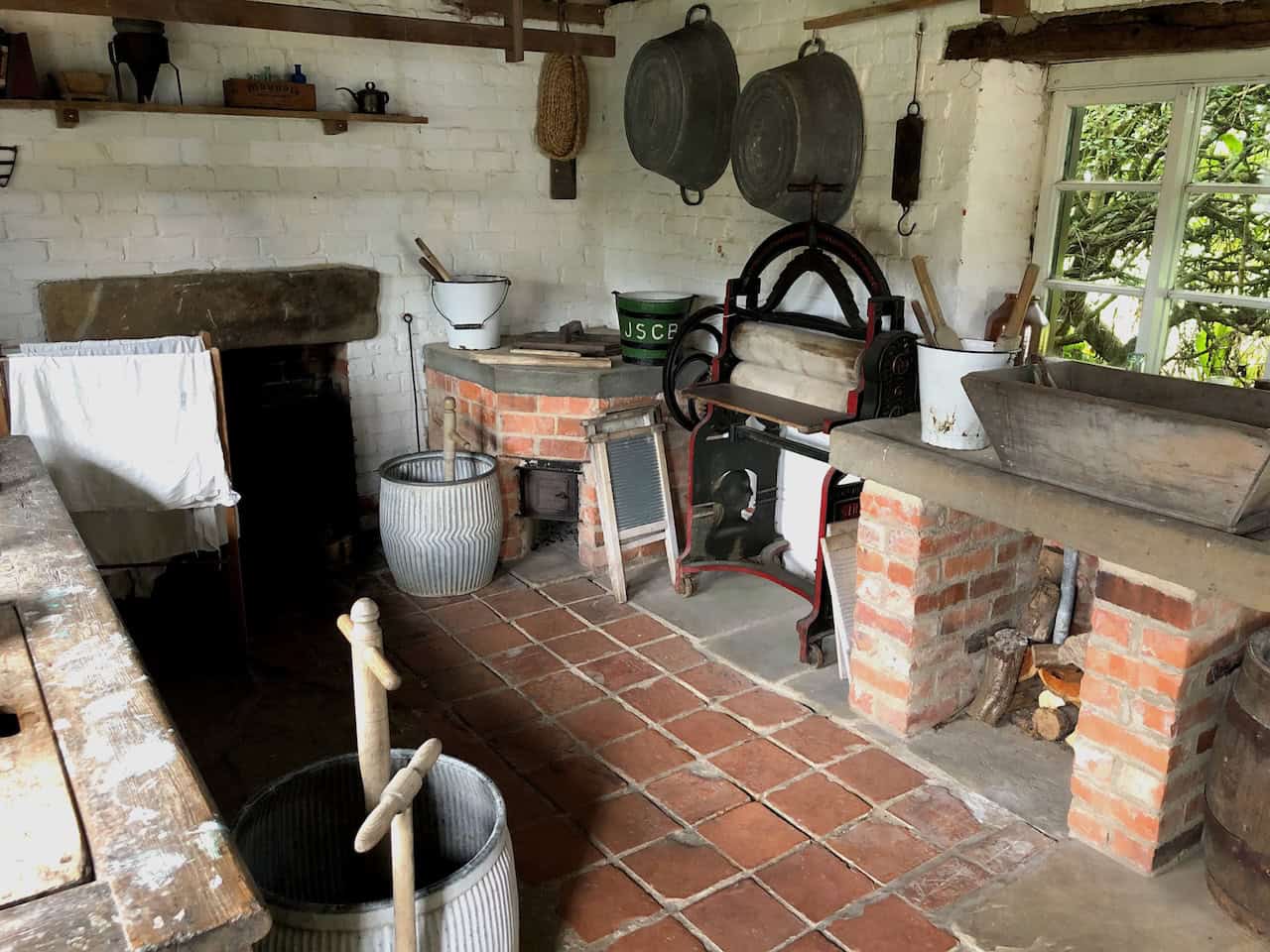
The museum also holds a remarkable textile archive. A recent highlight is the rag rug collection created by artists Lewis and Louisa Creed, comprising over 400 original works made from recycled materials. Known historically as thrift rugs, these were a practical response to poverty, made by pulling strips of scrap fabric through hessian sacking. The collection also includes the Victorian skirt lifter, a small tool that allowed women to raise their long dresses above the muddy paths of rural Ryedale without spoiling them.
Lake District High Level and Fell Walks with Thirty Routes
AD This pocket-sized guide presents 30 routes on the Lake District’s highest fells, including Scafell Pike, Helvellyn, and Blencathra. With OS maps, colour photographs, and practical notes, it offers circular walks from 4–15 miles graded by difficulty.
Witches, Spells and Superstition on the North York Moors
The Ryedale Folk Museum holds a remarkable collection of objects and buildings connected to the folk beliefs and superstitions that once governed life on the North York Moors. From the 16th to the 18th centuries, people sought protection against witches, fire, famine, and illness through a wide range of ritual practices.
The Witch’s Hovel
The Witch’s Hovel was built by museum founder Bert Frank using materials left over from the reconstruction of Stang End. The museum has long shared stories of local witches such as Nanny Pierson and Old Mother Migg, whose tales were once used to explain community misfortunes. Since the 1960s, a resident witch has often occupied the hovel on event days to bring these stories to life.
Witch Posts at Ryedale Folk Museum
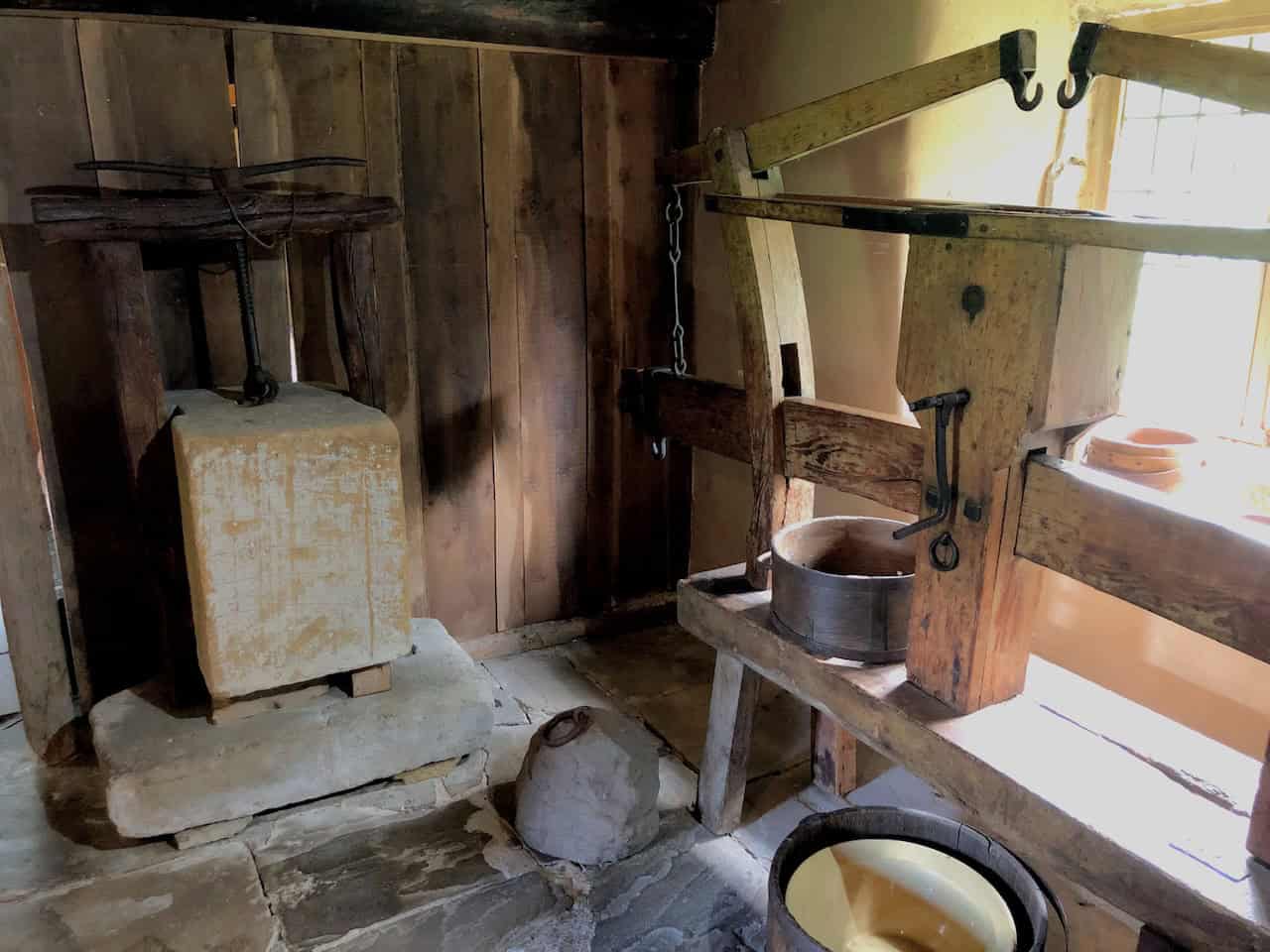
The museum holds three witch posts, among the rarest architectural features in the country, with only around twenty known to exist. These carved oak posts served as upright supports for a smoke hood above the fire, and each bears a St Andrew’s Cross to ward off evil. The post at Stang End was found in its original position within the 17th-century cottage. According to folklore, a silver threepenny bit hidden inside the post could be dropped into a pail of cream to break a witch’s curse. The museum also runs an ongoing Witch Post Hunt, inviting the public to help identify more of these rare artefacts.
Protective Markings and Spell Tokens
The heritage buildings themselves carry physical evidence of ancestral anxiety. Carved near doors, windows, and chimneys, these protective markings were intended to keep evil out. They include daisy wheels, or hexafoils, a series of overlapping circles found on the doorframe of Harome Manor House; Marian marks such as the double V or M representing the Virgin Mary; and spirit traps, mesh-like scratched lines designed to snare evil before it could enter a room.
Lake District High Level and Fell Walks with Thirty Routes
AD This pocket-sized guide presents 30 routes on the Lake District’s highest fells, including Scafell Pike, Helvellyn, and Blencathra. With OS maps, colour photographs, and practical notes, it offers circular walks from 4–15 miles graded by difficulty.
The collection also includes three 18th-century love charms decorated with hearts, initials, and dates, likely used by women seeking to secure a marriage in a society where this was a primary expectation. Other items include a crystal ball for fortune-telling, medicinal charms, and witch bottles. These objects formed the centrepiece of the museum’s 2024 exhibition, Believe It or Not.
Archaeology, Rare Breeds and Wildflowers at Ryedale Folk Museum
The Ryedale Folk Museum explores the relationship between people and the North York Moors landscape across thousands of years. Much of its archaeological depth comes from the work of Raymond Hayes, a village postman and photographer whose intimate knowledge of the moors led to significant discoveries spanning from the Mesolithic period to the Roman era.
Key Archaeological Sites and Discoveries
Among the sites represented in the collection is Kirkdale Cave, discovered in 1821, which yielded bones and teeth from Pleistocene animals including elephants, hippopotamuses, rhinoceroses, and hyenas, dating back around 120,000 years. Finds from the Windypits, geological fissures near Rievaulx and Helmsley, include Late Neolithic and Early Bronze Age beakers and flints, as well as human remains showing evidence of blunt trauma and Roman-era scalping. Costa Beck, near Pickering, produced bone, antler, and pottery from the late Iron Age and early Roman periods.
Super Sparrow Stainless Steel Insulated Water Bottle with Two Lids
AD The Super Sparrow stainless steel water bottle keeps drinks cold for 12 hours or hot for several. With a straw lid, bamboo cap, BPA-free construction, and durable 18/8 steel, it is ideal for sport, travel, work, and outdoor use.
Heritage Farming and Rare Breeds at Ryedale Folk Museum
The museum’s farming area brings the working landscape to life. Tamworth pigs, believed to be the oldest pure-breed pig in the country, share the site with Manx Loaghtan sheep and traditional-breed chickens including Light Sussex, Barnevelder, and Orpingtons. In the Foldyard, horse-drawn ploughs and mechanical threshing machines document the shift from manual labour to animal power and early mechanisation.
The Cornfield Flowers Project
The museum also runs the Cornfield Flowers Project, established in 1999 to protect rare arable plants threatened by post-war chemical farming. The demonstration cornfield grows species including Shepherd’s Needle, a critically endangered plant now rarely found outside south-east England; Large-Flowered Hemp Nettle; Corn Marigolds; and Corn Cockles, all of which support vital habitats for pollinators.
Keeping the Little Stories Alive: Ryedale Folk Museum Today
The Ryedale Folk Museum continues to evolve, finding new ways to make the heritage of the North York Moors relevant for modern audiences.
Schools can now prepare for visits through digital resources, including virtual lessons with Miss Periwinkle, a kindly but firm Victorian teacher, and an Iron Age farmer who introduces students to the Settlers narrative before they explore the roundhouse in person.
Super Sparrow Stainless Steel Insulated Water Bottle with Two Lids
AD The Super Sparrow stainless steel water bottle keeps drinks cold for 12 hours or hot for several. With a straw lid, bamboo cap, BPA-free construction, and durable 18/8 steel, it is ideal for sport, travel, work, and outdoor use.
The museum has also embraced contemporary rituals that connect visitors to the ancient past. In 2026, the Iron Age Roundhouse hosts Summer Solstice handfasting ceremonies, where couples bind their hands together in a traditional folk custom. One ceremony is timed to the exact moment of the solstice, at 9:24 am. Solstice yoga and sunrise meditation sessions are also on offer, drawing inspiration from Celtic tradition.
Living crafts remain central to the museum’s work. In early 2026, the museum featured on the BBC’s Robson Green’s Weekend Escapes, showcasing volunteer Jim Wood and the endangered craft of bee skep making, the art of coiling straw into traditional beehives. The headline exhibition for 2026, Making a Meal of It, explores the hard graft of historic food production, from the baking recipes of museum founder Hannah Crosland to the story of the Sonley bakers of Kirkbymoorside.
Through all of this, the Ryedale Folk Museum stays true to the mission Wilfred Crosland set out nearly a century ago: to preserve the little stories of ordinary people and make sure they are never forgotten.

Mountain Warehouse Merino Womens Long Sleeve V Neck Top
AD This Mountain Warehouse Merino top combines warmth, comfort, and practicality. Made with high-quality wool, it is naturally antibacterial, lightweight, and easy to pack. Designed for outdoor activities, it keeps you fresh and warm, and comes with a two-year warranty.
Related Post: Ribblehead Viaduct
The remarkable Ribblehead Viaduct and its impact on railway history