ADVERTISEMENT
Fishing Villages, Clifftops and Ironstone Heritage on the Runswick Bay Circular Walk
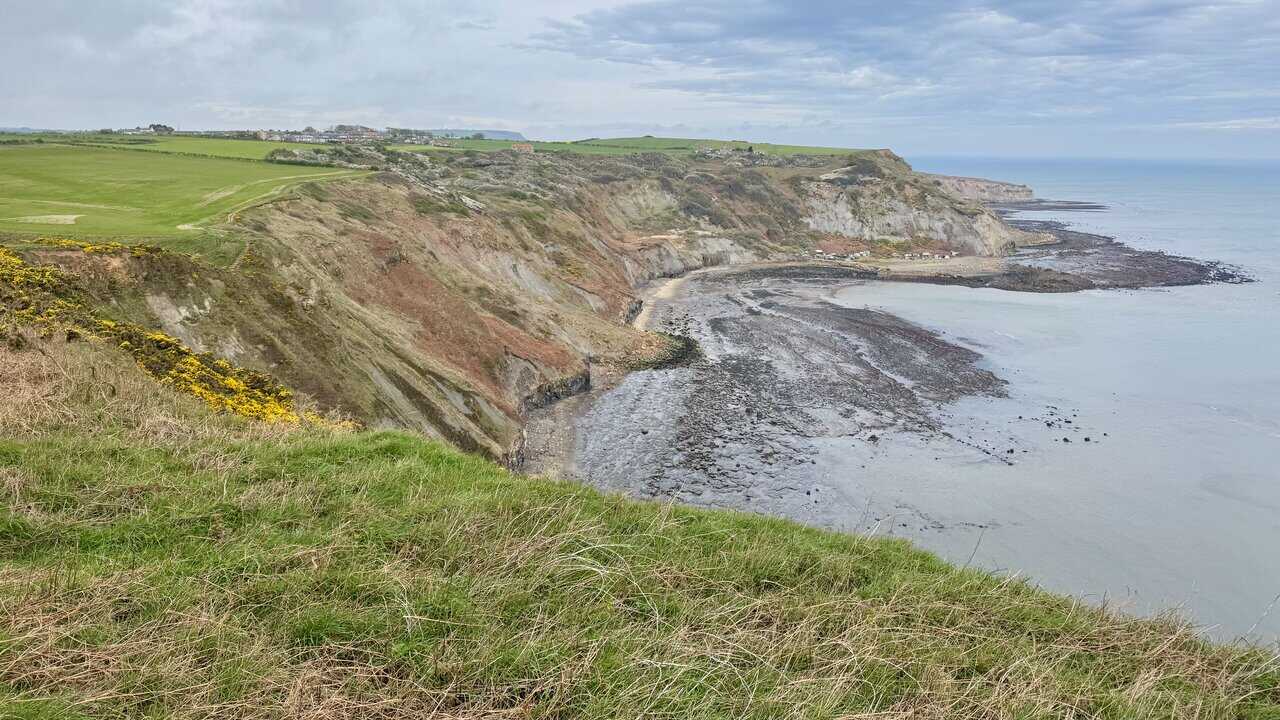
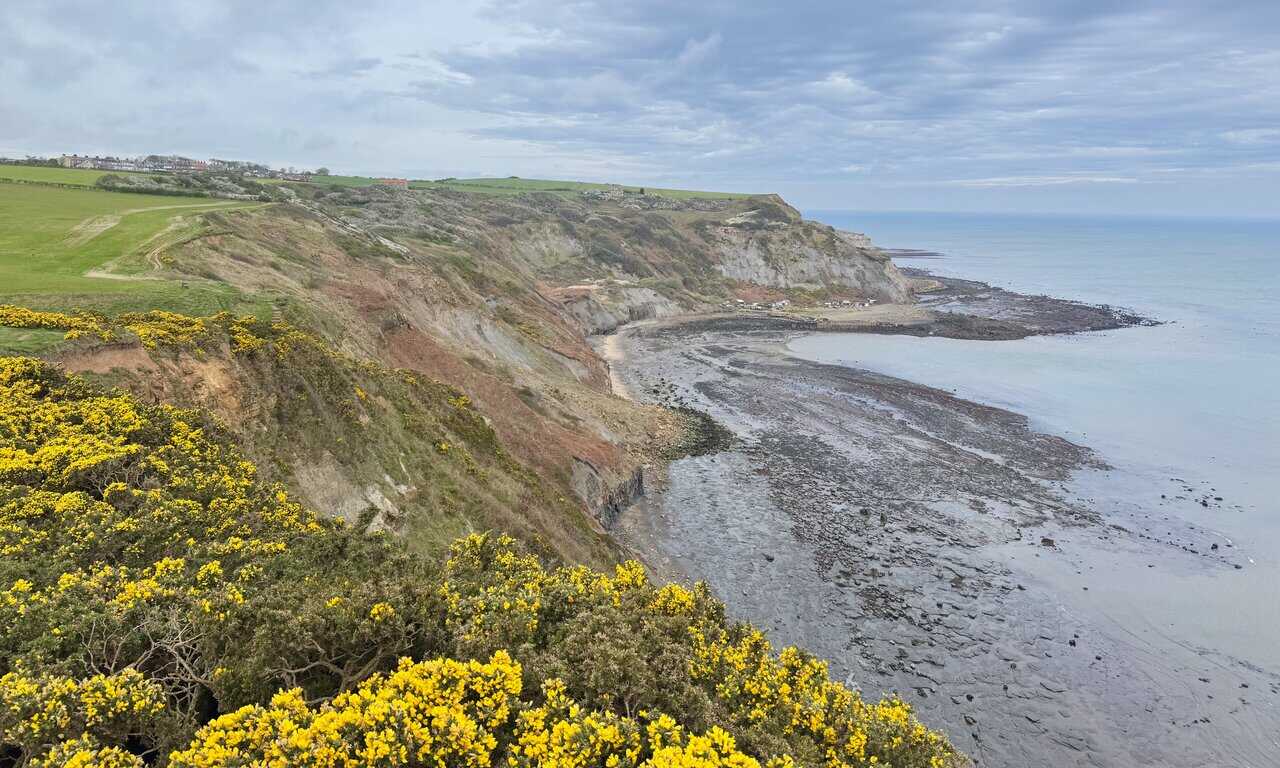
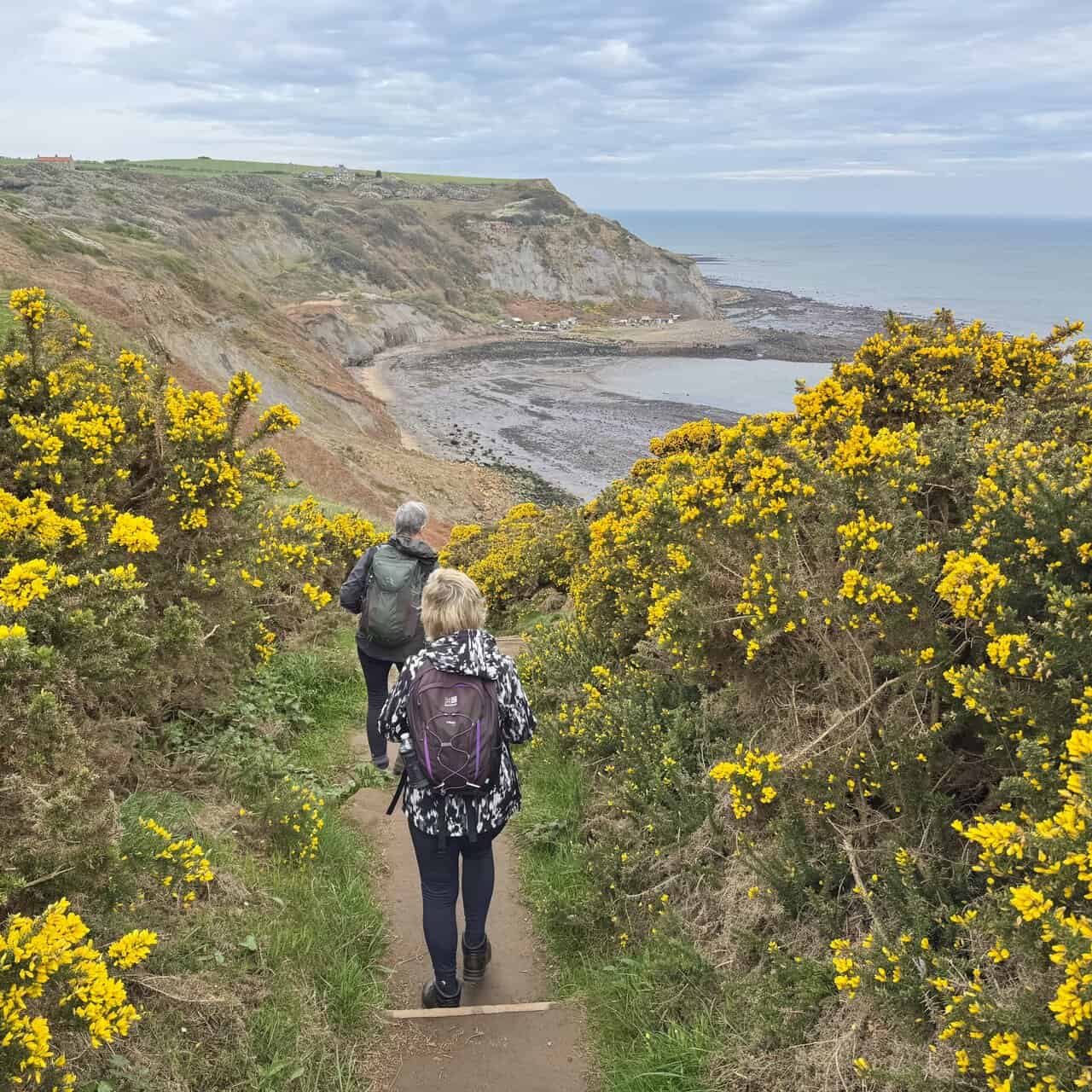
Some stretches of the North Yorkshire coast stay with you long after you’ve brushed the sand from your boots. This Runswick Bay circular walk is very much one of them. The route takes in fishing villages, clifftop paths, former industrial harbours and woodland trails, along with a scattering of places tied up in legend and history. It covers just over eight miles of some of the finest coastal scenery the National Park has to offer.
ADVERTISEMENT
I’ve walked this route before. Returning to it more recently with a couple of friends gave me the chance to spend longer in the two villages that really shape the day. Runswick Bay sits at the start, and Staithes sits roughly halfway round. Both reward a slower pace. Anyone putting this Runswick Bay circular walk in the diary should allow extra time for exploring their narrow lanes, steps and hidden corners.
ADVERTISEMENT
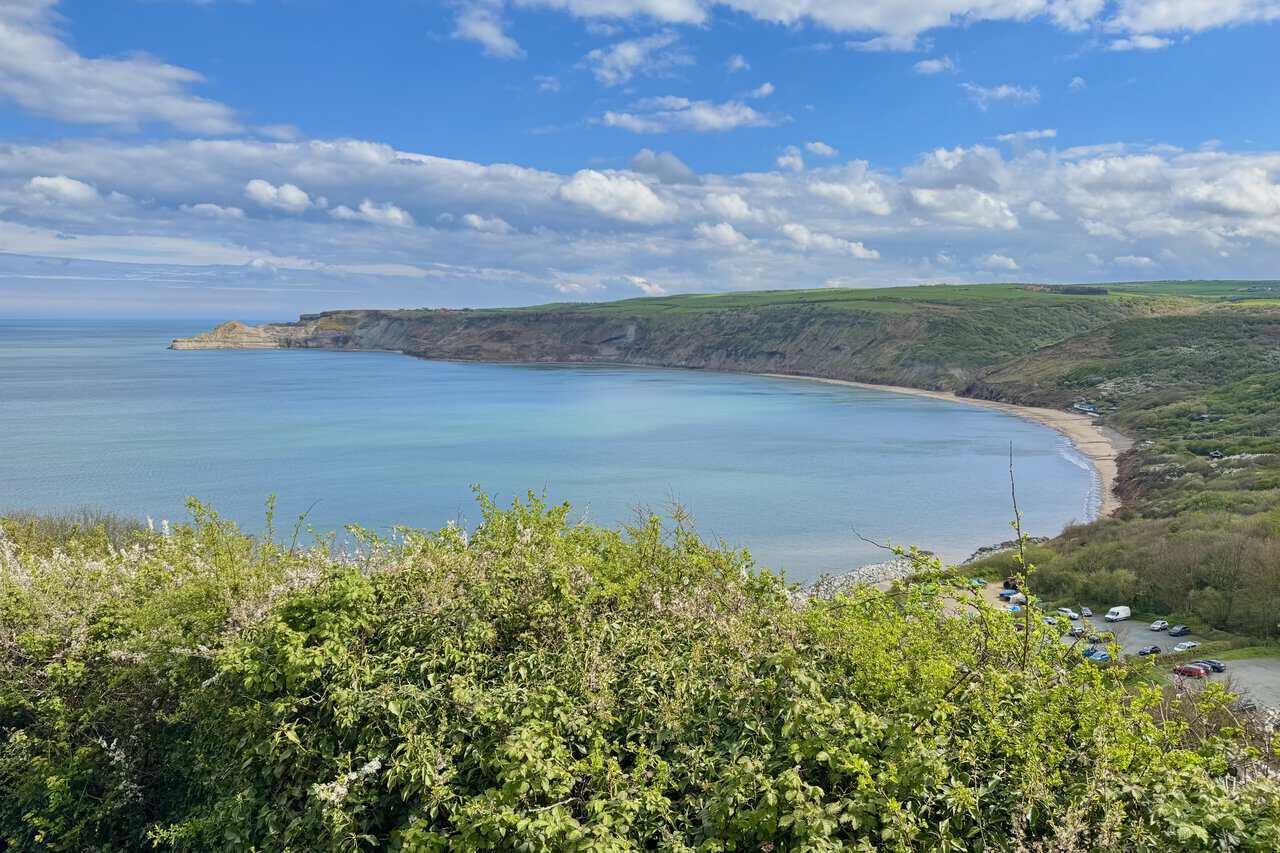
The walk begins at Runswick Bank Top, where two pay and display car parks sit on Bank Top Lane. Before setting off, take a moment to look out across the crescent-shaped bay below. Red-roofed cottages huddle together against the shale cliffs.
Runswick Bay Circular Walk: Maps and Tools
Visit either the OS Maps website or the Outdooractive website to view this walking route in greater detail. Both platforms offer a range of features, including the ability to print the route, download it to your device, and export the route as a GPX file. You can also watch a 3D fly-over and share the route on social media. Plus there is a supporting video, available for you to watch on YouTube.
Runswick Bay Circular Walk: Distance, Duration, Statistics
Distance: 8¼ miles
Distance: 13 kilometres
Duration: 4 hours
Ascent: 1080 feet
Ascent: 329 metres
Type: Circular walk
ADVERTISEMENT
Runswick Bay: A Village Reborn From the Sea
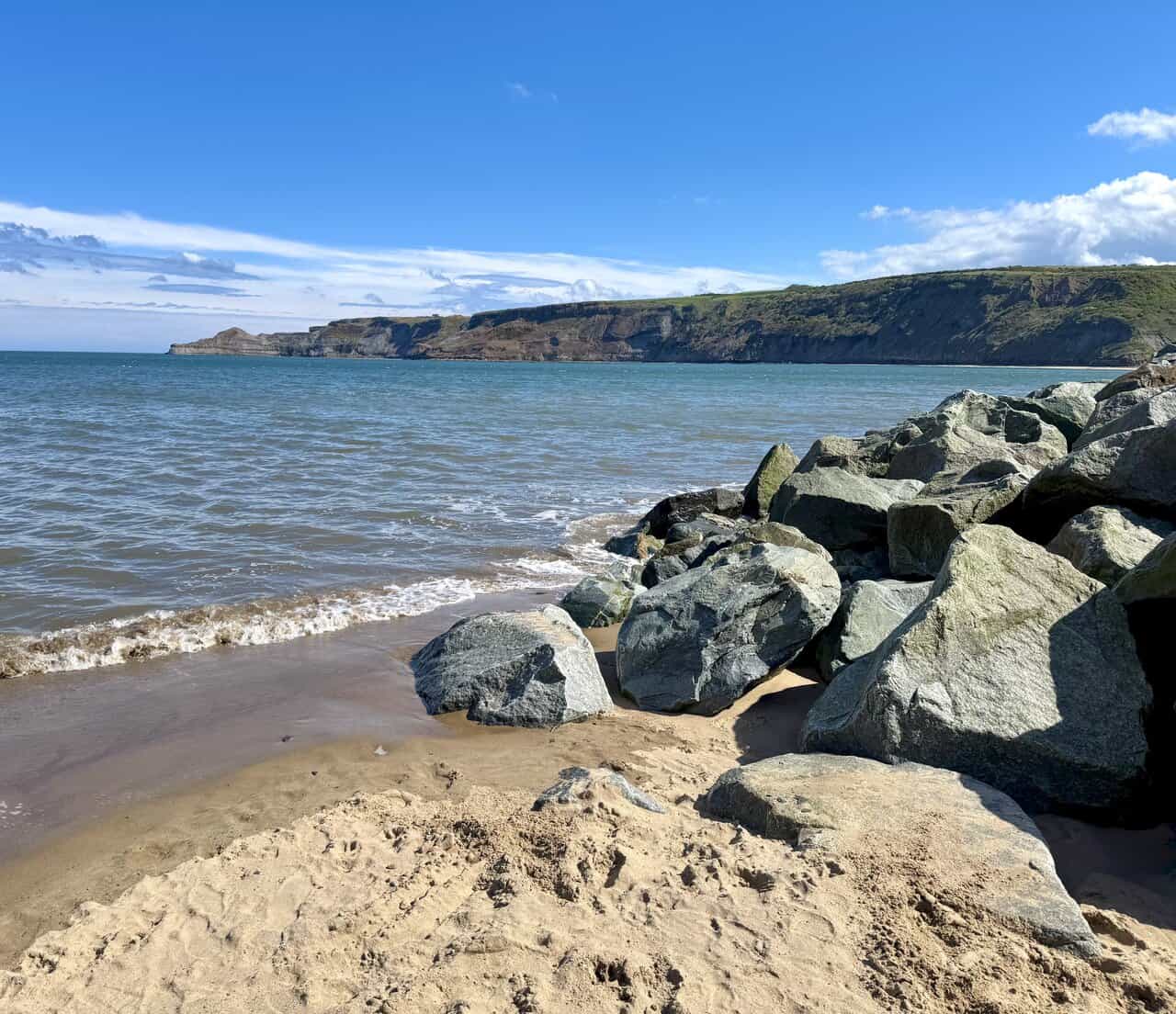
Runswick Bay sits roughly nine miles north-west of Whitby. It lies within the North York Moors National Park and faces one of the finest sandy bays in northern England. The Sunday Times named it Beach of the Year in 2020. The village has two distinct halves. The modern hamlet of Bank Top sits on the cliff edge. The historic lower village of tightly packed cottages lies at the foot of a steep, winding road.
What gives the lower village its character is a story that begins with disaster. The Great Landslide of 1682 destroyed the original village, which stood a little further to the north. The cliff face failed, and the sea swallowed almost every house. Villagers happened to be holding a wake that night. Two of the mourners felt the first tremors and noticed the ground shift. They raised the alarm in time. Every inhabitant escaped to higher ground before the houses fell, and every one of them made it out alive. The survivors rebuilt on the more sheltered southern part of the bay. The narrow alleys, flagged paths and steep steps they created still shape the village today.
From the car park at Bank Top, the route heads down the steep road signposted to Runswick Bay beach. About three quarters of the way down, just before a car park on the right-hand side, a tarmac lane on the left is signposted as the Cleveland Way. Don’t take it yet. Continue down to the mini roundabout at the bottom. Straight ahead leads to the beach, which has a cafe, shop and toilets. Left leads into the maze of the lower village. Both are worth the time.
The Lower Village: Cottages, Pantiles and Hidden Corners
The lower village is best understood not as a place of streets but as a village of paths, steps and narrow links. Sandstone cottages and white-rendered walls press close on either side of the flagged passageways. Front gardens spill colour into every glimpse. The houses are known for their sandstone walls and red pantile roofs. According to local tradition, ships originally brought these clay tiles over as ballast from the Low Countries. Many of the cottages look quite different now from the way they once did. They were home to herring fishermen and their families. Those fishermen grew vegetables in their tiny gardens and stored their catch in the herring houses nearby.
Among the most recognisable landmarks is the white-painted Thatched Cottage. It’s the only remaining thatched house on this part of the coast. It once served as a home for the local Coastguards. Its pale walls and distinctive roof stand out among its neighbours. For anyone looking for refreshment, the Royal Hotel is a family-owned pub in the lower village with views across the bay. The Runswick Bay Hotel at the top of the hill is well regarded for its welcoming atmosphere. The community remains close-knit. Its volunteers continue to run an independent rescue boat service, carrying on a long tradition of life-saving along this stretch of coast.
The Beach and the Jurassic Coast on the Runswick Bay Circular Walk
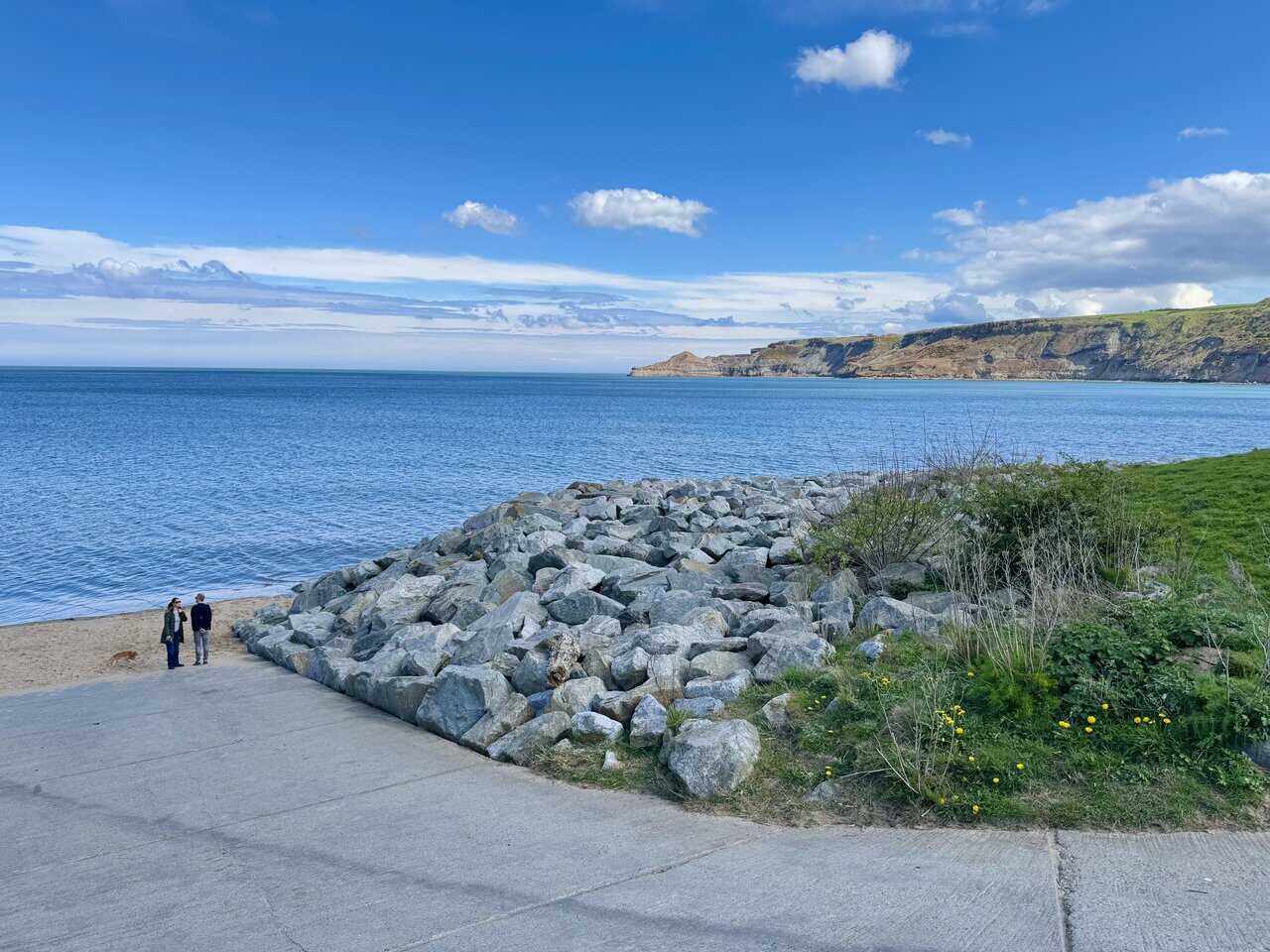
From the lower village, it’s well worth wandering out onto the beach itself. The broad sweep of sand mirrors the village above. Headlands frame the bay on either side, giving it a calm, enclosed feel quite unlike the more exposed parts of the coast. Twenty boats or more worked from Runswick Bay in the 1840s. A century later the industry had gone, and today the bay is better known for its geology than for fishing.
The cliffs hold international importance. They reveal rocks from the Early Jurassic period that date back nearly 200 million years. Regular erosion of the soft shales continually exposes new material. This makes the bay one of the premier spots in the country for beachcombing and fossil hunting. Walkers often find ammonites and belemnites among the loose pebbles on the shore. The area also holds a rare Middle Jurassic flora. This includes the seed cones of the extinct plant Williamsonia gigas, preserved here in remarkable detail. Because the cliffs are a Site of Special Scientific Interest, visitors should search in loose beach material rather than hammer at the bedrock.
Hob Holes: Legends of the Shoreline
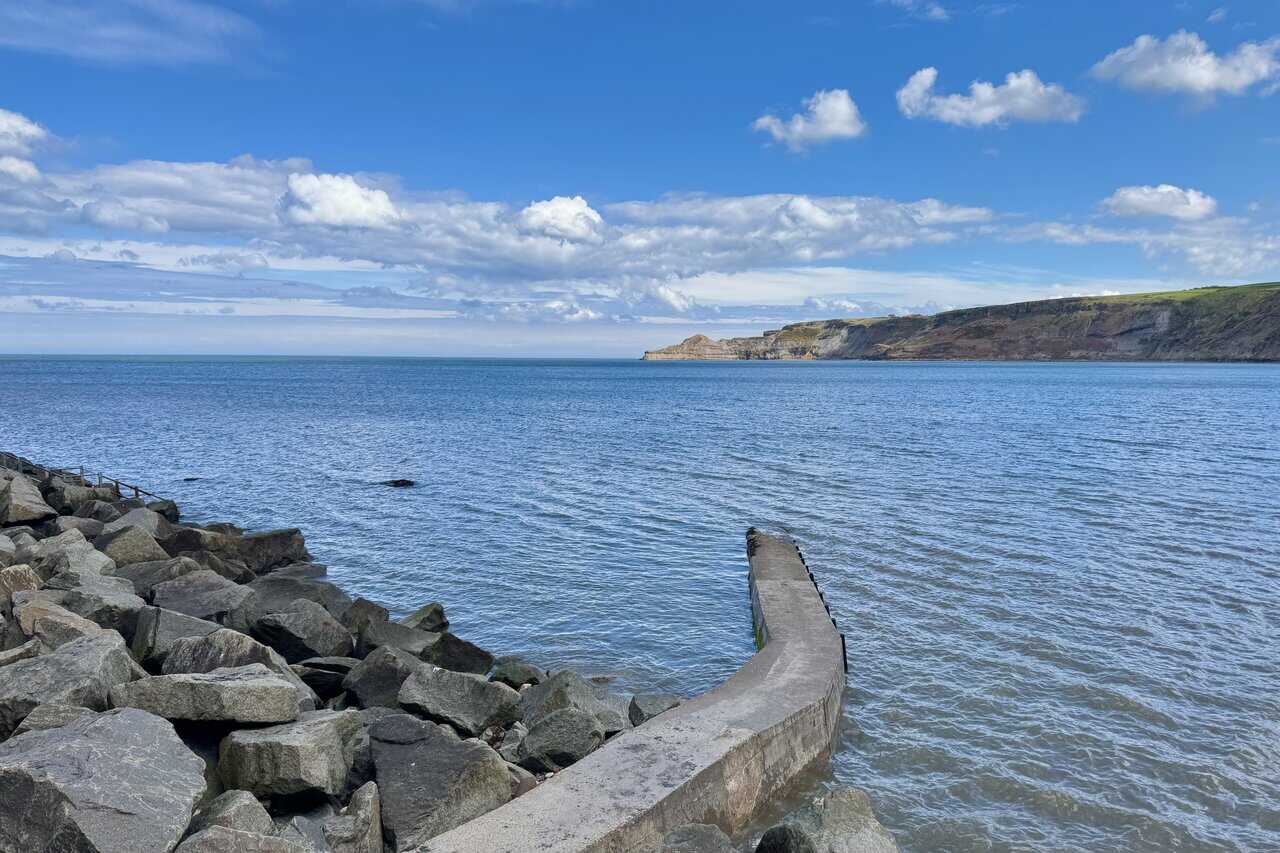
Along the edge of the shore, caves known as Hob Holes come into view. Wave action formed them, and 19th-century jet miners later expanded them. In local tradition, the Runswick Hob was a benevolent spirit who lived in the caves and acted as a healer. Up until the late 1800s, mothers would carry children suffering from “kink-cough” or whooping cough to the cave at low tide. They called out to the Hob for a cure. Some maritime tales paint a more mischievous picture. They suggest the Hob might use a lantern on stormy nights to decoy unwary travellers into the rocky pools below. It’s the kind of folklore that seems to belong entirely to this coast. It adds another layer to a place already rich in character.
When you’re ready to leave the lower village, walk back up the hill to the tarmac lane you passed earlier, signposted as the Cleveland Way. The lane eventually becomes a footpath, still on the Cleveland Way. It winds its way up the hillside until it rejoins Bank Top Lane. Continue along Bank Top Lane until a stone track appears on the right, immediately before a house called The Cow Shed at number 15. Take the track and pass the Northern Powergrid brick building on the left. A little further along, pick up the grassy path on the right that runs between a fence and the hedgerow. Follow this to the clifftop. After a third of a mile, a junction with the Cleveland Way appears. Continue straight ahead.
The Cleveland Way National Trail
The route now follows the Cleveland Way north above Lingrow Cliffs. It’s worth saying a little about the trail itself. The Cleveland Way is one of England’s original National Trails. It opened in 1969 and runs for around 109 miles from Helmsley to Filey. It’s really two walks joined together. One is an inland moorland and escarpment route through the North York Moors. The other is a coastal clifftop route that takes in some of the most dramatic scenery on the east coast. The stretch covered in this Runswick Bay circular walk falls firmly into the second category. The scale of the cliffs, the quality of the views and the sense of exposure to the sea all make the section north of Runswick Bay a memorable one.
Lingrow Cliffs: Layered Jurassic Rock on the Runswick Bay Circular Walk
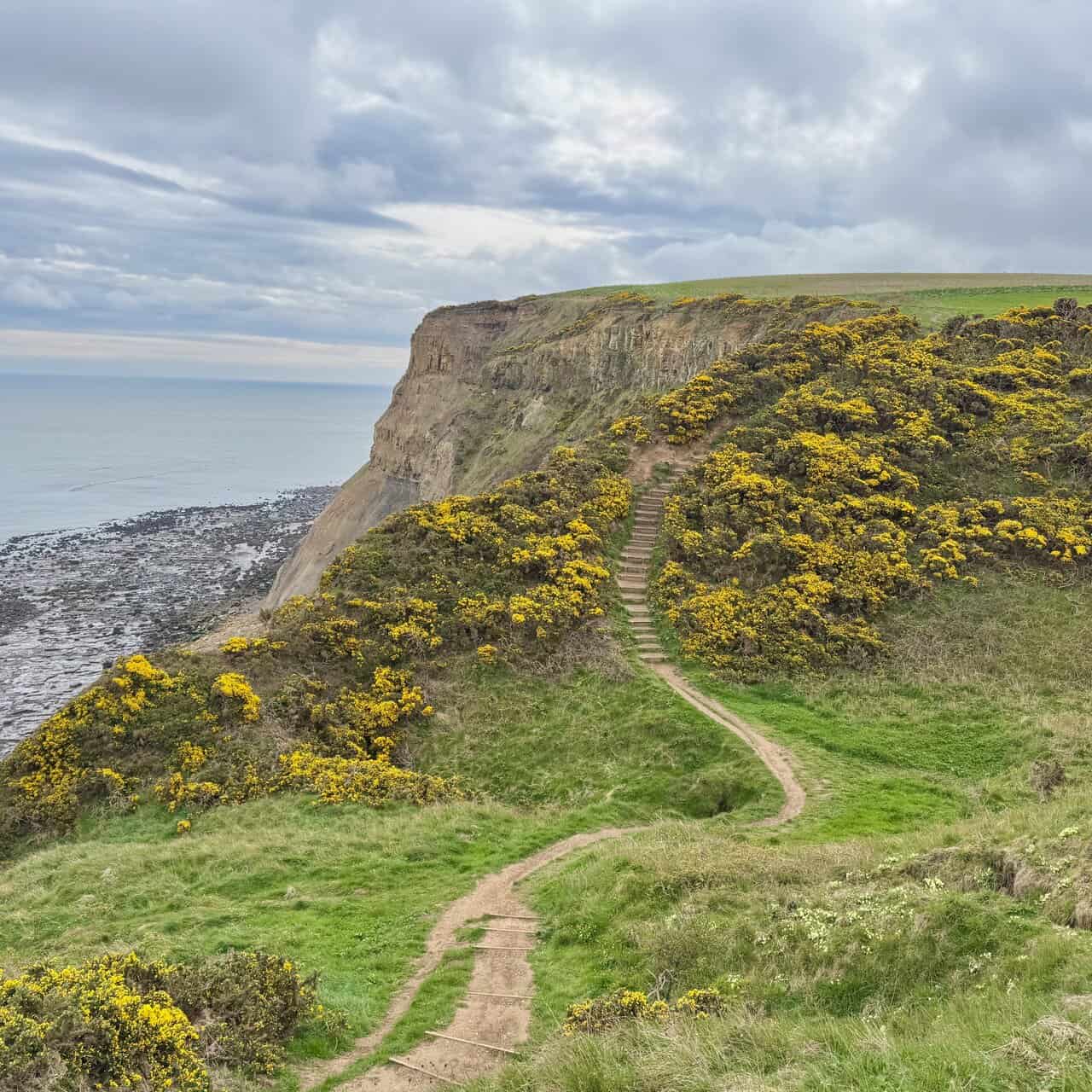
Walking along Lingrow Cliffs, the scale of the coastline really opens up. The cliff faces show layered, banded Jurassic rock. This includes the Staithes Sandstone, Cleveland Ironstone and Whitby Mudstone. Together they give the cliffs a structured, striated appearance in tones of ochre, grey and rust. The cliffs also preserve traces of the area’s industrial past. These include ironstone mining, alum workings and old harbour remains. All of it serves as a reminder that this quiet stretch of coast was once anything but peaceful.
The Cleveland Way follows the cliff edge north towards Port Mulgrave. Green farmland lies on one side, the open sea on the other. A set of steps drops down into a small valley and climbs up again on the other side. This is one of many short, sharp descents and climbs along this part of the route. After about a mile the path reaches a junction. The right-hand path drops down onto the cliffs. The route instead takes the left-hand fork along the gravel track, staying on the Cleveland Way. This brings you to the road at Port Mulgrave. A signpost points left to Hinderwell. Ignore it and turn right, following the tarmac road signposted Cleveland Way to Staithes. This road is called Rosedale Lane.
Port Mulgrave: A Forgotten Ironstone Harbour
The peaceful little bay at Port Mulgrave, visible below as the path approaches, once looked very different. The growth of the railways and shipbuilding during the nineteenth century drove an enormous surge in the demand for iron. Ironstone mining began here in 1855. The cliffs would have rung with the sound of machinery and miners going about their work. Today only a section of pier, the breakwater and the mine entrance remain of the industry that thrived here.
The solid red-pantiled sandstone houses along the route once served the mining community. Local people worked in the mines, but the mines also recruited labourers from as far away as Norfolk. Mine owners built cottages for them that counted as luxurious by the standards of the day, even offering their own pigsty. The labourers’ cottages went up at Far Rosedale. Those for the mine officials and the mine manager stood at the top of the cliff.
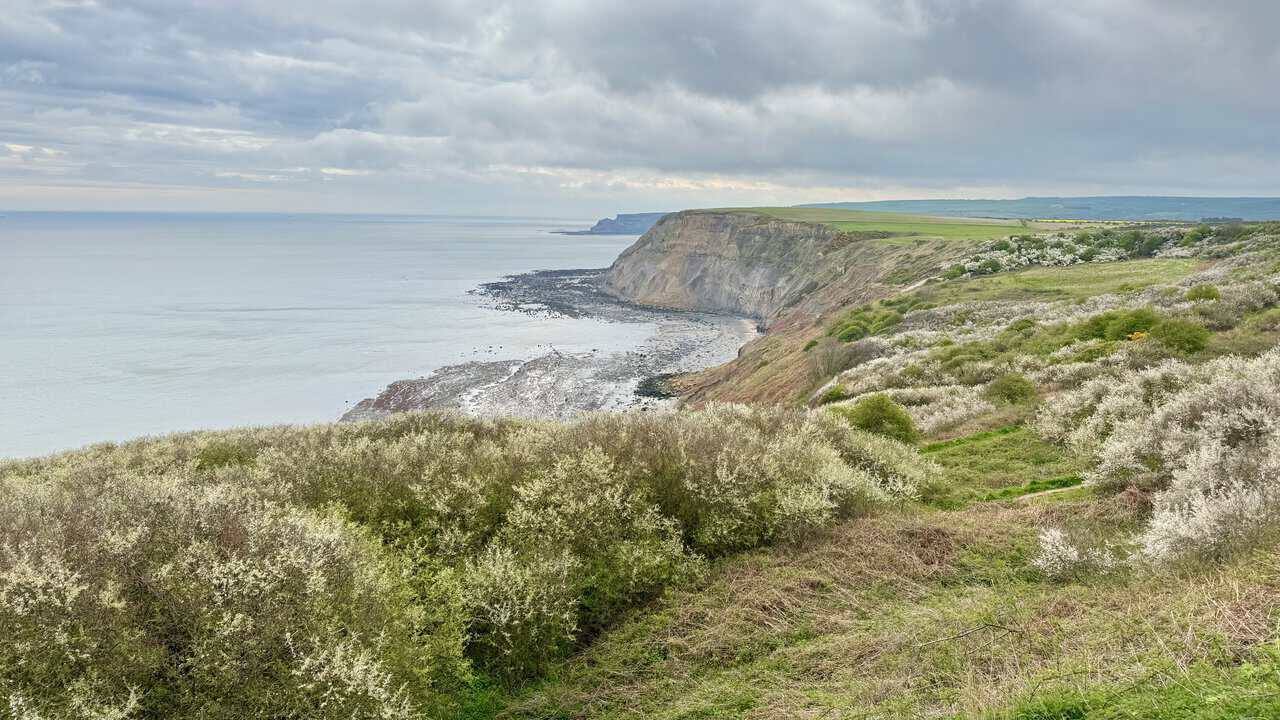
Down below, the pier itself has long since vanished. It once carried an impressive wooden gantry with storage bunkers. Railway trucks drove out of the mine and tipped ironstone into the bunkers. Workers then loaded it onto the ships waiting below. When the ironstone here ran out, Grinkle Park Mine opened three miles away. The harbour at Port Mulgrave still shipped the stone, and a specially constructed railway line brought it here until 1917. An accidental fire eventually destroyed the gantry. Royal Engineers blew up the northern harbour breakwater during the Second World War to prevent German forces using the harbour as a landing point. The last remnants of the old machinery survived until 1934, when workers removed them. The site has gradually given way to the effects of time and the sea ever since. All of this makes Port Mulgrave one of the most atmospheric stops on the whole Runswick Bay circular walk.
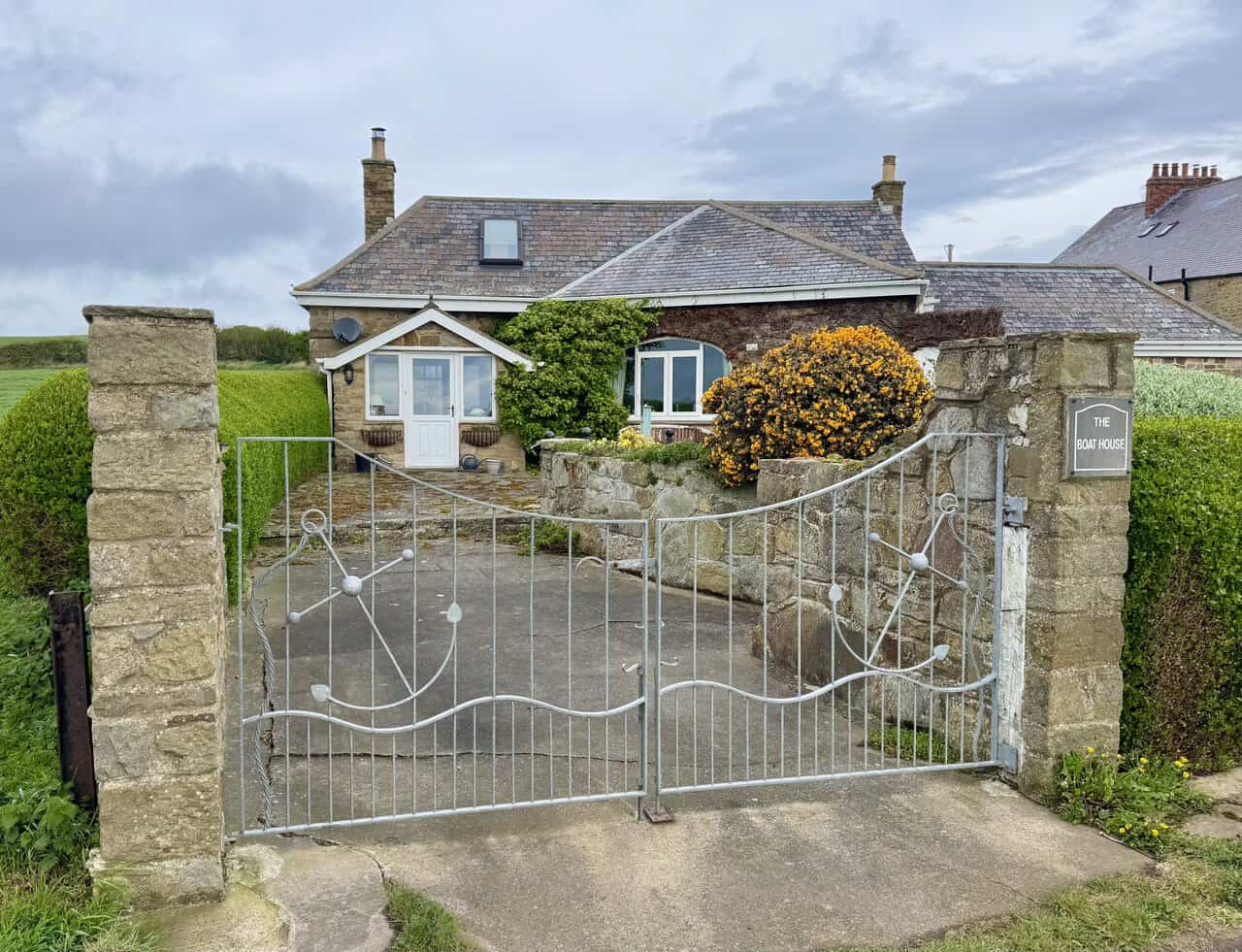
The route passes The Boat House, a stone-built bungalow with iron gates set between sturdy sandstone pillars. A row of terraced stone cottages follows, then a second bungalow a short distance further on. Continue along the gravel path signposted Cleveland Way to Staithes. After half a mile the path splits again. The right-hand fork is the Cleveland Way public footpath along the edge of the cliff. This marks the entry to the National Trust area known as Old Nab. The Cleveland Way along this stretch also doubles as the King Charles III England Coast Path.
Old Nab: A Dramatic Headland on the Runswick Bay Circular Walk
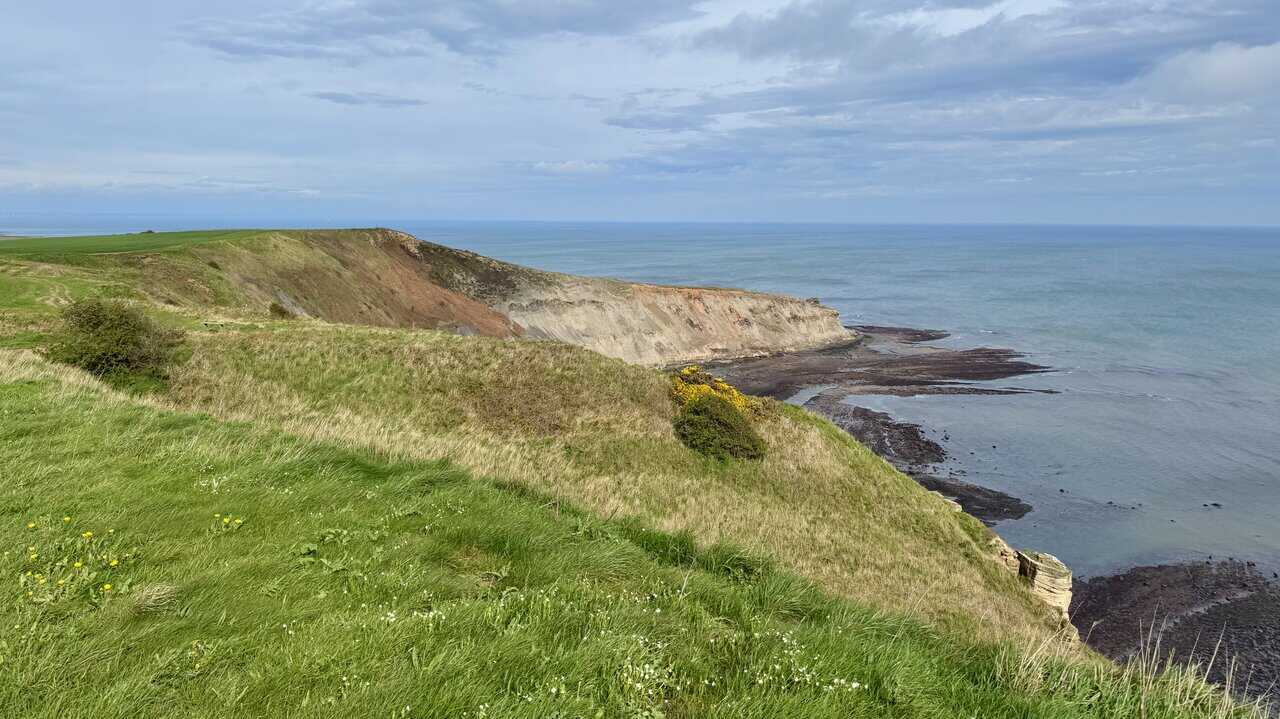
Old Nab is a bold headland of layered rock jutting out into the sea. It’s one of the most striking spots on the entire route. The cliff face drops away sharply. Banded layers of sandstone and mudstone lie exposed and raw where the land has fallen. Waves break against the dark rock platform below, and the scale of the coastline from up here is real. Out on the headland itself, a strange, weathered stack of layered rock stands alone. Wind and rain have sculpted it into a rough, tiered shape. The ground around it is eroded and uneven, a reminder of how quickly this coastline is reshaping itself.
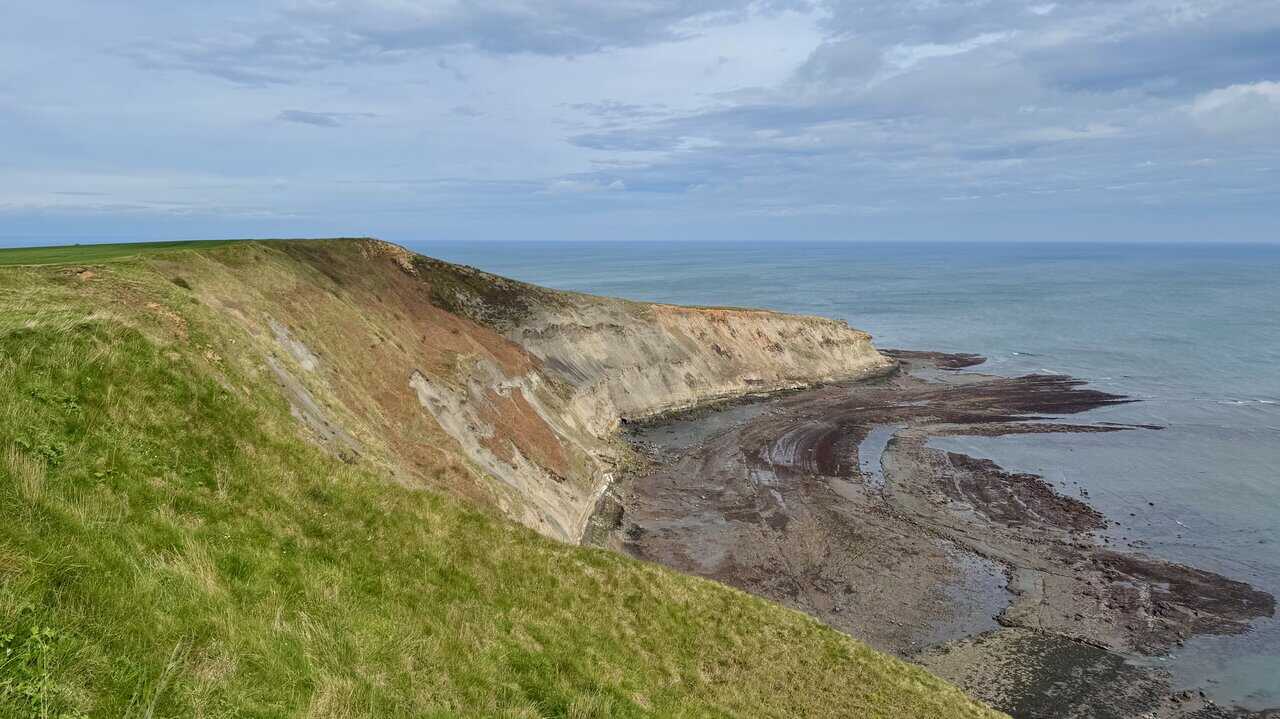
Looking west from Old Nab, the cliffs drop sharply to the rocky shore at Jet Wyke. Waves roll in across a broad rock platform. They break in long, curving lines of white against the dark stone. It’s a wild and open stretch of coastline, with no path down and no easy access from above.
From Old Nab the Cleveland Way continues for another half a mile. The path then bends left and heads inland to reach a farm. In front of the farm, turn right and pass the front of Barn Cottage. Head downhill towards Staithes. The stone path descends and joins a cobbled lane. It drops steeply between sandstone and white-rendered cottages before emerging onto the harbourfront.
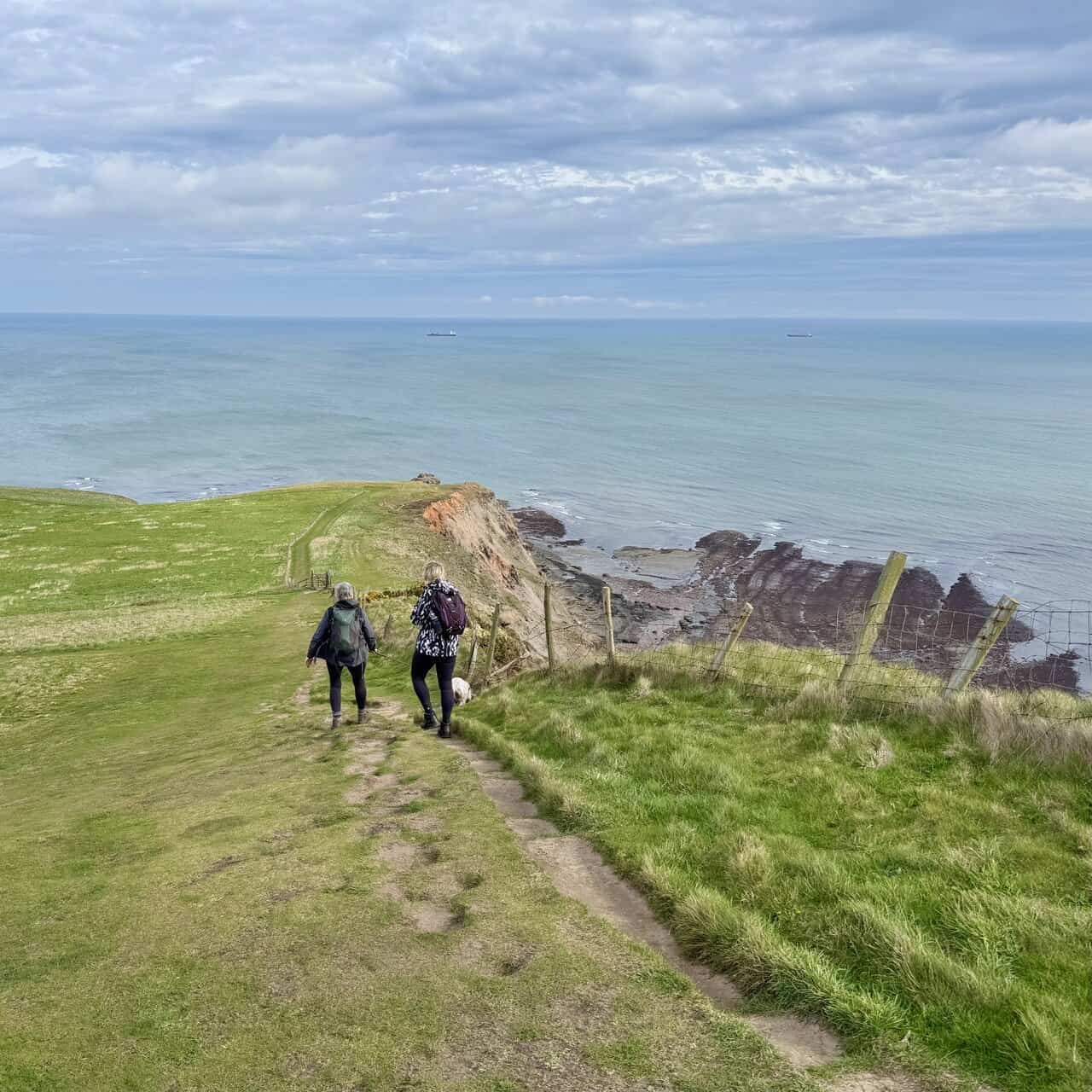
Staithes: A Historic Fishing Port on the Runswick Bay Circular Walk
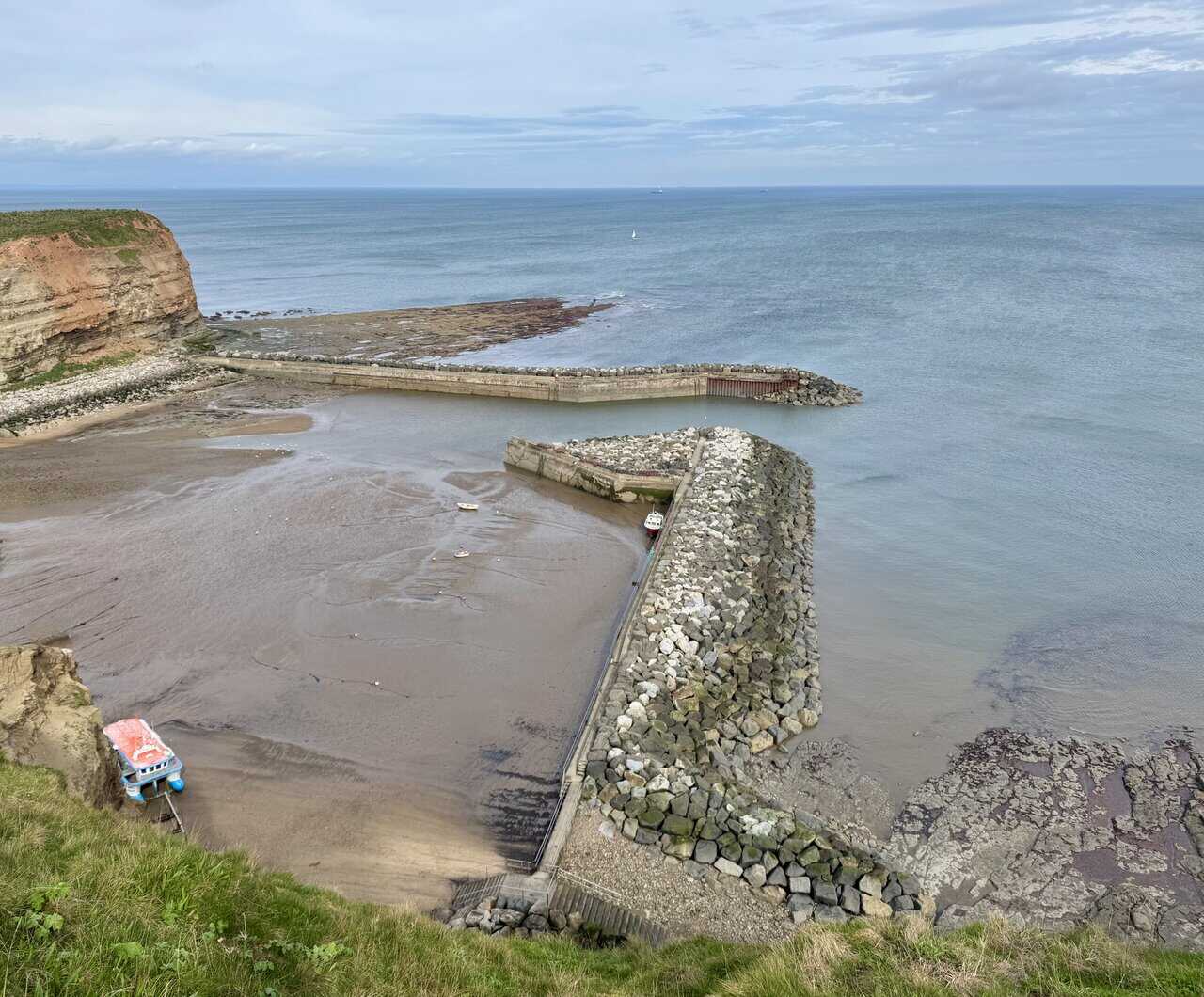
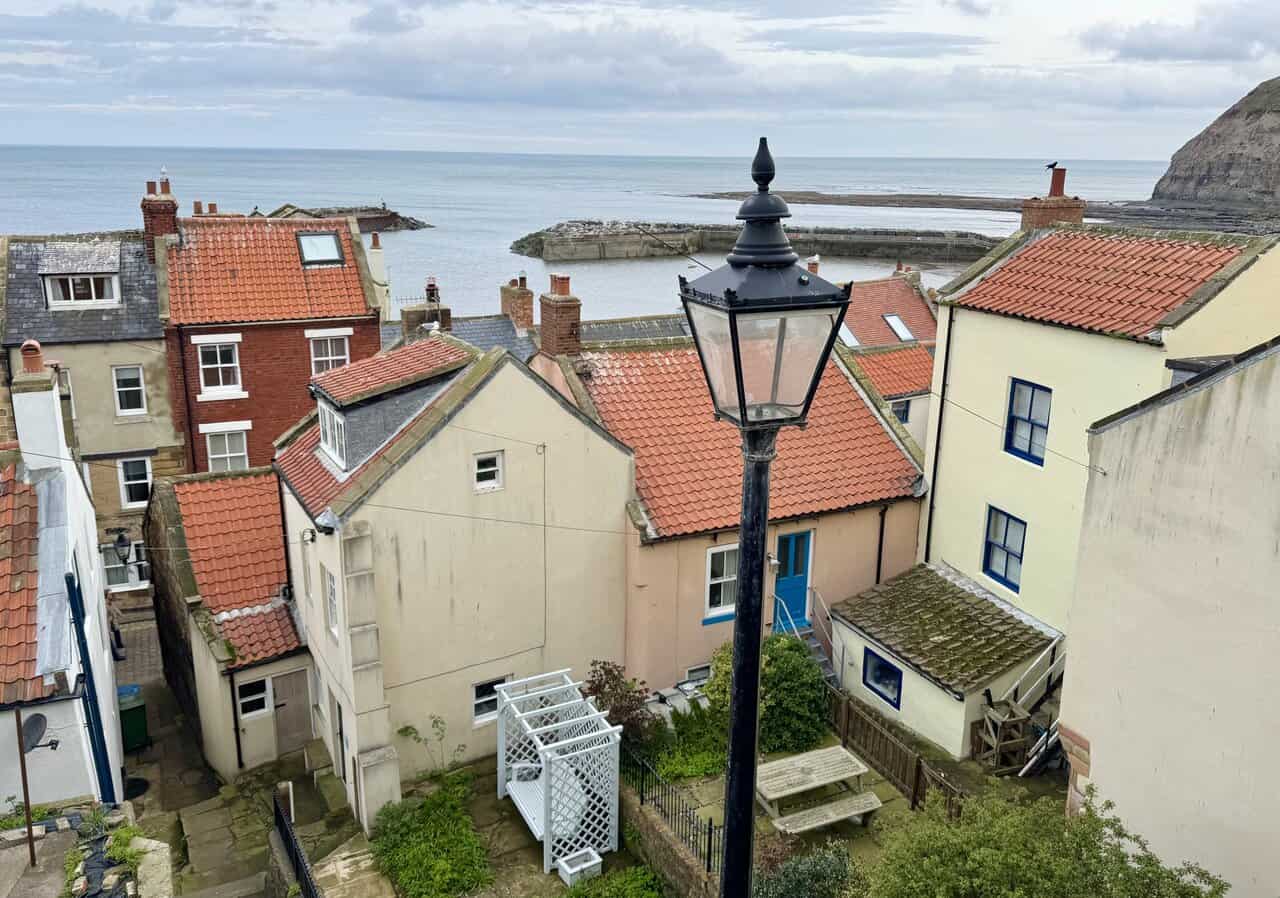
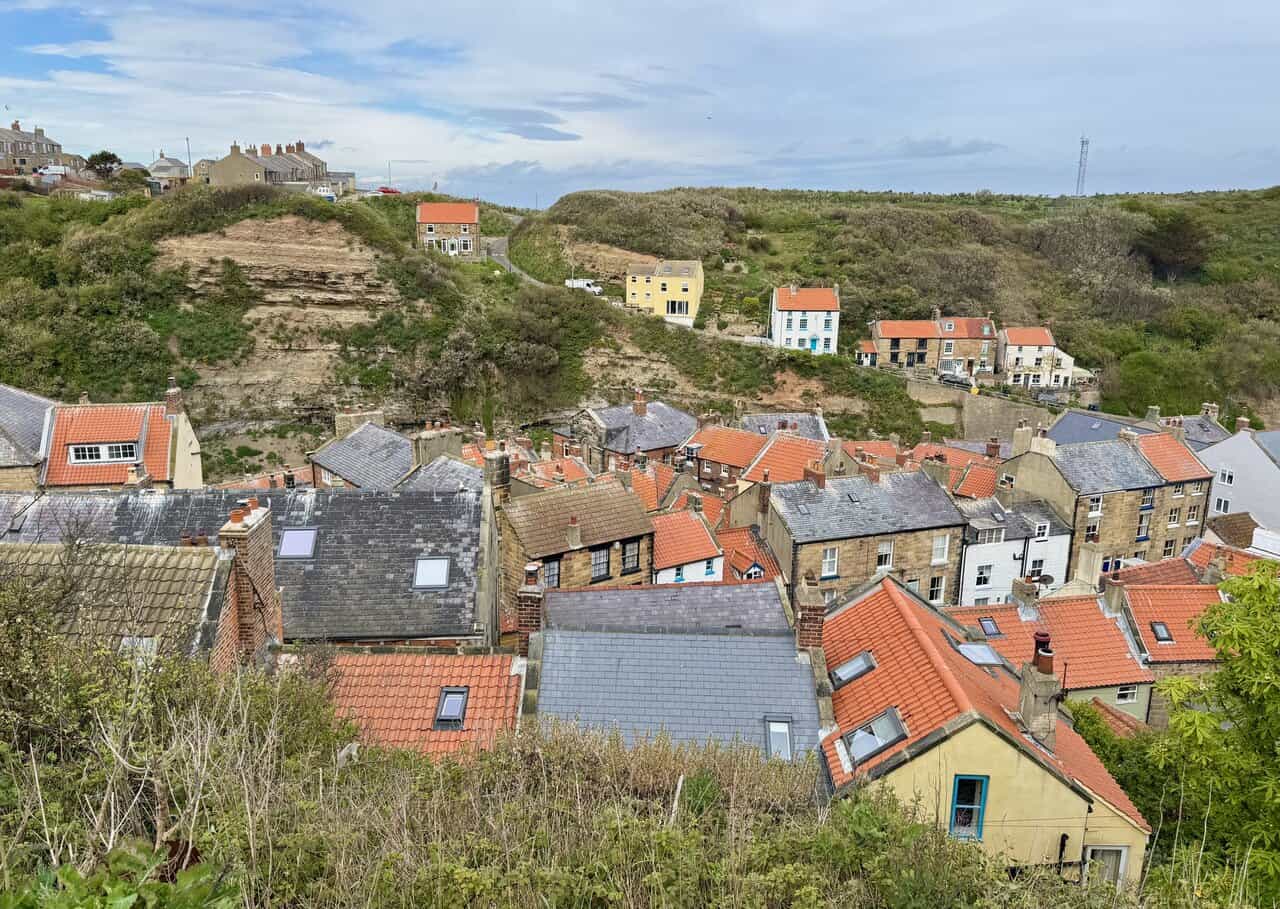
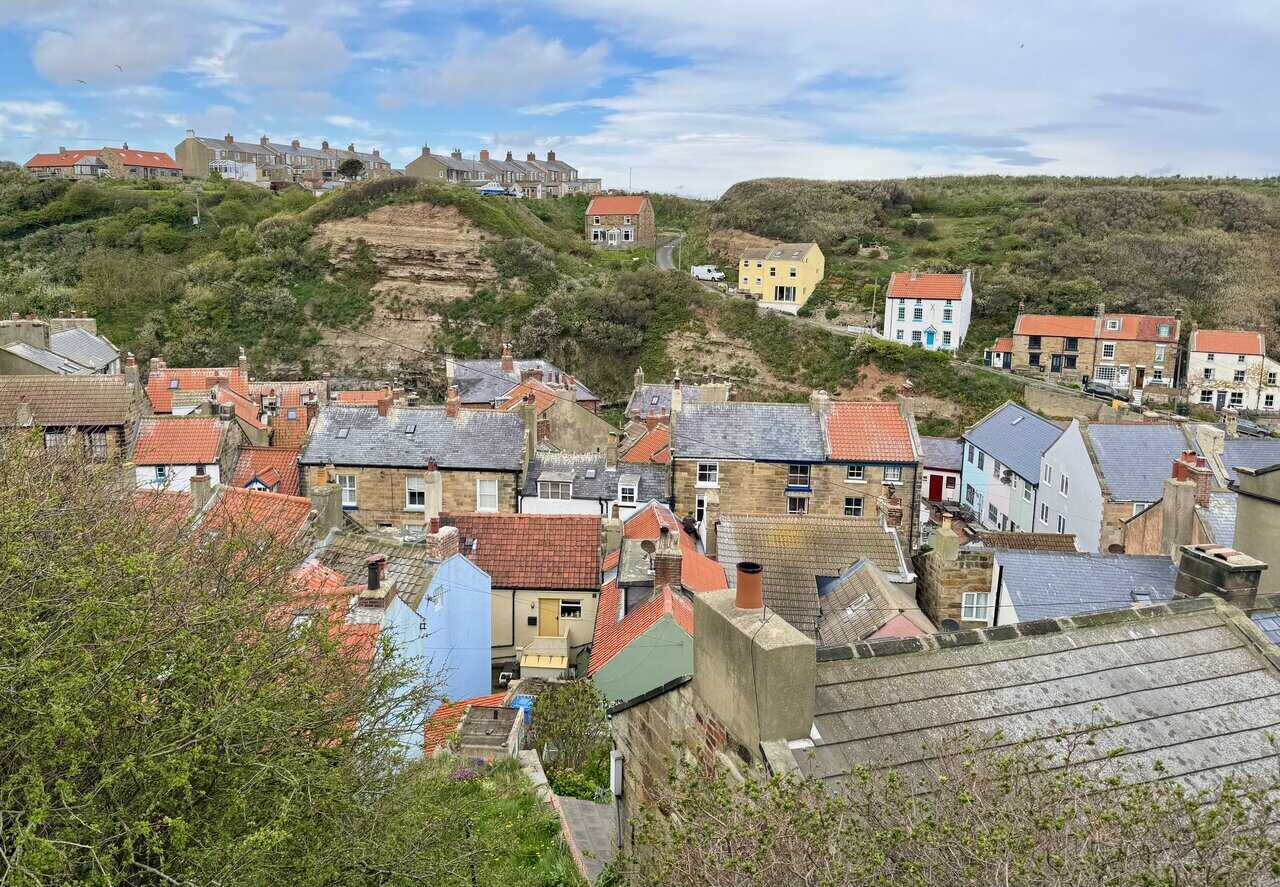
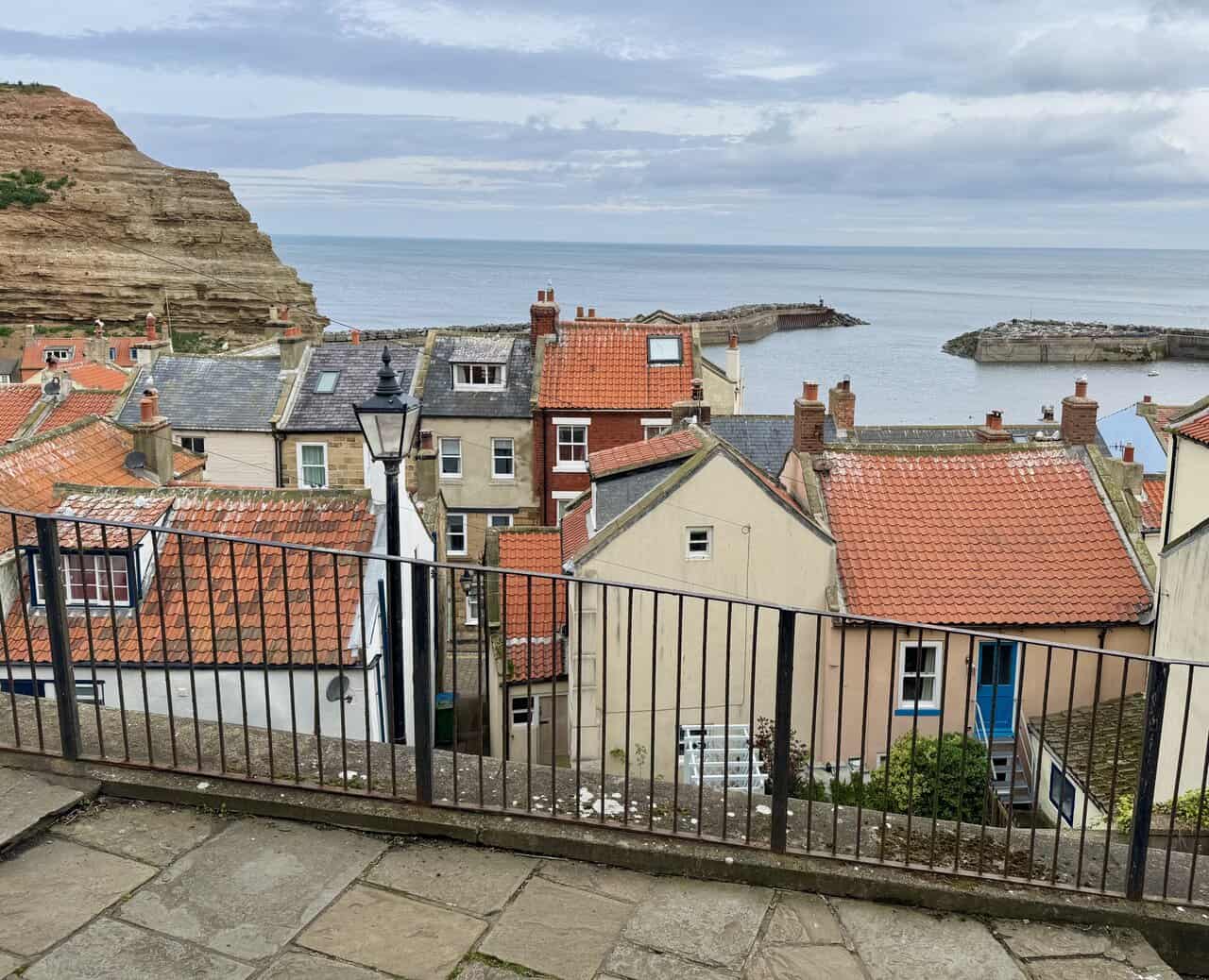
The first glimpse of Staithes from the cliffs above is a real moment. The village tucks itself into its narrow valley. Red pantile roofs pack tightly above the harbour. Breakwaters curve out into the sea. They shelter a handful of boats on the calmer water within. Beyond them, the bold, rust-coloured cliff of Cowbar Nab rises sharply against the sky. The hilltop hamlet of Cowbar sits on the western side of Staithes Beck. Further along the coast, the buildings of Boulby Mine stand out against the green farmland. In the distance, the sheer face of Boulby Cliffs stretches along the coast. These are the highest cliffs on England’s east coast, and from the path down into Staithes their scale is unmistakable.
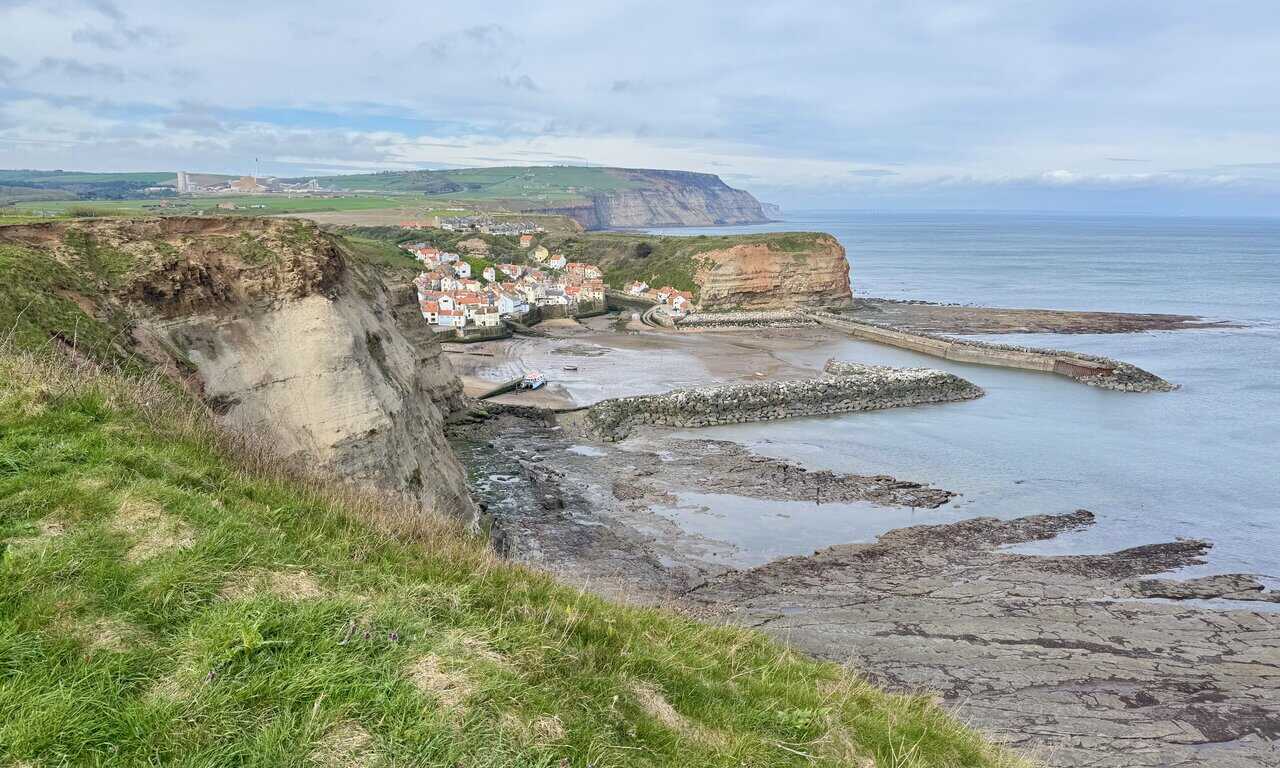
Staithes has a long history as a fishing port. The young James Cook worked here as an apprentice to William Sanderson, a local grocer and draper, in 1744. He was just sixteen years old. By 1746 he had left for Whitby and a life at sea. Standing on the harbourfront today, it’s hard not to think of him looking out across the same water and finding himself drawn to something beyond it.
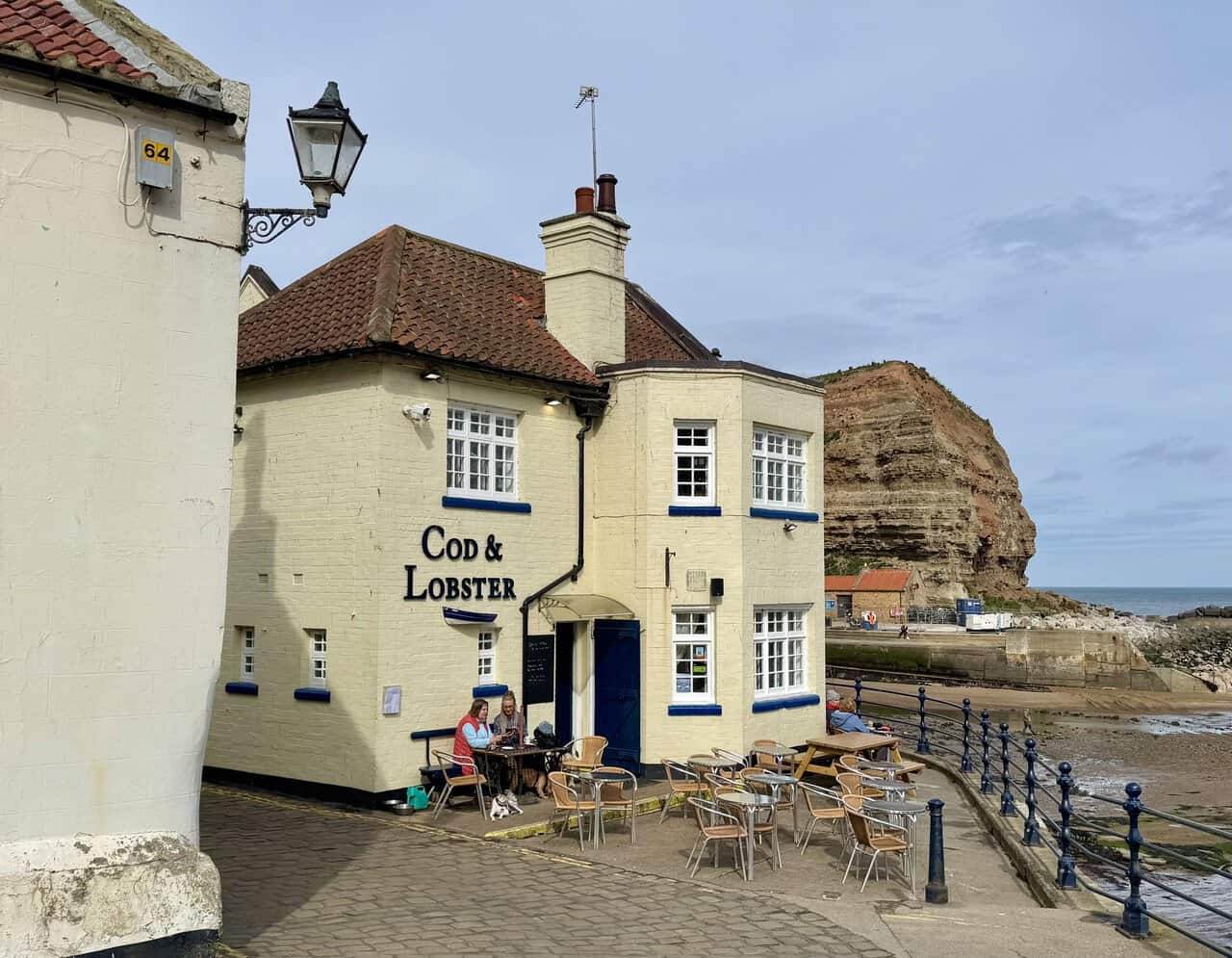
The Cod and Lobster and the Harbourfront
The cobbled street leads past the Cod and Lobster pub. It sits in a prominent position right at the water’s edge. Pale blue and cream-painted cottages press close on its left side. Their pantile roofs and slightly cracked render give them a well-weathered look. The pub has needed rebuilding more than once after storm damage. It remains one of the focal points of the village, with Cowbar Nab rising dramatically behind.
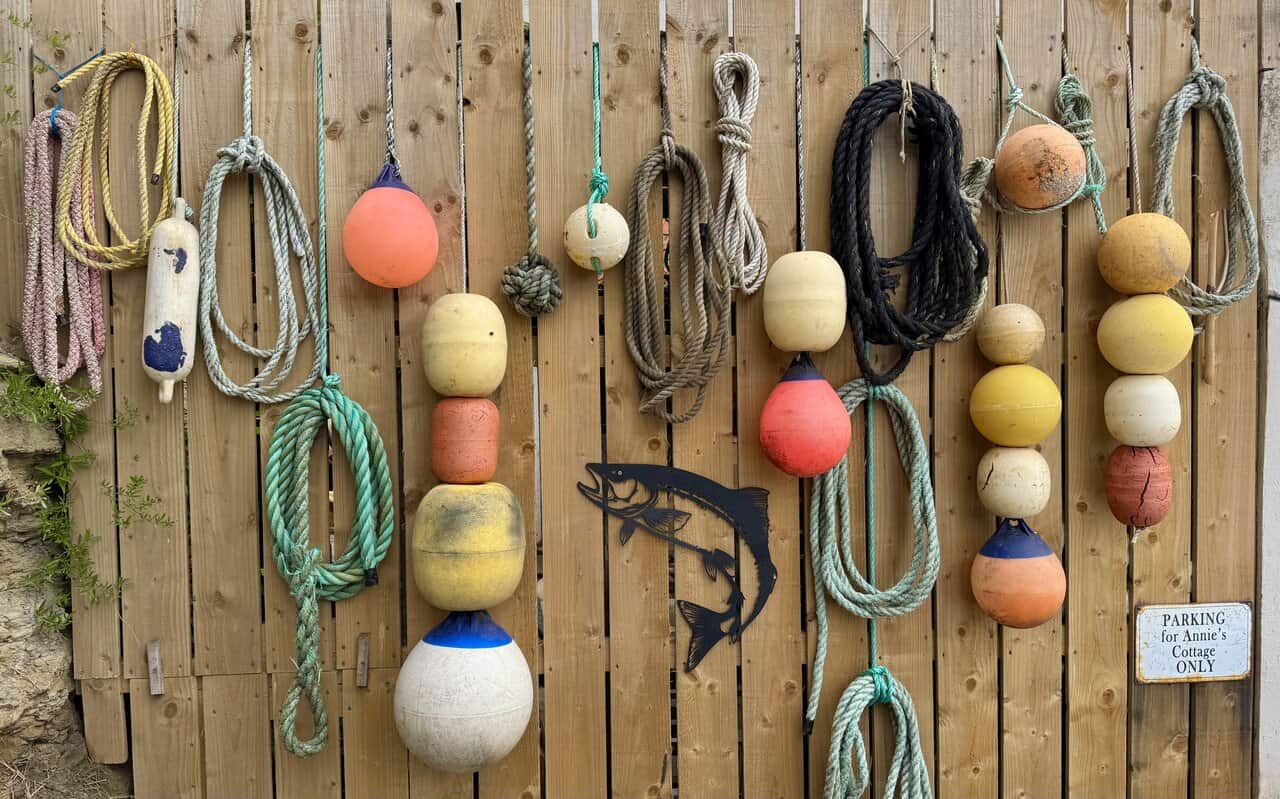
At the point where the cobbled street bears around to the left, the route carries straight ahead instead. A narrow flagged alleyway runs between the buildings and leads to the footbridge over Staithes Beck. Cross the bridge and turn right to explore the harbour area. Along the Cowbar side, a row of brightly painted cottages with red, turquoise and pastel-coloured doors adds colour to the scene. Fishing buoys hang from the side of a small shed, and the exposed bed of Staithes Beck lies below at low tide.
Cobles and the Fishing Tradition of Staithes
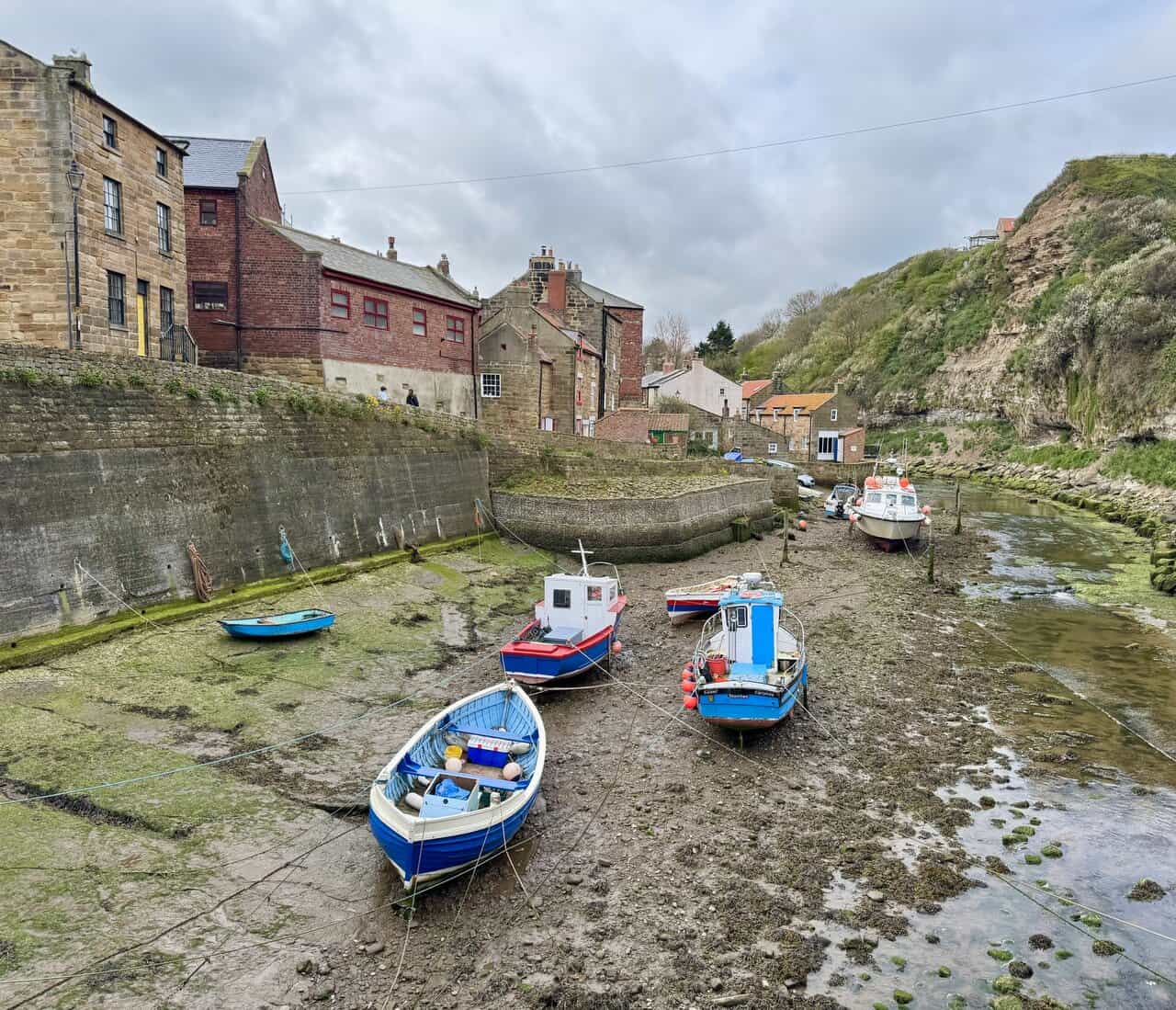
In the nineteenth century, more than 300 men worked from this harbour. They hauled in catches on traditional wooden cobles. These are flat-bottomed boats with a high bow designed for launching from shallow, sandy beaches. Cobles formed the backbone of fishing along this stretch of the coast. Staithes is still a working harbour today. A small fleet of cobles fishes for mackerel, lobster and crab. The feel of the place is shaped as much by the sea as it ever was.
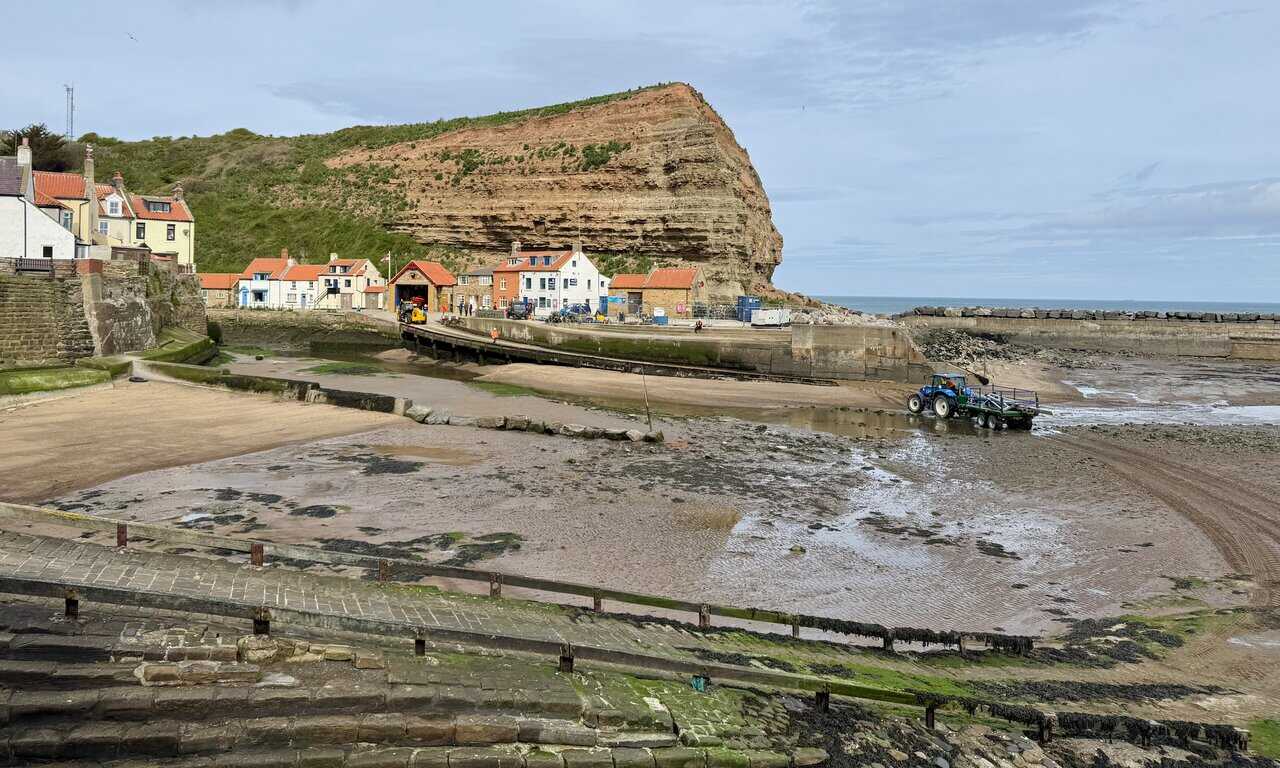
The walk out along the breakwater runs along a concrete path. Heavy boulders line the harbour edge. These sturdy sea defences protect the village from the worst of the North Sea. The concrete breakwaters extend further out into the water beyond. The headlands of Cowbar Nab and Penny Steel provide natural shelter on either side. The engineered defences keep the harbour and the village safe. The concrete surface has worn smooth under the sea. From its far end, the exposed position of Staithes, and the effort that has gone into defending it, both become very clear.
The Staithes and Runswick Lifeboat Station
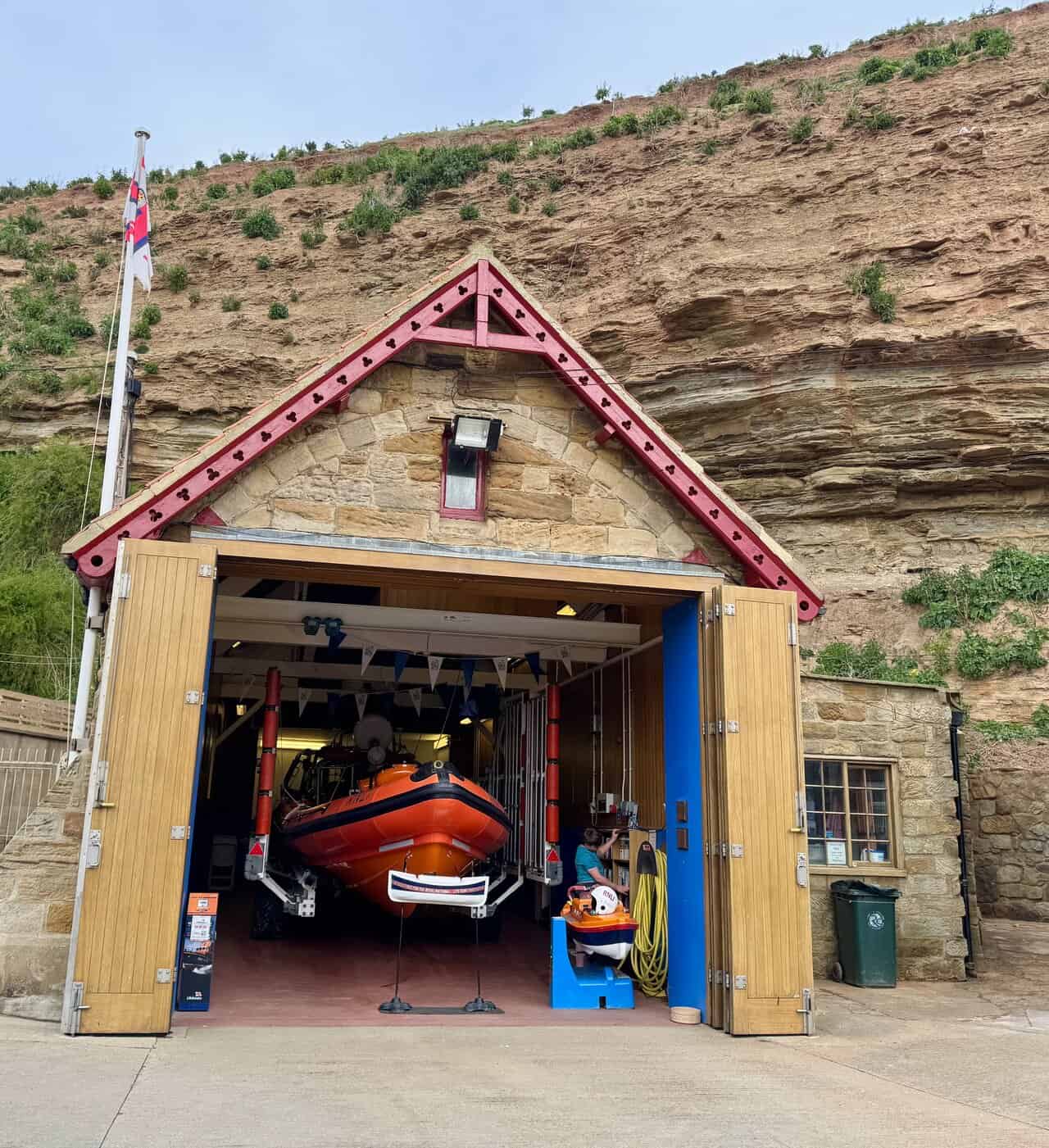
On the Cowbar side of the harbour stands the RNLI lifeboat house. Its white-painted walls and blue trim stand out among the stone and rendered cottages. Lobster pots sit stacked on the quayside outside. A red-painted gable and flag mark the building out. The station opened in 1875. A large crowd attended the inauguration of the lifeboat Hannah Somerset that day. Crews have operated lifeboats from Staithes and Runswick for more than 150 years. The station currently runs an Atlantic 85 inshore lifeboat called Sheila and Dennis Tongue III, on station since 2016. Its volunteer crews have earned nine awards for gallantry over the years. It’s a fitting place to pause on this Runswick Bay circular walk and reflect on the long tradition of courage and service that connects these two coastal communities.
When you’re ready, retrace your steps back over the bridge and through the alleyway. Turn right and follow the road uphill for half a mile, all the way out of the village. At the A174 main road, turn right towards Loftus and Saltburn. A short distance further on, turn left onto Dalehouse Bank, signposted Dalehouse, Borrowby and Roxby.
Dalehouse and the Former Ironstone Tramway
The road drops down into the hamlet of Dalehouse. It passes the Fox and Hounds on the right, a solid sandstone pub with red pantile roofs and climbing plants on its walls. Just before the bridge over a small stream, a public footpath on the left begins as a concrete driveway. It quickly becomes a wide gravel track.
This track follows the route of a former railway tramway. A bench made from old railway axles and sleepers sits beside an information board further along. The board tells the story of the Grinkle Ironstone Mine. A narrow three-foot tramline carried ironstone from the mine along this valley, through Dalehouse and through a tunnel to Port Mulgrave. At Port Mulgrave, workers loaded it onto ships that sailed to Jarrow on the River Tyne. In the early 1900s, three million tons of ironstone passed over these very rails.
HMS Queen Mary: A Striking Connection
The information board goes on to make a striking connection between this quiet valley and one of the greatest tragedies of the First World War. The ironstone shipped from Port Mulgrave went to the Jarrow yard of Charles Mark Palmer. Palmer owned both the Grinkle Mine and the shipyard. In 1912, Palmer’s yard launched HMS Queen Mary, a 27,000-ton battlecruiser. She sank at the Battle of Jutland on Bank Holiday Monday 1916. That battle was the biggest naval engagement of the First World War. Her magazine took a hit and she exploded. 1,266 men died, and only eighteen survived. It’s highly probable that ironstone from Grinkle, carried along this very tramway through Dalehouse, went into the iron that built her. Standing on the quiet footpath now, it’s hard to reconcile the two scales of story. The information board makes one of the most unexpectedly affecting stops on this Runswick Bay circular walk.
From the information board, continue along the track. At a wooden footbridge over a stream near some caravans, cross the bridge and bear left, then immediately right to follow the track uphill. At the top, continue straight ahead.
Oakrigg Wood Nature Reserve
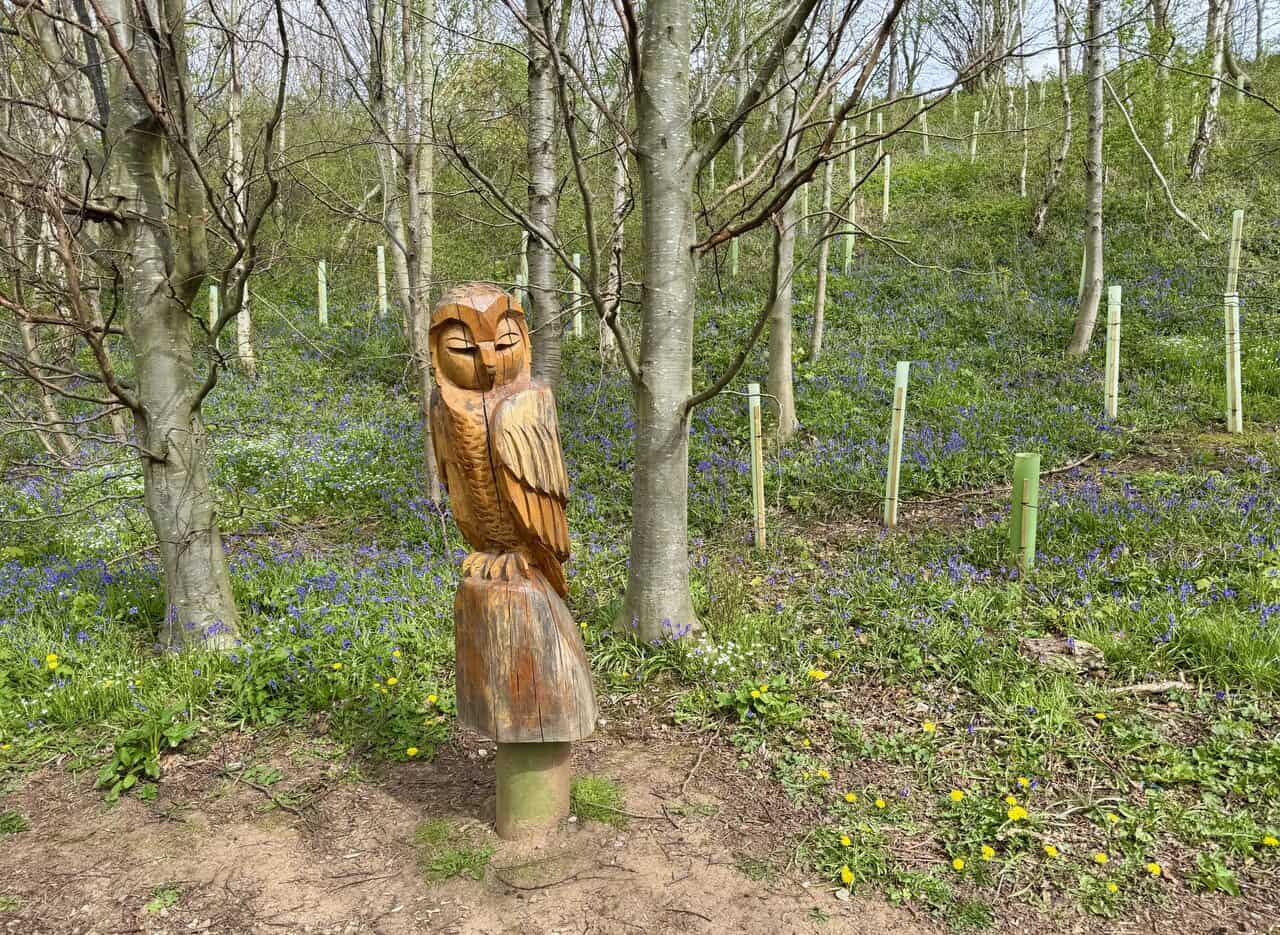
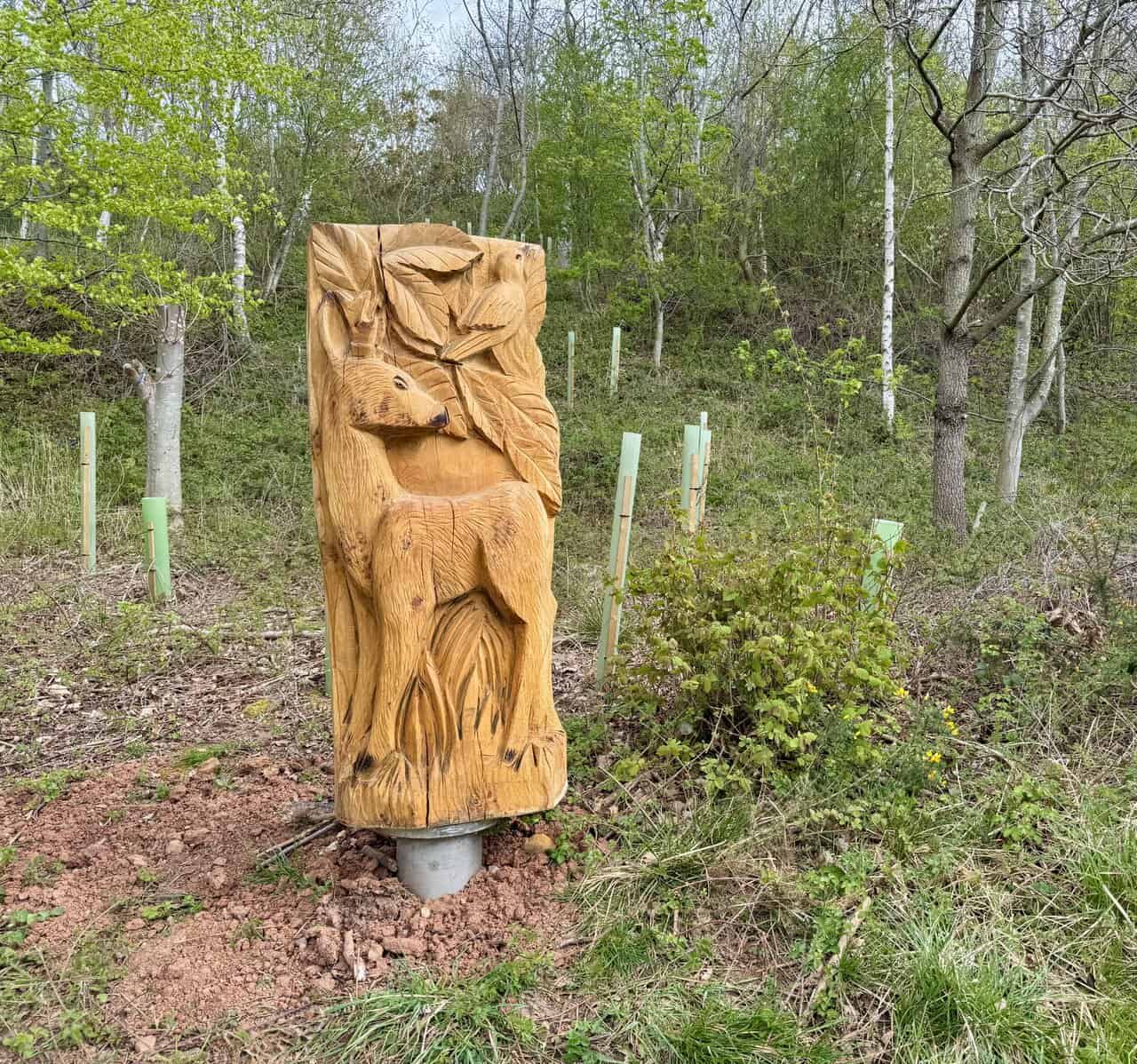
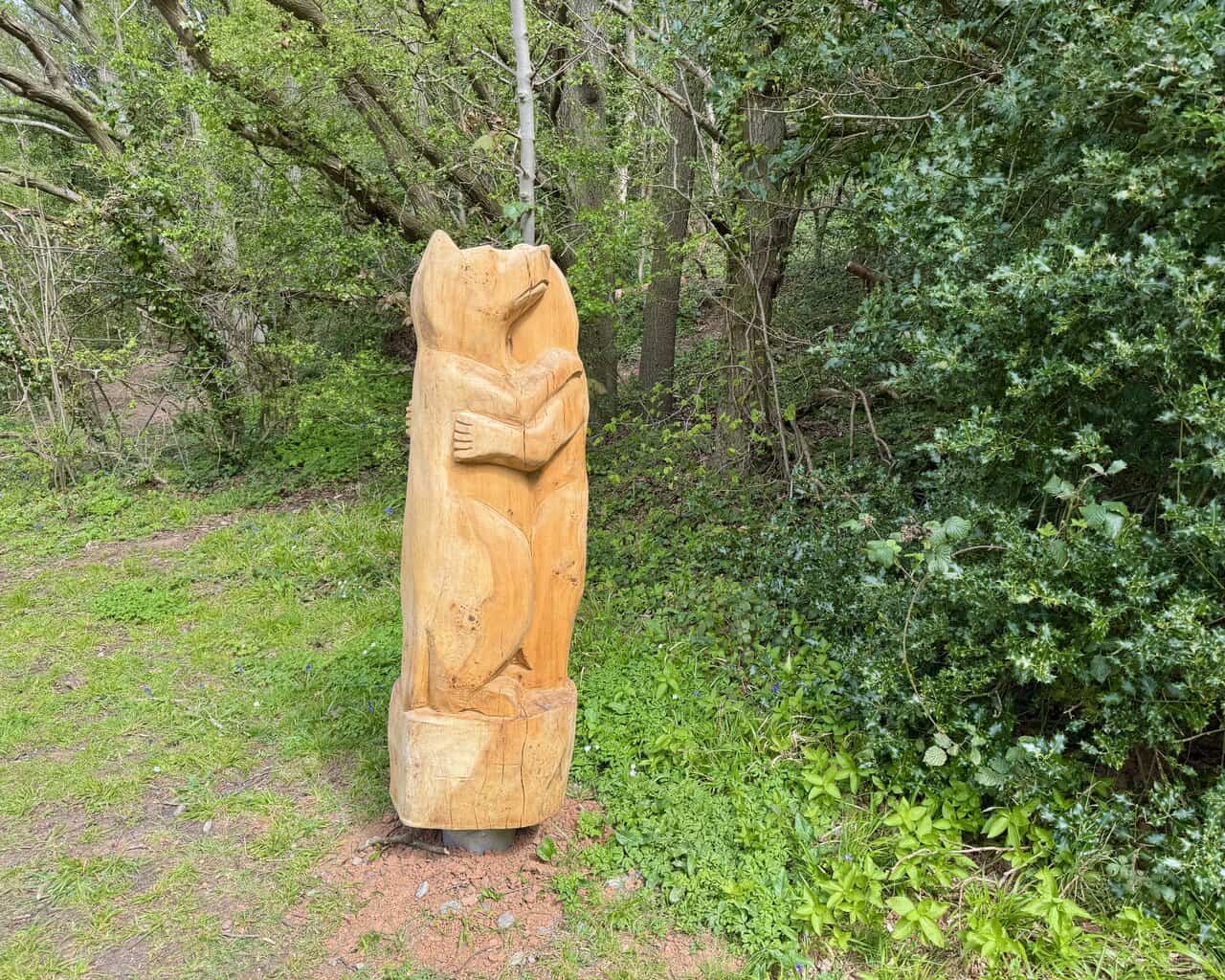
The former tramway leads into Oakrigg Wood, a local nature reserve set in the valley between Dalehouse and Hinderwell. The wood takes its name from the abundance of native English oaks found here. Many of the sixty-five oak species that grow in this country today now thrive alongside the natives. The path passes a series of wooden sculptures as it winds through the trees. First comes a carved owl, perched on a stump with its eyes closed and its feathered wings folded. It’s a fine piece of chainsaw work in warm, honey-coloured wood. Further on, a tall panel depicts a deer standing beneath broad leaves, with a small bird perched above. The detail impresses, from the texture of the deer’s coat to the veins in the leaves. A third sculpture appears beside the path. Two bears stand upright and embrace, carved from a single trunk.
The track gradually narrows into a woodland path. It remains well defined and easy to follow. Where the path splits near the yellow Oakrigg Nature Reserve sign, take the left-hand fork onto the higher path. The route then runs along a narrow ridge with the valley down to the left. It passes through an area where twisted, gnarly trees lean in from both sides. Their ivy-covered trunks and low branches form a dense, natural tunnel overhead. The light filters through in patches. The path narrows to little more than a thread of bare earth winding between the roots.
At a junction, turn left and descend some wooden steps into the valley. Cross Dales Beck via a wooden footbridge and climb the steps on the other side. Follow the stone track straight ahead towards Hinderwell. The track passes some farm buildings and runs between houses before reaching the A174 main road.
St Hilda’s Church, Hinderwell
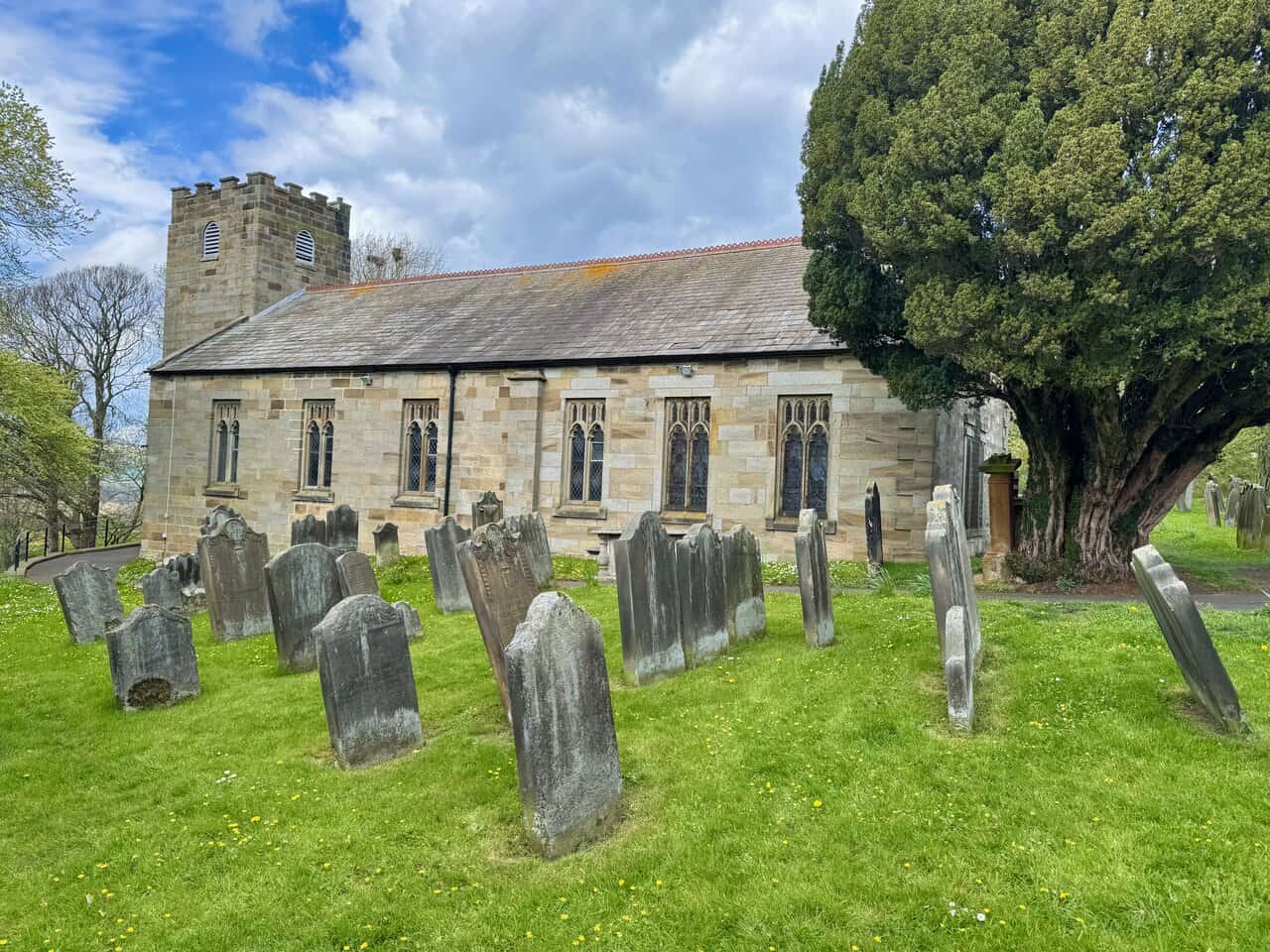
Cross the road and walk down Old High Street opposite, signed Port Mulgrave. A short way along on the left stands St Hilda’s Church. It sits in a peaceful churchyard dotted with old headstones and wildflowers. A large yew tree stands close to the building. Its broad canopy spreads over the graves.
The current building dates from 1773. It forms a single rectangle of 67 feet 6 inches by 28 feet 6 inches, with a tower at the west end that also serves as a porch. The tower underwent rebuilding in 1817. In 1895, a restoration gave the six rectangular windows on each side gothic tracery within their original openings. An earlier church on this site probably dates from the twelfth century. The Holy Well in the churchyard has much older origins still, and it probably gave its name to the village.
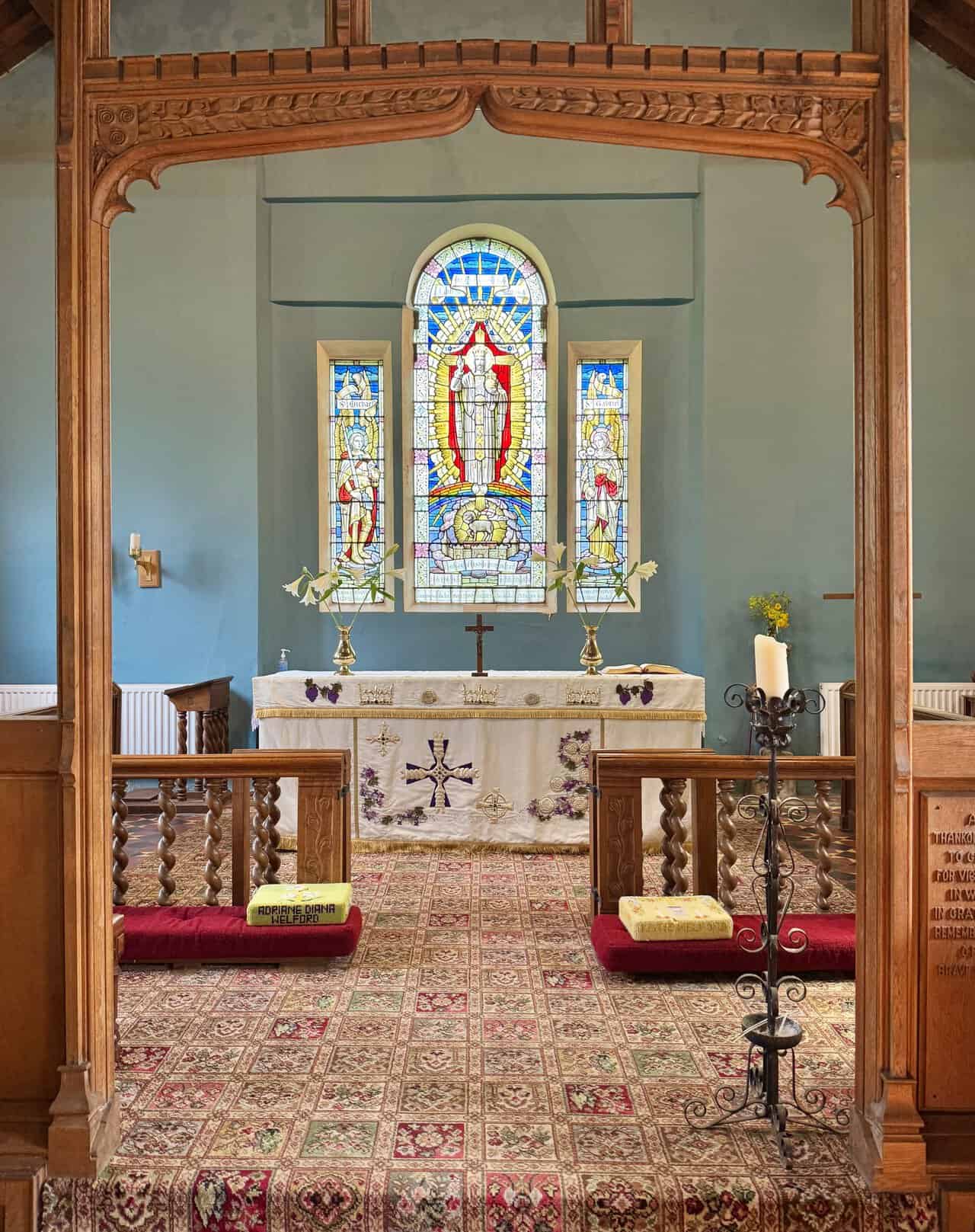
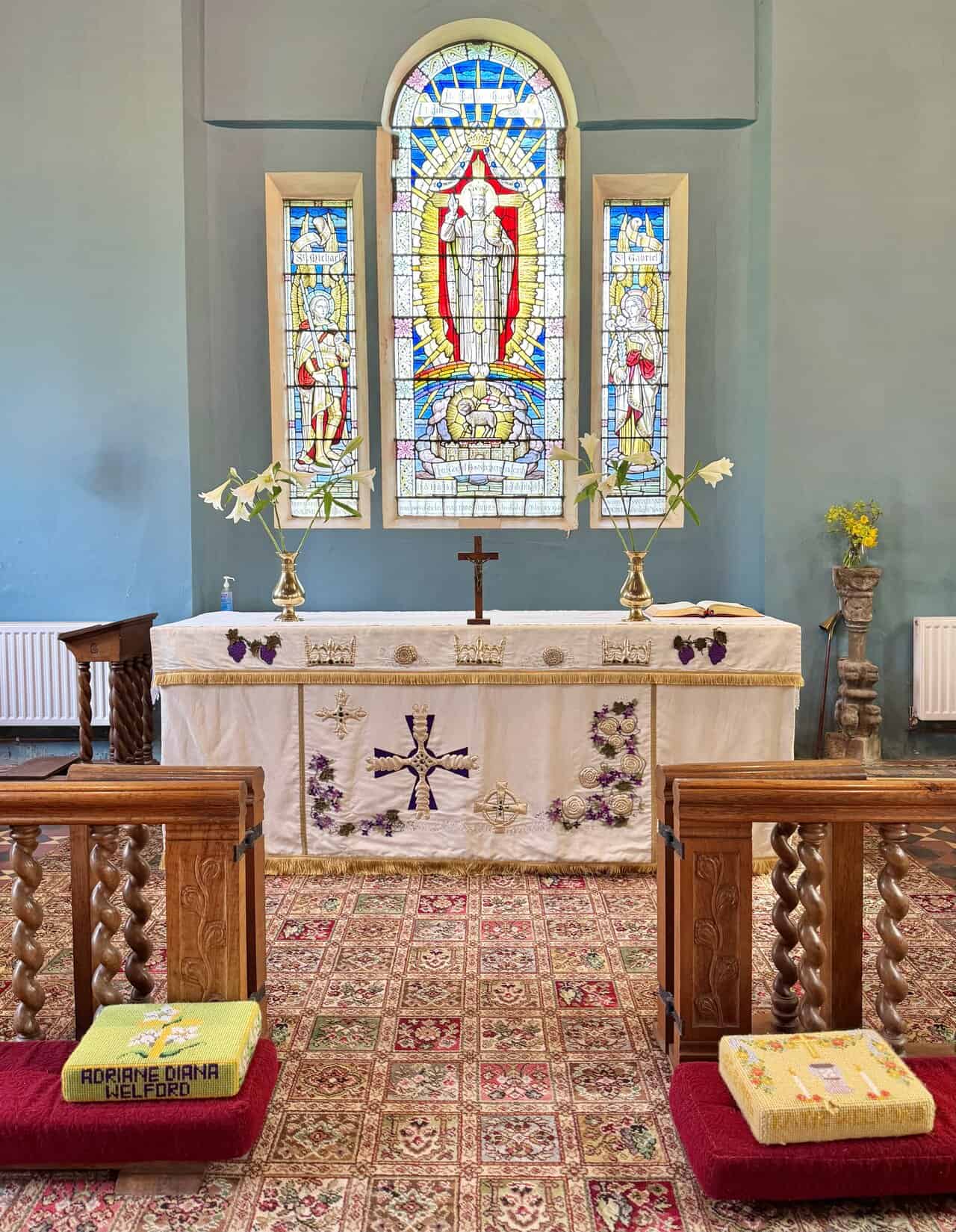
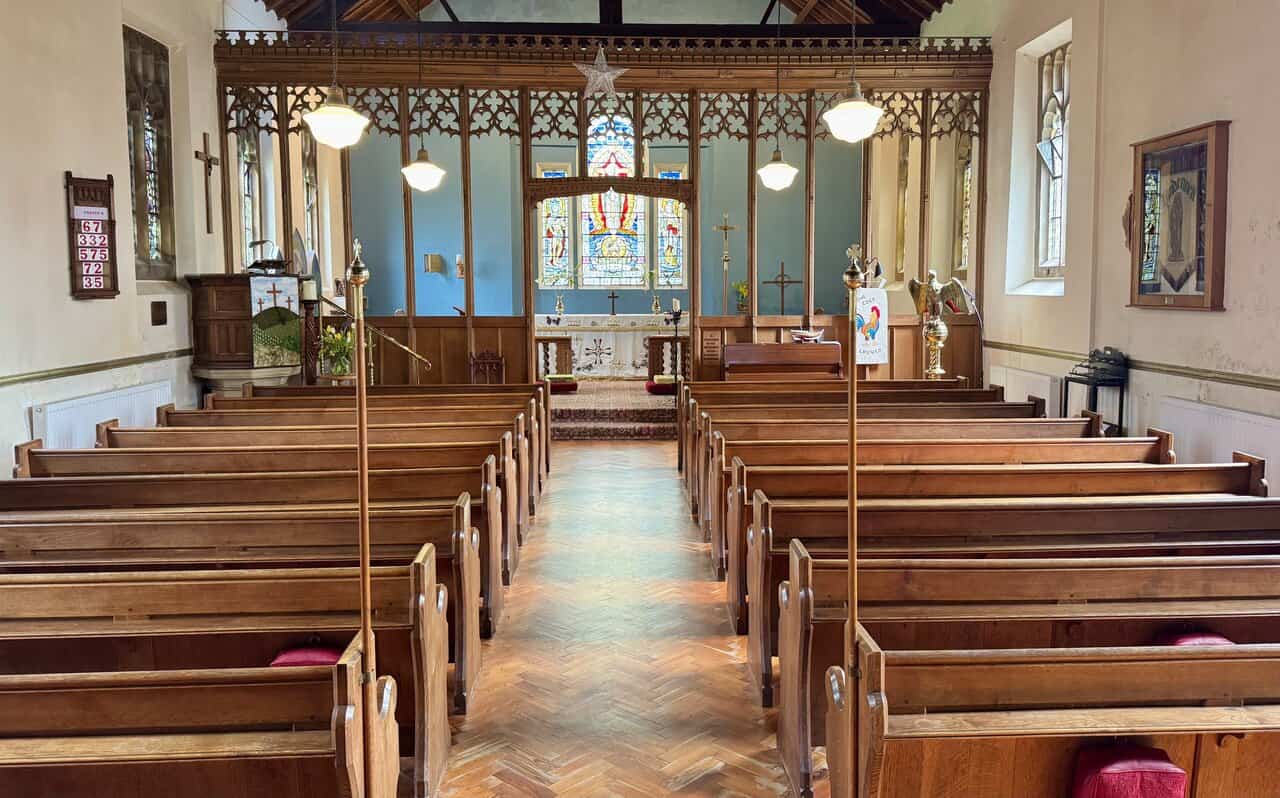
Inside, oak pews line either side of a herringbone-patterned floor. The nave leads towards an ornate wooden rood screen with delicate carved tracery. Beyond it, the sanctuary shows a distinctive soft blue. A colourful stained glass window fills the east end with light. The rood screen in particular repays a closer look, with its arched openings and finely carved gothic detail.
Saint Hilda: Abbess and Anglo-Saxon Saint
The church honours St Hilda (c. 614–680), perhaps the most renowned female saint of Anglo-Saxon England. A grandniece of King Edwin of Northumbria, she received baptism from Saint Paulinus at York in 627, when she was thirteen years old. She became a disciple of the great St Aidan of Lindisfarne. She remains most famous as the Abbess of Whitby Abbey and as an important figure at the Synod of Whitby in 663. That synod decided between the Roman and Celtic dates for Easter. She became known for her spiritual wisdom, and her monastery for the calibre of its learning and its nuns. Saint Bede praised her enthusiastically as one of the greatest Englishwomen of all time. Among her monks was the herdsman Caedmon, the first English religious poet. She suffered from fever for the last six years of her life but continued to work until her death in 680, aged sixty-six. In her final year she established another monastery fourteen miles from Whitby, at Hackness.
St Hilda’s Well: A Place of Pilgrimage on the Runswick Bay Circular Walk
A set of stone steps leads down the slope from the churchyard. It passes a stone cross and weathered headstones before reaching St Hilda’s Well at the foot of the slope. The well is a small, stone-built structure with a heavy lintel. A plaque reads “St Hilda’s Well, Restored by Hilda Palmer of Grinkle Park, 1912.” It’s the only scheduled ancient monument in the parish. It once supplied all the water for the village.
Its waters held a reputation for healing eye diseases. During the Middle Ages the well became a place of pilgrimage. According to legend, someone asked St Hilda to intercede in a drought whilst travelling through the parish. Her prayers brought an answer. The spring that appeared has continued to bubble from the hillside to this day. Visitors have left small stones, shells and candles on the ledge above the plaque. Three ammonite fossils sit embedded in the stonework above.
On Ascension Day, a custom known as Shaking Bottle Sunday once took place here. Local children would shake well water in a small bottle containing a stick of liquorice to make a flavoured drink. A commemorative open-air service still takes place at the well each July. In 2015, St Hilda’s Way launched from this spot. It’s a forty-mile pilgrimage visiting all eight churches in the Esk Valley dedicated to St Hilda, plus two others, finishing at Whitby Abbey.
St Hilda also bears the credit for the ammonites often found along this stretch of coast. They resemble curled-up headless snakes. According to legend, she prayed for all the snakes of the neighbourhood to lose their heads. For this reason, locals know ammonites as St Hilda’s Snakes. Seabirds flying over Whitby Abbey are even said to dip their wings in recognition of this miracle.
St Hilda’s Old School: A Community Hub
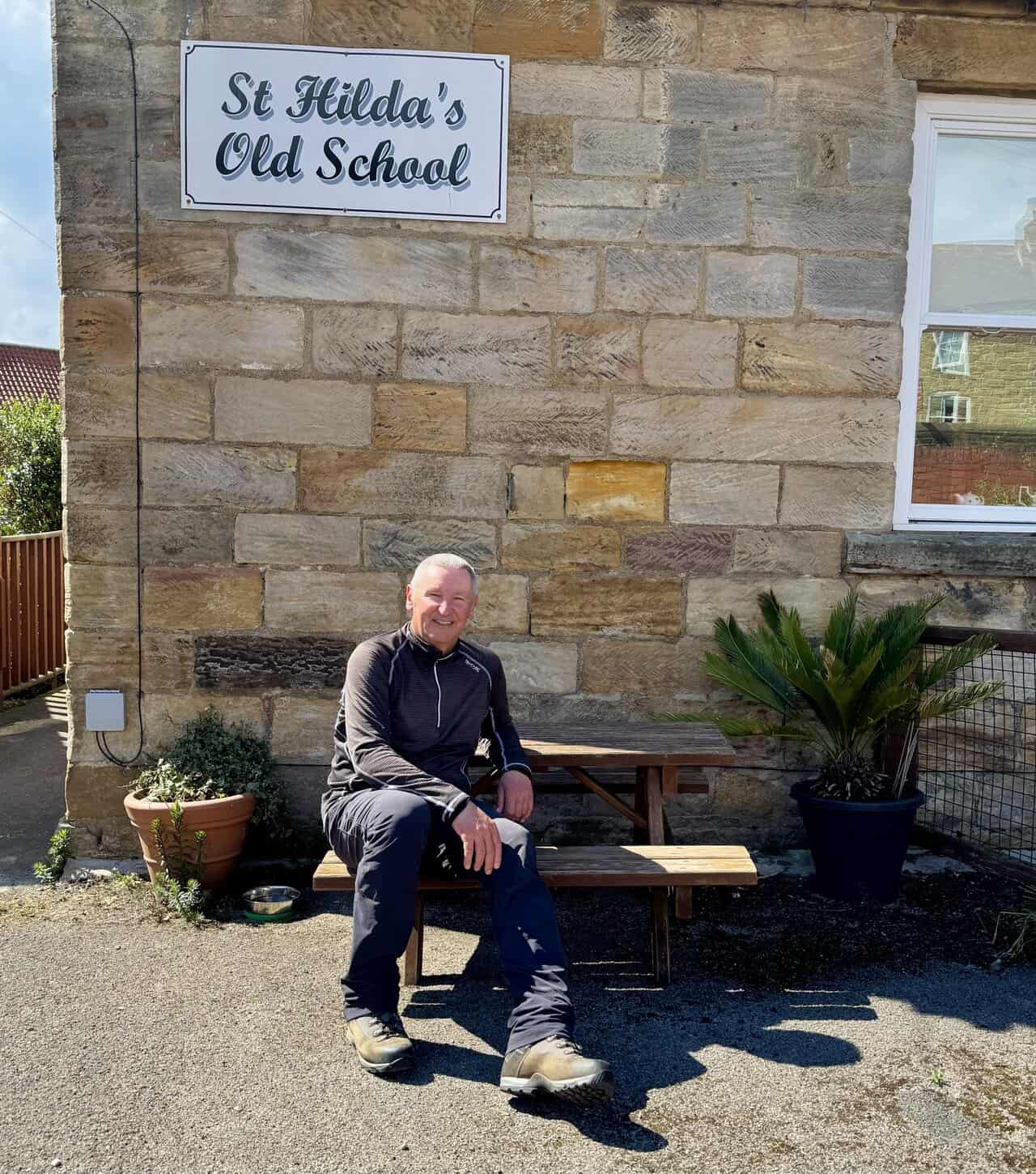
Back at the A174 and heading left through Hinderwell, the route passes St Hilda’s Old School. It now serves as a community tearoom and village hub. The single-storey sandstone building sits on the High Street. Picnic benches fill the old school yard outside, and the place has a warm, welcoming feel about it. The tearoom serves home-cooked food and locally sourced produce. It also houses a small craft shop and artwork by local artists. It’s another stop well worth making if time allows.
A little further along Hinderwell’s main street, a sandstone cottage with leaded windows catches the eye. Its front garden holds an extraordinary collection of ornaments, from gnomes and animal figures to plant pots and stone carvings. A large wooden owl stands guard on the left. Behind the iron railings, the wonderfully eccentric display fills every inch of the garden.
Hinderwell War Memorial Clock Tower
Towards the far end of the village stands the Hinderwell war memorial, a Grade II listed sandstone clock tower. It sits at the junction where the road to Runswick Bay turns off to the left. Local people paid for it by public subscription and unveiled it in 1921. It commemorates the thirty-five men from Hinderwell, Port Mulgrave and Runswick who lost their lives in the two World Wars. Its inscription reads: “Pass not this stone in sorrow but in pride, and live your lives as nobly as they died.” The committee added the clock because the only one in the village at the time sat inside the post office. People waiting for the bus were damaging the shop front by climbing on the window sill to see the time.
From the war memorial, take the road on the left, signposted Runswick Bay. The final stretch of this Runswick Bay circular walk follows a narrow roadside footpath. It runs between a tall hedge and the open road. The path is straight and level, with wide views across farmland to the moors in the distance. It’s about a mile back to the car park at Runswick Bank Top where you started, completing the walk.
The route comes in at 8¼ miles and takes around four hours. There’s more than enough along the way to keep you lingering, particularly in the two villages. It makes a varied and thoroughly enjoyable day out on clifftop paths, a former ironstone tramway, woodland tracks and a short amount of quiet road walking. Some short, sharp descents and climbs along the coast call for a reasonable level of fitness. The total ascent of 1,080 feet spreads well through the route and never feels daunting. Appropriate footwear is advisable, particularly after wet weather when some of the cliff and woodland sections can become slippery underfoot. Taken at a relaxed pace, this Runswick Bay circular walk is a great day out and well within reach of most reasonably fit walkers.
Related Post: Walks in Wharfedale
Discover two walks in Wharfedale with scenic hillside and river views