ADVERTISEMENT
Breathtaking Scenery on Yorkshire Coast Walks
Discover the beauty of the Yorkshire Coast with my comprehensive guide to a collection of Yorkshire Coast walks. The Yorkshire Coast is a striking and varied Northern England coastline stretching over 100 miles from the mouth of the River Tees, north of Middlesbrough, to the mouth of the Humber, south-east of Hull. From north to south it boasts a string of popular seaside towns including Redcar, Saltburn, Whitby, Scarborough, Filey, Bridlington and Hornsea, each with its own distinct character and history.
Nestled between these towns are many attractive coastal villages, among them Staithes, Runswick Bay, Robin Hood’s Bay, Ravenscar and Skipsea. The path along the Yorkshire Coast forms part of the England Coast Path, which will be the longest managed and waymarked coastal route in the world. The section from Filey to Saltburn also serves as part of the Cleveland Way National Trail. Visit Discover Yorkshire Coast and Welcome to Yorkshire for more information about this wonderful stretch of coastline.
Below, I highlight three of my favourite Yorkshire Coast walks, each showcasing a different part of this remarkable coastline. These are just a taste of the walks available, with the full list detailed further down the page.
ADVERTISEMENT
Yorkshire Coast Walks: My Three Favourites
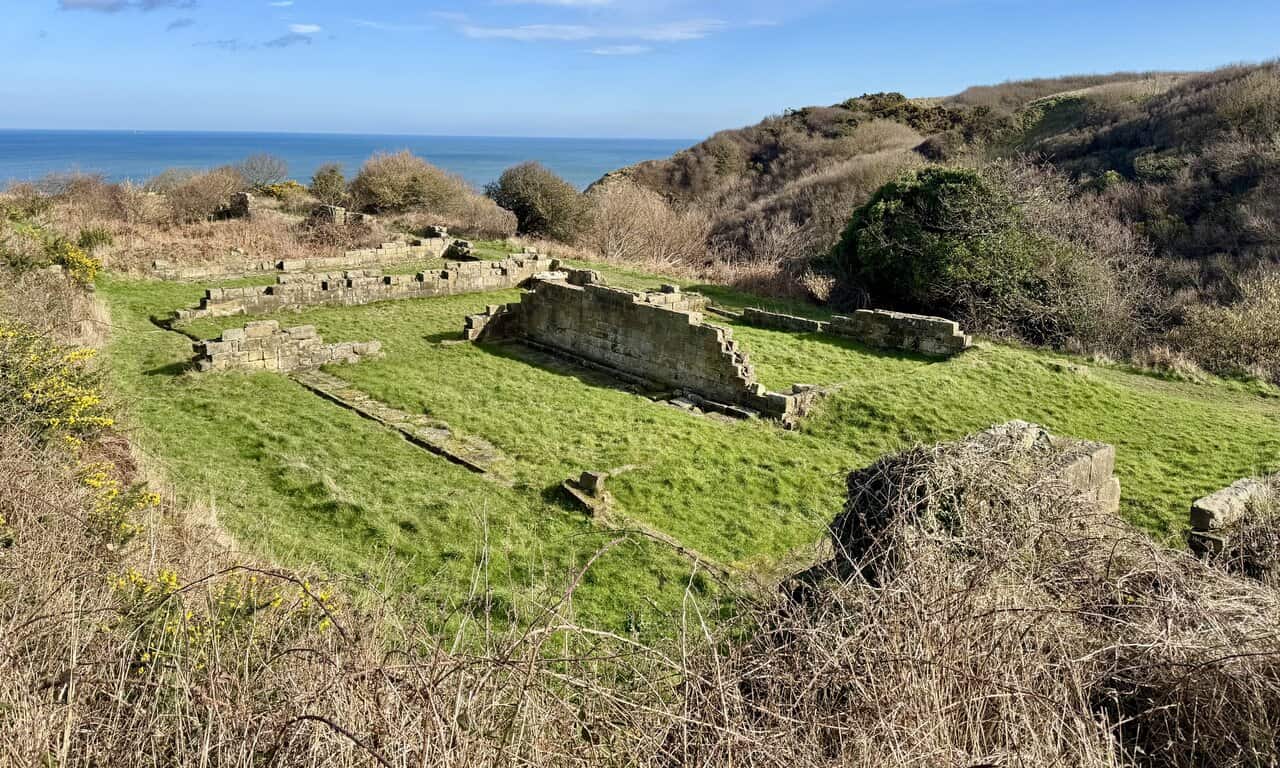
My first featured walk, the Ravenscar walk, is an 8½-mile circular route starting from the clifftop village of Ravenscar. The outward leg follows the Cleveland Way north along the coast, passing the remains of Peak Alum Works before dropping into Boggle Hole and continuing to Robin Hood’s Bay. After exploring the village, the route returns along the Cinder Track, the old Scarborough to Whitby railway line, through quiet countryside back to Ravenscar. It’s a walk rich in industrial heritage and coastal scenery, with one of the finest stretches of clifftop path on the Yorkshire coast.
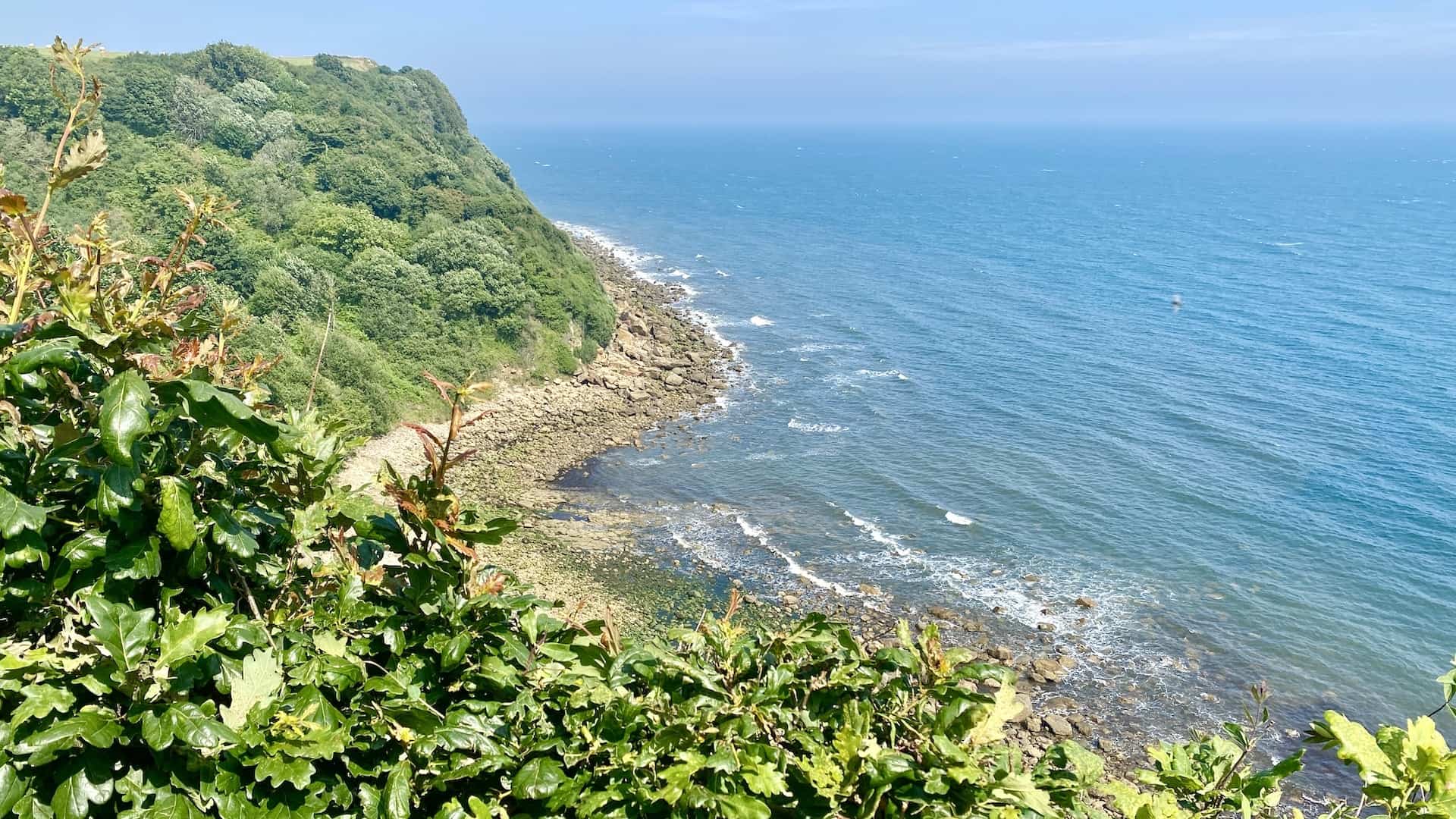
My second pick, the Robin Hood’s Bay walk, is a 9¼-mile circuit that heads north from Robin Hood’s Bay along the Cleveland Way. The coastal path follows the clifftop above a string of small rocky bays and wooded ravines, with wide views out to sea, before turning inland near High Hawsker. The return leg crosses farmland and picks up the Cinder Track for a gentle, level finish back into the village. It’s an excellent walk that combines dramatic coastal views with the charm of one of Yorkshire’s most distinctive seaside villages.
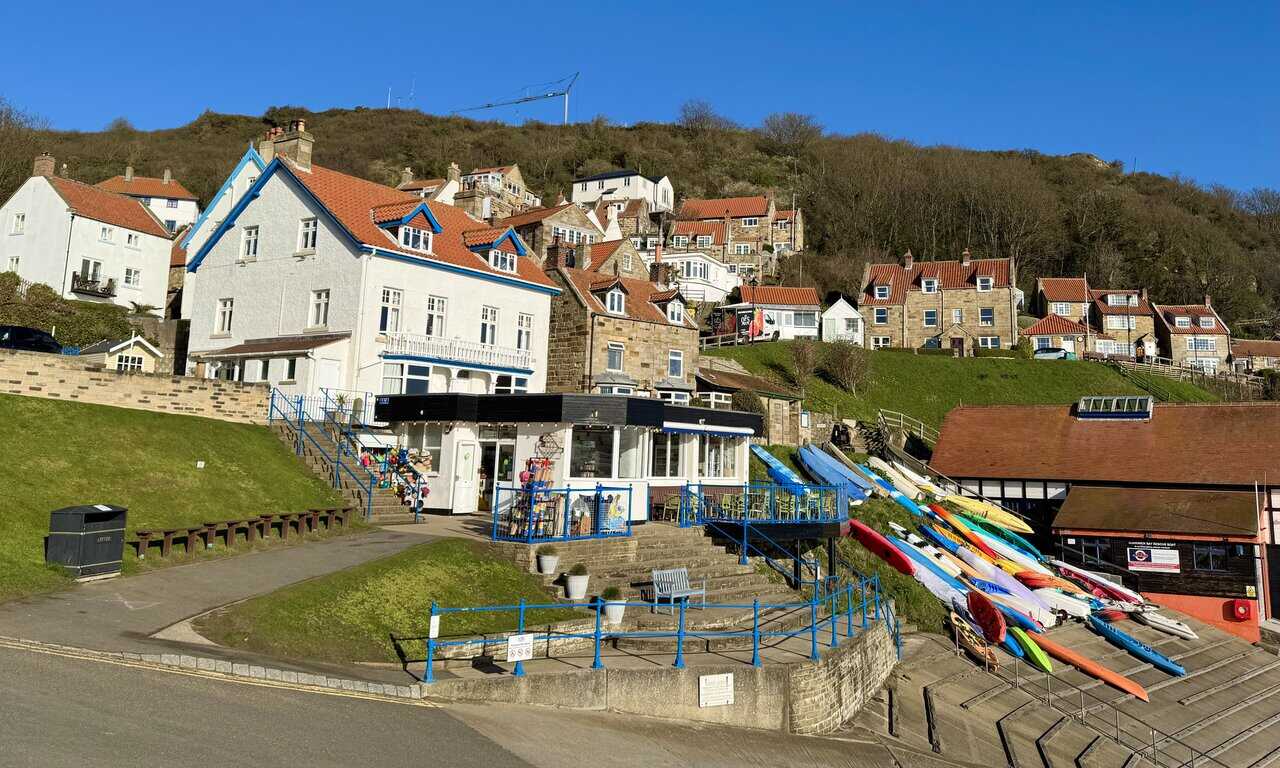
Rounding off my top three is the Runswick Bay walk, an 8-mile route that links two of the finest fishing villages on the North Yorkshire coast. From Runswick Bay, the Cleveland Way heads north along the clifftops through Port Mulgrave to Staithes, where the harbourfront and old cobbled streets are well worth exploring. The return leg follows an inland route through Dalehouse, Oakrigg Wood Nature Reserve, and Hinderwell, offering a mix of woodland paths, quiet lanes, and local history before arriving back at Bank Top.
Each of these Yorkshire Coast walks offers something different, from industrial heritage and smuggling history to clifftop drama and quiet fishing villages. As you explore the full list of walks below, you’ll find plenty more to enjoy along this spectacular stretch of coastline.
The Yorkshire Coast’s Picturesque Walking Routes
Cloughton Wyke Walk: Coastal Path to Hayburn Wyke and Return
8.7 miles | 14.0 kilometres | 4¼ hours
Hayburn Wyke Walk: The Cleveland Way, Ravenscar and the Coast
9.2 miles | 14.7 kilometres | 4½ hours
Ravenscar Walk: Cleveland Way and Cinder Track Circular Route
8.6 miles | 13.9 kilometres | 4¼ hours
Robin Hood’s Bay Walk: Cleveland Way and Cinder Track Circular
9.2 miles | 14.7 kilometres | 4¼ hours
Runswick Bay Walk: Staithes, Port Mulgrave and Hinderwell Route
8.1 miles | 13.1 kilometres | 4 hours
Scarborough Walk: Cliff Tops, the Cinder Track and Peasholm Park
8.2 miles | 13.2 kilometres | 3¾ hours
Whitby Walk: A Coastal and Railway Loop From Robin Hood’s Bay
13.1 miles | 21.1 kilometres | 6¼ hours
About the Yorkshire Coast
The Yorkshire Coast is one of the most varied and historically significant stretches of coastline in England. Running from the Tees estuary in the north to the Humber in the south, it encompasses dramatic cliffs, wide sandy beaches, ancient fishing villages and bustling seaside towns. Much of the northern section lies within the North York Moors National Park, and the coast has long been recognised for its exceptional geology, earning it the popular title of the Dinosaur Coast. For walkers, it offers an outstanding combination of coastal paths, clifftop scenery and places of genuine interest, all of which can be experienced on my Yorkshire Coast walks.
ADVERTISEMENT
Geography and Landscape
The character of the Yorkshire Coast changes markedly from north to south. The northern section, from Staithes to Scarborough, is defined by high cliffs, rocky headlands and small sheltered bays, with villages tucked into narrow ravines and steep-sided valleys. South of Scarborough, the coastline softens into the broad sweep of Filey Bay and the low clay cliffs and wide beaches of the Holderness coast, stretching down towards Spurn Point and the Humber estuary. Between these two contrasting landscapes lies Flamborough Head, a chalk promontory that juts out into the North Sea and provides one of the most important seabird colonies in the country.
The Cleveland Way National Trail follows the coast from Saltburn to Filey, connecting the moorland interior of the North York Moors with the clifftop paths above the sea. Further south, the England Coast Path continues the route towards the Humber. Inland, the coast is backed by the heather moorlands and wooded valleys of the North York Moors to the north and the gentle farmland of the Yorkshire Wolds to the south.
ADVERTISEMENT
Coastal Towns
The major towns of the Yorkshire Coast have evolved from fishing ports and maritime hubs into popular seaside destinations, each retaining a strong sense of its past.
Whitby is perhaps the best known, a town whose identity is shaped by its maritime history and its literary associations. Captain James Cook served his apprenticeship here in the 18th century, and the town’s shipbuilding heritage is still celebrated today. Above the harbour, the ruins of Whitby Abbey stand on the clifftop, a landmark visible for miles along the coast and closely associated with Bram Stoker’s novel Dracula. The town’s narrow streets, working harbour and independent shops give it a character quite unlike anywhere else on the coast.
Scarborough holds a special place in the history of English seaside holidays. Following the discovery of acidic spa waters in 1626, it developed into Britain’s first seaside resort, a reputation cemented by Dr Wittie’s influential publication in 1660. Scarborough Castle, occupying a commanding headland, preserves evidence of over 3,000 years of human activity, from a Roman signal station to a medieval stone keep built by Henry II. The town’s Victorian heritage is equally impressive, including the Grand Hotel, which was the largest hotel in Europe when it was completed in 1867, and the Rotunda Museum, one of the world’s first purpose-built museums, established in 1829 by William Smith, widely regarded as the father of English geology.
Further south, Bridlington serves as a traditional family resort, anchored by Bridlington Spa and the parklands of Sewerby Hall. Filey, by contrast, offers a quieter atmosphere, with a five-mile beach ending at Filey Brigg, a narrow rocky peninsula that acts as a nature reserve and marks the southern terminus of the Cleveland Way.
Coastal Villages
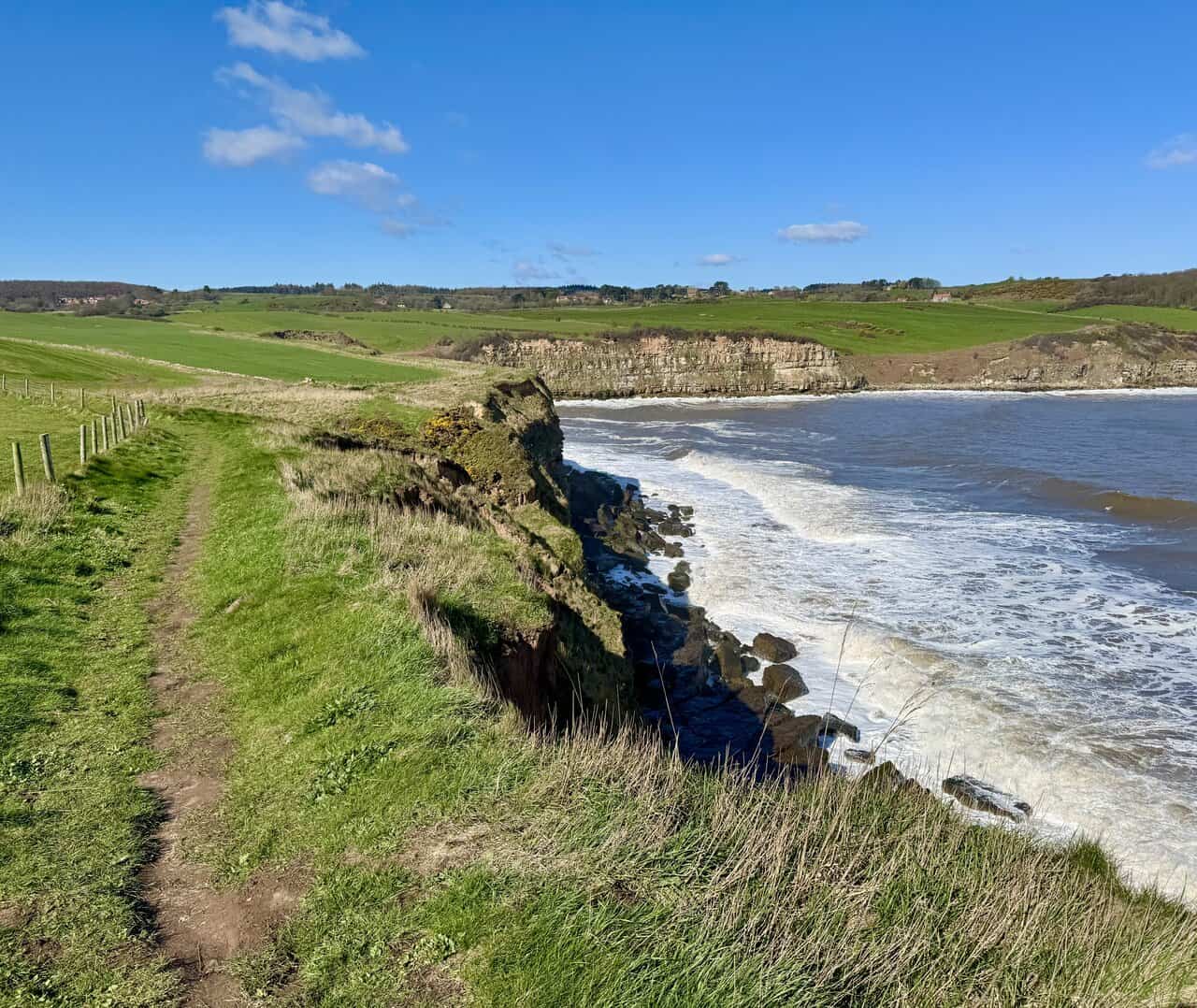
Between the larger towns, a series of smaller villages provide some of the most memorable sights on the Yorkshire Coast. These compact, often steep-sided settlements retain much of their pre-industrial character and are closely tied to the coast’s fishing and maritime past.
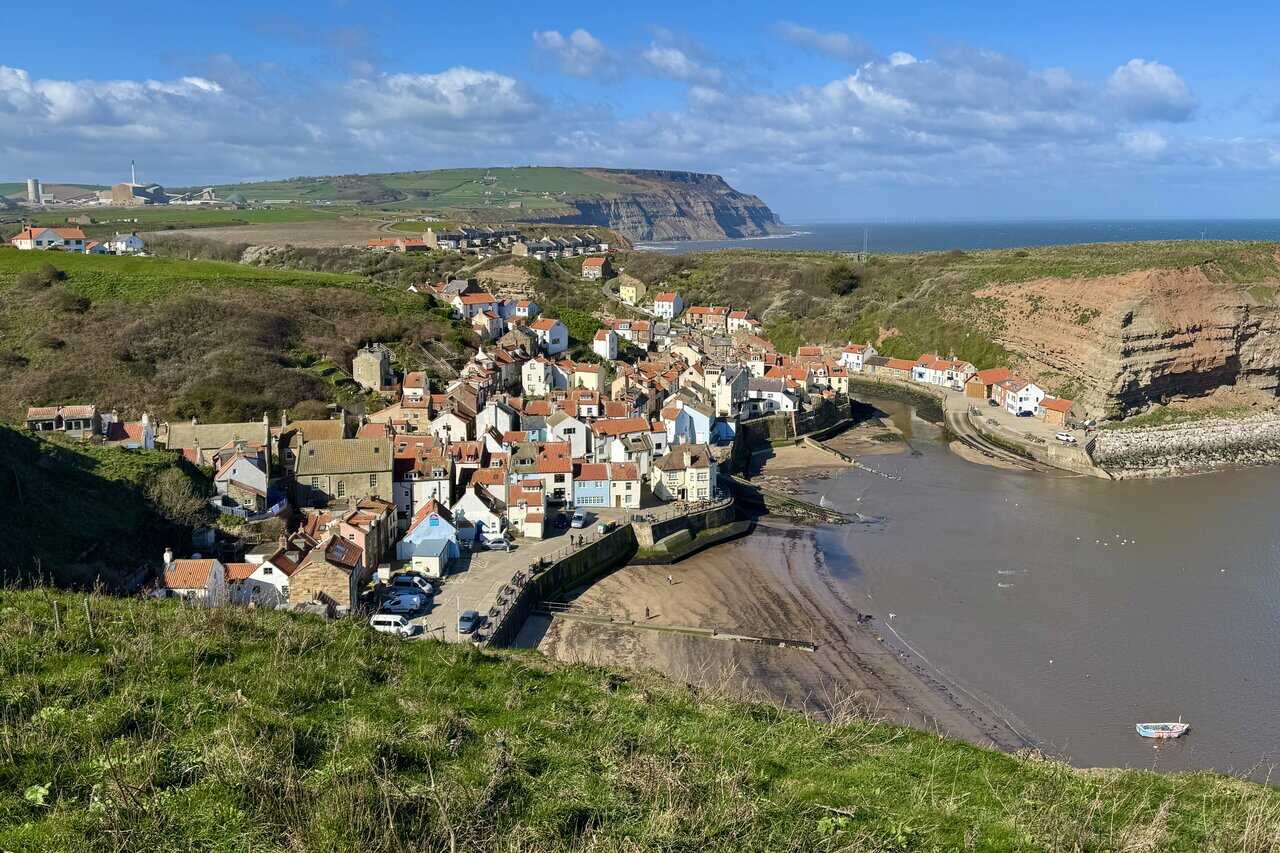
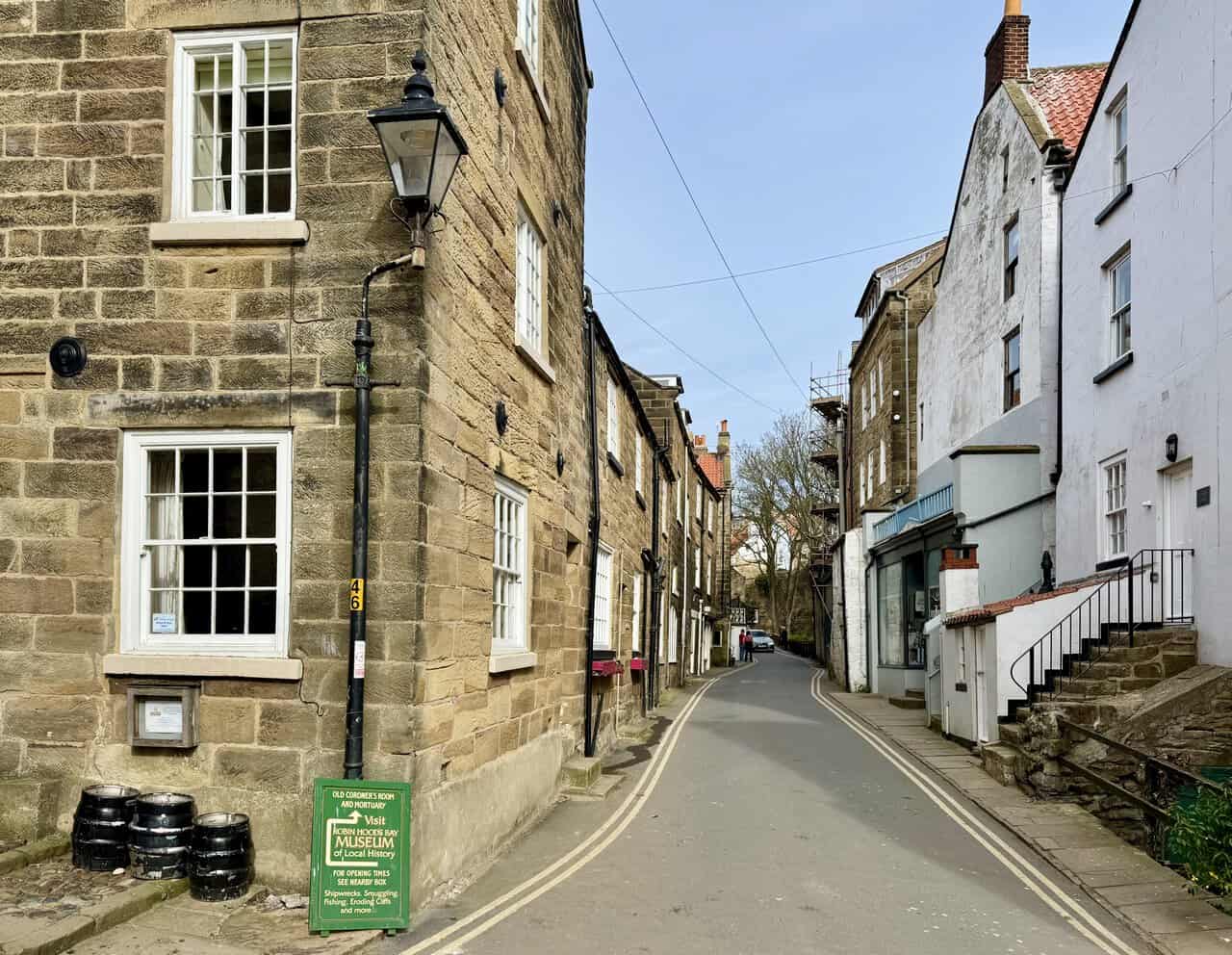
Robin Hood’s Bay is one of the most recognisable, its red-roofed cottages tumbling down a steep hillside to the sea. The village’s narrow, cobbled streets and hidden alleyways are a legacy of its 18th-century reputation as a smuggling hub, and it remains a popular stopping point on the Cleveland Way. Further north, Staithes sits at the foot of a narrow valley, its houses packed tightly around a small harbour. The village has a long artistic heritage, celebrated through the annual Staithes Festival of Arts and Heritage, and it was here that the young James Cook first developed his interest in the sea.
Runswick Bay, a crescent-shaped cove between Staithes and Whitby, is known for its sandy beach and the cluster of cottages that cling to the shale cliffs above. Ravenscar, perched 600 feet above the sea, occupies one of the most dramatic positions on the coast. It was once earmarked for development as a grand Victorian resort to rival Scarborough, but the scheme failed, leaving Ravenscar as a quiet and unspoilt clifftop village known locally as the town that never was. All of these villages feature on my Yorkshire Coast walks and are well worth exploring.
Geology and Fossils
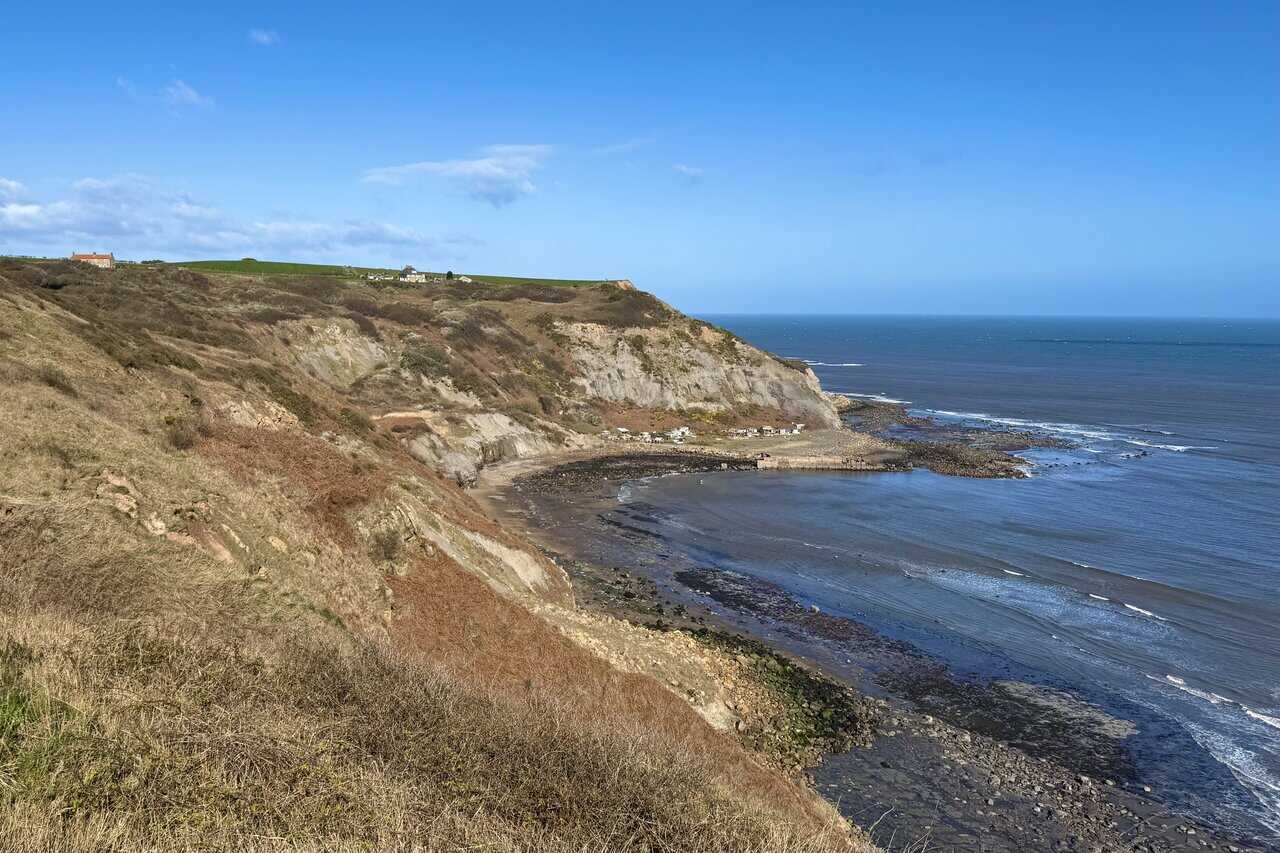
The Yorkshire Coast is a site of international geological importance. The northern stretch, from Staithes to Scarborough, exposes a near-continuous sequence of Jurassic rocks dating back between 180 and 195 million years. This makes it one of the finest Jurassic coastlines in Europe and a key reference site for researchers studying the ancient seabed and the life it supported.
The cliffs between Staithes and Port Mulgrave are recognised as the type section for the Staithes Sandstone and Cleveland Ironstone Formations, giving the area a significance that extends well beyond local interest. At Runswick Bay, the Wrack Hills Plant Bed preserves some of Britain’s most important Middle Jurassic plant fossils, with specimens retaining microscopic anatomical detail. The foreshores of Runswick Bay and Port Mulgrave are among the most productive fossil grounds in the country, yielding ammonites, belemnites and Gryphaea, commonly known as the Devil’s Toenail.
A distinctive geological feature of the region is the Whin Sill, a doleritic intrusion that contributes to some of the coast’s most dramatic landforms. The geology has also shaped human activity along the coast, from the alum industry that flourished between the 17th and 19th centuries to the ironstone mining that brought prosperity to villages like Staithes and Port Mulgrave during the Victorian era.
Wildlife and Nature
The Yorkshire Coast supports a rich variety of wildlife, with several sites of national and international importance. Bempton Cliffs, between Bridlington and Filey, are home to one of the largest seabird colonies in England. Between April and October, the cliffs host around half a million nesting birds, including northern gannets, puffins, guillemots, razorbills and kittiwakes. Managed by the RSPB, the site offers some of the most spectacular wildlife viewing in the country.
The rock pools, wave-cut platforms and intertidal zones along the coast provide habitats for anemones, crabs, starfish, shrimps and a wide range of seaweeds. Grey seals are regularly spotted in the waters below the cliffs at Ravenscar and along the shoreline further north. Inland, the moorlands and wooded valleys of the North York Moors support populations of red grouse, curlew and merlin, while the hedgerows and farmland closer to the coast are home to species including barn owl and tree sparrow.
The North York Moors National Park, which encompasses much of the northern coast, holds International Dark Sky Reserve status. The lack of light pollution makes the area one of the best places in England for stargazing and astrophotography, and events such as the Dark Skies Fringe Festival help to promote the coast and its hinterland as a destination outside the main visitor season.
Coastal Pathways and Trails
The Yorkshire Coast is served by a network of well-maintained long-distance trails, making it one of the most accessible stretches of coastline in England for walkers.
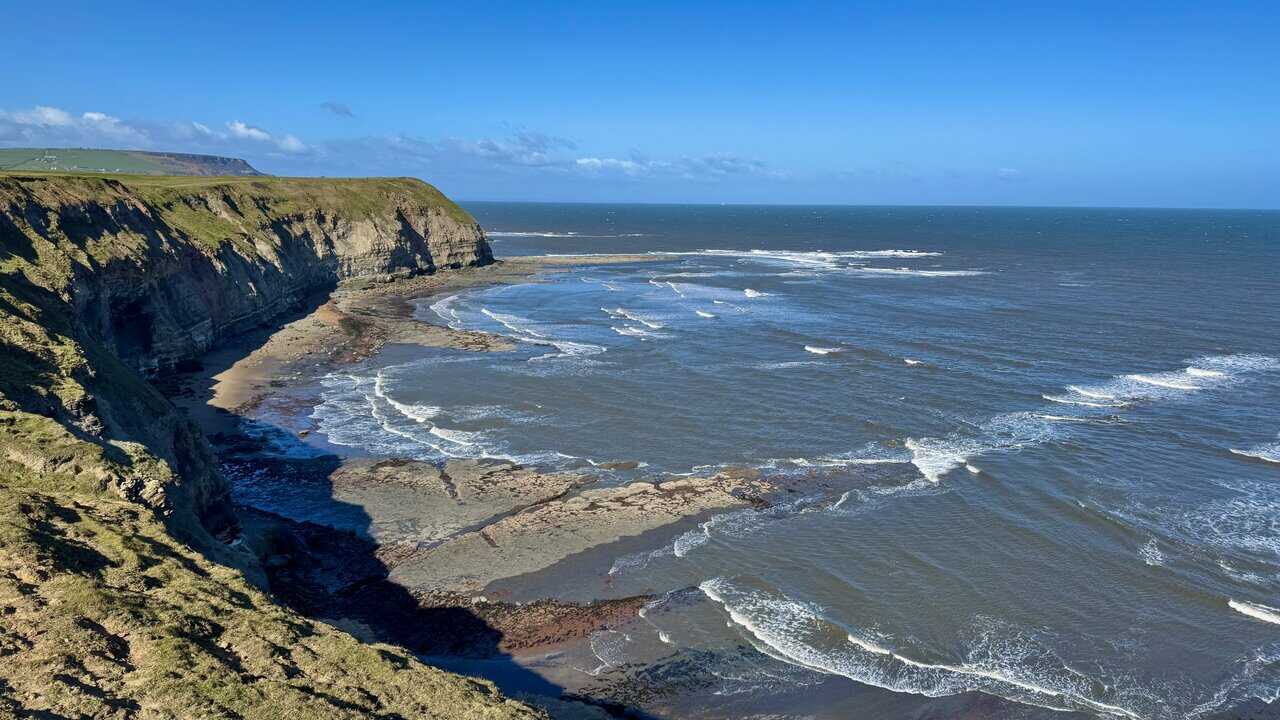
The Cleveland Way National Trail is the primary walking route along the coast, running from Saltburn in the north to Filey Brigg in the south. It connects the heather moorlands of the North York Moors with the dramatic coastal cliffs, providing a varied and rewarding experience across its full length. The trail forms part of a wider network that includes the England Coast Path, which extends the route south towards the Humber and will eventually form the longest managed and waymarked coastal path in the world.
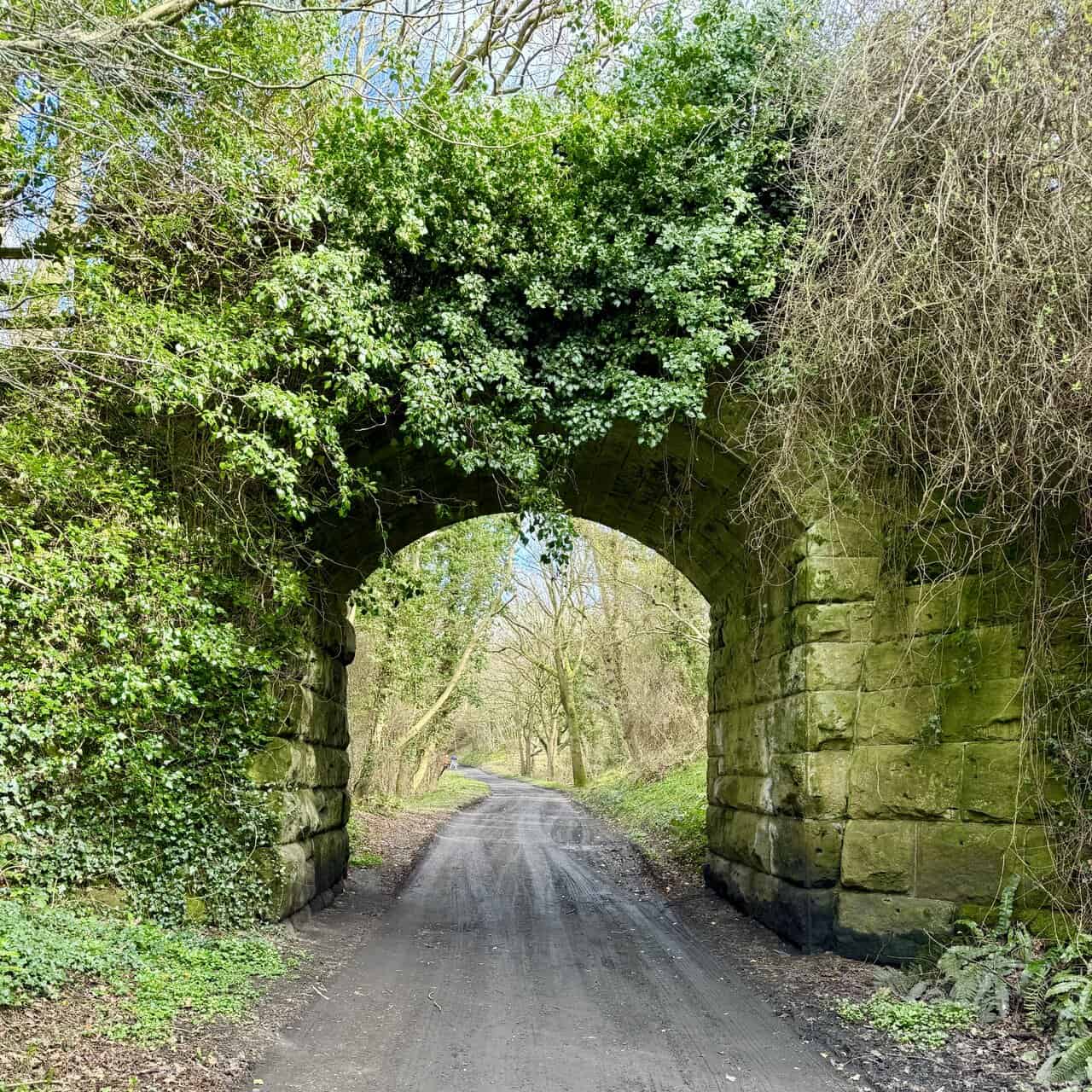
The Cinder Track, running for 21 miles between Scarborough and Whitby, follows the route of the old Scarborough to Whitby Railway, which opened in 1885 and closed in 1965 following the Beeching Report. Now a shared-use trail for walkers, cyclists and horse riders, the track forms part of National Cycle Route 1 and passes through the North York Moors National Park for much of its length. Old bridges, platforms and station buildings survive along the way, and the former trackbed supports stretches of wildflower grassland. Several of my Yorkshire Coast walks make use of the Cinder Track as part of their circular routes.
Public transport also plays an important role in making the coast accessible. Bus routes including the X93/X94 and the Coastliner 840, which has been recognised as one of the most scenic bus journeys in the country, link the main towns and villages along the coast.
Heritage and Culture
The Yorkshire Coast has a cultural identity that runs deeper than its status as a seaside destination. Centuries of fishing, shipbuilding, mining and trade have left their mark on the landscape and the communities along the shore.
The alum industry, which operated at sites across the North Yorkshire coast from the early 17th century until the mid-19th century, was one of the most significant industrial activities in the region. Alum, a crystal used in textile dyeing and leather tanning, was produced from Jurassic shale quarried directly from the cliffs. At its peak, the coast was home to more than 30 alum works, and the remains of several sites, including Peak Alum Works near Ravenscar, can still be visited today.
Fishing remains an important part of the coast’s identity, particularly at Whitby, Staithes and Scarborough, and the local food culture reflects this heritage. Fish and chips is a central part of the culinary tradition, with Whitby in particular widely regarded as one of the best places in the country to enjoy it. The town’s annual Fish and Ships Festival celebrates the connection between local gastronomy and maritime history.
The coast also has strong literary and artistic associations. Whitby’s connection to Bram Stoker’s Dracula continues to draw visitors, and the town hosts a bi-annual Goth Weekend. Staithes has long been celebrated as an artist’s haven, attracting painters since the late 19th century. Scarborough’s cultural calendar includes the revival of Scarborough Fair, a trading and cultural festival with origins stretching back to a royal charter granted in 1253. Together, these traditions give the Yorkshire Coast a living culture that continues to evolve alongside its remarkable natural and historical setting, something that can be fully appreciated on my Yorkshire Coast walks.