ADVERTISEMENT
Discovering Nidderdale Museum in Pateley Bridge
Nidderdale Museum in Pateley Bridge is one of those places that quietly surprises you. I visited recently with my friends on a mid-October afternoon, just before the museum switched to its winter opening hours. It’s a delightful museum with lots to see, and we found it very interesting from start to finish.
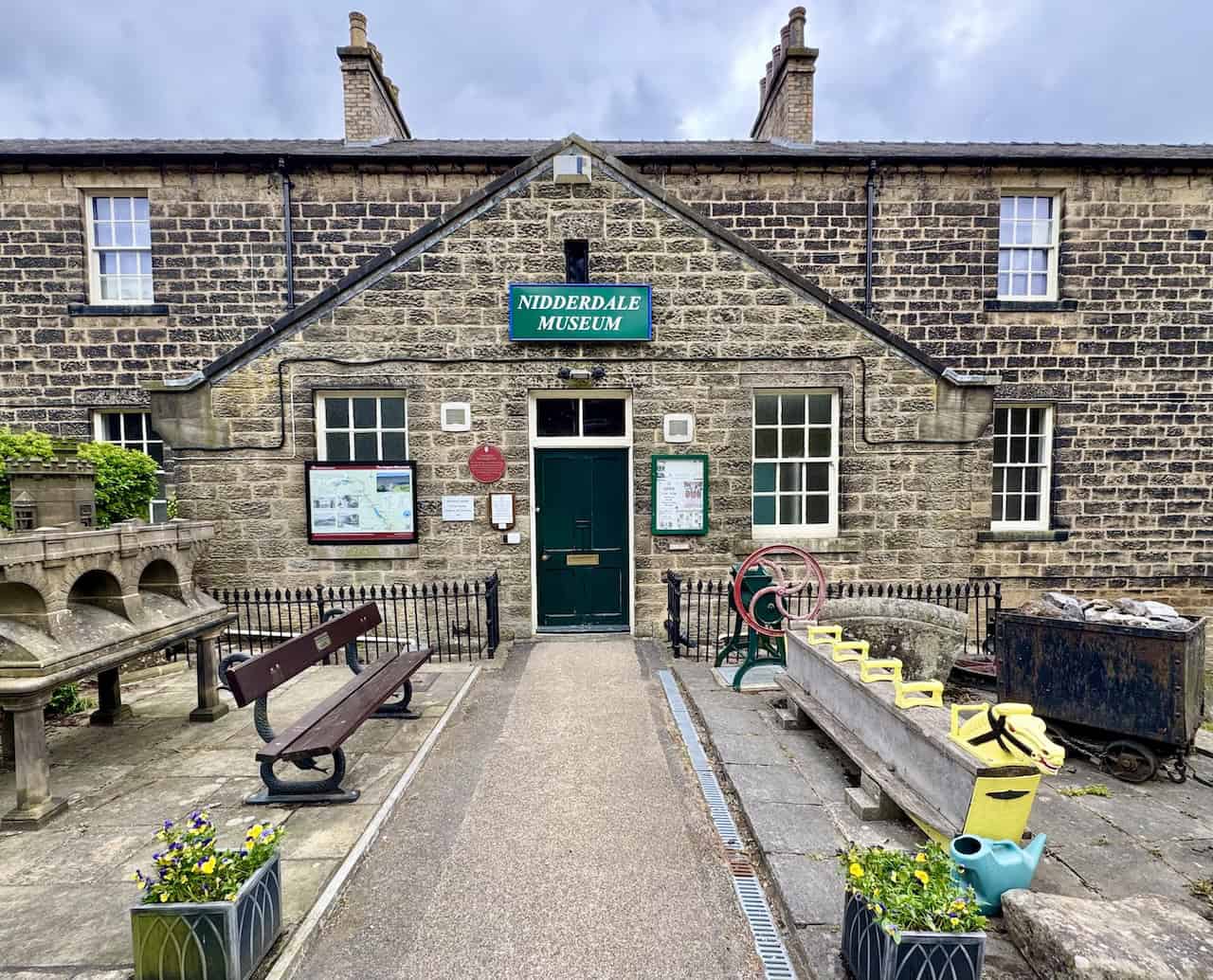
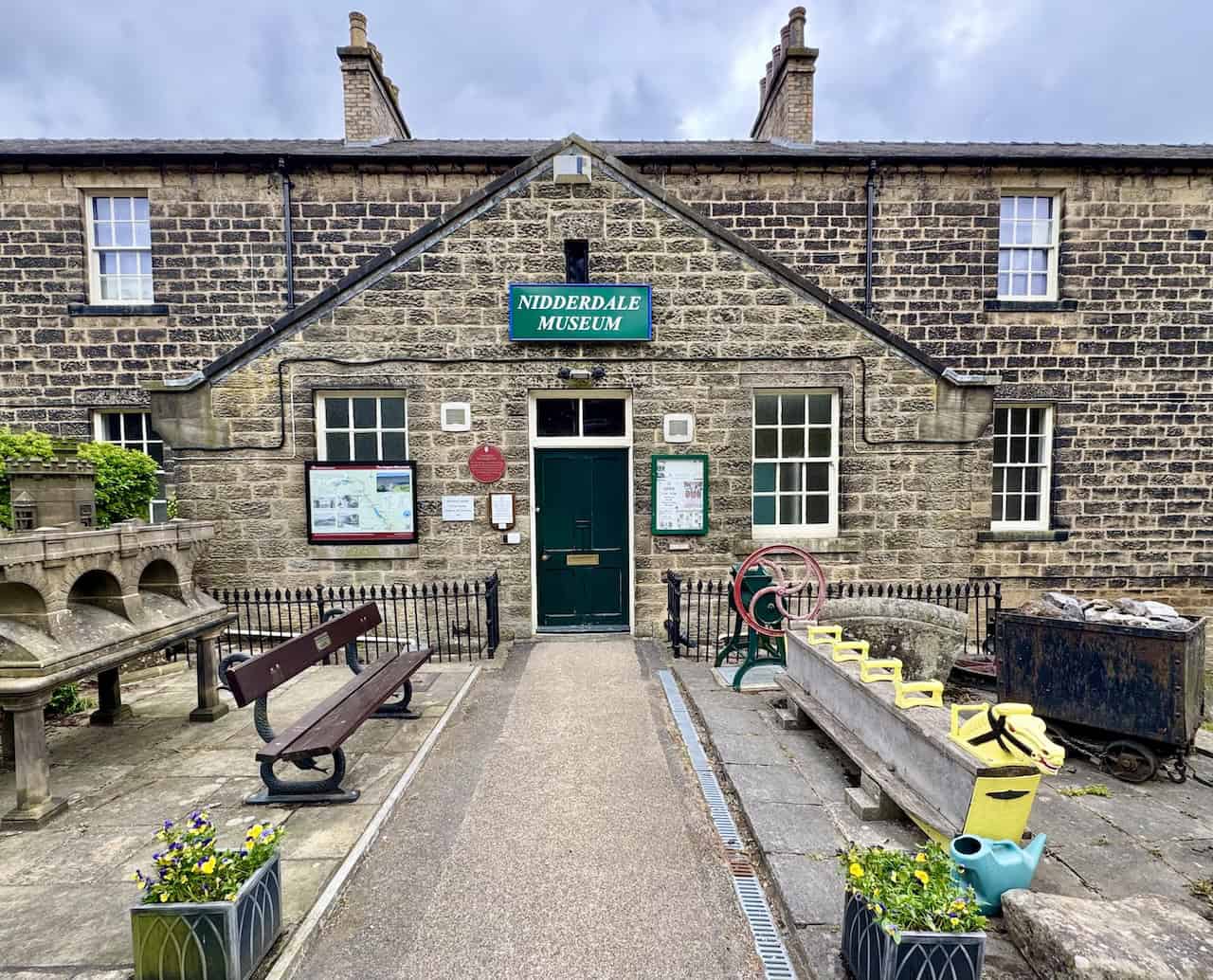
The museum fills the old workhouse on King Street with the everyday life of the dale. Behind its modest stone front lie shops, a parlour, a schoolroom, a courtroom, a mine level and much more, all brought together with real care by volunteers.
What follows is a tour of Nidderdale Museum in the same order as the museum’s own guidebook, with a photo from each part of the building. First, though, here’s how we paired our visit with a morning walk to Yorke’s Folly, which made for a perfect day out in Nidderdale.
ADVERTISEMENT
A Morning Walk and an Afternoon at Nidderdale Museum
During the summer season, Nidderdale Museum opens only in the afternoons, from 1:30 pm to 4:30 pm. The hours seem a little strange at first, but they suit walkers perfectly. My friends and I spent the morning on a walk and headed to the museum in the afternoon.
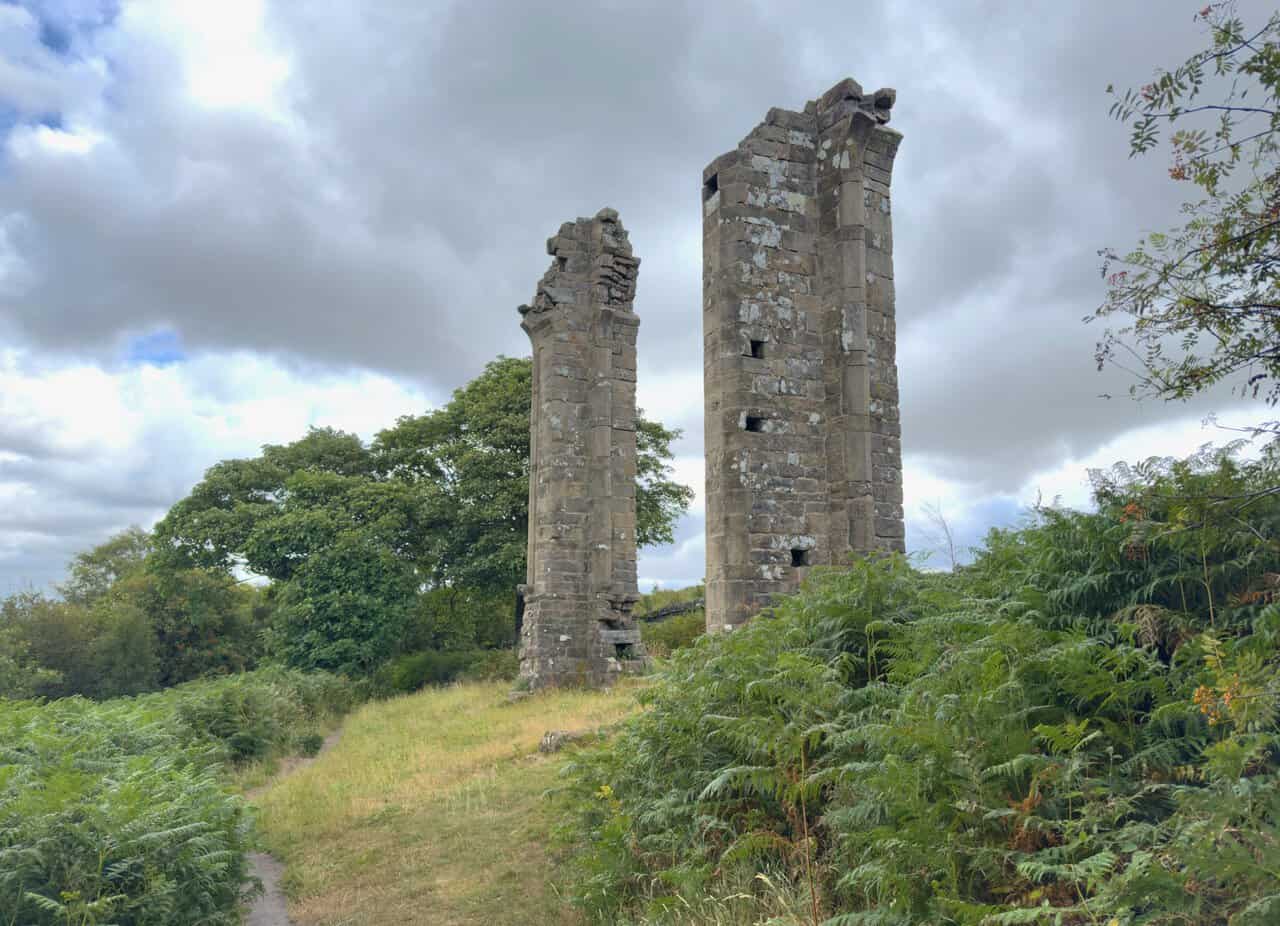
We chose my Yorke’s Folly walk, a circular route of about 4¾ miles (7¾ km) that starts and finishes at the Nidderdale Agricultural Society car park in Pateley Bridge. It takes around 2½ hours and climbs onto Nought Moor to the two gritstone pillars of Yorke’s Folly, where the views over Nidderdale are wonderful. From there, the route drops through Guisecliff Wood and Glasshouses before returning beside the River Nidd.
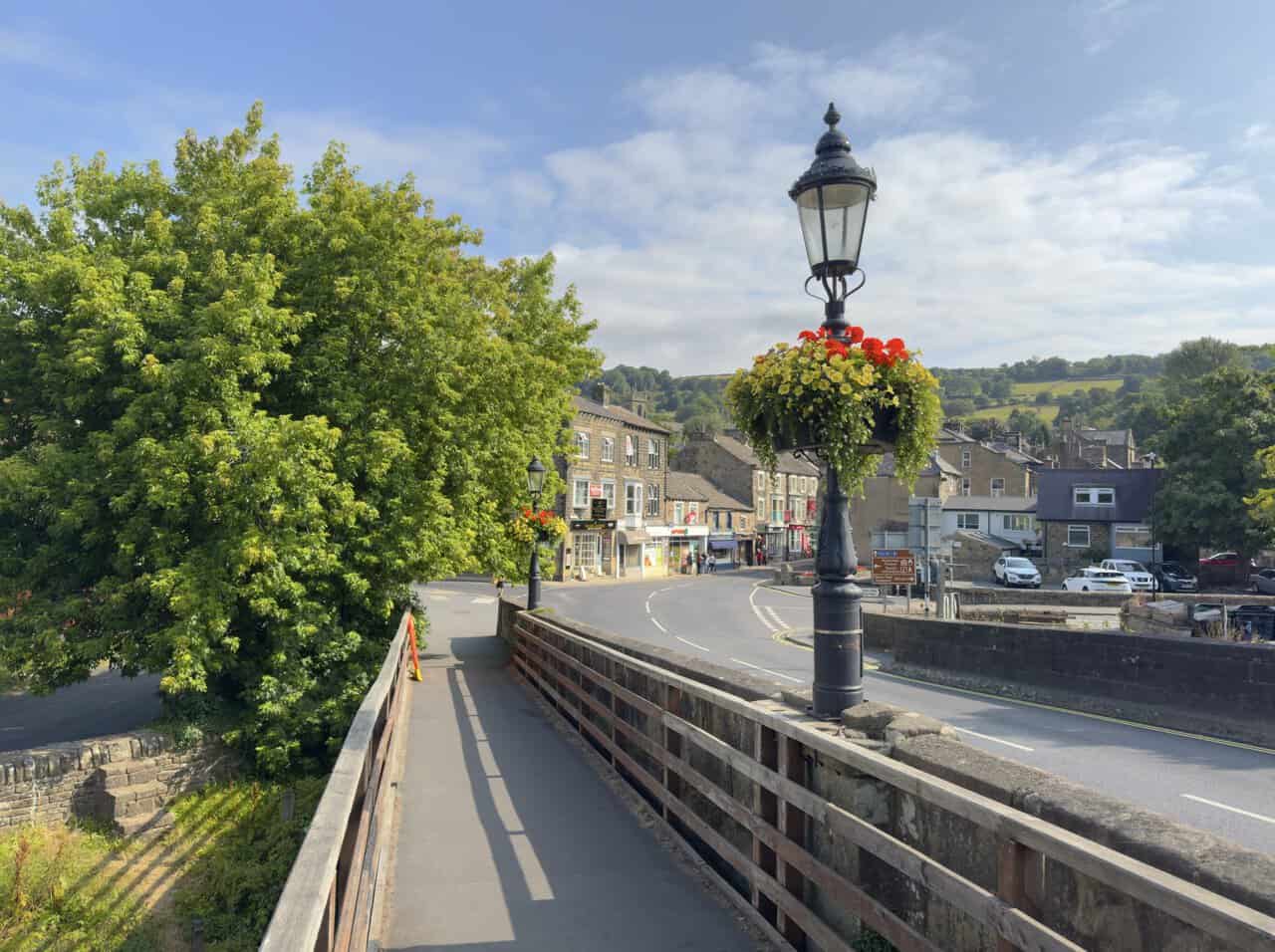
Having eaten our sandwiches on the walk, we went straight to the museum afterwards. If you’d rather stop for lunch, Pateley Bridge has several cafés to choose from. I also spotted some tempting shops, including a butcher’s with a window full of mouth-watering pies. From the town centre, Nidderdale Museum on King Street is only a short walk away.
ADVERTISEMENT
From Workhouse to Nidderdale Museum
The building is part of the story. It was built in 1863 as the Pateley Bridge Union Workhouse, a home for orphans and paupers, and replaced an earlier workhouse on Bishopside Moor. The last inmates left in 1914. In the early 1920s, some of the men building Scar House Dam lodged here until their own village was ready. The building then became rural district council offices until local government was reorganised in 1974, and today it’s known as The Old Workhouse.
The following year, in 1975, a group of enthusiasts founded Nidderdale Museum. They could see that much of the traditional life of the dale was quickly disappearing, and they set out to save it. To this day, the museum is run and staffed entirely by volunteers, with the council providing the premises.
Their hard work has earned Nidderdale Museum some well-deserved recognition:
- 1990: The museum won the National Heritage Museum of the Year Award, for “the museum which does the most with the least”.
- 2010: Its volunteers received a Harrogate Volunteering Oscar Special Award.
- 2017: It was given the Queen’s Award for Voluntary Service.
- 2023: It achieved full museum accreditation.
The 1990 award sums the place up beautifully. Nothing here feels flashy, yet every room is packed with real objects from real local people.
ADVERTISEMENT
A Room-by-Room Tour of Nidderdale Museum
A dotted route on the guidebook’s floor plan leads you around Nidderdale Museum, and my photos follow the same order. The displays are all on the first floor, so the tour begins upstairs at reception.
Reception and Leisure Pursuits Room
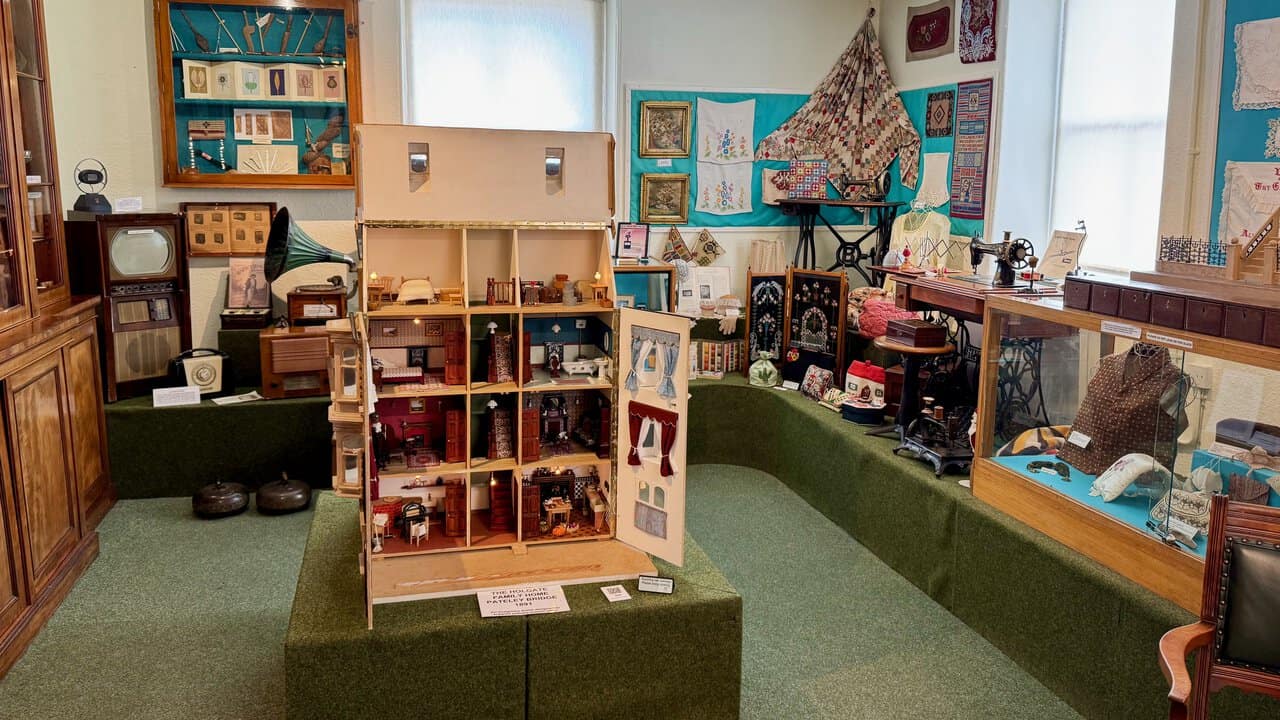
The first room celebrates the ways people in the dale filled their spare time, and it sets the tone for everything that follows. Needlework comes first. Sarah Denison made the fine wool petit-point waistcoat for her husband, Samuel, in 1818 or 1819. Close by are lace, patchwork and knitting sticks, which were often made as love tokens. A money box made for the children of the Harker family of Harefield Hall comes with a wry note in the guidebook: their father was a banker!
The centrepiece is a dolls’ house modelled on a quarry owner’s home, representing the Holgate family house in Pateley Bridge in 1891. Around it, the room is full of curiosities. Two curling stones on the floor were last used on Glasshouse Dam in 1929, and the last surviving player rescued them when the museum opened. Above them sits the first television set in Pateley Bridge, while a large collection of cameras fills the space under the window.
Toys, games and trophies from long-gone local events, such as the Nidderdale Races, fill the large cupboards. Beside them stands the Polyphon, a forerunner of the gramophone. Ask the steward, and they’ll drop in an old penny so you can hear its beautiful tone.
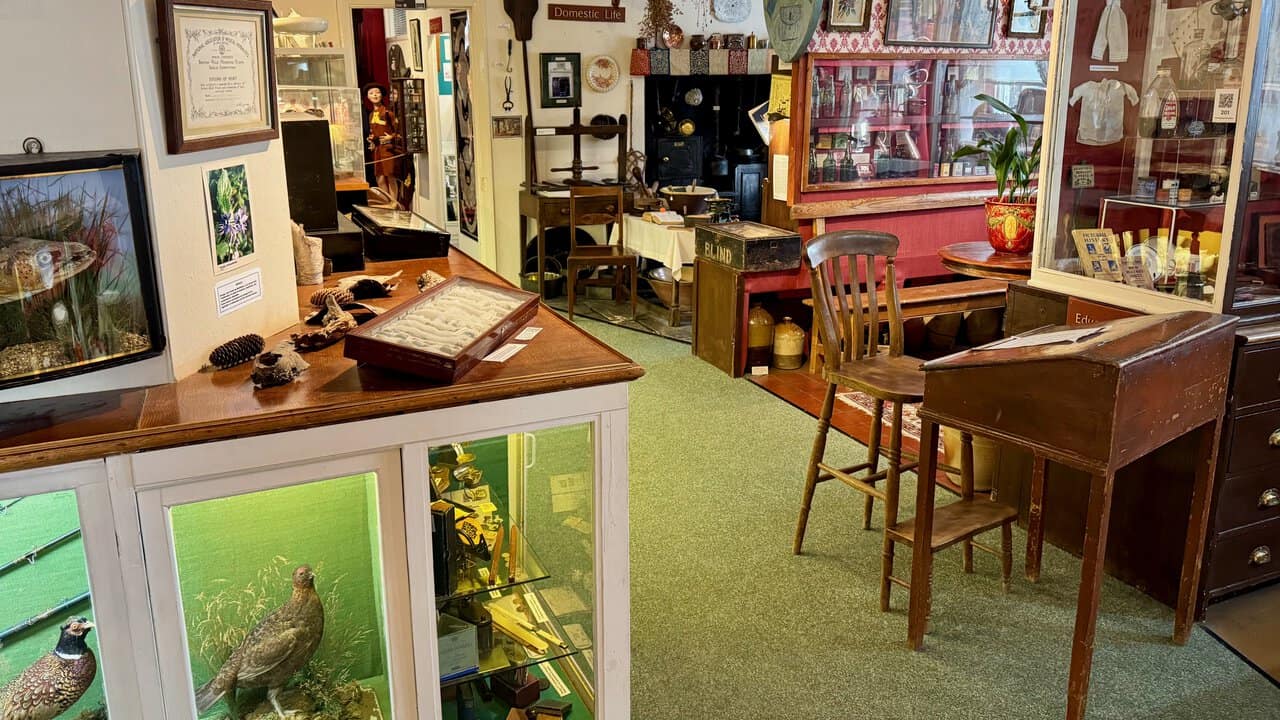
The Home, School and Pub Snug Room
The next room takes you into everyday Victorian life. It opens with household crockery and lighting, including the first lucifer matches brought to Pateley Bridge. Nearby, a natural history case holds stuffed moorland birds, a grass snake and an adder.
The medical section is gruesome in the best way. In the late 19th century, you could hire a brass enema for a shilling a week, and a fine bleeding set comes complete with a stoppered jar for the leeches. There’s an ingenious old stethoscope, too, small enough to fit inside a doctor’s top hat. In use, it was also longer than a flea’s leap, which kept the doctor safe from vermin.
Further on is a classroom spanning Victorian times to 1950, with desks from the schools at Greenhow, Fellbeck and Lofthouse. Its black globe is believed to be the one mentioned in the Glasshouses School Log Book of 1865.
At the heart of the room is the snug of a public house. A picture on the wall recalls Elizabeth Metcalfe, who inherited the George Inn in 1773 and became well known for her Pateley Ales. Her family’s business grew until its products were exported to Western Europe. Bottles from J. T. Verity’s aerated water factory still hold their original contents, although, as the guidebook points out, they’re no longer drinkable!
The room ends in an early Victorian kitchen, built around a cast-iron range made by Todd’s of Summerbridge. The grandfather clock here is the work of the Snow family, who were clockmakers in the dale for several generations.
The Religion Room
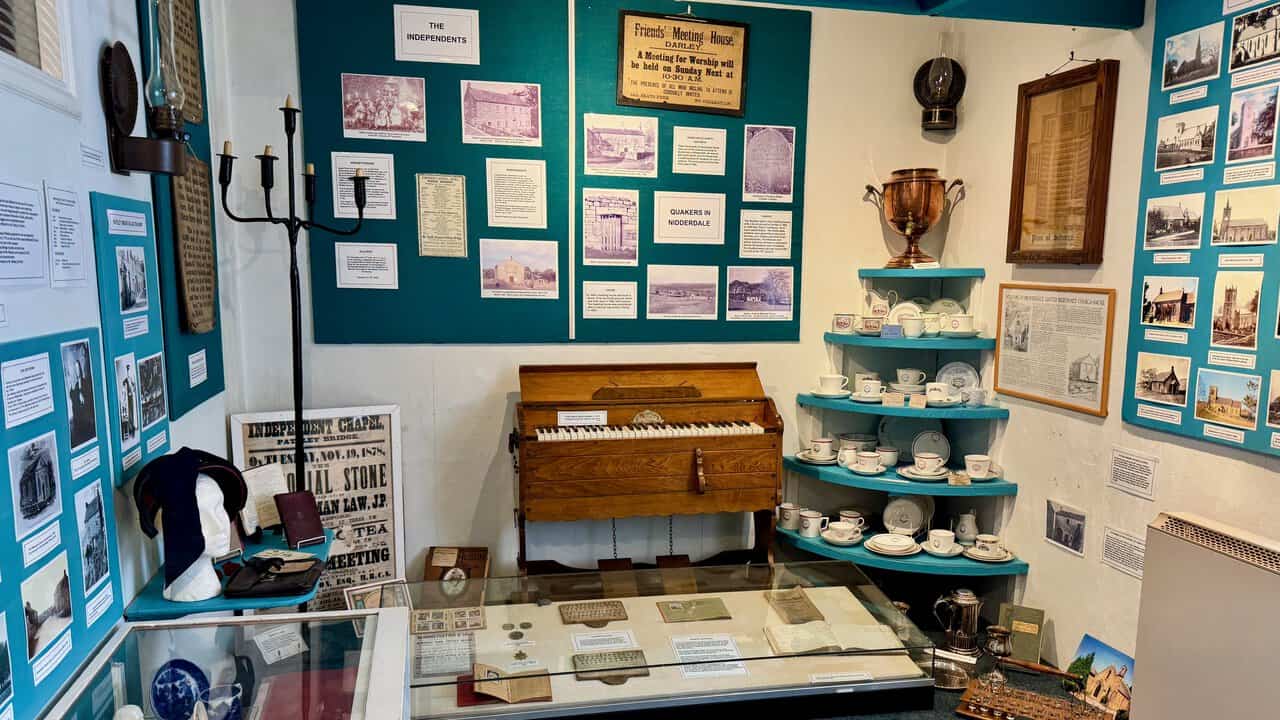
This small corner room traces a thousand years of Christianity in the dale. The story begins with a preaching station set up at Middlesmoor by St Chad in the 10th century. Two centuries later, Fountains and Byland Abbeys were granted large estates in the upper dale. Later still, Thornthwaite’s chapel was funded by each householder raising a sheep to pay for a priest.
Some of the stories are surprising. At the Reformation, Nidderdale stayed loyal to the old religion for a century, and all the Gunpowder Plotters except Robert Catesby had relatives in the dale. Methodism arrived in the middle of the 18th century, and John Wesley visited eight times, the last at the age of 88. After preaching in the Pateley chapel, he once set off at 4:30 am and rode more than 50 miles to Preston, where he preached again that evening.
Wesley’s pulpit from the first chapel is now part of the Nidderdale Museum collection. It sits alongside Wesley memorabilia and the crockery once used for chapel teas.
The Costume Room
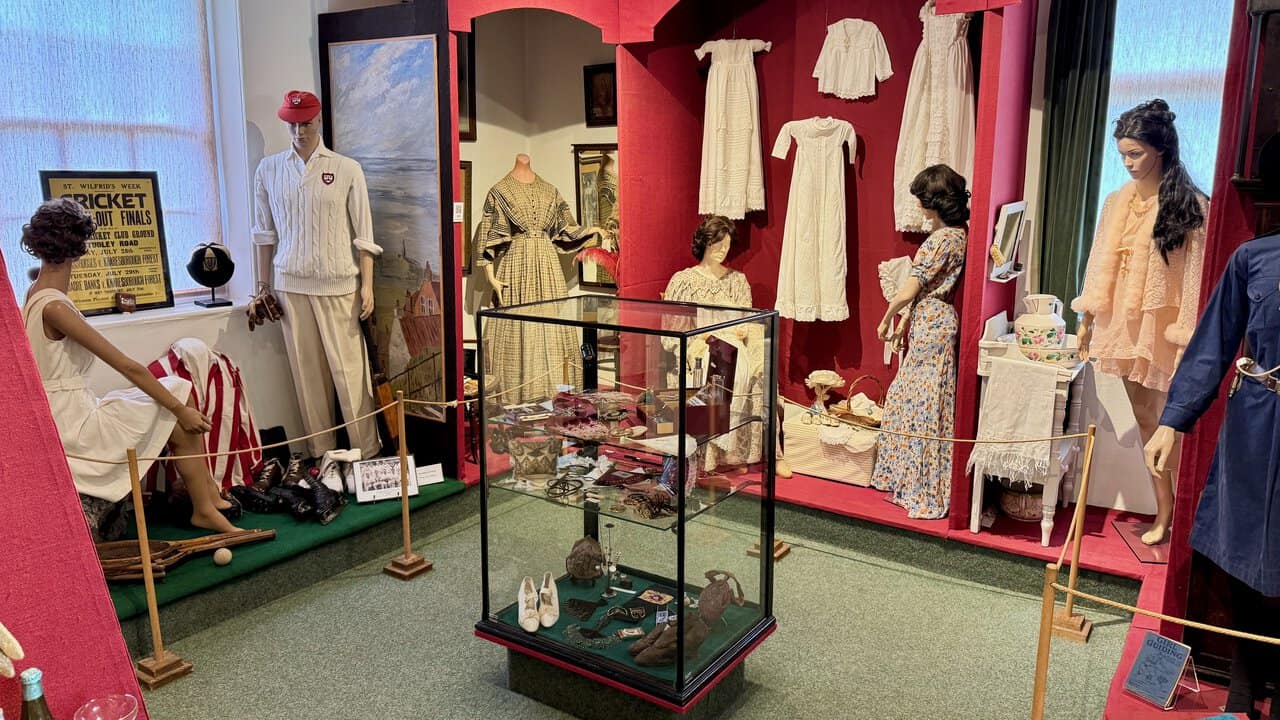
Seven bays of clothing fill the Costume Room, drawn from a collection that dates back to the early 19th century. The oldest dress is from the 1820s. Because the fabrics are fragile, the displays are changed from time to time to protect them from light damage. One eye-catching bay is given over to sport, with clothing and equipment from the 1940s and 1950s, including cricket boots, a blazer and a cap from a local team.
The cases are full of smaller treasures, including fans, hat pins, combs, a handkerchief given by Queen Victoria and a mourning brooch containing hair. Above them hangs a tall painting of Whitby by E. Charlton Taylor of Summerbridge. Photographs are another great strength of Nidderdale Museum, which holds more than 7,000 original pictures of local scenes, people and events.
The World Wars Room
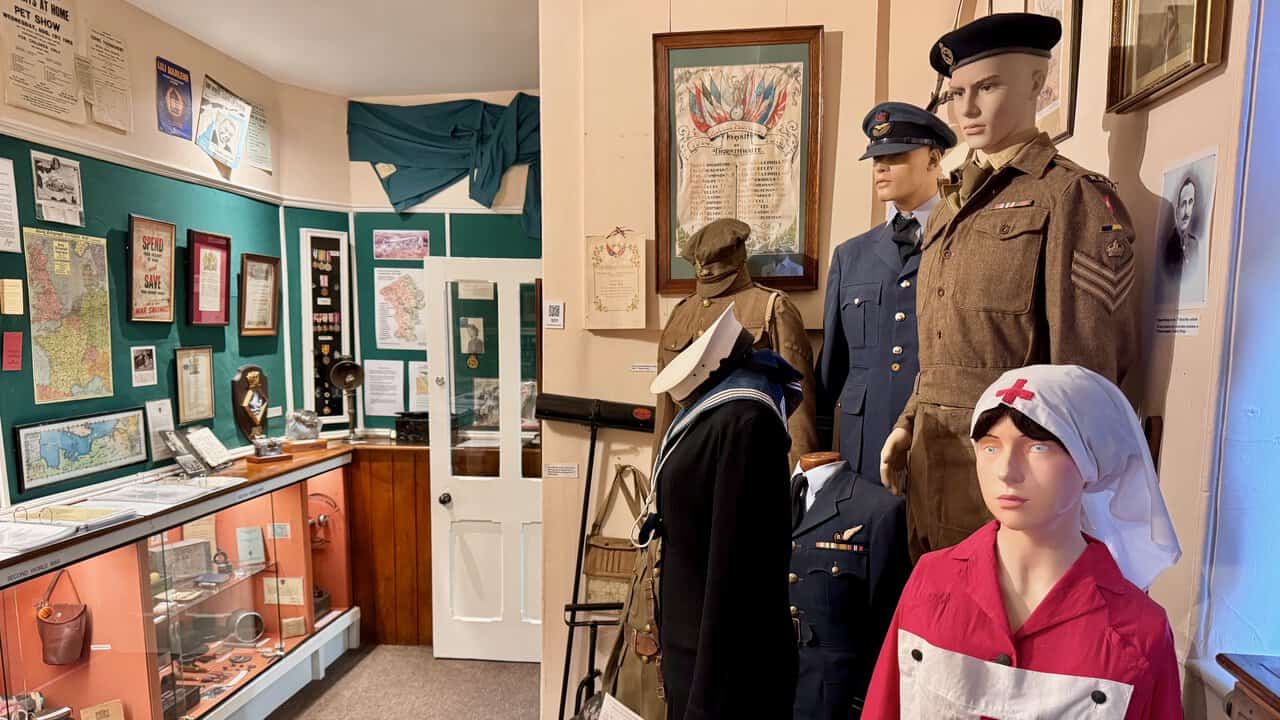
The mood changes in the next room at Nidderdale Museum, which is devoted to the two World Wars. By the doorway stands a dummy rifle that the Home Guard used for drill while real weapons were in short supply. A cupboard shows a typical week’s rations for one person, and wartime clothing carried the “Utility” mark, CC41. Embroidered postcards, worked by French soldiers’ wives and refugees, allowed men at the front to send a short message home.
Many of the objects tell personal stories. Pateley Bridge men received engraved silver cups when they returned from service. The uniform of Major Collins, who was wounded early in the First World War, still has one sleeve replaced and the other mended. A Motor Torpedo Boat Shield marks the town’s fundraising during Warships Week. Closer to home, several aircraft crashed on the moors, where local search and rescue teams faced exploding fuel tanks and ammunition.
The Milliner’s Shop and Agriculture
Back in the corridor, the milliner’s shop is stocked almost entirely from one business. It belonged to the grandparents of a Museum Society member and closed in 1939. Alongside hats waiting to be trimmed are 56 rolls of ribbon, some still priced at 11½d per yard.
Farming shaped life in the dale for centuries, as the agriculture section makes clear. The tack room holds a tail docker, used to trim working horses’ tails so they didn’t tangle in the harness. Dairying takes pride of place, thanks to the Mudd family of Thornthwaite, the champion butter makers of Yorkshire. Their skills even stretched to butter flowers, which were kept cool by spraying water over their glass case.
Elsewhere are huge scythes, seed drills, a single horse plough and peat-cutting tools from the head of the dale. Sheep washing, introduced by the Cistercian monks, was one of the great social occasions of the year until the 1930s. A stream was dammed, and young men stood chest-deep in the water to wash the sheep while the whole community came to watch. Near the doorway, a 16th-century oak door from the Apothecary’s House on Pateley High Street is worth a second glance.
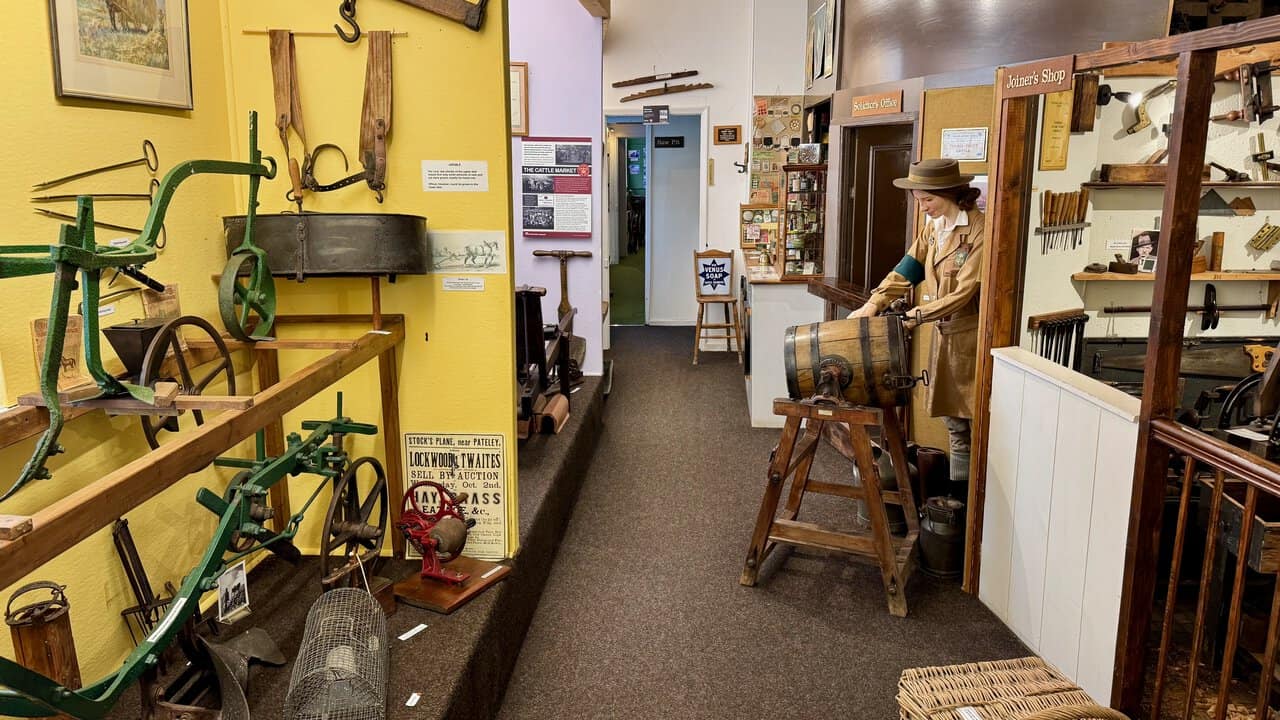
The Joiner’s Shop, Solicitor’s Office, General Store and Saw Pit
A row of small recreated rooms follows. The joiner’s shop is crammed with tools, most of them from Mr Hudson, the estate joiner at Nidd. Next door, nearly everything in the solicitor’s office came from Messrs Heap and Heap when they moved premises in 1984. Their account books even mention the Pateley Bridge Cocoa House, a temperance hotel on Millfield Street in the 1880s.
The general store recalls the years between the two World Wars, when most food was sold loose and weighed into paper bags. Before the NHS, many people treated minor ailments themselves, so patent medicines and cure-alls were everywhere.
Finally, the saw pit shows how the word “underdog” came about. The skilled sawyer worked the upper handle of the two-handled saw, while his apprentice stood below as the underdog, with sawdust falling into his eyes. On a shelf by the window sits a Celtic stone head found at Summerbridge.
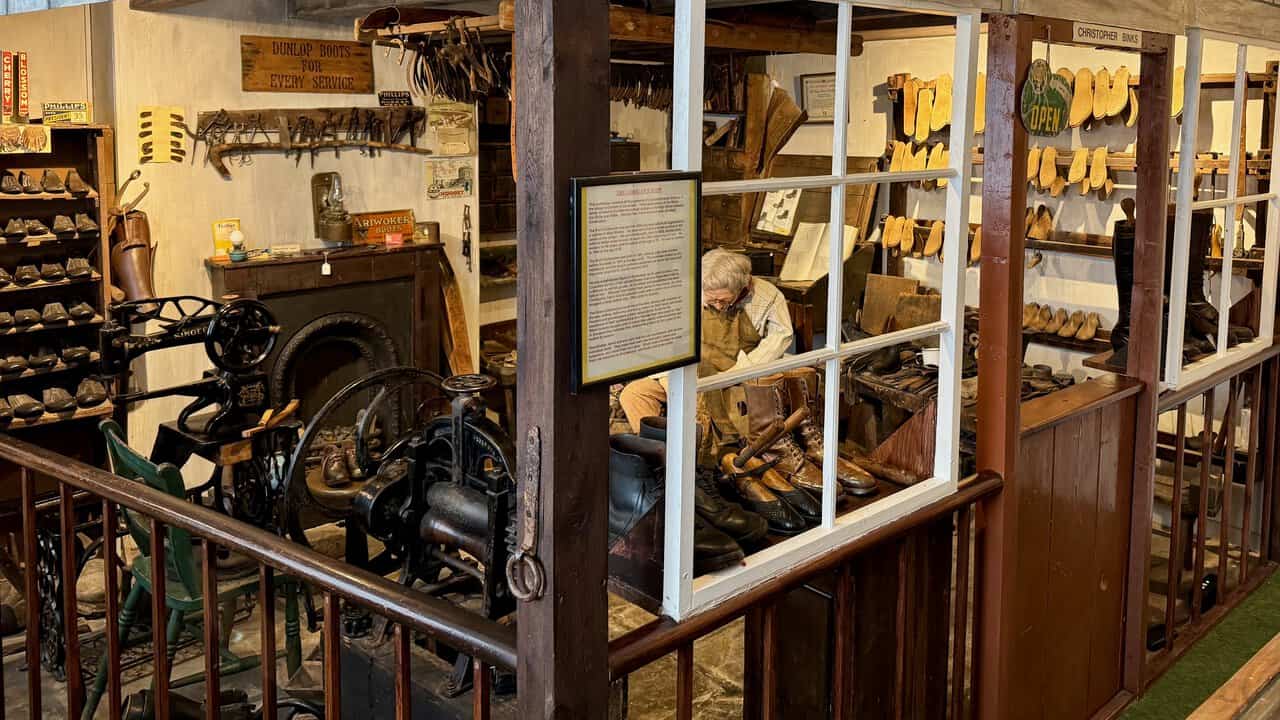
The Cobbler’s Shop at Nidderdale Museum
The cobbler’s shop is one of the most personal displays at Nidderdale Museum. Three generations of shoemakers, all named Christopher Binks, used these tools in Carlton-in-Coverdale between 1830 and 1965. The second Christopher started work at the age of 10, often at 4 o’clock in the morning, and kept going for 66 years. All three did business in Nidderdale, crossing Dead Man’s Hill with a leather bag full of boots and shoes. The last of them made the journey by bicycle.
Regular customers had wooden lasts made especially for their feet, while repairs were done on iron ones. Among the clog soles and wooden pegs for filling nail holes, Chris’s apron, teapot and spectacles are still here, as if he’s just stepped away from his bench.
Archaeology at Nidderdale Museum
Beside the cobbler’s shop, a small archaeology display reaches much further back in time. Sadly, nearly all the finds from the valley have gone to other museums, yet there’s still plenty to see. Five tiny Mesolithic flint points, known as microliths, were found together and may once have formed a barbed spear. A beautifully polished Neolithic stone axe turned up on Pateley Moor during peat digging.
The Romans mined lead on Greenhow, and two pigs of lead dated to 81 CE were found on Heyshaw Bank. One of them is now in the British Museum. At the back of the display, a woman grinds corn with a quern inside a section of an Iron Age hut thatched with ling.
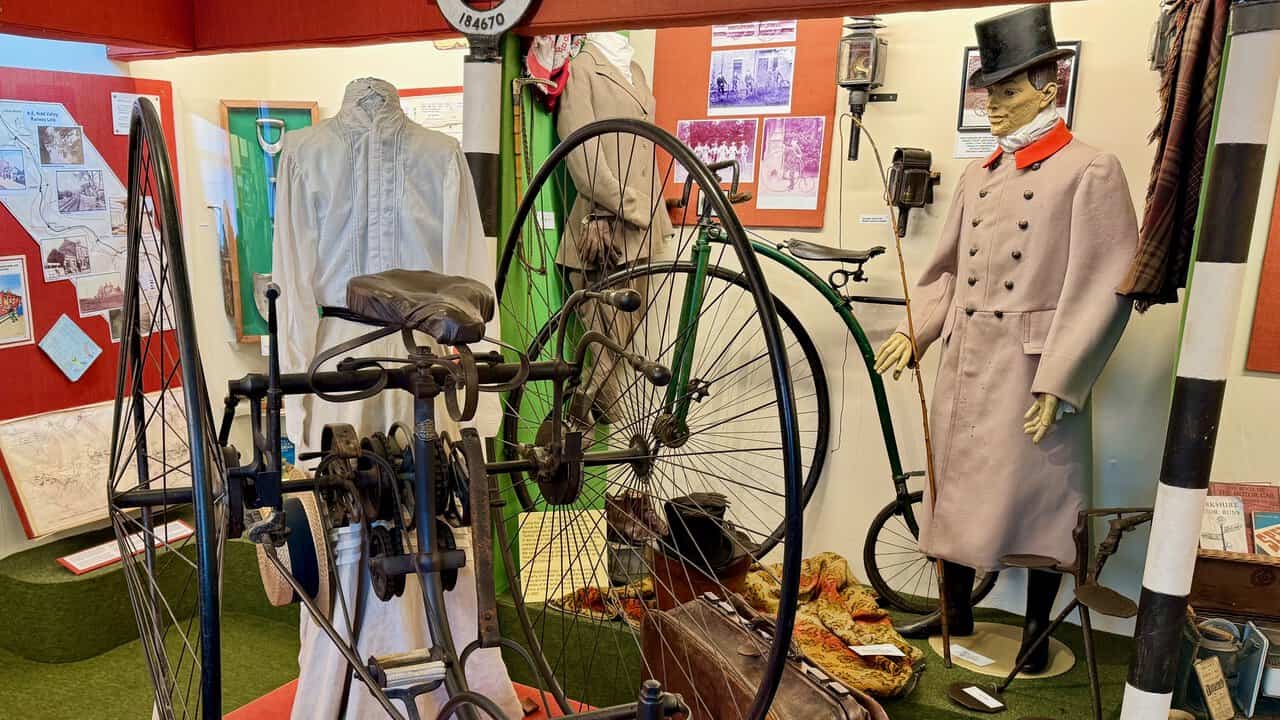
The Transport Room
Travel in the dale is the theme of the Transport Room at Nidderdale Museum. It opens with a collection of Roman coins, found by a young carpenter in Tom Taylor’s chamber at How Stean Gorge in 1868. From there, the story moves from the Roman road between Ilkley and Aldborough to the turnpikes of the 18th century. A railway up the dale was planned as early as 1819, and Thomas Telford surveyed the route, but nothing came of it.
Rail finally reached Pateley Bridge in 1862, when the Nidd Valley branch of the North Eastern Railway opened, and the line ran until 1964. A second line, the Nidd Valley Light Railway, was built by Bradford Corporation to serve its reservoirs. It was the first municipally owned railway in the country. In the room itself, a geared penny-farthing and a Victorian pram share the floor with the splendid Butler Omnicycle.
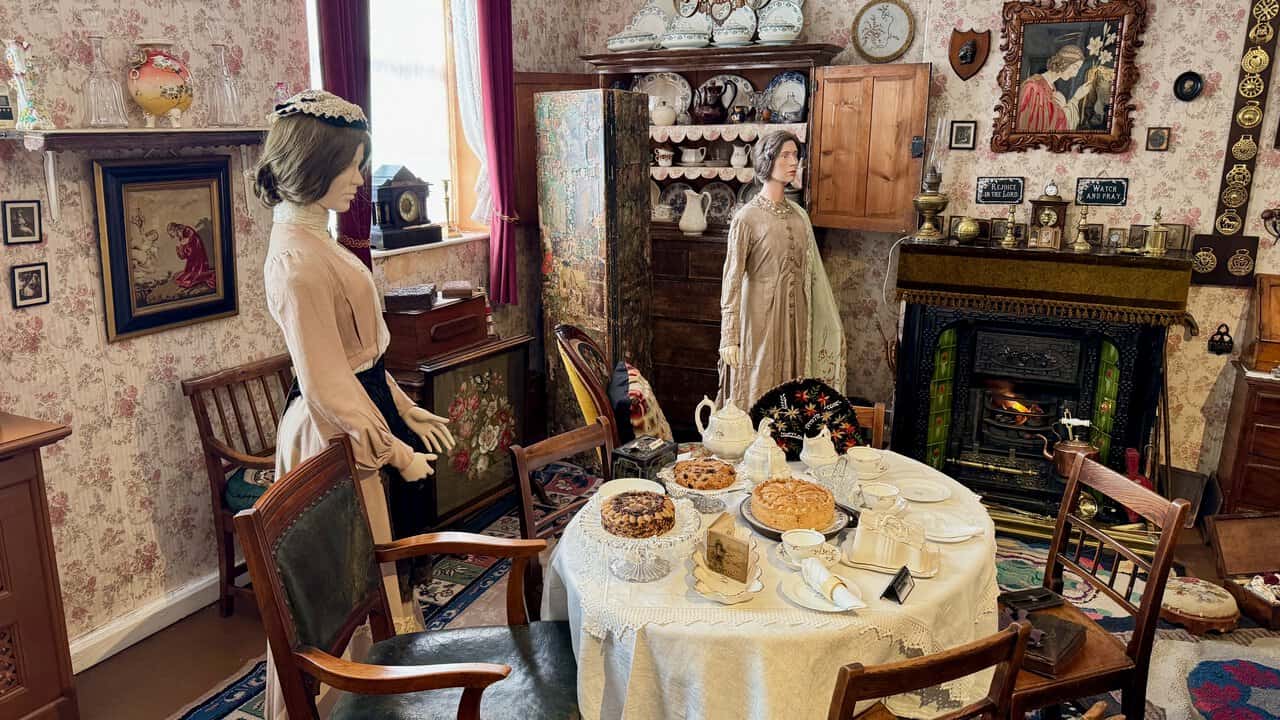
The Victorian Parlour
Stepping into the Victorian parlour feels like visiting a family home in the late 19th century, with tea laid on the table as if the family has just left the room. Blue and white plates line the shelves, the mantelpiece is crowded with family treasures, and a “crinoline” Windsor chair stands near the clock. On the peggy rug, a doll’s cradle well over 100 years old holds a baby with a splintwork rattle, carved from many small pieces of wood.
Even the barrier has a history, as it was once the communion rail of the Primitive Methodist chapel at Low Laithe. Behind it stands a harmonium from the Methodist chapel at Calcutt, Knaresborough. Its type won a prize at the Paris Exhibition of 1862.
The Study Room
The Study Room is the museum’s research room, where special exhibitions are occasionally held. Its library includes a valuable collection of local history books about Nidderdale, and the cupboards hold detailed records. There’s also access to the museum’s database, so if you’re tracing your family history in the dale, it’s best to contact the Museum Secretary before you visit.
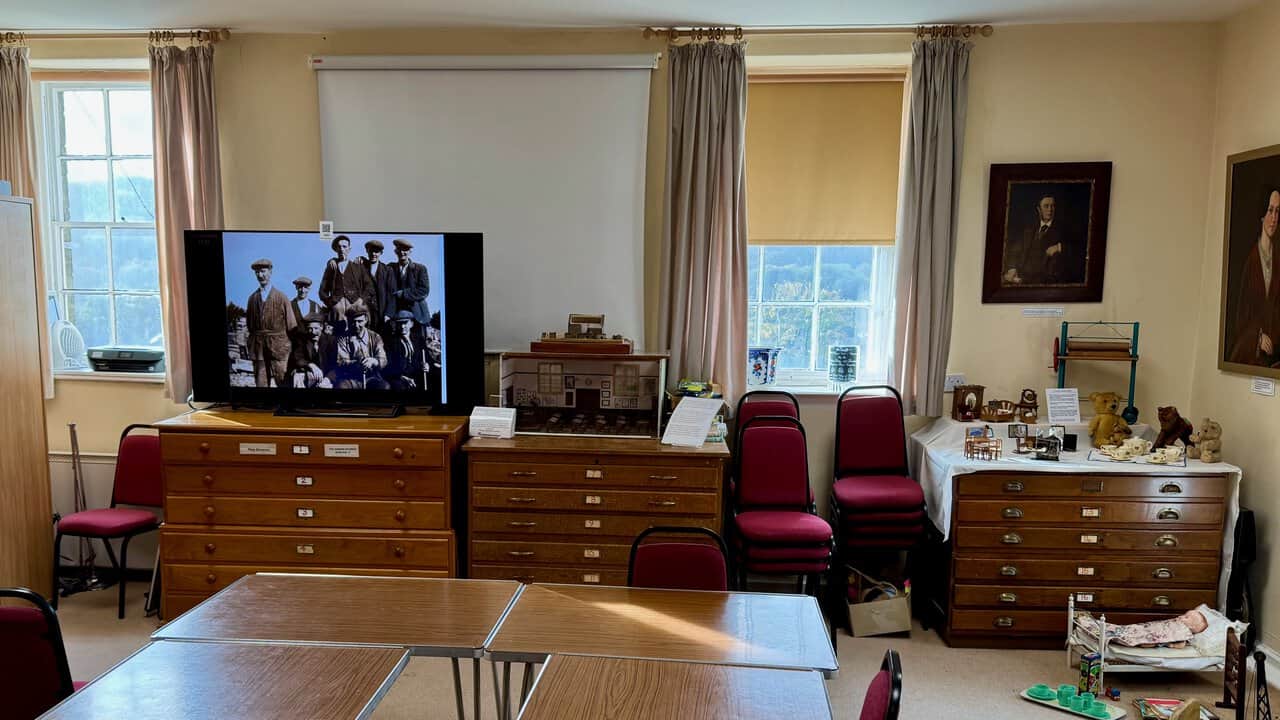
The Workhouse Scene and the Courthouse
Here, Nidderdale Museum turns to the history of its own building. A workhouse scene shows an old lady ending her days in the “dreaded Institution”, wearing one of the bonnets actually used here. The dresser and cupboard were part of the original furniture, and the cupboard once held the Punishment Book, which recorded the inmates’ misdemeanours. Interestingly, the diet sheet by the window suggests that, if the inmates really received the food listed, they were probably better off than the poorest working families outside.
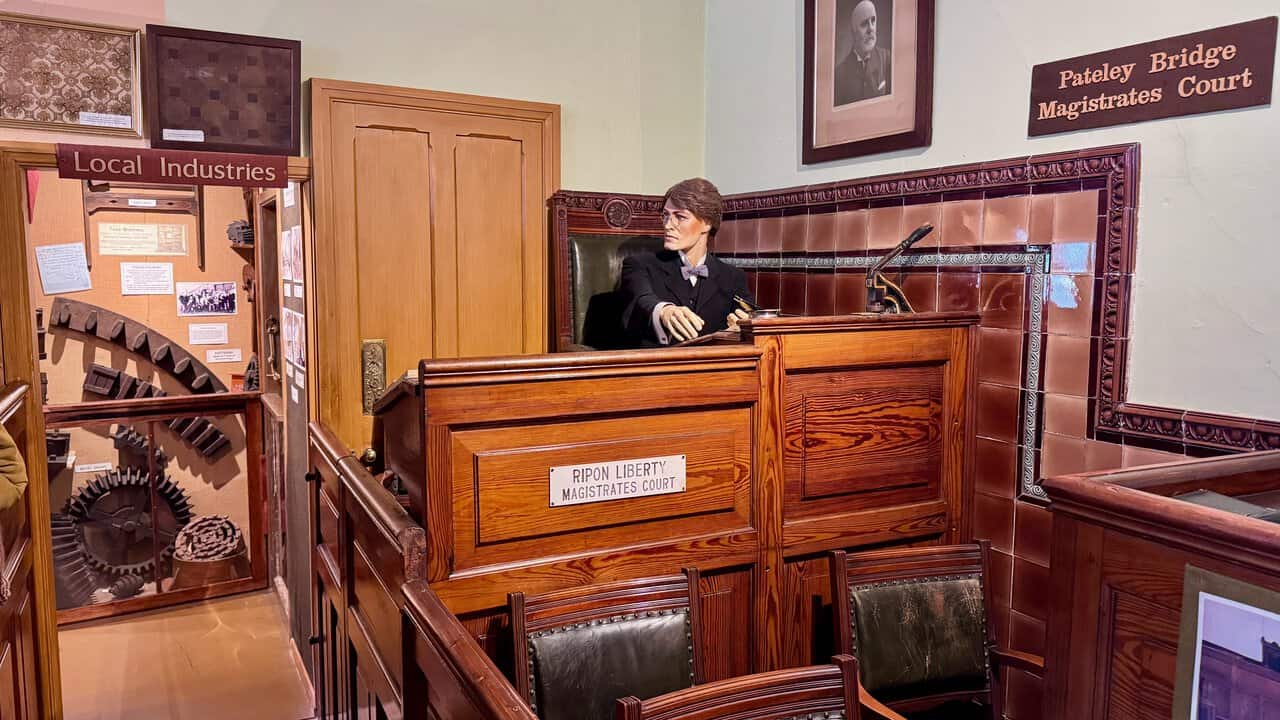
Next door are fittings from Pateley Bridge Courthouse, which was built in 1895 with chairs specially made by Marsh Jones of Leeds. The witness box once stood just inside the public entrance, facing the dock, which connected to the police cells. The court remained in use until 1995.
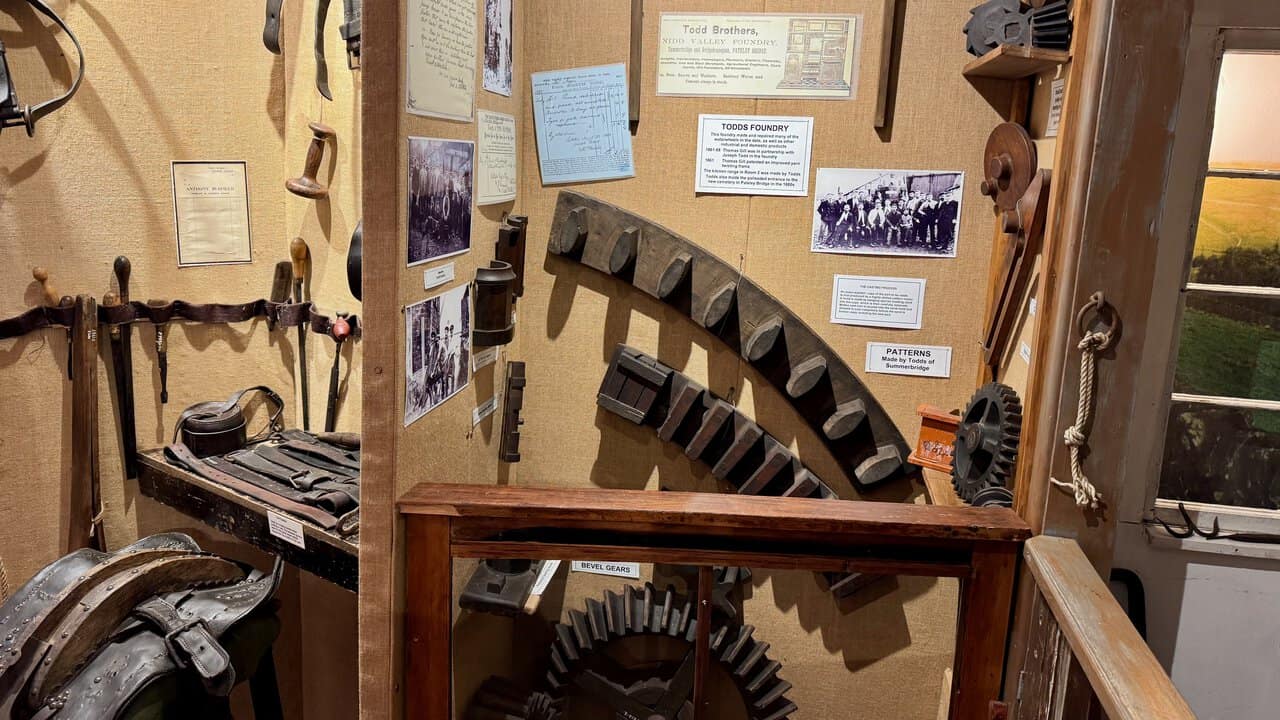
Local Industries at Nidderdale Museum
The Local Industries room shows just how busy the dale once was. On the right as you enter is a blacksmith’s shop, equipped mainly from John Stockdale’s smithy at Birstwith. Beside it are wooden patterns from Todd’s Foundry at Summerbridge, the firm that made mill gearing, waterwheels and even the kitchen range you passed earlier.
Flax spinning was once a major industry, and the mills at Glasshouses and New York were the largest in the dale. Glasshouse Mill’s “Clocking-In” time clock is on display, which makes a nice link to our morning, as the Yorke’s Folly walk passes through Glasshouses. Fringill Mill at Darley went on spinning flax and hemp until June 1986. It’s believed to have been the last mill in England to do so.
Smaller businesses have their place too, from the Darley laundry to a top hat factory. The world’s first instant coffee is believed to have been made at Shaw Mills. Like other early brands, though, it set hard in the tin and never caught on. As for the hairdresser’s permanent waving machine and hairdryer from the 1930s and 1940s, both look alarmingly like instruments of torture!
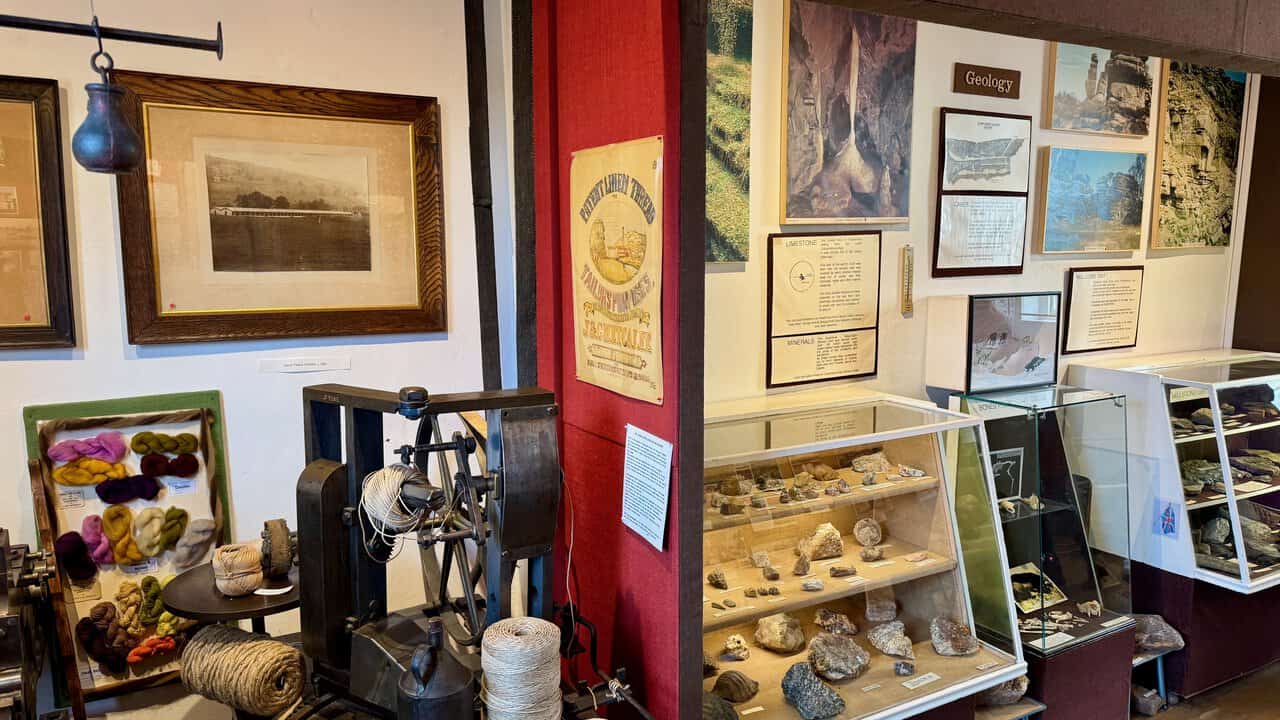
Geology, Lead Mining and the Mine Level
For walkers, the geology section is especially rewarding, because it explains the landscape outside. Some of the fossils, including corals and brachiopods, date from 325 million years ago. Most of the dale is made of Millstone Grit, formed from the sands and mud of a huge delta. It’s the same gritstone used for the pillars of Yorke’s Folly. Brimham Rocks, meanwhile, is an outstanding example of gritstone shaped by erosion.
Quarrying mattered too. In Victorian times, large paving flags for station platforms and docks came from Scotgate Ash Quarry, on the hillside above the museum. Lead has been mined at Greenhow since Roman times, and in 1365 lead from Coldstones was sent to roof Windsor Castle. In 1831, two-thirds of the men of Bewerley, another village on the Yorke’s Folly walk, worked in the mines.
Fittingly, you leave this part of Nidderdale Museum through a recreated mine level, which gives a small taste of the miners’ cold, damp and candlelit world.
The Long Corridor at Nidderdale Museum
The long corridor leads back towards reception, and there’s plenty to see on the way. Near the start, a wash house holds laundry equipment that was in use until the 1950s, including possers, peggy sticks and a dolly tub. Beyond it, the corridor tells how the dale’s ample rainfall was harnessed to supply water to Bradford. In the early 20th century, the River Nidd was dammed to create three reservoirs: Gouthwaite, Angram and Scar House.
Scar House, the largest of the three, was begun in 1921, and its workers lived in Scar Village. The village housed 700 employees and had its own school, doctor, nurse and fire brigade. Every building was lit by power from a hydroelectric plant. When the project was completed in 1936, the whole village was dismantled.
Further along are a toy cupboard with a miniature theatre and a chemist’s shop. Its set of dentist’s tools is a reminder that chemists sometimes pulled teeth as well as prescribing medicines. The wall displays include the oldest photograph of Pateley Bridge, dated 25 May 1859 and restored from a broken glass plate. Before leaving the corridor, it’s worth looking up and back to spot the drum of the Darley Temperance Band.
Outside Nidderdale Museum
Larger exhibits line the path from the door to the car park, so the visit isn’t quite over when you step outside. On your left as you walk out is part of the rocking horse from Bishopside and Bewerley recreation ground, along with a stone from Pateley corn mill that records flood levels. On your right is the magnificent stone monument of Angram Dam. Stonemasons working on the dam carved it in the 1920s, and it was donated to Nidderdale Museum in 2022.
Planning Your Visit to Nidderdale Museum
Nidderdale Museum is at The Old Workhouse, King Street, Pateley Bridge, HG3 5LE. The opening times and prices below were correct at the time of my visit in October 2026. They can change from year to year, so please check the Nidderdale Museum website before you travel.
| Season | Days | Times |
|---|---|---|
| April to October | Tuesday to Sunday, plus Bank Holiday Mondays | 1:30 pm to 4:30 pm |
| November | Weekends only | See the museum’s website |
| December and School Half-Terms | Published nearer the time | See the museum’s website |
| January to March | Weekends | 10:30 am to 3:30 pm |
Nidderdale Museum Visitor Information
- Admission: At the time of my visit, adult tickets were £5, while accompanied children aged 5 to 15 and carers went free.
- Accessibility: The entrance is level, and a stairlift takes you up to the first floor. There’s an accessible toilet on the ground floor and a hearing loop in reception and the Study Room.
- Digital Guide: The museum has a guide on the free Bloomberg Connects app, with captions, audio transcripts and adjustable text size.
- Parking: There’s limited free parking at the museum, and the town centre car parks are only a few minutes’ walk away. Pateley Bridge has quite a few places to park, but I always find the Nidderdale Agricultural Society car park one of the best.
- Bus: The number 24 runs from Harrogate bus station to Pateley Bridge.
- Dogs: Only assistance dogs are allowed inside.
- Groups: According to the guidebook, groups can visit at any time by prior appointment.
- Contact: You can call 01423 711225 or email info@nidderdalemuseum.com.
Allow plenty of time for your visit, as there’s far more to see than you might expect. The guidebook on sale in the museum shop is well worth buying too. It’s packed with stories, and it’s the source of much of the detail here.
More Walks Near Nidderdale Museum
Many of the stories inside Nidderdale Museum come to life out in the dale itself. These walks of mine link closely to the displays:
- Yorke’s Folly Walk: We did this walk on the morning of our visit, passing through Bewerley and Glasshouses on the way to the gritstone pillars.
- Brimham Rocks Walk: This route from Pateley Bridge leads to the eroded gritstone described in the geology section.
- Pateley Bridge Walk to Providence Lead Mines: You’ll explore the lead mining country featured in the museum.
- Bewerley Industrial Heritage Trail: This trail starts and finishes at Nidderdale Museum itself, taking in the lead mining, lime burning and quarrying heritage around Bewerley and Greenhow.
- Coldstones Cut Walk: This walk passes through Greenhow to Coldstones, where the lead for the roof of Windsor Castle came from.
- Scar House Reservoir Walk: The builders of this reservoir once lived in Scar Village, which features in the museum’s long corridor.
- Nidderdale Way Walk to Scar House and Angram Reservoirs: You’ll cross Angram Dam, whose stone monument now stands outside the museum.
For more routes, take a look at my Nidderdale walks page.
Final Thoughts on Nidderdale Museum
Nidderdale Museum is a real treasure. My friends and I couldn’t pick a favourite room, because they were all equally good. The care the volunteers put into the place shows in every display, and the museum truly lives up to that award for doing the most with the least.
If you’d like to support the museum, the Nidderdale Museum Society welcomes new members and volunteers. Membership includes free entry for twelve months, and the Society’s programme may include winter talks and summer tours of local heritage areas. Volunteers help with stewarding, preparing displays, conservation and administrative work.
For the perfect day out, I’d recommend doing what we did: start with my Yorke’s Folly walk in the morning, then spend the afternoon at Nidderdale Museum. However you plan your day, just remember to check the museum’s opening times before you set off.